
Of what are the Pharaohs guilty?
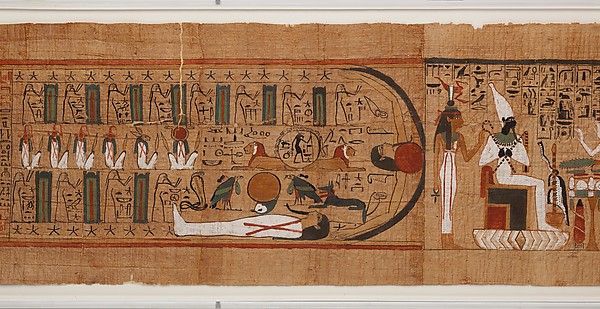
It seems paradoxical that, despite the fact that in most cases the experience of the afterlife as subjectively experienced by the mind is perceived from the viewpoint of the «afterlife body» — a product of the interaction between the living body and desires — or, as the ancient Egyptians called it, ka, there are very few maps of the Interval describing this experience. In fact, these are only the ancient Egyptian «Ru nu peret em heru», «Utterances on the Ascent into the Light», often referred to as the «Egyptian Book of the Dead» and the Tibetan «Bardo Thodol», «Liberation in bardo [through] hearing».
At the same time, there exists extensive literature describing the «Journey of ba», the thought body, which passes through the Interval, carried by divine winds (or, in the terminology of Egyptian thanatology — «sails on the Solar Barque»). These include the «Book of Amduat», the «Book of Gates», the «Book of Caverns», and a number of other texts.
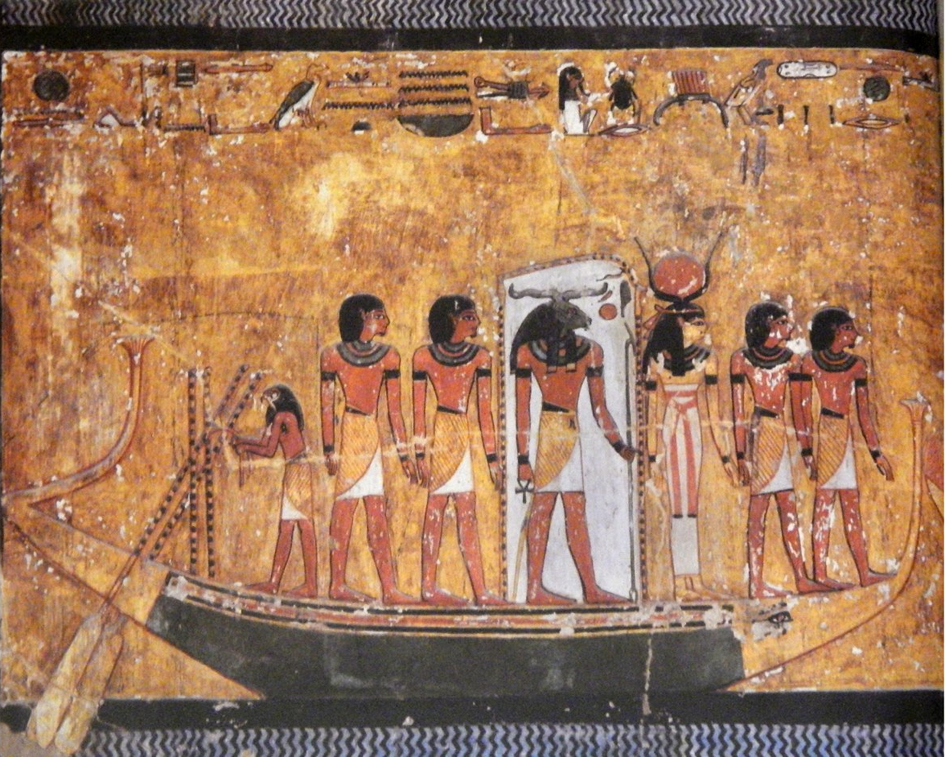
Usually such a discrepancy is explained by the stance of the Egyptian priesthood, which constituted the first (and practically the only) group of «professional» researchers of the Interval. Since the most important Egyptian ritual — the Coronation of the Pharaoh — placed the Ruler on a superhuman, divine level, making him a conduit and embodiment of higher creative forces, the king’s afterlife differed greatly from the path through Duat taken by others. Indeed, for the level of divine mind, the realm of thought is the lowest level (just as for a human being the basis is the level of the physical world). And therefore it is clear that the divine elemental — the deceased pharaoh — travels as ba, i.e., ‘sails’ through the afterlife on the Barque of Millions of Years. Accordingly, the extensive corpus of texts describes the pharaoh’s posthumous journey, whereas the wandering through Duat of ordinary people begins to interest priests only as aristocracy and elites gained influence.
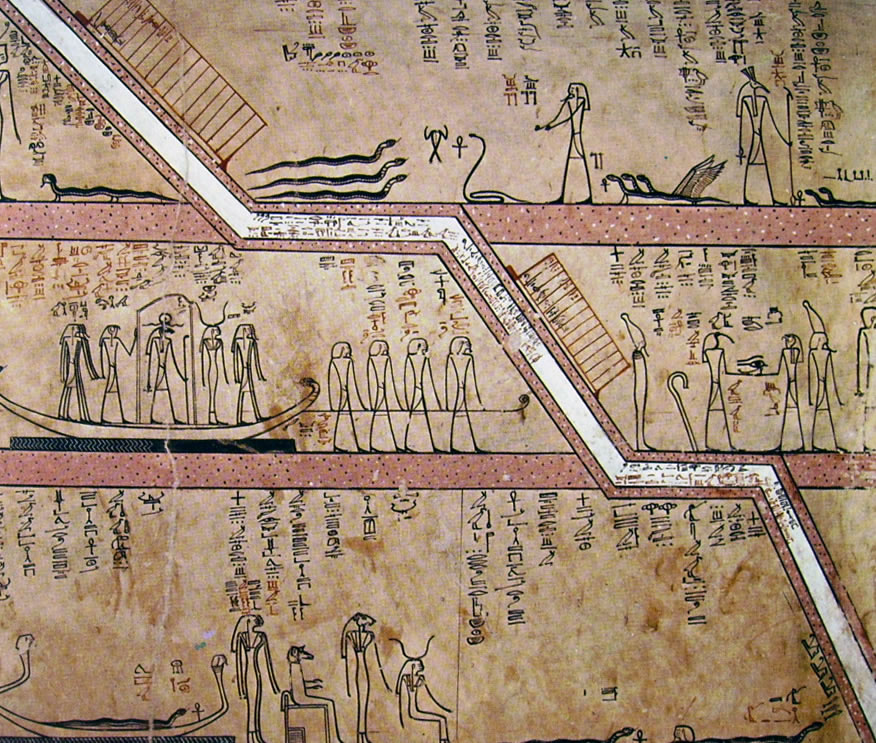
However, as often happens, besides this obvious reason, there are others, more esoteric.
As we have already discussed more than once, the division of the mind in the afterlife into an «astral» and a «mental» component, ka and ba, is a temporary process connected with the need to assimilate two types of experience — from interactions and inner experiences — which then must merge into a common imprinting, i.e., an actualized awareness. In other words, in the case of successfully passing the posthumous journey, the mind reintegrates (ka and ba merge into akh), and, in the ideal case, flows into the pleroma, and more often returns to gilgul, drawn by unrealized impulses («debts of ka») or unacknowledged experiences («debts of ba»).
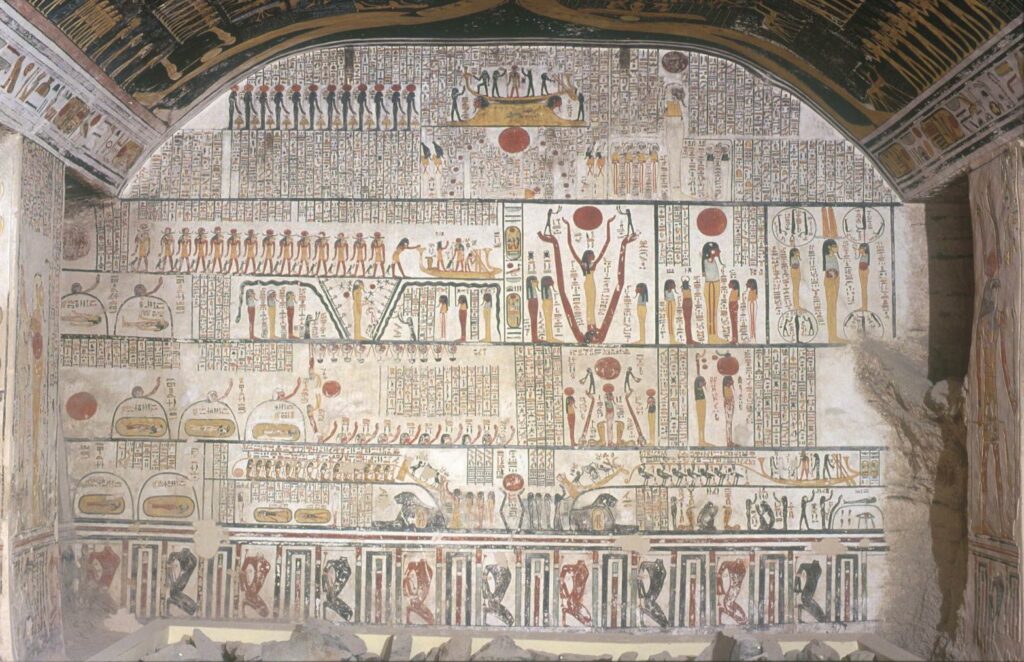
However, a third possibility also exists: the reintegrated mind may remain in the Interval as an elemental, and in this case one of three scenarios may await it — it can either go mad from hunger, turning into an utukku, or find comparatively stable and safe realms there — for example, the «Fields of Reeds», or build its own «pocket universe», turning into a «dead king» — a refaḥ.
It is well known that in ancient Egyptian discourse it was precisely the third variant that was considered most desirable. We have already discussed that the technologies of mummification and the construction of complex tombs developed by the Egyptians were aimed at «holding» the mind in the Interval. And, as it is not hard to understand, most pharaohs who managed to complete their voyage through Duat became precisely refaim, although perhaps initially they intended to fulfill the role of Lares.
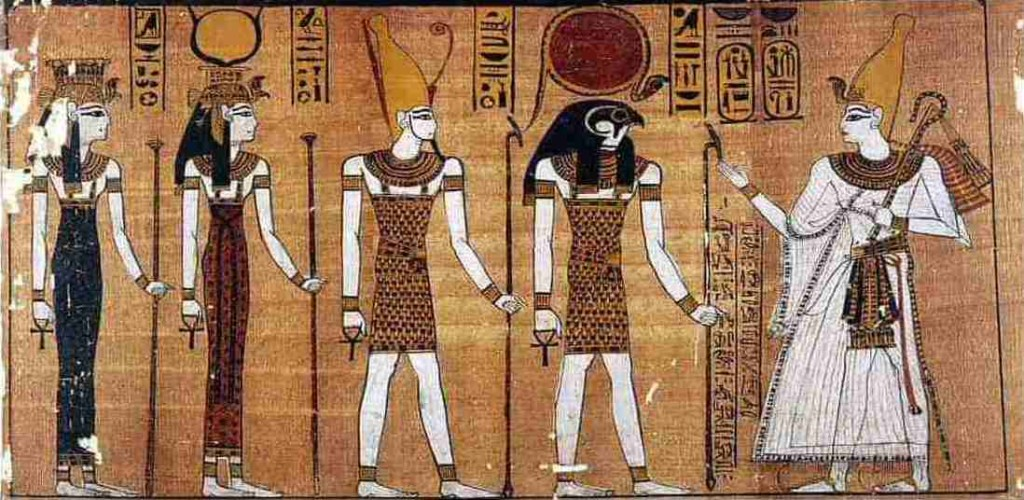
And here we come to the reason for the «imbalance of maps» mentioned at the beginning. Although refaim are very powerful entities, they cannot avoid the «maddening» properties of the Interval: its instability and energy scarcity. And therefore even the wisest of rulers, «stuck» in their cities and abodes of the Interworld, show their worst character traits: they become envious, jealous, wrathful, and so on. And therefore they demand worship (hence the cults of dead pharaohs, and later, for example, of Roman emperors), the development of techniques to ‘deliver’ energy into the Interval, and so on.
Instead of seeking routes by which ka could cross the «Field of Hills» as effectively as possible, and then unite with its ba, the priests, under the influence of «voices from the Sanctuaries», created ever new descriptions of the Gates and the Battles of the Barque.
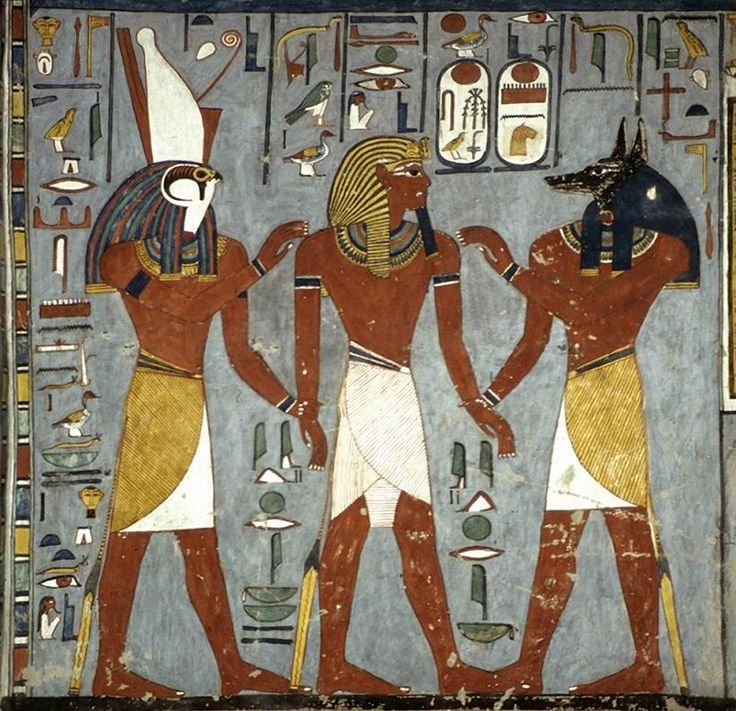
Therefore, manuals on «how to become an Osiris», that is, how to reintegrate one’s experience, how to extract the most from a past incarnation in order to be able to go further in one’s development, did not accumulate; instead, more and more strategies were developed for «how to eat the gods», — to secure the most comfortable existence in the Interworld.
As an illustration, let us cite an eloquent quotation from the «Pyramid Texts»:
«A god who lives off his fathers,
feeding on his mothers…
[Pharaoh] Unas is the heavenly bull who rages in his heart,
who lives off the essence of every god,
who devours their entrails,
when they come, their bodies full of magic,
from the Island of Flame…»
And although this tradition has long since lost its mass character, one can only regret that the enormous research potential possessed by the priestly schools of Egypt was directed in a not very constructive direction. If the literature of «Osirian» orientation were as extensive as the description of the Sailing of the Barque, perhaps there would have been more souls who successfully overcame their afterlife journey, and therefore incurred fewer debts and less destruction into a new birth.
You are cool, Master!!!
What is wrong with existing in the interworld of infinity? Belial lives there too, among others.
As I understood, to hang out there on a prolonged basis, additional sources of energy (tonic pneuma) are needed, and in the meantime, it is impossible to generate it. In general, it turns out that the gap is a vampiric structure in some sense, and according to tradition, it was called the moon.
Thanks for the article