
The Undead and Elementers
In the discussion of the Interworld we mentioned Elementers — disembodied beings situated between incarnations and belonging to none of the worlds.
However, mythologies not only describe such beings in their manifestations in our world but also record numerous cases of their deliberate creation.
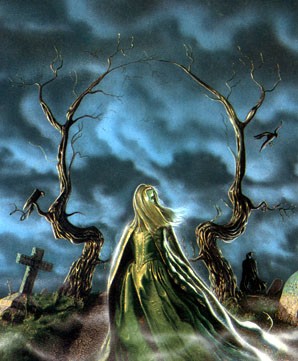
To begin, let us try to sort this out. The disembodiment of a being proceeds in the reverse order of embodiment; that is, consciousness withdraws gradually from the manifest world. Complete disembodiment, of course, requires complete bodily decay as well as the absence of strong ties to the Manifest World.
Violation of any of these conditions leads to disembodiment being disrupted.
The first case occurs when strong ties — for example, the emotion of terror at the moment of sudden or violent death, a vow of vengeance, or some unfulfilled oaths — bind the being to another person, place, or event. In that case, an imprint remains (often mistakenly called an ‘astral body’), preventing complete disembodiment. Since such an imprint retains traces of consciousness (but not the mind itself), it can engage in limited goal-directed activity (for example, pursue its victim or victims).
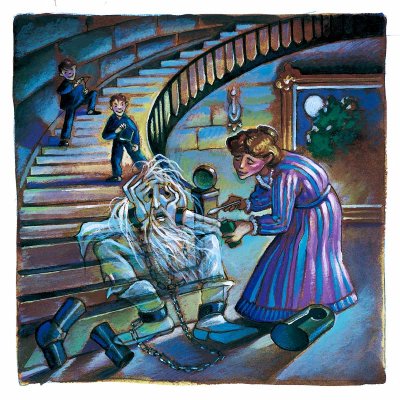
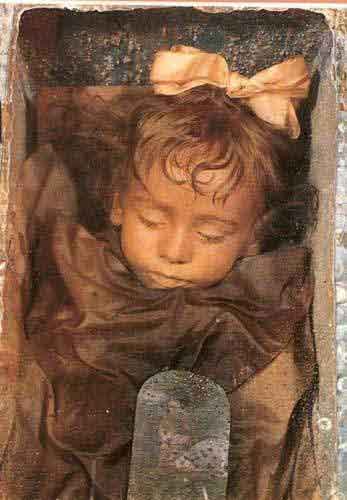
The second case is when the physical body does not decay (for example, due to deliberate or accidental mummification). In such a case, disembodiment likewise does not complete, and consciousness becomes trapped in the Interworld, where it can interact with other such minds and also attempt to influence the minds of embodied beings.
The third case is when disembodiment is disrupted by an artificial bond — for example, the creation of an anchoring corpse, a Draugar (if the bond binds a third party), or the emergence of a vampire (if the being itself interrupts its disembodiment).
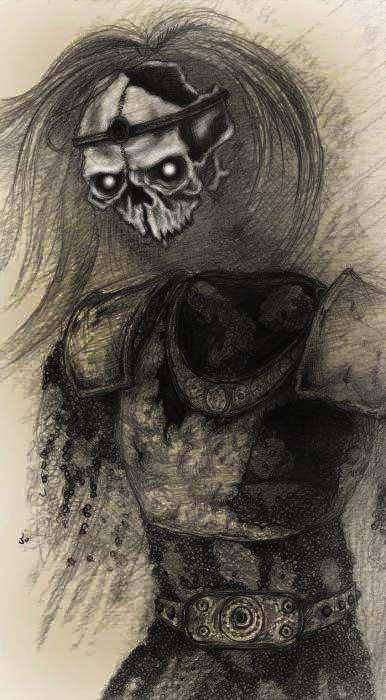
All partially disembodied beings share two traits: having shed the limits of the material world, they gain greater power, and yet they lose access to its source and therefore need constant replenishment from outside (for example, such as victims or blood).
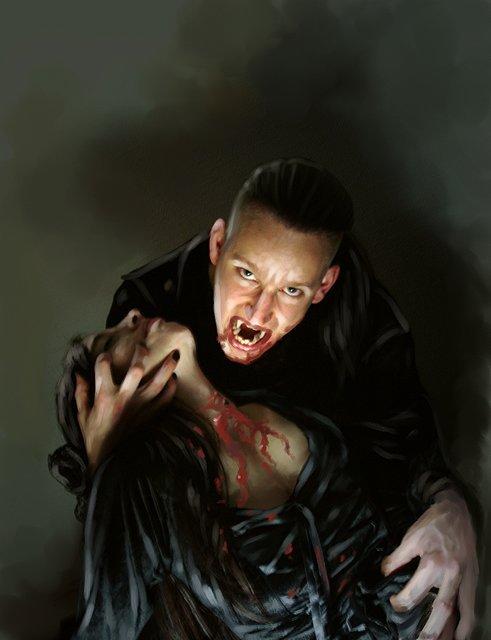
The tradition of creating Draugar to guard barrows and burial places goes back to remote antiquity. Two elements were combined: on the one hand, the being was bound to the place by violent death there; on the other, a special ritual interrupted disembodiment.
Another important question is the sense of identity of such an Elementer. Contrary to common belief, the undead’s mind differs from the original person’s mind. Subjectively, the creature experiences its condition as a clouded possession with little self-control; therefore, in the majority of cases, any appeals to the undead’s personality usually fail.
One more point — the undead are not spirits. They cannot be controlled by standard ceremonial magic. They have an anchor such as a body or another worldly tie, so Protection methods include weakening or destroying that anchor.
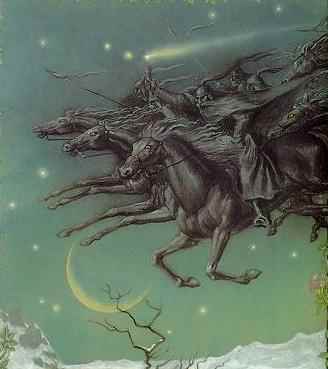
What can be used to destroy or weaken the fulcrum of the dead?
For example, with a sword 🙂
And if the fulcrum is not “in the form of a physical body”, but in the form of “another connection with the world”?
Then with spells and amulets.
How can an amulet weaken something? As far as I understand, amulets serve to attract forces unavailable to the operator … i.e., in themselves they can only provide protection, and to weaken, a spell (i.e., application of forces) is still necessary …
And it is also interesting to know why it is easier to destroy the fulcrum rather than “help” the process of disentanglement continue? After all, such a delay is often artificially created and has little stability.
Weakening or strengthening is merely a direction of the movement of power. By creating a force of counteraction, an amulet can well weaken some vector.
And regarding the dead – although they are indeed often created artificially, their stability actually depends on the stability of the fulcrum – that is, either the remains of a body or some object on which they are enclosed. Therefore, destruction of this support is in fact a help in disembodiment.
For some reason when I turned into a vampire, I didn’t observe that, even though the transformation was complete and void of residue. And when I dispelled them, there were enough powerful interwoven impulses of different natures throughout their essence and everything connected to it. It was extremely effective against many others.
The last comment amused me, thank you 🙂
By destroying the focal point without precaution, the destroyer becomes the focal point that the dead can destroy.
>In that case, the disembodiment also does not end, and consciousness gets stuck in the Interworld, where it can interact with other similar consciousnesses, as well as attempt to influence the consciousnesses of embodied entities< SO LENIN REALLY IS STILL ALIVE??? I knew that the pharaohs and the Egyptian nobility were not just concerned about the preservation of their physical bodies after death. Does being in such a state provide any advantages, or is this driven purely by the fear of losing one's personality and conscious individuality after death (I mean cases of deliberate mummification and vampirism)? I understand that by preserving one's physical body, a philosopher, king, or magician (in short, a person who had unquestionable authority in their lifetime) can somehow continue to exert influence on the material world, perhaps even ideologically. Is that correct?
Tell me, what are the relics, is it some sort of mummification to some degree? And how do they manifest in the Between Worlds?
Mummification of the body can occur on its own, depending on various environmental conditions (for example, in one of the abandoned salt mines a mummy of a worker who died from an injury was found, preserved in perfect condition, but upon being taken to the surface, it disintegrated in a matter of minutes) or mummies are created through special processing with chemicals. The relics of the Saints are remains that miraculously preserve themselves, not subject to decay and disintegration. Although separate bones of Holy Servants are also called relics. To maintain a proper appearance of relics, preserving substances such as wax mastic are also used.
To destroy the anchor point of death – is like in the tale of the immortal Koschey: to find the chest, to break the needle. The most important thing is to know exactly what this anchor point is.
It’s clear, but what about the fact that body parts wander around the world and are not given to the earth, how does this affect the post-mortem of a personality? I think the saints themselves are not thrilled with such a fate.
And I’m curious why to find and destroy. Any influence is possible through opened gates and always starts not suddenly, and one can trace and understand oneself. The only possible war, in my opinion, is to engage with oneself. After all, you can’t chase after elementals.
Maria, the best answer to your question would be a sudden fierce attack by an elemental. A priceless experience…
Your approach is fair for demons, but does not apply to elementals.
Write to farat.125@yandex.ru. I will explain with an example from my experience of destruction. By the way, I will also tell about the meaning of one unclear word. And I have many questions accumulated…
I have an aunt who is knowledgeable in some grave witchcraft; once she brought dirt from a cemetery to someone. She is my deceased grandfather’s sister. When I was born, my grandfather was alive, and against my mother’s wish, she decided to name me after my grandfather. I was named as my grandfather. Can my name serve as a reference point for the death of my deceased grandfather?
An acquaintance told a story about how in the north, cattle began to disappear from a herd. Then they began to find bled-out and mutilated bodies of animals. They thought wolves were attacking or some other beast. Hunters gathered and went to track the beast… they waited a long time… closer to dusk, something resembling a human emerged from the forest, approached an animal, attached itself, and drank its blood. Then when the animal fell, the creature cut open its belly and ate its intestines. The hunters were, of course, horrified… but still decided to track down and kill the beast… after some time they found a burrow in some hill (possibly a barrow) and pulled out what looked like a corpse, ugly and in rags, but without significant signs of decay… I think it resembles a draugr. I wonder how long they can continue their existence…