
Why Do Souls Leave Our World?
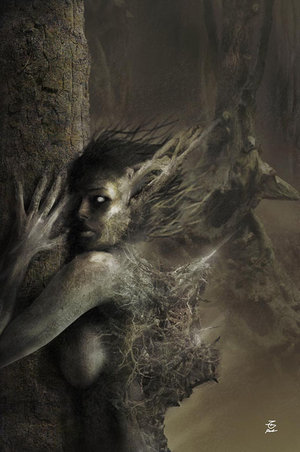
The postmortem disembodiment of a person must be accompanied by the entity’s withdrawal not only from our world but also from the Elements.
If this, for some reason, does not occur, partially disembodied souls, lacking a guide and having lost connection with the monad, turn into demons.
This arises because, having completed the program of embodied existence and surrendered the accumulated, not fully assimilated awareness (that is, the light ruach) to the Supreme Predator — Baphomet — the being ceases to be part of the world stream, and in order to re-enter it must incarnate again (enter the Gilgul) and must become fully disembodied.
Even the ancient Sumerians observed the transformation of elementals into hostile creatures. Having lost their human component and suffering constant hunger, elementers are likely to become a malevolent predator — utukku (the Sumerian “udug”).
The guardians of the netherworld could not see or confine them to the underworld, so the ghosts flew freely among the living.
Utukku could be benevolent or malevolent. Benevolent utukku assumed the form of winged human-headed bulls — shedu — and acted as guardians of people, usually their descendants.
Malevolent utukku fed on human breath and blood at night, infecting mortals with plague and stoking murderous rage among them.
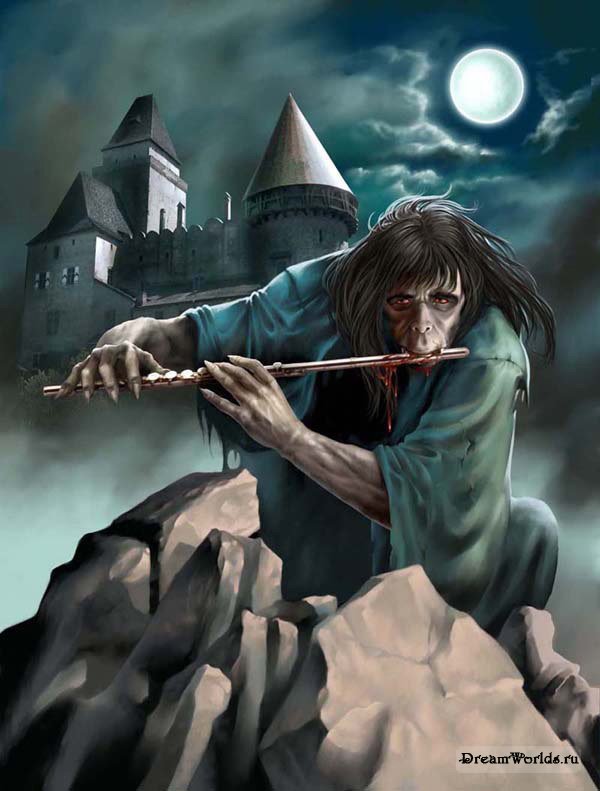
The best-known of the malevolent utukku is Alû. He appeared to his victims as a one-legged, one-armed leper, covered with putrefying sores. His bite or touch infected the unfortunate with a terrible disease.
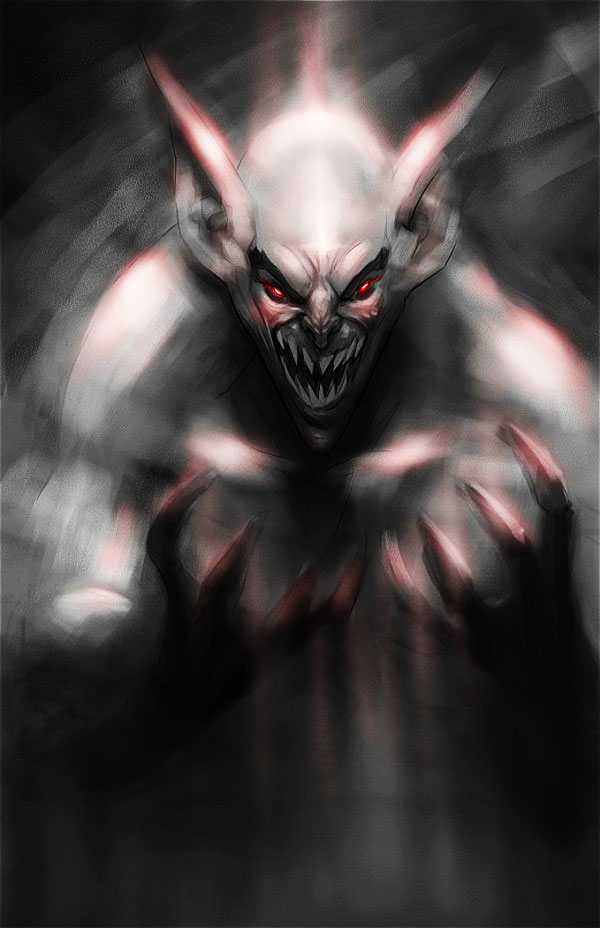
One could rid oneself of an utukku by burying the spirit’s body according to sacred rites or at least by making offerings in its memory. Then the satisfied nocturnal avenger would agree to leave the living in peace and withdraw to the otherworldly borders.
The Akkadians already used the name “utukku” to denote demons in general.
Many utukku were without limbs, bore marks of wounds or torture, and uttered piercing cries of pain. The Egyptians called similar ghosts Ku. Like the ancient Sumerians, the peoples of Europe believed that a ghost was a person who had died a painful death. For example, the Irish feared the Taishe and the Sluagh — the spirits of those tortured in dungeons, as well as those executed on the gallows or the block.
Apart from their direct vampiric influence on people, utukku often strive to possess a human, both to return to the Gilgul and to hide from the demons of the underworld — Galla.
If an utukku seizes a person, the result is a dibbuk — the possessed.
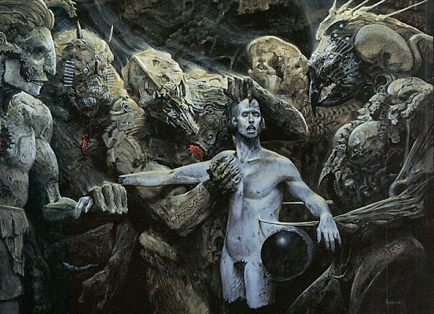
According to Sumerian notions, the capture and delivery of the souls of the dead to their places of eternal confinement are the responsibility of seven keepers of the nether realm — the Galla. The Galla do not concern themselves with whose soul it is — a shepherd’s, a warrior-hero’s, or a god’s.
“Demons of the Galla, cruel creatures who
Do not eat food, do not know drink,
They taste not the scattered offerings,
They do not drink the libation poured,
They accept no pleasant gifts,
They embrace not a spouse with tenderness,
They kiss not beloved children…”
The demons of the Galla make no independent decisions — they obey the will of the goddess of the dead, Ereshkigal. Her orders are law for them.
The Galla need not wait for natural death; they can smite with grievous disease or even wrench the soul from the body.
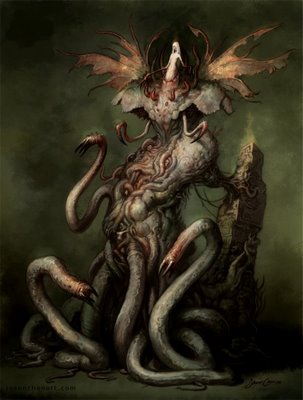
The Galla appeared on earth as a wandering radiance. Woe to any human or god who encountered them.
When the goddess Inanna was released from her underworld imprisonment, seven terrible guardians followed her. She ascended to the earth pursued by remorseless Galla, ready at any moment to seize her or whomever she points to. Inanna went to the cities of Umma and Bad-tibira, but the patron deities of those cities prostrated themselves before her, and she showed them mercy. Inanna and the demons came to Kulab, the city of her husband, Dumuzi.
There she saw her husband Dumuzi, the shepherd-god, sitting on his throne and surrounded by lovely maidens. In anger Inanna fixed on him the gaze of death and consigned him to the demons:
” Dumuzi in the garment of power, in royal repose sits on the throne.
The demons of Galla seized him.
Seven of them tore his chest, they poured out his blood!
Seven of them — as if in fever they fell upon him!
They broke his shepherd’s flute, his reed-pipe before his eyes!
She cast on him her look — her look was death!
She cried out — in her words was wrath!
She uttered a cry — the cry of a curse:
‘Seize him, seize him!’
Radiant Inanna delivered the shepherd Dumuzi into their hands. ”
However, we see that despite their fearsome nature, the Galla are a necessary element of the cosmos — “cleaners”, “undertakers” — without whom the process of disembodiment would much more often lead to the rise of utukku and their flooding of the world.
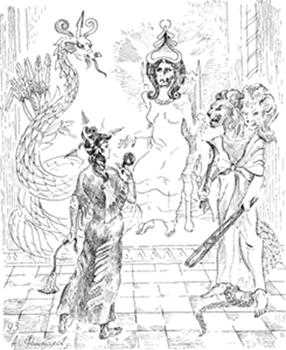
It is the Galla — guardians of the underworld — who take souls and ensure the process of their full disembodiment.
The same function is served by the “Wild Hunt” of European mythology, during which Arawn or Gwyn ap Nudd (among the Celts), or Odin, rides into our world to capture souls that have escaped from the otherworld. Like the Galla, the Wild Hunt, when it encounters a living person, also sends them to the underworld.
During the Reformation, the Wild Hunt was regarded as the fate of the unbaptized dead, especially children. The unbaptized could not be buried in consecrated ground; they were interred in the north part of the churchyard, where they were thought to remain under the earth. They became the sport of the dogs of the Wild Hunt, which drove them to hell.
The last reports of the Wild Hunt in England date to the 1940s — it swept across the countryside at Samhain on the eve of each church festival. Witnesses were advised to fall prostrate to the ground and recite prayers to save their souls from the jaws of the hell-hounds. One must not look upon the Wild Hunt — the one who meets the gaze of the Wild Hunter dies or vanishes; in some versions of the myth he dies on the spot, in others is torn apart by the dogs, in others is transformed into the hunted beast until the hounds overtake him or another beast is found, and in others simply joins the cavalcade forever.
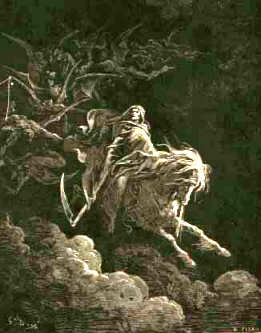
The Wild Hunt, like the roaming of the Galla demons, despite its terrifying appearance and the danger of encountering it, was regarded as a necessary element of the annual cycle — an annual “cleansing” of the world of the living from the dead souls accumulated within it.
Thus, the shared experience of various peoples shows that the departure of a disembodied soul from the manifest world is under the control of powers — guardians who maintain world balance and prevent a tilt toward the predominance of predators consuming life-energy over its transformation into awareness by living beings.
The Supreme Predator, unwilling to share the spoil, keeps the lower predators under strict control.
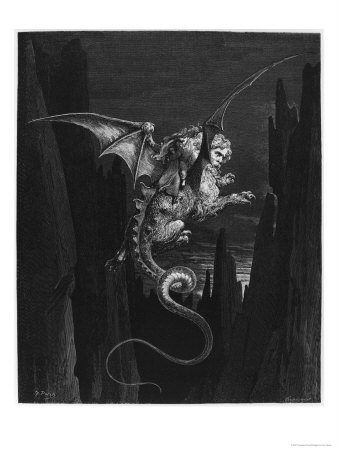
How to avoid losing awareness and at the same time not meet with “gravediggers”?
This very question has been a primary concern for magicians of all times 🙂
It turns out that religion is one of the ways to answer the question above?
Well, isn’t it? You will shed light on this issue, right?
People who shed light on this issue have already written entire shelves of books. There’s no point in duplicating them. Although, of course, all my posts are about this.
It is known that N.V. Gogol voluntarily left life several times but asked his relatives not to bury him – and each time he returned alive. How did he manage not to disembody and not turn into a demon? How long does the period of transformation of the elemental into a malicious creature take?
…The evil utukku drank human breath and blood at night, infecting mortals with plague and inciting fratricidal fury in them. The most famous of the evil utukku is Alu. He appeared to his victims in the form of a one-legged, one-armed leper covered with festering sores. His bite or touch infected the unfortunate with a terrible disease…