
“Theurgy of Goetia” — Management of “grey” spirits
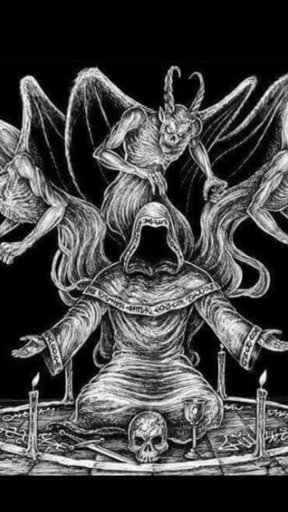
We have already discussed more than once that, from the standpoint of Traditional Magic, the majority of spirits with which both magi and “ordinary” people encounter belong to the category known as “Subcelestial“, or the “grey” ministering beings.
We have also mentioned that among these spirits one can distinguish three principal groups:
1) Gatekeepers, or “goetic demons”;
2) “Air” spirits, or spirits of the “ascending flow”, “Epiklets“, expressing the medium’s striving, empty immanent potential, that seeks to be filled with Light — the so‑called component of the “shining klippah” (this group also includes some of the presently popular “Enochian angels“),
3) Grigori, or “spirits of balance”, concerned with maintaining the stability of the relationship itself, the opposition of forces.
Given the critical importance, both on macro‑ and microcosmic scales, of interacting with such beings, the Tradition also includes three groups of approaches aimed at ensuring constructive contact with them.
“The core” of the goetic tradition, of course, is the First Book of the Lemegeton (“Goetia”), and the confrontation and transformation of the Gatekeepers’ energies have always been the foremost task of magi. To this same group belong the “Book of Raziel“, the “Testament of Solomon”, and, with some reservations, the systems of the “Greater“, the “True” and the “Gonorieva” grimoires.
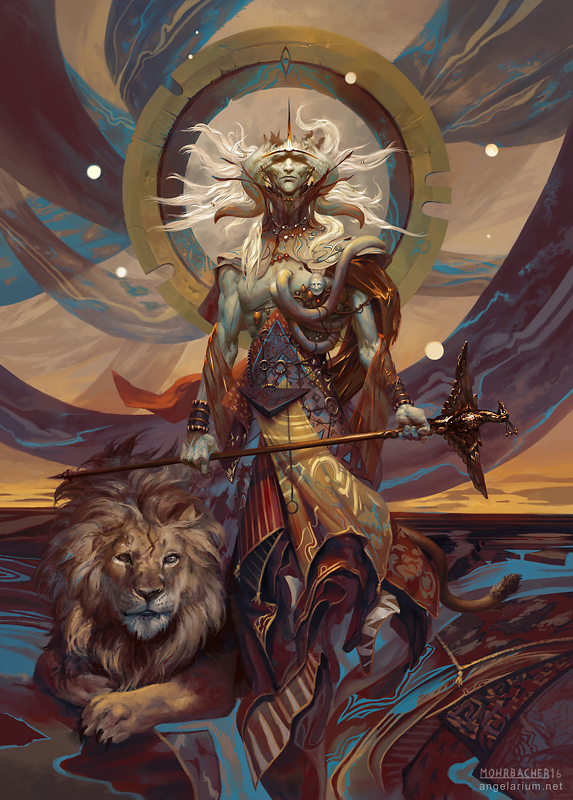
The technique for interacting with “air spirits” is described in the “Heptameron” and the Second Book of the Lemegeton (“Theurgy of Goetia“), and, in part, in the “Greater Key of Solomon”.
Contacts with the Grigori are discussed in the “Books of Enoch” and the “Parables of Enoch”, and also — partially — in “Theurgy of Goetia”.
Despite the importance of control over the Gates, interaction with the other two groups of spirits is also important, primarily because of the “instability” of their flows.
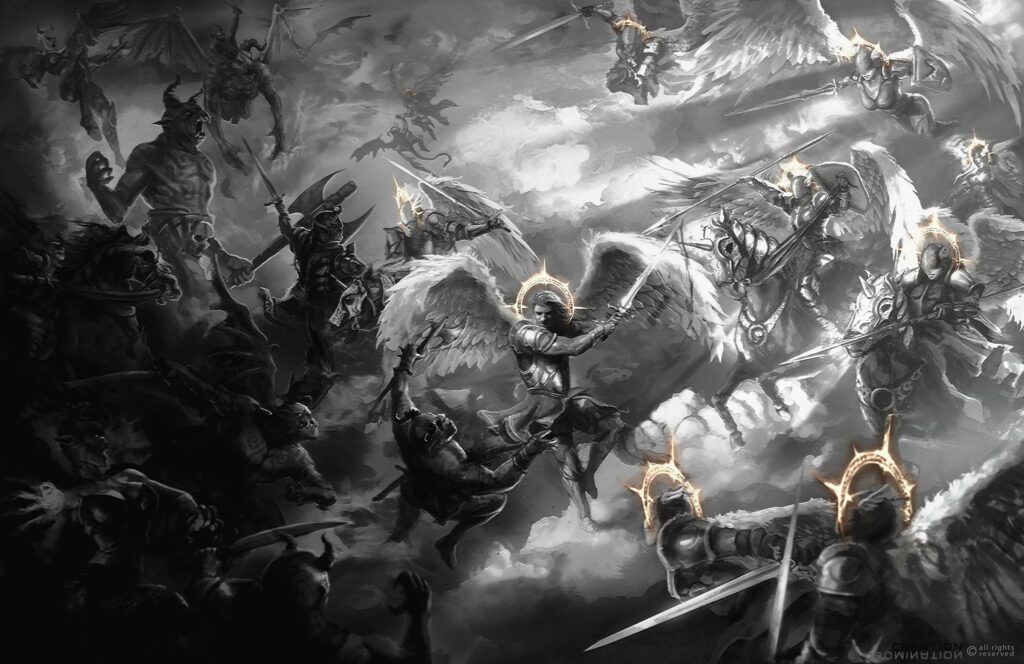
One might say that Epiklets are the Interspace’s “own” serving forces, which sustain it in the same way as the opposition of Angels and Demons ensures the stability of any manifested world. Accordingly, Epiklets (or, as Gnostic myth also calls them, Potestates) are, in fact, governed by Archontic forces.
“Grey air” spirits perform the so‑called “calling” function, expressing the very striving of the vessel to be filled; they are the “voice of hunger” through which the void calls the Light. Such spirits are traditionally called Epiklets (“callers”, from «επίκληση»), the title by which the ancient Greeks named representatives of the city’s “executive” authority.
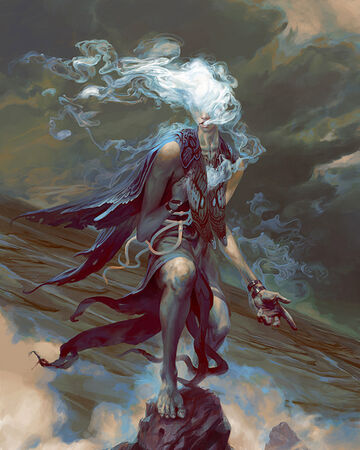
Indeed, “air spirits” display a certain ambivalence: while predominantly predatory by inclination, they can, nonetheless, take the “light side” if the scales tip in favor of the Qliphoth. It is precisely the “drawing to one’s side” of these spirits that both the approaches of “Enochian magic” and more traditional methods seek.
Epiklets populate all the spaces of the Interspace, performing a sustaining function analogous to that of the “younger gods” — the elementals. Moreover, in each of the interworld spaces Epiklets play the role of “Gatekeepers“, regulating transitions between subspaces.
At the same time it must be clearly understood that, as with goetic evocations, interaction with these “flow” beings is a “game of chess” with a more experienced and cunning opponent, and the stakes of such a “game” are usually very high.
We will not discuss here Doctor Dee’s unfortunate experience and the presumptuous experiments of frivolous “Enochian magi”; instead we will focus on more tested and developed systems.
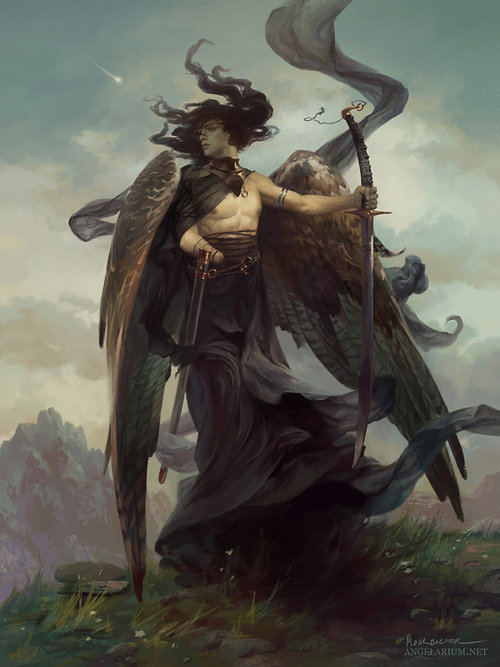
The first of the best-known and most tested systems is, of course, the approach of the “Theurgy of Goetia”. The first published variant of the approach underlying the method of the “Theurgy of Goetia” was Johannes Trithemius’s “Steganographia”, written in 1500. This work entered the Lemegeton codex no later than 1550.
The system of the “Theurgy of Goetia” describes a “compass”, a circular “arrangement” of the “air spirits”, noting that “These spirits (air spirits) by their nature are both good and evil simultaneously“. According to this system, on each quarter of the world five ruling spirits are singled out — an Emperor and four Kings (and/or Princes), each of whom is “served” by his own dukes and knights.
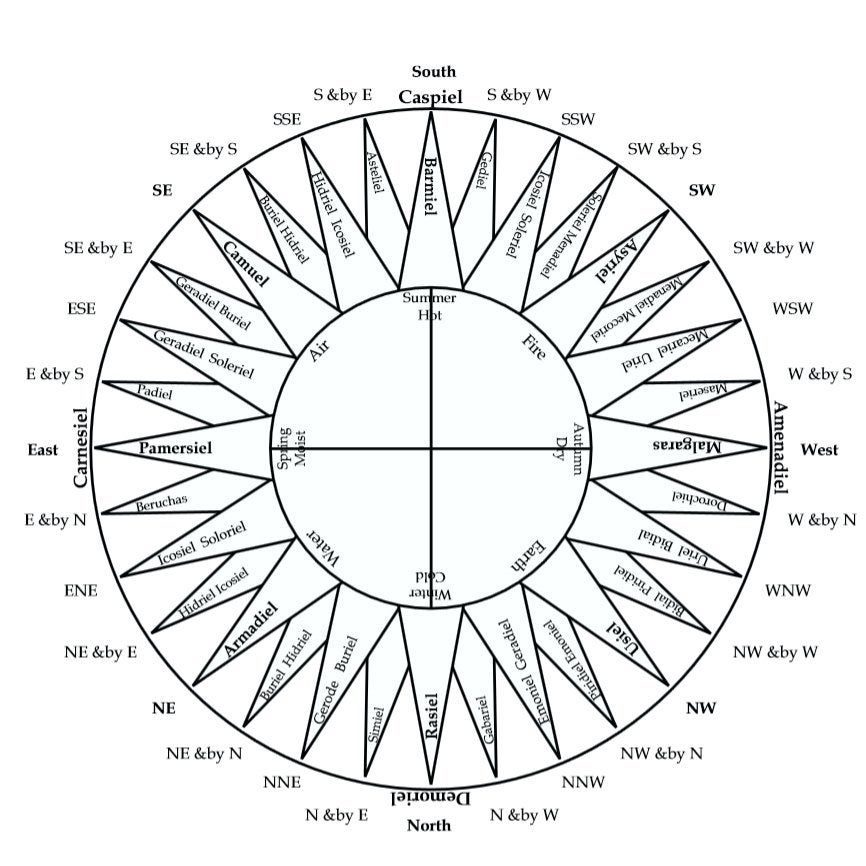
In addition to these “fixed” Rulers, there are also mentioned 11 “Wandering” Princes, “who wander through the Air up and down and never remain in one place“, who apparently correspond to the leaders of the Grigori mentioned in the Books of Enoch (although, according to Enoch, there are more of these leaders — 17, 19, 20 or 21 — which complicates direct parallels between the two traditions, though it does not introduce contradictions).
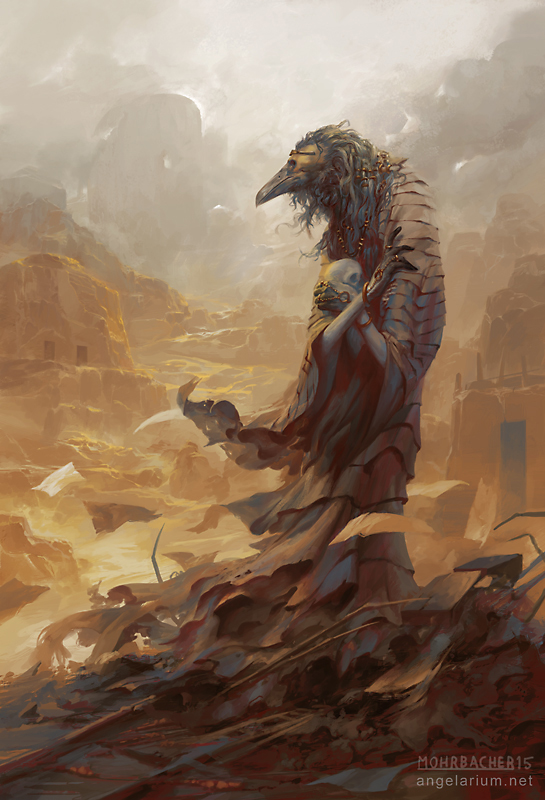
For each Ruler a summoning incantation is given.
Aside from the “rulers”, the “Theurgy of Goetia” also supplies the names (and sigils) of Dukes subordinate to them — 367 for the “stationary” Kings and 115 for the “wandering” ones.
Since it is precisely the name and the sigil that provide the keys to governing a spirit’s energy, analysis of the information presented in the “Theurgy of Goetia” makes it possible to develop the modus operandi of a ritual that secures contact with them and binding.
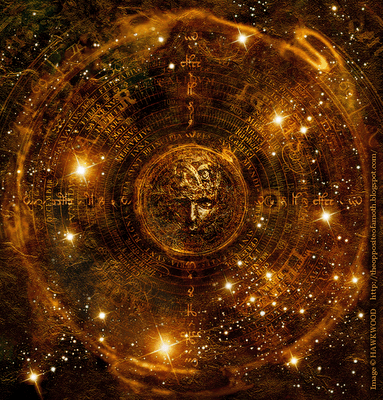
Kabbalistic analysis of names, and graphic analysis of sigils, allow one to determine the characteristic features of each spirit’s energy, its influence on the macro‑ and psychocosm, and to identify elements important for the “reconfiguring” of its vortex into a constructive channel for the operator.
Overall, provided it is properly worked through, the system of the Second Book of the Lemegeton makes it possible to facilitate mental development, reduce destructive influences on it, and pave the way for new strategies for the “main” battle — the reconstruction of the Gates of the Horizon into a productive form.
Good time,
I am a Muslim. What will happen if in all prayers and summoning rituals I use the word Creator instead of Father and use another name of God from the Quran instead of Jesus Christ, and Muhammad instead? Will the rituals work? Because for Muslims affirming the fact that Jesus is Lord or the Son of God renounces us from the religion.
Thank you for your answer.
Hello!
Islamic Magic is developed no less and no worse than Christian magic. It would be more correct to use the spells (dua) of Jinn magic than to try to adapt Christian ones, although this option is also possible.