
John Dee and “Magic of the Angels”
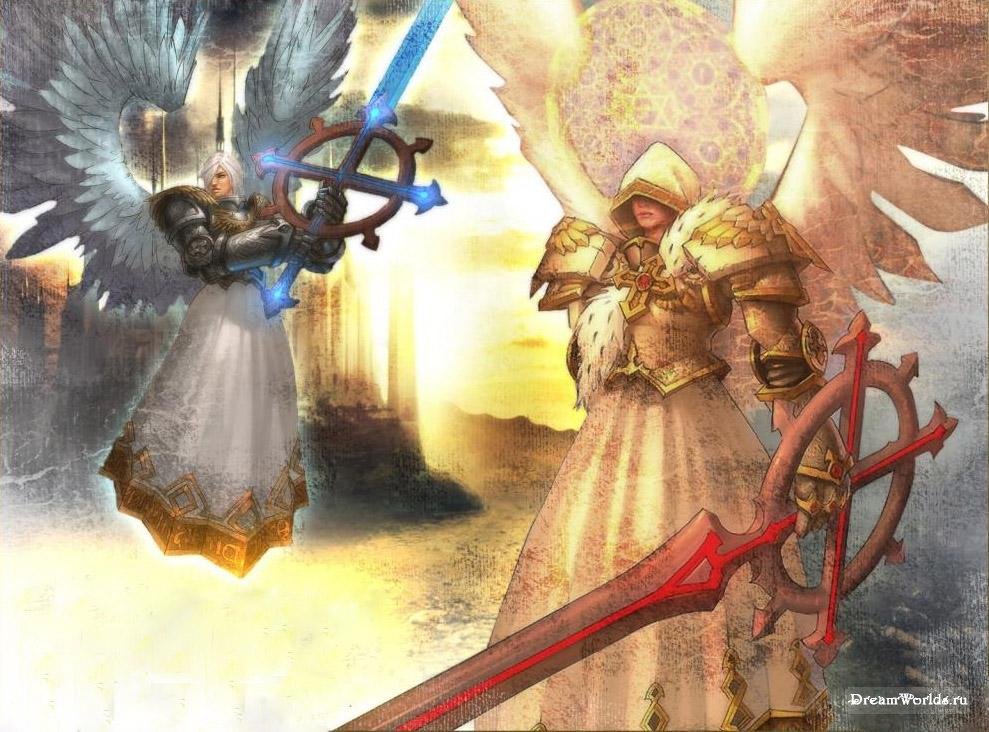
“Enochian” Magic has recently become widespread, despite repeated claims from one source to another about its “complexity” and “mystery.”
In truth, the “complexity” of this field is mathematical not occult, and anyone with more than rudimentary mathematical ability is fully capable of handling the apparatus of the “Tablets.”
At the same time, the actual nature of what happened to John Dee during 1581–1589 remains underappreciated and defies systematic analysis. Moreover, the question of whether what the angels told Dee should even be considered magic is usually left out of the discussion.
None of those for whom Magic is more than mere words and stories will deny the powerful energetic effect of the “Enochian” approaches and Calls. The possibilities for visualizing Enochian spirits also surpass Goetic ones. It is precisely for this reason that the “revelations of angels” exerted such a strong influence on the occult tradition of the Golden Dawn and, especially, on Thelemic currents.
At the same time, there is something in this domain that should unsettle any experienced magus.
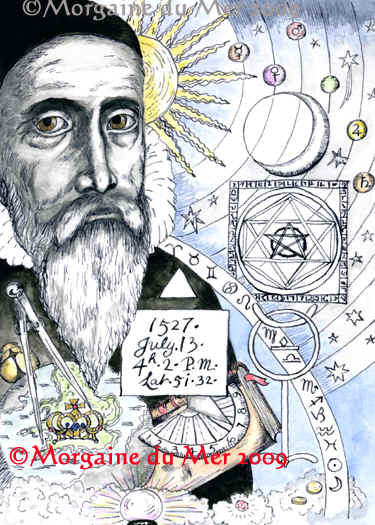
It is well known that “Enochian” Magic arose from studies of the works of John Dee undertaken by S. L. Mathers in the 1890s. More precisely, Mathers studied not Dee’s own manuscripts but the presentation of his work in Casaubon’s book. Mathers incorporated the “Enochian system” into the Golden Dawn’s rituals and instruction. The later development of this field is associated with the name of Aleister Crowley (by the way, Crowley believed himself to be the reincarnation of E. Kelley — the seer who dictated the angels’ messages), who, with characteristic force, breathed life into Dee’s idea of the “Ethers” and, of course, made Horonzon attractive by granting it the status of the Demon of the Abyss. Only after the works of Mathers and Crowley can one speak of “Enochian magic.” Neither John Dee nor his medium E. Talbot (Kelley) were able to put the angels’ revelations to practical use (except perhaps, according to some accounts, for the final stage of their communication, in which Kelley is said to have received a recipe for the alchemical transmutation stone).
The history of the ideas that so impressed Mathers and, especially, Crowley can be summarized briefly as follows: John Dee (1527–1608) was the son of a minor Welsh squire who served at the court of King Henry VIII. The Dee family was of Welsh origin; the surname Dee derives from Welsh du, “black.” Dee displayed his remarkable mathematical talents at age fifteen, when he became a student of St. John’s College, Cambridge. In 1546, at the age of nineteen, he earned his B.A., then became a fellow of Trinity College, where he was later awarded an M.A.. It is not known when he received a doctorate, or whether he did so at all. It is possible Dee earned it in Paris in 1550, where he delivered his famous lectures on Euclidean geometry and where obtaining a doctorate was easier than in England. In 1551 he returned to England and continued his scholarly work. In 1552 Dee met Girolamo Cardano in London: Dee and Cardano worked together on the problem of a perpetual motion machine and also examined a gem said to possess magical properties. In 1558 Dee published his first important work, Aphoristic Introduction, and in 1564 his famous Monas Hieroglyphica appeared. John Dee was passionately eager to recover lost knowledge and spiritual truths that he believed lay in ancient lost books. Among them was the legendary Book of Enoch, which Dee thought described the magical achievements of the patriarch Enoch.
This knowledge had been used by later generations after Enoch’s death, but in subsequent centuries people began to misuse it. God was angered and decided to take the sacred magical books away from mankind. Instead, He sent an evil spirit to spread false magical systems across the Earth.
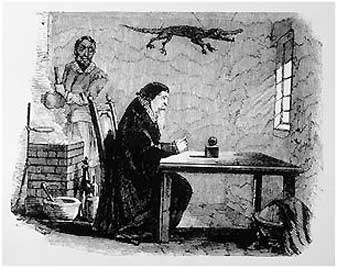
Concluding that worldly efforts would not yield the wisdom he sought, Dee decided to attempt contact with divine sources. Dee believed that number is the basis and measure of all things in the universe, and that the creation of the world by the Lord was an “act of computation.” From Hermetic philosophy Dee adopted the idea that man is potentially capable of attaining divine power; he also believed that divinity could be achieved by mastering mathematics. Over four years — from 1581 to 1585 — Dee carried out a series of magical operations to realize his purpose. For Dee, exercises in Kabbalah and the calling of angels (which were based on numerology) and intensive studies in navigation and other mathematical applications were not in conflict; rather, they were two interconnected aspects of the same activity. In March 1582 he was joined by the twenty-six-year-old Edward Kelley, who became his sole assistant throughout the endeavor.
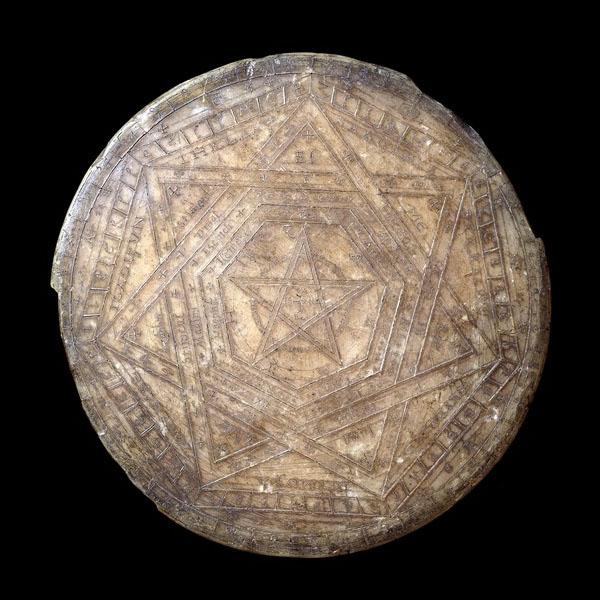
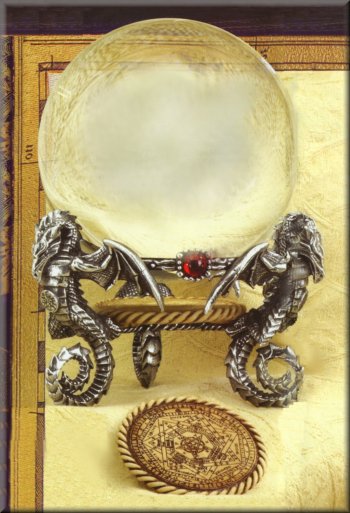
Under Kelley’s supervision, Dee repeatedly made contact with certain spirits, falling into trance and speaking in a language unknown to anyone on Earth. Contemporary linguists who studied him noted that the script of the “angelic” tongue resembled the letters of ancient Ethiopian (now the sacred language of the Ethiopian church). The first session in which contact with the other world was achieved occurred in 1581. In the magical crystal the medium saw the “angel Uriel,” who explained how to create a wax talisman — the Seal of Emet (the Seal of Truth) — by which it would be easy to enter into contact with the otherworld.
The earliest of the communications received by Dee and Kelley differed little from traditional medieval mysticism. They conversed with spirits corresponding to each of the seven planets known at the time (including the Sun) — the so-called planetary “kings” — learned their names, and those of their “princes” and “ministers.” In addition, Dee and Kelley, through conversations with spirits, compiled magical squares and tables.
In subsequent sessions the heavenly interlocutors explained to Dee and Kelley the means of communicating with them and provided the alphabet of the “angelic,” or Enochian, language. Thereafter, pointing to the appropriate letters, the angels dictated 19 poetic texts to the mediums now known as the “Enochian Keys,” or “Calls.”
Several times the texts so frightened Edward Kelley that he was on the verge of abandoning the experiments, but John Dee persuaded him to continue. In 1589 Dee parted with Kelley (at Kelley’s initiative) and returned to England. He resumed his former position at court, but his influence began to wane. Soon Dee’s friends either died or lost power, and he himself was left without means. The accession of King James I to the throne in 1603, who feared magic and disliked Dee, led to Dee’s final downfall. He died in utter poverty in 1608.
Kelley remained in Europe and for his alchemical research was knighted by Rudolf II. He remained at odds with the law until his death and died of wounds while trying to escape prison in 1595. It is said that his career as a medium ended the day he explored the seventh Ether and received a message that so terrified him he swore never again to seek visions. Here is the message that so frightened Kelley and caused Dee and Kelley to abandon their Enochian work:
I am the Daughter of endurance, and every hour since my youth I have been forced. For behold: I am Understanding, and knowledge dwells within me; and the heavens oppress me. They conceal me and desire me with boundless lust: for no earthly man will embrace me, for I am in the shadow of the Circle of stars and veiled by the morning Clouds. My feet are swifter than the winds, and my hands more tender than the morning dew. My garments are primordial, and the dwelling of my being is within myself. The lion knows not where I walk, no wild beast comprehends me. I am deprived of virginity, and yet I am a virgin: I bless though I myself am not blessed. Happy is he who embraces me: for at night I am gentle, and by day full of delights. My company is the harmony of symbols, my lips are sweeter than health. I am a harlot to those who violate me, and a virgin to those who have not known me. Cleanse your streets, O sons of men, and wash your houses clean; become holy and clothe yourselves in righteousness. Cast out your old harlots and burn their garments; and then I will bring you children, and they will be the Sons of Consolation in the coming Age.
From his conversations with the “angels” Dee received confirmation of his own higher destiny to know the secrets of the world. For example, the “archangel Uriel” told him: “Go forward: God has blessed you… The whole world begins with your deeds… The angels in my charge shall be at your disposal.”
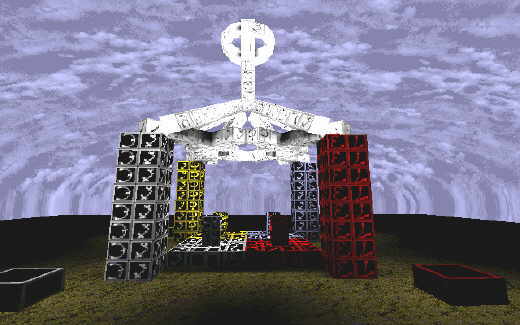
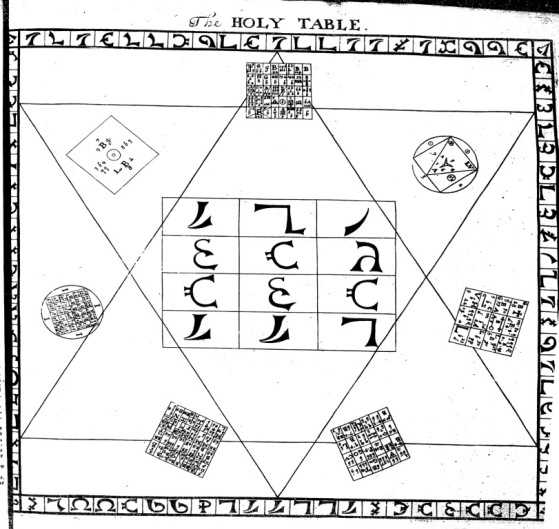
The “angels” gave Dee descriptions of the equipment (a table, special boards, a ring, talismans) for communicating with them, and also outlined, fairly precisely, their version of the structure of both the visible and invisible worlds.
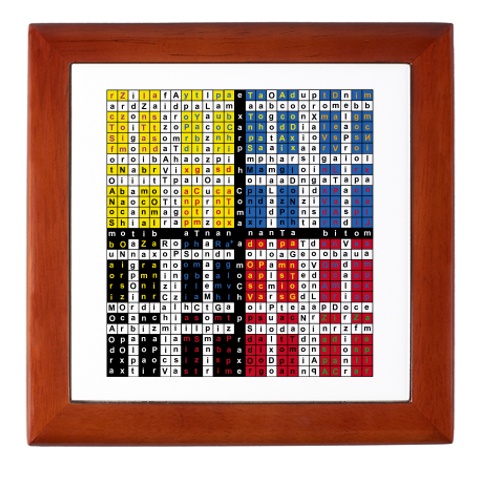
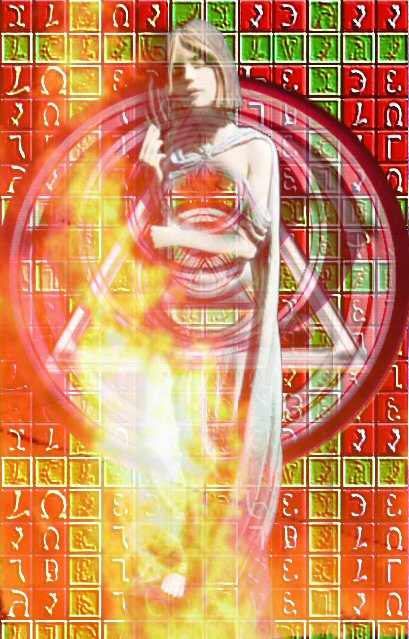
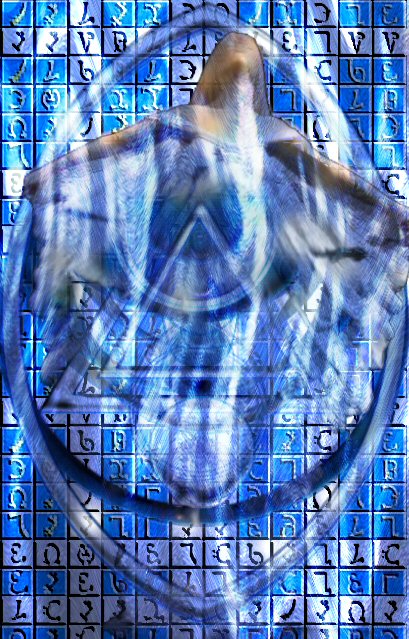
At the foundation of the invisible world’s structure, according to the “angels,” lie the so-called “Four Watchtowers,” which are at once beings and the cities of the angels. (Mathers associated them with the cardinal directions, colors, zodiac signs, and the letters of the Tetragrammaton).
The Four Dwellings are the Four Angels of the Earth, the Four Watchers and the Watchtowers, which… the Lord… set up against… the Great Adversary, the Devil.
Each Tower has twelve gates leading to twelve Angelic “cities.” The gates of the Watchtowers are opened by means of forty-eight Keys or Calls. The Keys may be called Calls because they summon the angelic hierarchies from the cities, through the gates of the Watchtowers, into our world. Thus there are 49 Gates to the “Cities of Wisdom.” However, some Gates are “too holy to be opened,” leaving forty-eight (four per twelve).
According to the “angels,” the Watchtowers came into being when Adam was cast out of Eden. As soon as Adam (mankind) entered the material world, there arose in it a need for “angels” — guardians and watchers who sustain the universe in space and time. The “angels” assert that because of Adam’s disobedience God cursed the whole world.
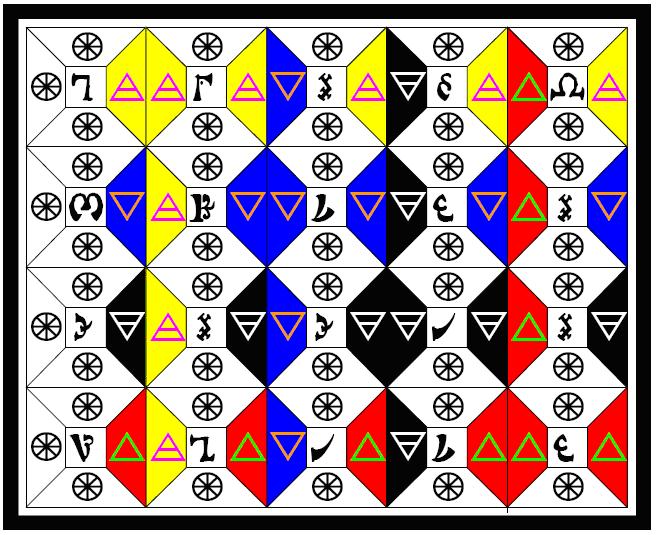
The Four Watchtowers were symbolically represented by magic squares of 156 cells each, in a 12 by 13 matrix. Each Tower was divided into four quadrants corresponding to particular elements. The energies of these Towers are collectively embodied in a square called the Great Table (or the Great Tablet). This is a magical schematic diagram of the Enochian world. Each quarter of the Great Table symbolizes one Watchtower. The Keys open the gates to the angelic cities, whose names are written in the Watchtowers, and summon their numerous inhabitants. Opening the gates of the Watchtowers is meant to blend the eternal with the temporal, to admit Angels into our world. Together, these forty-eight Keys and the Great Table of four Watchtowers form the basis of “Enochian” magic.
Two things stand out in all the angels’ messages — their indifference to Dee and Kelley themselves, and a coldly superior attitude toward humanity in general, sometimes bordering on hostility. According to the “angels,” one who has learned all they intend to teach could bring about the overthrow of all governments — “the alteration of the majority of states and kingdoms in the World” — and bring the world to an end of material existence. One gets the impression that it is the very existence of the material world that especially irritates the “angels.”
The heavens are called righteous because of their obedience. Cursed is the earth because of its stubbornness. Therefore those who seek what is in the heavens must be obedient; the stubborn shall at last be utterly burned with fire, as the Earth with its wickedness.
To affect the physical world, the “angels” must use people as their instruments on the material plane. Naturally, Dee and Kelley were such instruments. Dee firmly believed that the Angels intended to exalt him as their prophet and representative before the princes and rulers of the world. The reason the Angels chose Dee as a human instrument to record their system was his intellectual genius, his extensive knowledge of ciphers, and his skill in mathematical Kabbalah. Dee was one of the few men of his time both willing and able to carry out such a transmission, and smart enough to comprehend its meaning.
The true aims of the Enochian spirits are obscure. Indeed, they decided to teach Dee the “primeval wisdom” taken from sinful mankind. According to them, God had so decreed. At the same time, there is no evidence that Dee in any way used this wisdom for his own benefit or for the benefit of England (which he so longed for). There is a hypothesis that, by conveying this “wisdom,” the “angels” were hastening the end of the world’s incarnation, and that if Dee had completed the full ritual of opening the gates of the Watchtowers, spirits would have poured into our world. It is difficult to say how macrocosmic these aims truly were. Yet there is no doubt that the “angels” communicated with Dee for purposes far beyond a mere “transmission of wisdom.”
Unlike Goetic spirits, whose mode of action and motives are relatively intelligible, the Enochian spirits constantly evade direct answers to questions. In Goetia a spirit summoned will swear an oath to the Magus and, depending on the magus’s power and authority, either enter into a pact (that is, undertake certain services in exchange for certain sacrifices by the Magus) or be compelled to exchange power (information, etc.) without a Pact, on the basis of the magus’s leverage.
Enochian spirits behave otherwise. They did not keep a single promise given to Dee and Kelley (the question of the “red powder” remains doubtful). They constantly steered conversations to topics convenient to themselves; namely, they behaved precisely as certain summoners behave toward evoked spirits. In short, one gets the impression that Enochian magic is inverted magic: it is not the Magus who evokes the Enochian angels, but rather the “angels” who evoke the operator.
The equipment for Enochian rites is much simpler than for Goetic ones: a table (“Tablet”), seals, a ring, a lamen, veils — that is all the “angels” demanded of Dee. The Golden Dawn simplified the ritual even further, reducing the apparatus to the “Tablet” alone, and still achieved stable contacts.
Thus a picture emerges of deception wrought by the “angels”: they caused a set of instruments to be made that permit them to enter into contact with the operator and to use his resources while expending nothing themselves.
Another point supporting this hypothesis is the Enochian language. All Goetic conjurations are composed in human tongues, i.e., languages suitable for describing the human world. The Enochian Calls, however, are composed in an “angelic” language, alien to man, suitable for describing another world where it has a basis external to the operator. That is, unlike traditional Goetic evocations in which the spirit speaks in a language comprehensible to a human, in the Enochian ritual the human speaks in a language comprehensible to the spirit.
Finally, one cannot fail to notice that the “angels” constantly rethink and change their instructions. They altered the description of the table and the ring several times, and the Lamen was entirely revised; the first Lamen was declared “false,” and the angel who provided it called an “impostor.” In other words, it seems the spirits fine-tune the ritual sequence just as a Magus experiments to achieve the best evocation.
All of the above allows one to conclude that “Enochian” rituals, despite their effectiveness and apparent safety, must be assessed by the practitioner far more carefully than even the boldest Goetic operations, and that the danger of deception and traps within them is very high.
“By the way, Crowley considered himself reincarnated E. Kelly – the clairvoyant who dictated the messages of the ‘Angels’)”
Strangely enough, if my memory serves me well, Crowley (in ‘Magic in Theory and Practice’) considered himself reincarnated Levi.
Overall, thank you for an extremely interesting article.
Your memory does not deceive you. But Crowley considered both Kelly and Constans (Levi) as his past incarnations.
I read the works of both E. Levi and A. Crowley. While reading Crowley, after already getting acquainted with some of Levi’s works, I had a peculiar feeling that these two somewhat different individuals (two different personalities!) were inspired by THE SAME SPIRIT!!! It was an incredible and astounding sensation! And when I reached the part where A. Crowley describes his own “recollections” of a certain apartment in Paris… I experienced something akin to spiritual ecstasy, as at that very moment (while reading Crowley’s textbook) I was quite successfully engaged in the same thing… that is, my personal “recollection” of past incarnations… :)) That’s how it happens.
Aren’t those “angels” who contacted John Dee actually from the rank of the Grigori? If I’m not mistaken, they were cast down and imprisoned?
I eagerly await your answer! 🙂
I have a question, Enmerkar. After conducting the Enochian ritual of summoning inter-world spirits, can we impose communication with them based on Goetia in the human language of magic? Would it then be possible to equalize the balance of powers and exit the status of evocation?
Great article! Thank you! It was quite timely as it dispelled my doubts about the pure and immaculate connection of “Higher Powers” with John Lee (whose story I was very interested in).
Enmerkar, what a meticulous job it is to process such a vast amount of information and present it to us in such an accessible article. Thank you very much for your work.