
The Paralyzed Mind of Ziminiar
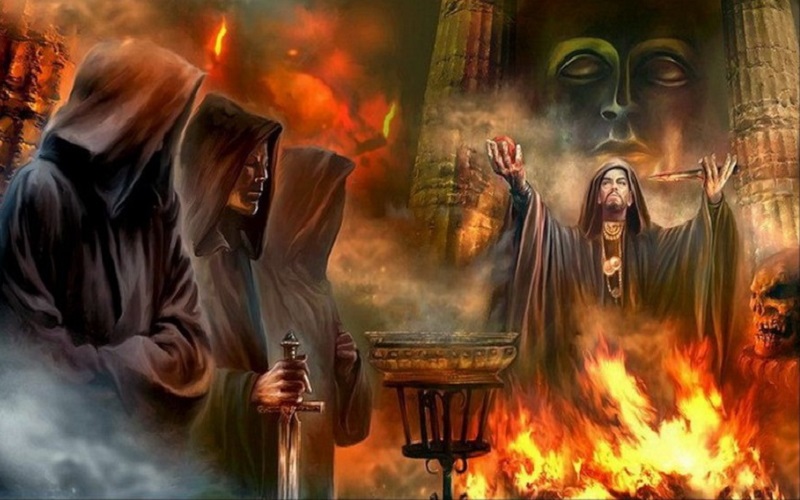
Describing the causes of the ineffective functioning of the ordinary person’s mind, the Western myth points out that each of the mind’s “activities” is “distorted” by a corresponding distorting agent. Moreover, such distorted activities of the mind, acting as autonomous agents, are represented by mythological figures of the “Archdemons”, or, as the Lemegeton calls them — the Four Emperors. In this system, distorted streams of thought operate as the “King of the Market” Amajmon; the stream of distorted desires is depicted in the figure of the “Alpha-Leader” Goap; fragmented emotional streams manifest in the universe of the mind as the Son of Veelzevul — the “Emperor of Caprice” Corson; and corrupted actualizing impulses — as the “King of Inaction” Ziminiar (זימיניאר, or Zimimay, זﬠמﬠ מארּ).
Note that grimoires differ in how they assign the Emperors to elements and directions: for example, the Lemegeton places Ziminiar in the north, while the “Grimoire of Honorius” situates Amajmon in that quarter, and Agrippa — as well as several other sources — names the northern Emperor Egin (sometimes Ariton). We have already discussed that these differences stem from different approaches of individual grimoire schools and authors to describing their cosmologies — if the Lemegeton uses a four-part division of the world, then, for example, the ‘True Grimoire’ uses a three-part division, and they can only be reconciled with many caveats.
Grimoiric literature warns that ritual interaction with the Emperors is extremely dangerous and recommends invoking them only to command lesser demons. Indeed, the destructive effects on the mind from demonic vortices of these Archdemons can inflict serious harm on a person, even one employing multiple layers of protection, since the Emperors “sum up” the destructive currents of all those predators that fall within their domain.
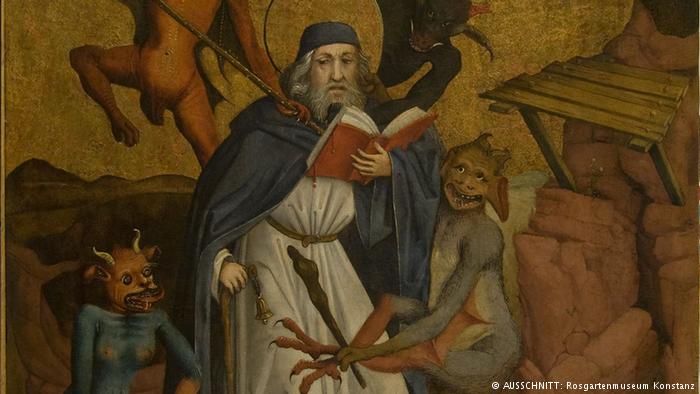
Each of the “Emperors” manifests in more specific streams, and Ziminiar’s power extends through two principal kings — Paimon and Vine.
All the Emperors act as distorted forces of the “primordial” manifestations of the mind, and whenever we observe the neglect of spiritual values for material rationality, we are, in fact, witnessing the workings of Amajmon; whenever the mind asserts itself by opposing or suppressing others, it displays the activity of Goap; whenever the mind ignores its deep desires in favor of momentary impulses, caprices and whims — it acts under Corson’s sway; and whenever the mind proclaims the “value of passivity” and mistakes balance for indifference — it is executing Ziminiar’s will.
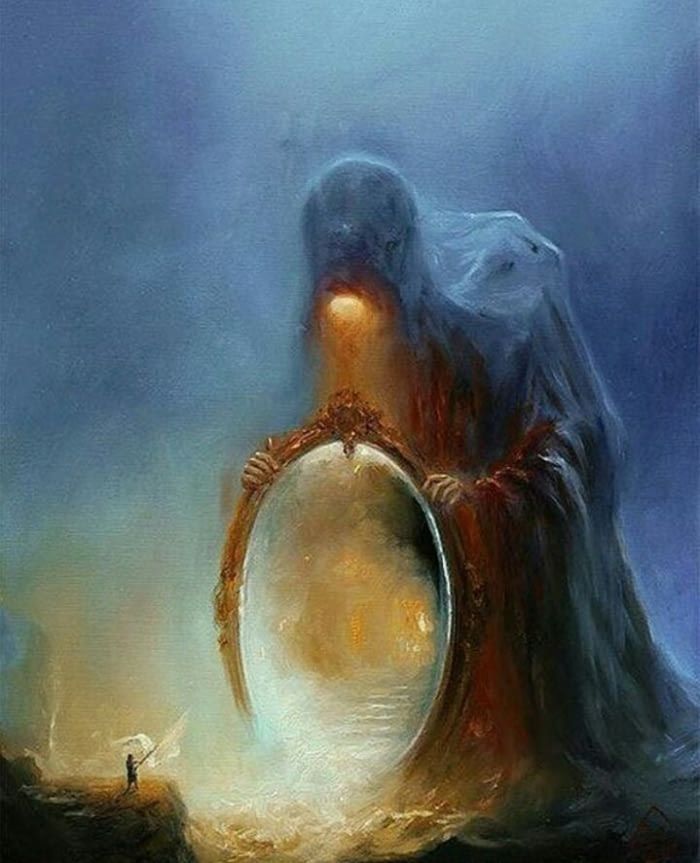
Ziminiar — the “Emperor of the North” who blocks the mind’s creative, actualizing capacity, “freezing” and paralyzing its living flow. It is his manifestations that are so widely visible in the modern world as the “wisdom of inaction”, which in practice often serves merely as a justification for laziness, asthenia and passivity. Unfortunately, very often contemporary “wisdom” is the philosophy of one who has given up. People grow tired of striving; we tire of striving and searching. We lose zest and inspiration. And then we declare that “one should not search,” that “one should just be happy,” and we hide our laziness and fatigue behind these words. But the “simple life” of one who has attained and the “happiness” of one who has surrendered are fundamentally different things. Therefore, when it seems to us that we should “sit down and rest” — we must ask ourselves — have we truly found what we were seeking? — or have we simply grown bored and given up, and admit our defeat… When we are guided by “passivity for its own sake” — we can say with certainty: we are in trouble; our minds are gripped by Ziminiar.
Two kings within Ziminiar’s sphere manifest his paralyzing influence in two areas: Paimon turns all of the mind’s activity into a “chase after trends”, after fashion, after outward tinsel and empty glitter, while Vine imprisons the mind in envy and jealousy, forcing it to poison itself, to seek not what it needs but what “others have.” Both inclinations — to seek what is fashionable and to seek what others possess — distract the mind from realizing its own impulses, its own inclinations, and gradually exhaust its creative capacities.
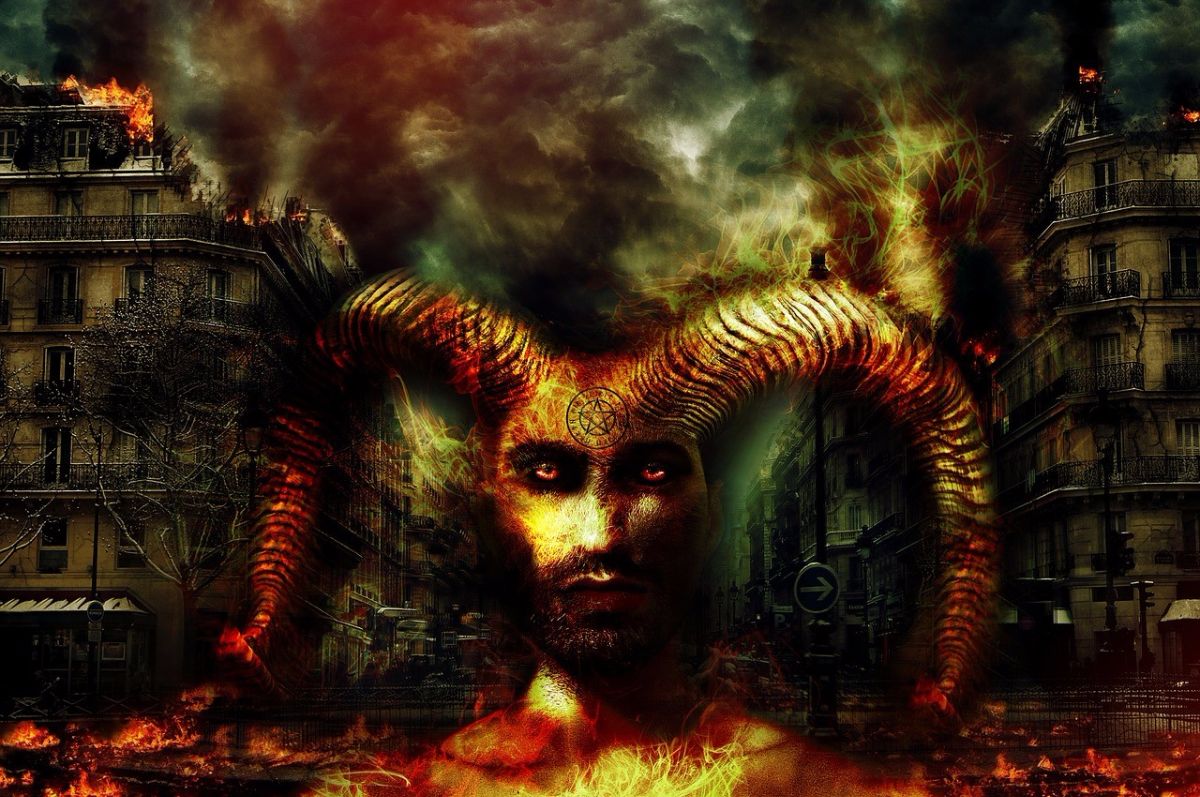
Being the “Keeper of the Gates of the Earth”, Ziminiar allows only those realizations through its gates as do not violate the passivity of this principle, thereby expressing only “firmness” lacking generative potential; his “earth”, therefore, is not fertile soil but barren, rocky ground.
For the Magus, resisting Ziminiar begins above all with recognizing the need for productive activity as an instrument for the development of the mind. Even when practicing contemplation, the pilgrim must avoid passivity and mental weakness and not mistake calm for inertia. Only when the mind is equally free from attachment, anger, and indifference, when it realizes itself through active engagement with the world, understands itself and the world as inseparable, does it reach those levels of its nature at which its freedom and actualization reach their maximum.
Question. Do you think that a being that has exhausted its resources at the moment and has not managed to restore them or is investing all resources in a specific activity, falls under the power of this Emperor? Formally, in both cases the absence of ‘strength’ and ‘energy’ will make consciousness passive. ‘Generally, temporarily’ in the first case and ‘everywhere except, always’ in the second. And let’s assume that in both cases the energy and strength were not dissipated under the influence of predators but were used ‘for the matter’.
It depends on the degree of constructiveness of the undertaking itself. A being that invests energy in some costly but constructive, i.e., consciousness-developing activity, firstly, gains authority, and thus the ability to resist distractors, and secondly, probably has a strong desire, meaning it will restore energy fairly quickly. ‘Using Strength leads to Strength’, unlike dissipating or losing.
I’m sorry, I didn’t understand. So, if we feel a loss of strength as a result of some constructive action, it will quickly replenish, and if it is a destructive action, it will be its depletion? In that case, what could be a destructive action if a person is burning with desire and believes that their actions are constructive and benefit him and the World, but still may feel weakened for a long time?
Golden words. It is precisely to avoid getting stuck in development that a magician must complicate their actions by changing interactions with those Forces that are important to them. Example: first a magician learns to feel energy, then to see, to manage… to perceive. Then the Forces pay attention to them; then it already depends on style, direction, tradition… but gradual increase in influence is needed, otherwise you’ll get stuck, stagnate, fall out of the flow, stop, or fall.
Enmerkar, please tell me, is it even possible to totally free oneself from these so-called demons? Especially while continuing to live in society? And what awaits someone who has freed themselves from all demons?
Complete liberation from distractors means achieving the degree of the Most Perfect. Principally it is of course possible and desirable, but how much time it will take depends on personal efforts.
As far as I know, the first Archdemons are the reflected ideas of the Creator in emptiness. They are a controlling structure of demons. They are independent of the Forces and Gods. If we talk about independence, the question of the source of consciousness arises. What expresses the initial ‘true’, pure consciousness, and where is its source?