
Inner Goetia
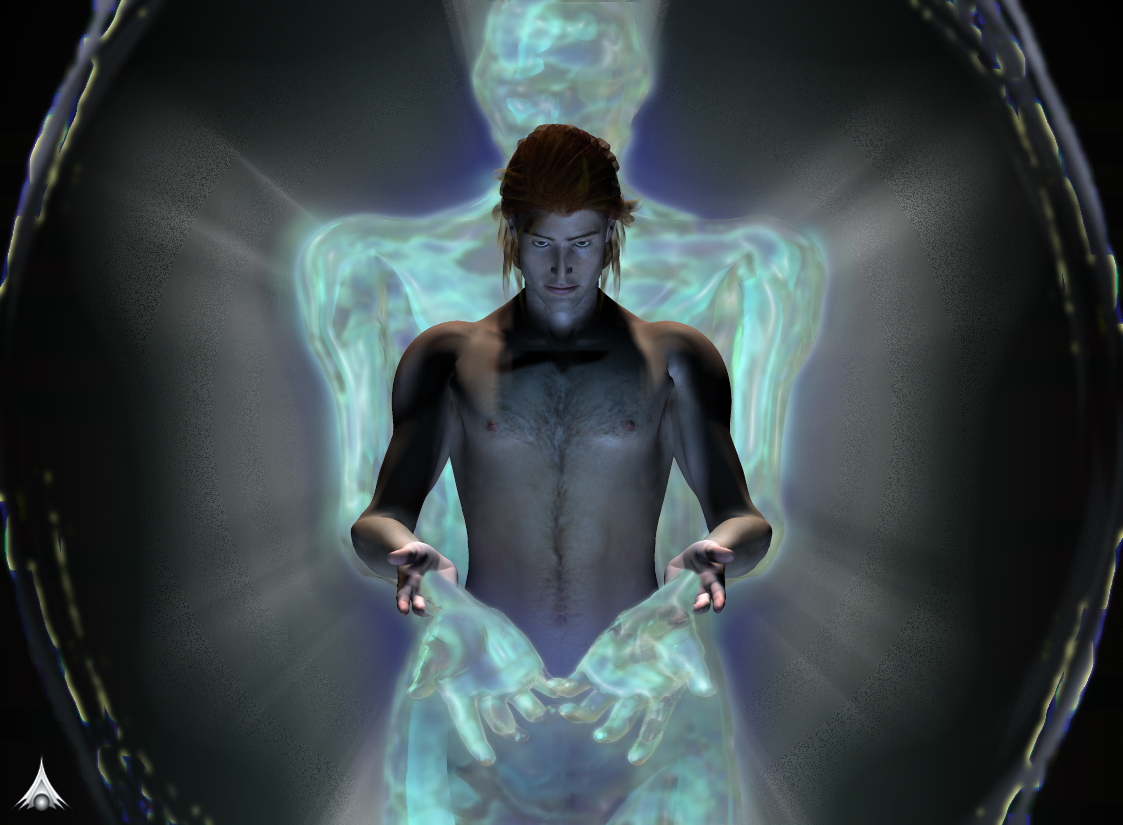
For modern magi, raised on “angelic revelations” and “teachings of the light,” the ancient art of surviving encounters with Grey Spirits or even Black Spirits often seems old-fashioned or anachronistic.
Meanwhile, any study of one’s mind, and especially its shadowed areas, confronts it with destructive elements within it, capable of harming it or even utterly destroying the psychocosmos.
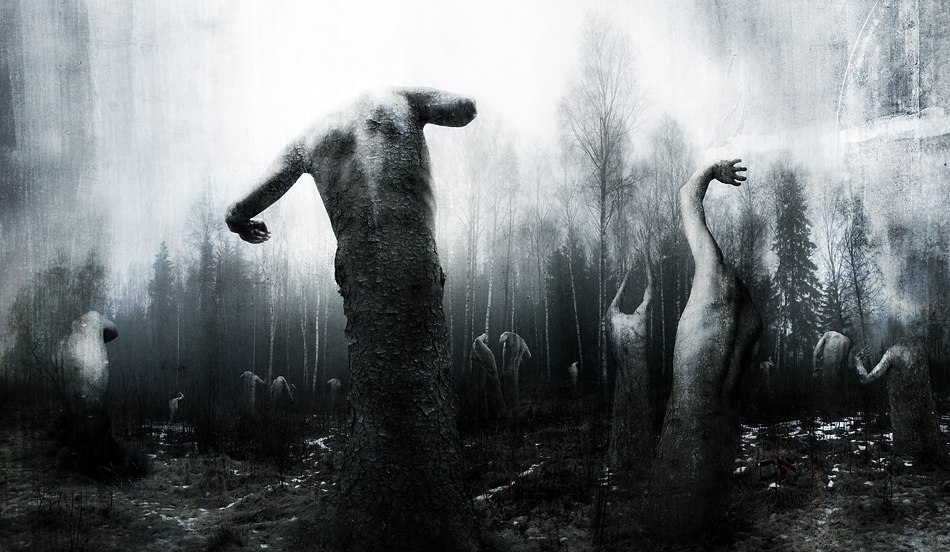
We have already said that, whether or not a Magus is interested in “demons,” at a certain stage of his development those “demons” inevitably begin to take an interest in him; then he faces a choice — to ignore or underestimate that influence and be destroyed or ‘consumed,’ or try to progress by resisting it. The sad truth is that most of those who have walked any appreciable way and yet deny the dangers of the “dark layers” of the mind turn out, upon closer inspection, to be deeply enslaved by predators and parasites of the psychocosmos.
In any case, if a magus is sufficiently aware and honest to stand face to face with “the darkness” — whatever we take it to be, external forces or internal pathologies of the mind — he will need skills to resist this destruction effectively (or pharmacological psychocorrection methods).
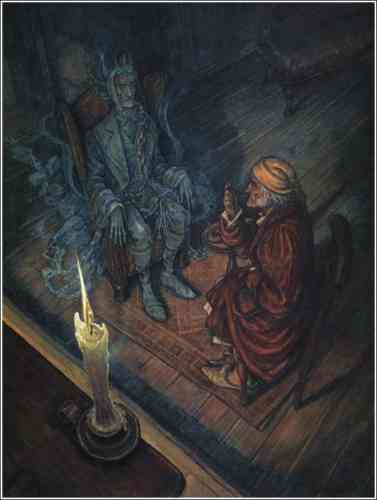
“Classical” goetic practice, of course, is a very effective training system — a way of “building muscle” for such encounters — yet its methods are fairly laborious, costly, and not always accessible. Nevertheless, goetic skills are necessary for any substantial transformation of the mind, even when dealing with the “gentle” conditions of the Mysteries or ” spiritual alchemy.”
In fact, if all Wayfarers mastered the art of “freeing themselves from the hooks of demons,” magical consciousness would advance faster and far more successfully toward its full realization. And the entire system of a magus’s discipline, all training in his self-control techniques, is, in a certain sense, such an “inner goetia.”
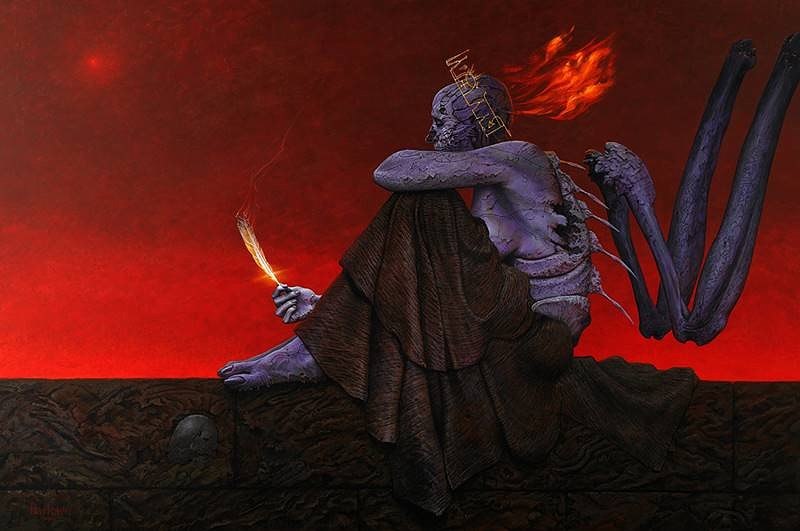
A frivolous attitude toward the destructive forces of the mind, of course, primarily serves those forces themselves, since it deprives the active self of means to resist them. The gloomy spirit of the ancient Grimoires, their ornate language, deters many wayfarers (and attracts gothic-minded youth). Nevertheless, newer attempts to systematize destructive forces — and thus to map the ways of resisting them — are far less effective than the finely wrought approaches of the “Keys of Solomon” and a number of comparable Grimoires.
Goetia — not as a specific work but as a general method — is a tried and tested system that does not reduce to long tedious procedures but to concrete and practical skills:
- the ability to assert oneself consistently and unequivocally,
- inner honesty coupled with a system of checks,
- the capacity to ask direct questions and receive direct answers.
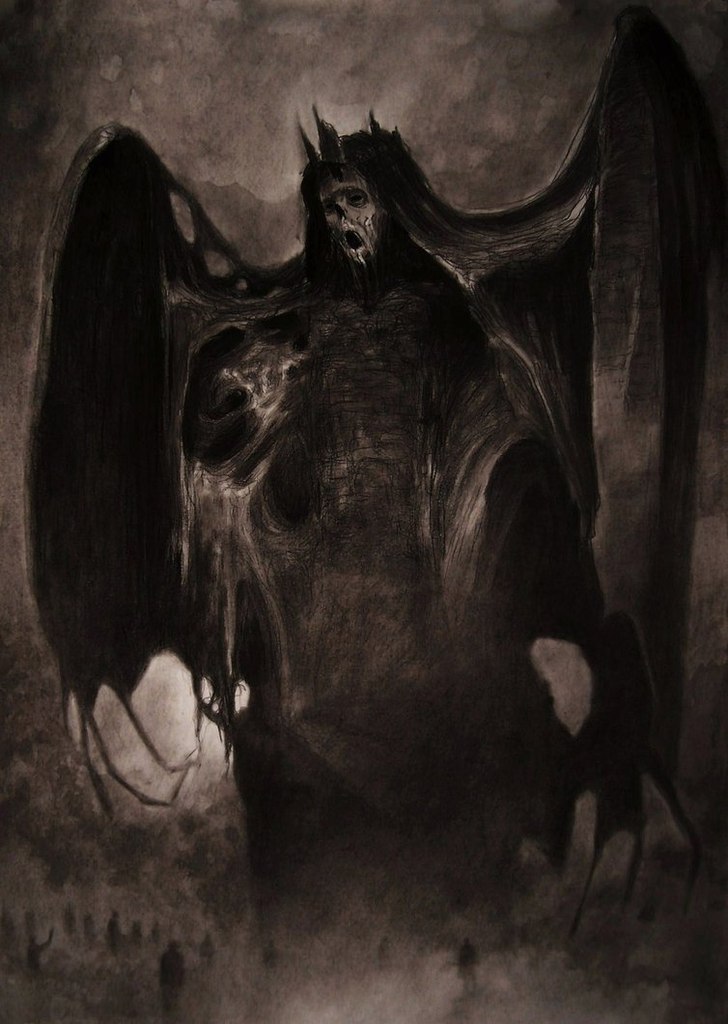
Do not suppose that learning goetia consists only of memorizing spells and hard-to-pronounce names; it is above all training in a particular way of acting, a way of separating oneself from destructive elements, a method of leaving their sphere of influence, without ignoring the very fact of their existence.
It can be said that any successful magus is goetic, even if the Lemegeton is not their reference book. The very fact of successful progress along the Way, the very fact of overcoming destructive forces and distortions of perception, is evidence of those approaches and methods on which evocation is founded. The question is only how a magus learns these approaches — by an intuitive ‘trial-and-error’ method or within a systematic framework.

For example, practices similar to Castaneda’s stalking, aimed specifically at tracking and controlling factors that hinder freedom – are they in some way also close to this ‘inner goetia’? Or did you mean something fundamentally different here?
Any approaches aimed at identifying, defining, and confronting destructive elements can, to some extent, be considered ‘goetic’. The clearer and more structured such a practice is, the more it is aimed at direct questioning and identification of the distractor, the more effective it is. At the same time, of course, usually the best results are achieved when this practice fits into a cohesive system of an individual’s Path, harmoniously combining with its other elements.
A question has arisen: the concepts of the pure and the reflection (shadow) in the authenticity of manifestation? How to determine the nature of action in relation to oneself? How to determine what is unconditioned and pure in nature of the Force and where is the boundary of concepts in relation to phenomena?
Enmerkar, what do you think about psychoanalysis? Can it replace goetic practice?
What matters is effectiveness and productivity. It does not matter what you call the action that helps achieve genuine internal harmony.
Both the article and the answers to the questions are strong. Thank you, Enmerkar.