
Mysteries and Mystagogues
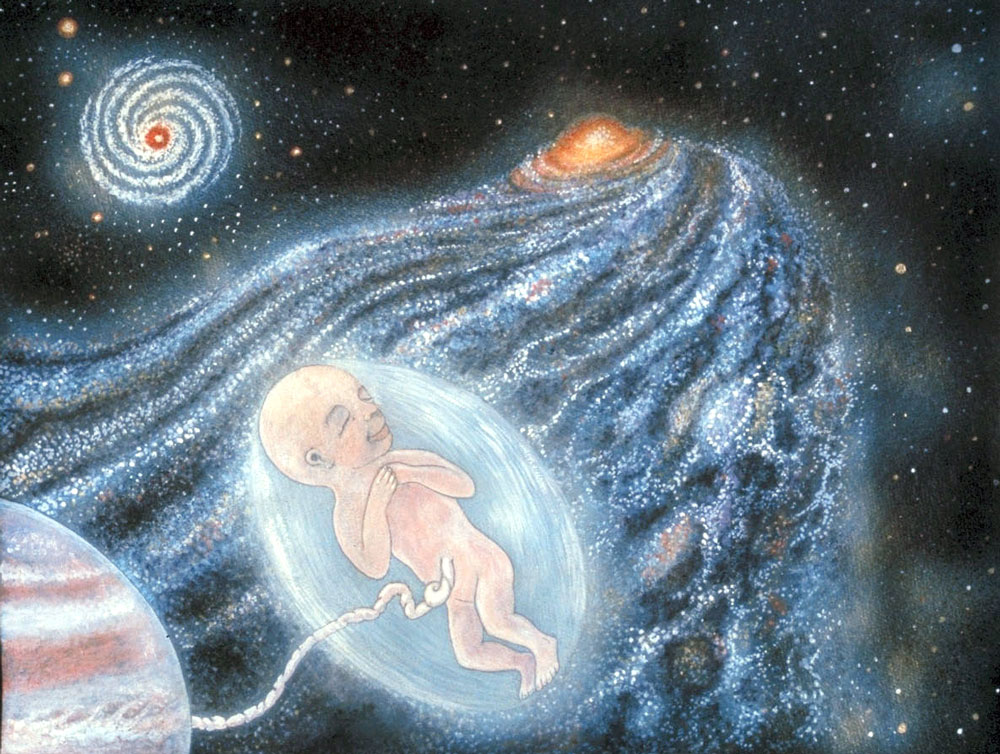
Although the mind’s level of development, traditionally called the “degree of Initiation“, is an entirely objective characteristic — independent of public recognition or ritual formalization — the Magi have long observed that a certain set of symbolic — that is, ritual — actions can accelerate, indeed catalyze, the transition from a lower state of mind to a higher one (of course, only when the internal prerequisites for such a transition are already in place).
In other words, the development of the mind does not always proceed gradually; it is largely discontinuous, and a long period of inner work carried out without obvious change can lead to a sudden widening of horizons — this is called a a rise in the degree of Initiation. Nevertheless, even when the mind, as a result of inner work, has already accumulated sufficient capacity for transcendence, the leap itself may not occur for a long time, requiring an external push, an initiatory influence that destabilizes the state poised for transition, which, without that push, may nevertheless remain in equilibrium for a long time.
Moreover, as mentioned, the mind often needs an external influence, a direct introduction to its true nature, since it may lack access to the resources that would allow it to step beyond the limits imposed by the constraints of embodiment and move from a state of diffuse, unproductive existence to one of development and expansion.
In this respect the importance of the Mysteries as a means to accelerate and ease the transition cannot be overestimated, and the entire history of Magic confirms this understanding.
Even in the most ancient times the Magi observed that a particular set of symbolic and energetically significant actions could not only lessen the mind’s attachment to its habitual, outdated level of awareness, but also provide the necessary resource, an anchor point, for the transition to a new state.
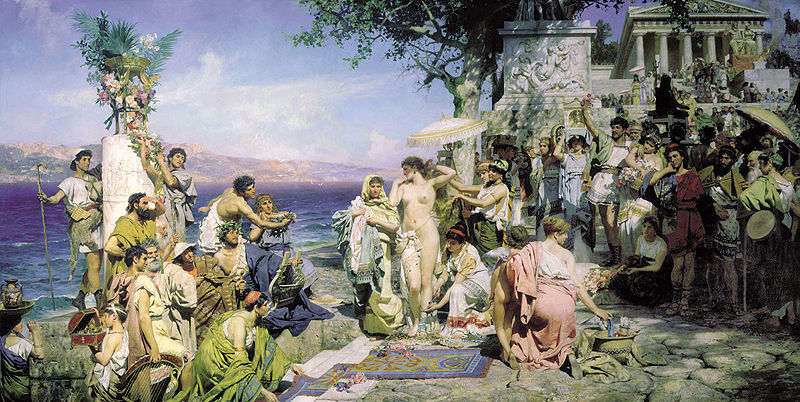
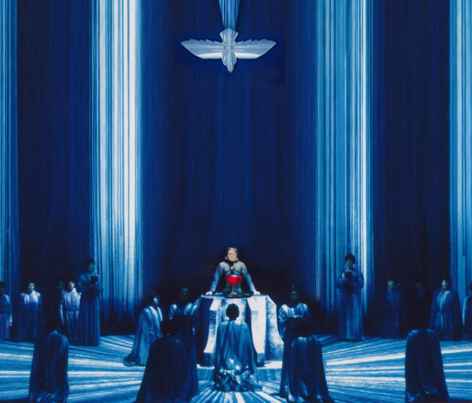
From the Elephantine and Eleusinian mysteries, through the Slavic Kol and the Scandinavian Utiset, to the Rituals of the Golden Dawn, the mystery tradition has lost neither its relevance nor its ceremonial practices.
At the same time, particular importance applies not only to the Mystery Rite itself but also to proper guidance in conducting that Rite.
A striking example that illustrates this last point is the magic of the modern era, in particular the initiatory tradition of the Golden Dawn.
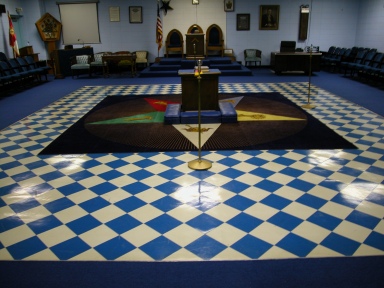
One may debate at length the significance and effectiveness of the system of magick developed by S. L. Mathers, as well as his personal character as a magus; yet what remains beyond doubt is the initiatory, mystery value of the Neophyte Ritual (and the subsequent degrees), and Mathers’ role as an outstanding Mystagogue of the Western system of initiations.
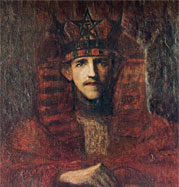
Even those who doubted Mathers’ authority as a Magus could not ignore his talent as a mystagogue, a fact attested by the resilience of this tradition, which has weathered every storm and upheaval and continues to exist today.
It is worth noting that we often encounter cases in which the talent of a Mystagogue is present in someone who has not attained high levels of realized power or clarity in expressing magical concepts, and conversely — not every magus can conduct effective mysteries. In other words, the talent of a Mystagogue is a particular magical gift that may or may not coincide with other gifts. For example, Crowley, who was undoubtedly a great magus, achieved rather modest success in initiatory work.
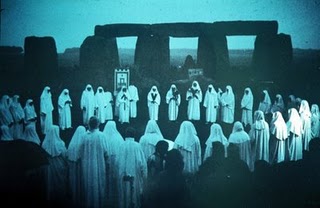
Thus, mystery rites, properly organized and conducted under the guidance of a competent, suitable mystagogue for their participants — whatever scheme they follow, whether the Neophyte Ritual or the Kolo Velesa — are a crucial element that “catalyzes” the movement of the mind, enabling it to break through the boundaries of the state it has already traversed and accelerating attainment of those levels whose unaided path might take more than a single life even when all necessary prerequisites are present.
Is a Mystagogue from among the people always necessary to undergo the Mysteries? Is it possible to go through the Mysteries “independently”? (in quotes, since the Transitions are still not independent and are directed by the Hierophants)
“No, of course, it’s not mandatory. Everyone has their own path, and for some, it’s easier to go through the Mystery with a mystagogue, for others with Hierophants, and for some, completely on their own.”
What mysteries can potentially be organized and conducted independently, alone, and what will be needed for that?
Those mysteries, the structure and necessity of which you recognize independently. Specific names and sequences of actions are relevant within the frameworks of any Traditions, schools, or currents when you have a relationship with them and are developing according to the proposed script.
Can I please have at least a list of names so that I know what to google and choose?
Crowley was indeed a great magician…. and his books confirm this.
By simplicity, I always thought that confirmation consists of deeds (results), not words. Can these collections of words be considered a result?