
The Madness of Egregores
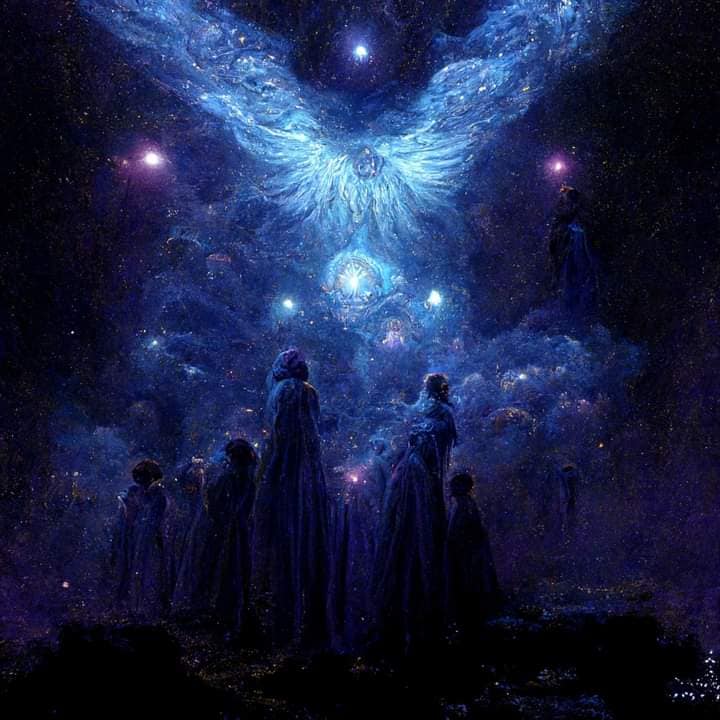
Being quasi-sentient formations, egregores, as we have already discussed, possess a distinct form of psyche; consequently they not only have their own personality traits, but also their own destructors and can undergo a range of fluctuations, up to the loss of sanity and outright “madness.”
Although we usually assume that the mind should manifest in a structured, rational way, in fact most forms of manifestation of mind are chaotic — insanely.
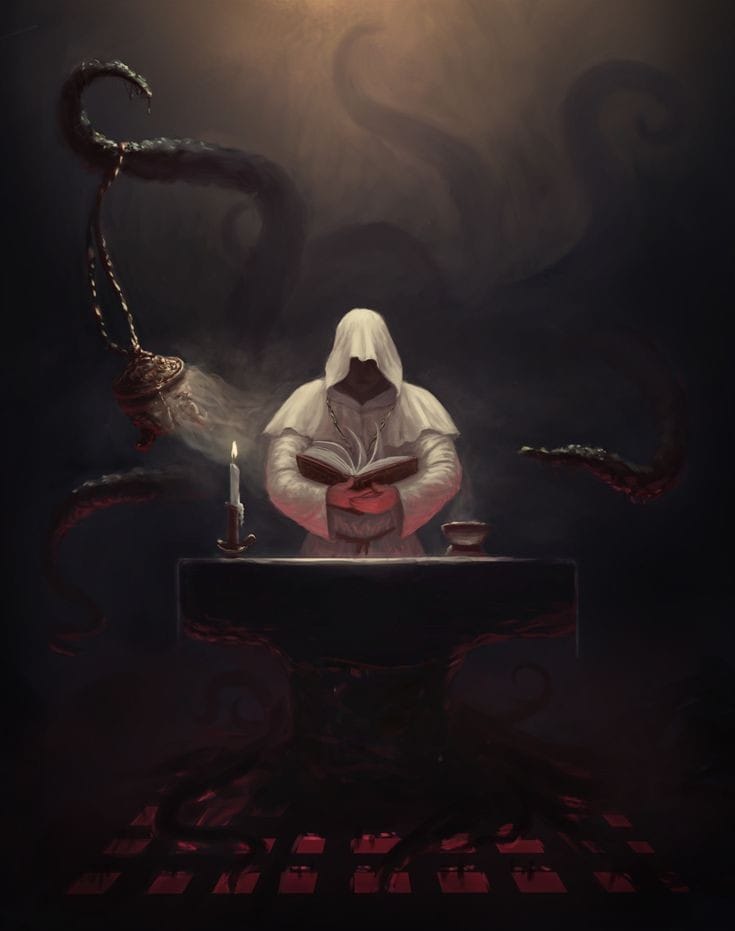
At the same time, since every embodied stream of mind, every psychic space is a microcosm, its infernal depths are usually kept under the control of liminal forces and therefore do not impose themselves on the entire stream. In cases when the chaotic depths of mind overpower its ordering forces, madness seizes larger or smaller parts of psychic space, producing mad people, mad gods, or mad spirits.
Egregores, like other “artificial” bearers of consciousness, do not possess the robust defenses of established “natural” streams of mind that have experienced many incarnations across different worlds; therefore madness is much more prevalent among them. Egregores go mad far more easily and more often than individuals, spreading their madness to participants. For the protection, some egregores are guarded by special entities of divine or ministering nature, yet even their influence is sometimes insufficient to withstand the destructive tendencies of collectives.
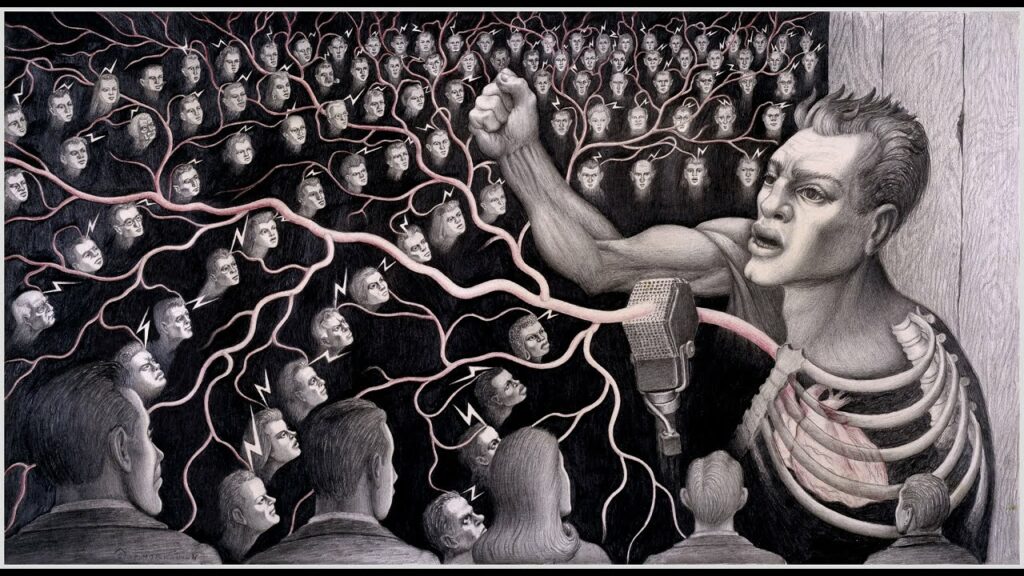
Indeed, a simple analysis of collective behavior shows that it is always less rational, less justified, and less expedient than that of individual beings. By joining a collective, any being becomes affected by that vortex’s properties, including its madness. It is well known that perfectly reasonable people, when caught up in a crowd, are capable of unimaginably horrible acts impossible to them outside that collective. Moreover, they can act against their own interests, as the famous Abilene paradox demonstrates. One can confidently assert that any egregore falls under Belial’s influence, causing de-individuation and blurring minds’ structures, and in some cases the consciousness-corroding effect of collectives becomes nothing short of catastrophic.
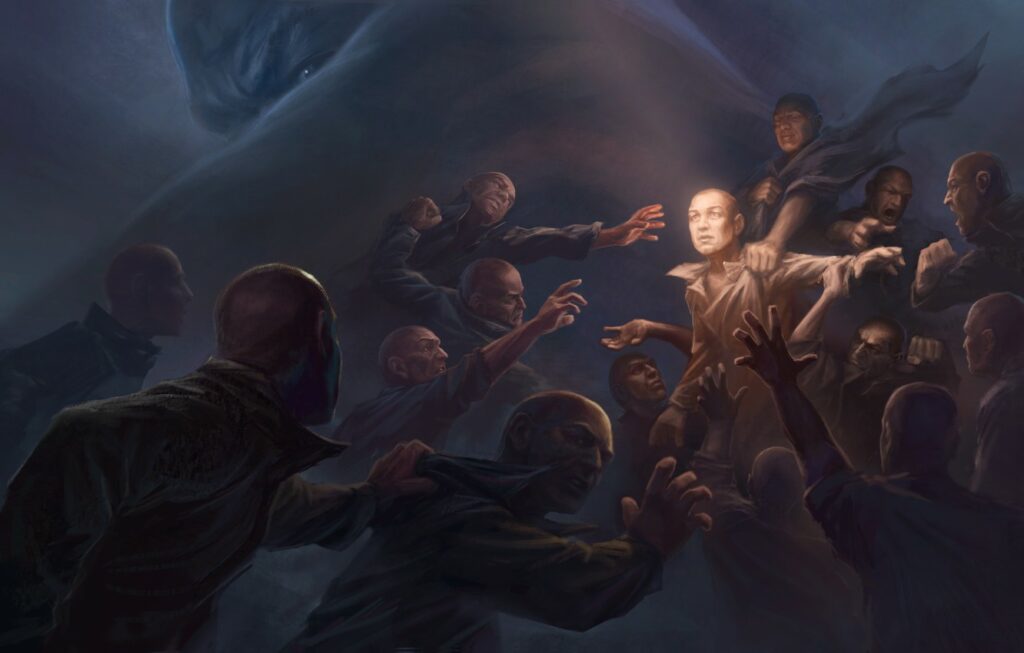
When entire countries go mad, when the church and the nation lose their sanity, the cause must be sought precisely in their shared vortex structures, the “collective mind” that pours chaos into the masses. Sometimes an egregore “goes insane” under the influence of some deranged (or possessed) leader who has reached its “control panel,” and sometimes the collectivity is chaotic “from within,” generating madness in the depths of the societal vortex. If in the first case replacing the leader can bring substantial recovery to the collective, in the second case healing, if possible at all, is extremely laborious and prolonged. It is also clear that the increasing chaos in an egregore’s collective mind is always accompanied by being filled with destructive entities and by significant energy outflow into the inferno.

Whoever is behind an egregore’s madness — its own constituents, leaders, demons or Rephaim — the result is always the same: degradation of the egregore’s mind, its members, and huge energy losses.
In such situations the only way out for both the individual mind and the community is an exit from the egregore, a severing of ties with it; and if one wishes to help the collectivity, this can be done only from outside, since when vortex structures join, the stronger always absorbs the weaker — and therefore attempts to “heal an egregore from within” are most often doomed to failure and merely strengthen the madness. Only when there is a powerful structuring agent outside the egregore can it influence the internal vortex characteristics of the collectivity, gradually “re-tuning” it, and only then, when enough of that “induced” intelligence has accumulated inside the vortex, supported by externally maintained “points of resistance,” is its full reconfiguration with the casting off of destructors and the healing of dystrophied parts possible.

Thus, the only way back into a “healthy collective” is first to exit the sick one (mentally, emotionally or physically). At the same time, which contribution to the healing of society is more significant — the “points of influence” remaining within it, the reflectors, or the inducers of change who have left it — the projectors — is a big question, since the energy for reconfiguring the vortex is provided precisely by external sources, and its recipients are the “seeds of health” within the sick organism ready for reconfiguration.
“Healing” an egregore is always its complete rebirth: the destruction of the old vortex and the creation of a new one on the same basis but with different input parameters. Of course, there are no guarantees that this new vortex will not also go mad, either destroying its members or being destroyed itself.

Thank you. It felt exactly the same… about the madness of crowds.