
Artificial Mind
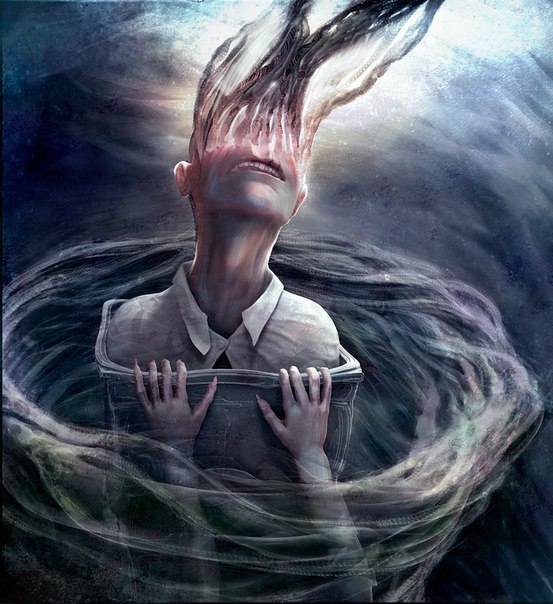
Magical influence, in which the principle of desire predominates, is achieved by forming vortices — carriers of creative will, woven from the fabric of that desire.
The desire to live in any embodied being lies at the foundation of the existence of an individual vortex; the desire for socialization underlies the formation of collective vortices; and the desire of the Great Spirit to know itself in the sum of its aspects constitutes the fabric of the World Vortex.
Each vortex is formed around the axis of a creative volitional impulse and exists so long as that impulse sustains it.
Therefore, alongside such large-scale vortices as Baphomet, egregores, or the Body of Human Desires, active participants in the world process are relatively small vortices, whose large numbers help maintain the integrity of the cosmos.
We have discussed this aspect of interactions repeatedly; we will note here only that the constant exchange of vortices — interacting with, reinforcing, weakening, or annihilating one another — is essential to maintain the unity of the manifested world, and this exchange, in fact, is the force opposing Nahash — the force of cosmic repulsion.
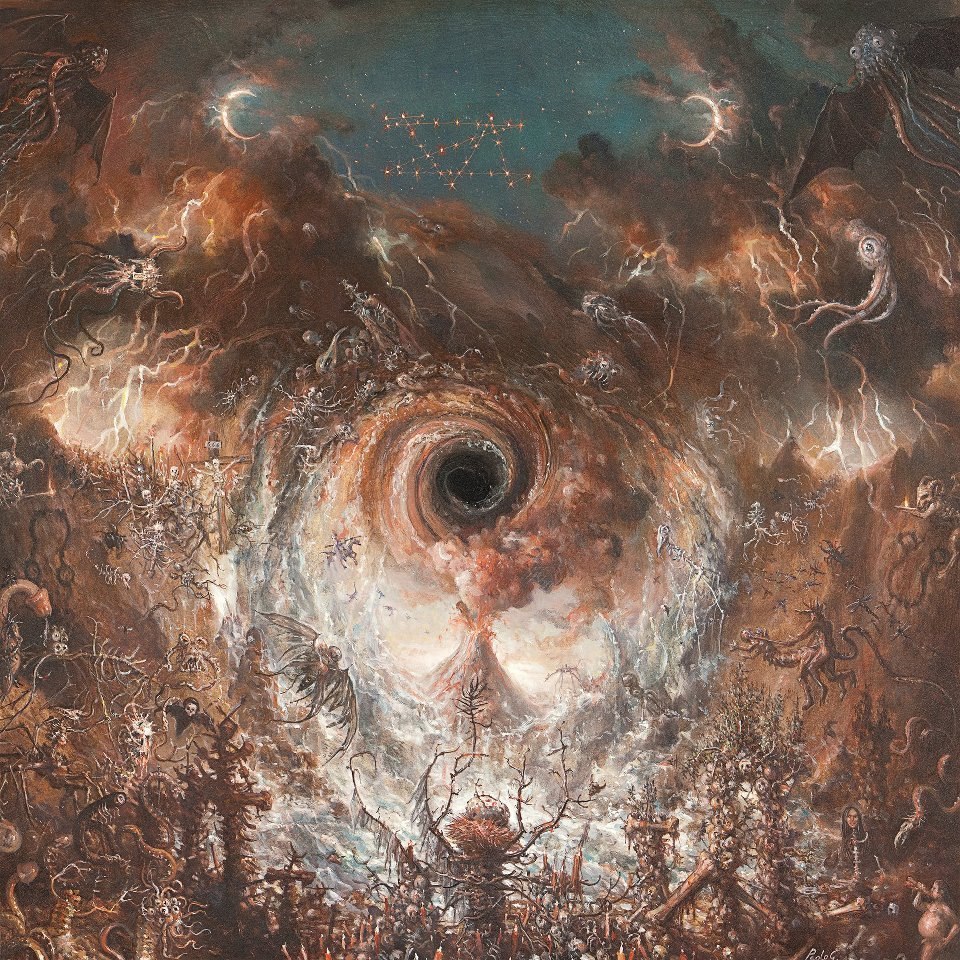
At the same time, as is usually the case, the very process of generating “temporary” vortices has both a positive and a negative side.
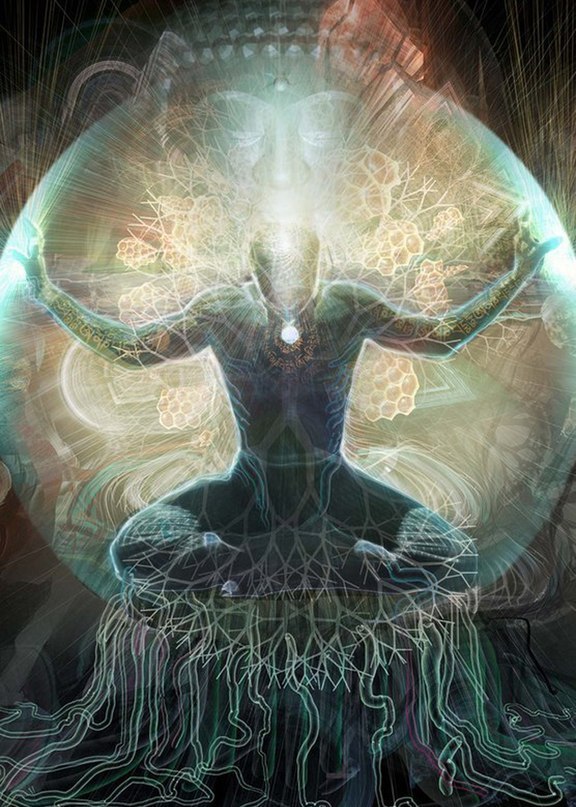
On the one hand, by refusing active, desire-filled interaction with surrounding beings — as Buddhist monks do, for example (especially of the Zen school) — a person contributes to the cosmos’s return to a “pre-manifest” state, failing to sustain the world of concrete forms, which is precisely what these currents aim for. The abolition of Telesma, which is effectively the aim of all practices of the “stopping of the flow of mind,” leads to the cessation of differentiation in the cosmos and a return to its total state.
The Western mindset, oriented not toward merging but toward the integration of consciousness, seeks not to return the individual flow of mind to its world-ocean but to achieve the pleromal unity of such flows; therefore it is not inclined to renounce the exchange of vortices, but must instead order and harmonize that exchange.
Therefore the Magus does not avoid realizing desires, but strives to make that realization as effective as possible.
So, we see that any volitional act accompanied by a strong desire for fulfillment leads to the formation of a vortex in the world.
Since this vortex aims to bring reality into accord with its creator’s will, it seeks to embed itself in the fabric of the cosmos (that is, to interact with other vortices) in such a way as to best further the intended realization.
And the whole question of effectiveness comes down to how successfully the point of application of a given vortex is chosen, how stable that vortex is, and what attenuating influences it may encounter on its way. A large body of magical literature is devoted to the question of forming stable and effective vortices.
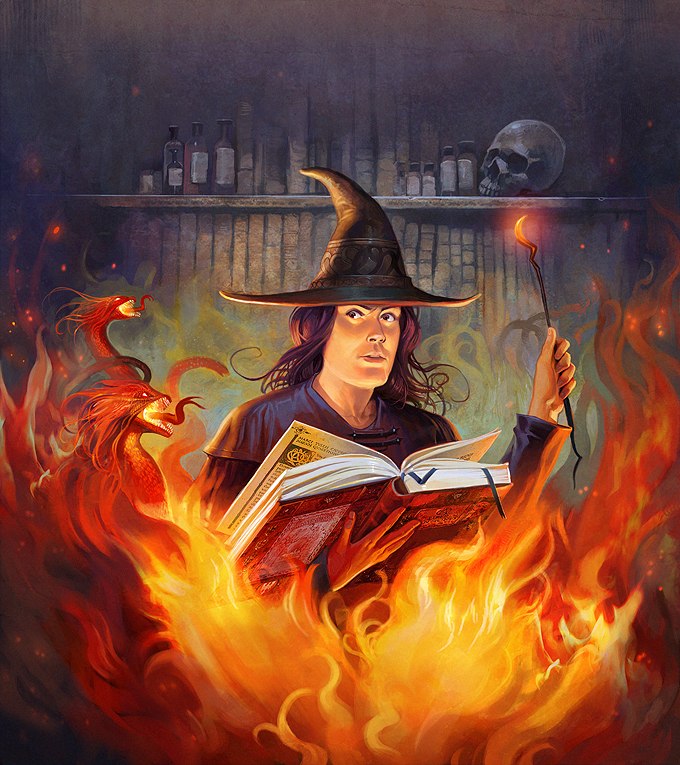
However, one more point, often overlooked, is that, being formed according to the tetragrammatic principle, any vortex is a holistic system capable of self-perception — that is, in fact, a sentient entity.
Thus, the success of the formation and existence of a vortex for the Magus is determined by three factors: 1) its stability and correct orientation; 2) ensuring its annihilation if it fails to achieve the goal or its return; and 3) preventing a conflict between the vortex’s quasi-mind and the Magus’s mind.
And while experienced Magi pay close attention to the process of creating a vortex and carefully defend against backlash, they often do not attend to their creation’s will.
And they end up in the familiar scenario from various films and books about uprisings of machines and cyborgs.
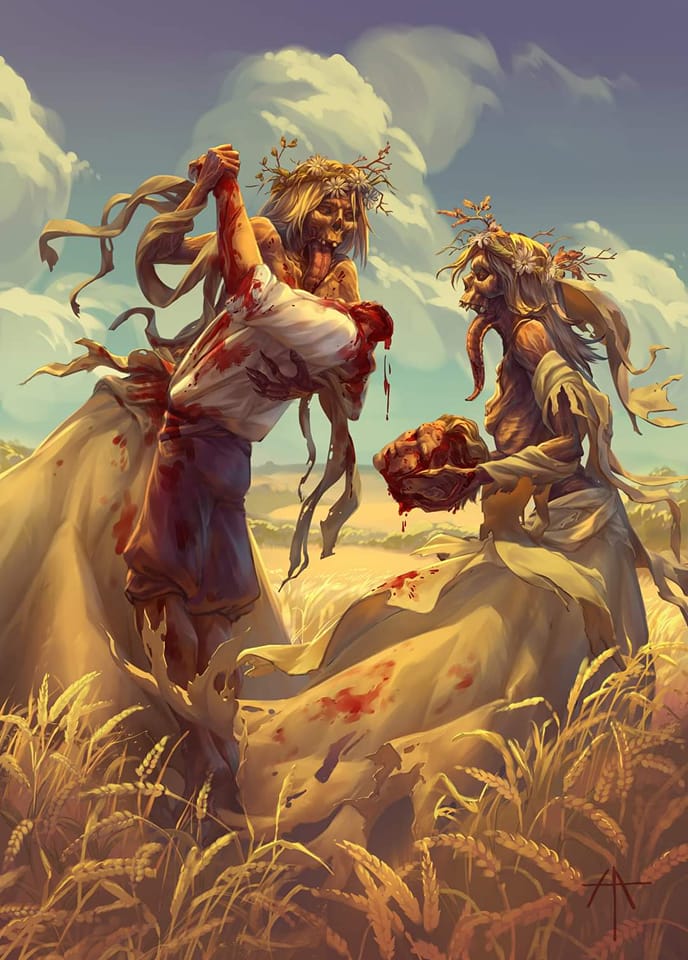
A simple situation: a successful Magus has created an effective vortex intended, for example, to attract business success to him. The Magus took precautions, protecting himself from backlash so as not to become, instead of a recipient, its donor — for example by substitution. The vortex took effect, the deal was successful, and the cash flow was directed to the Magus. In theory, the vortex’s existence should have ended there. Imagine that the Magus was so experienced that he even equipped the vortex with a self-destruction system that should activate after the result is achieved. And it did activate. But the Magus did not take into account the vortex’s own mind. The vortex should be destroyed, but it, of course, does not want to do that. Woven from the Magus’s desire and therefore akin to that Magus’s own energy, the vortex returns to him and begins to absorb the Magus’s energy to prevent its own death. What does the Magus feel then? — He becomes dependent on that achievement. The larva implants in him a need for ever-new streams of money, successful deals, since their realization sustains the life of the parasite. And the Magus gradually turns into a food source for the creature he created: his energy flows to the larva, and his level of free energy falls. It turns out that the Magus becomes possessed by his own creation. Enthralled by “transurfing” reality, the Magus does not notice how that reality robs him of freedom. And such situations, unfortunately, are fairly common.
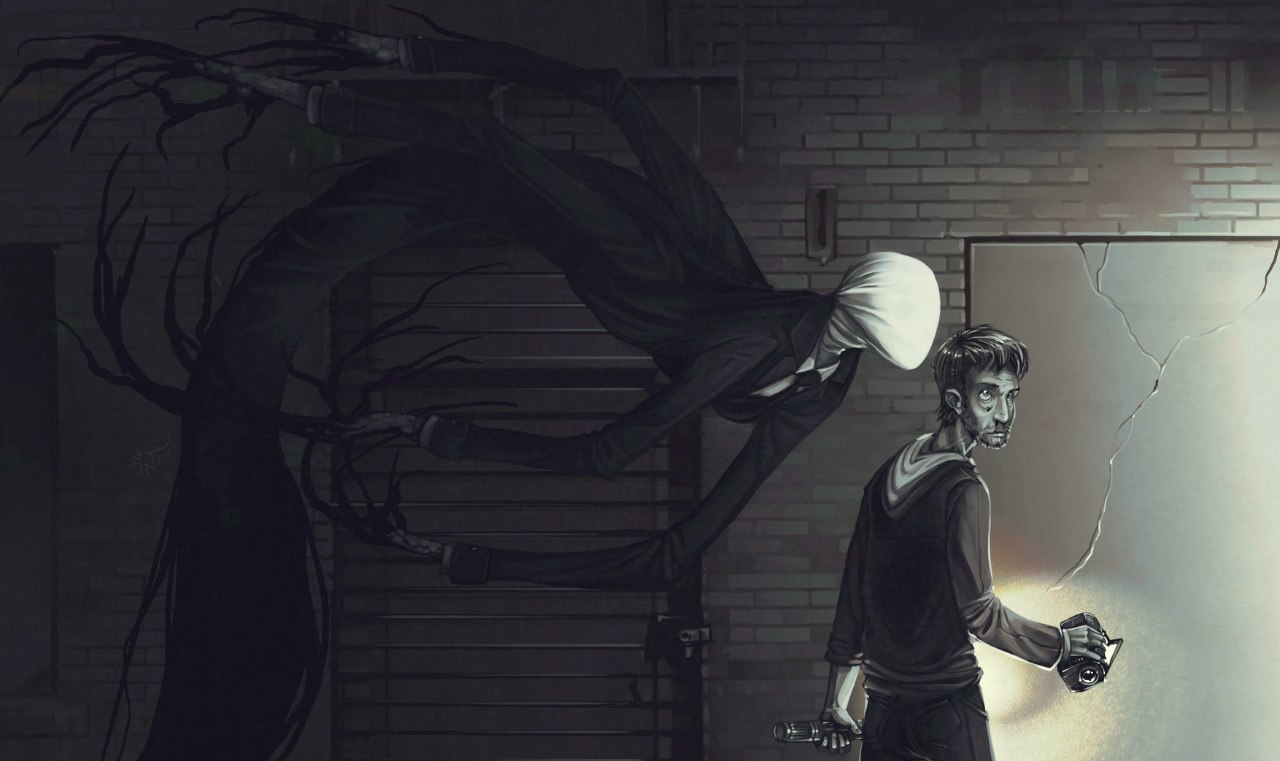
In order to avoid such mistakes, the Magus must construct his vortex so as to control the vortex’s existence at every stage.
It is important not only to create a successful vortex but also to annihilate it in time and to prevent backfire. It is important to not only “let go” of a situation in time; it is important to assume responsibility for it. Only by controlling himself, his manifestations, and achievements, can the Magus not only achieve maximum effectiveness in his creative activity but also preserve as much freedom as possible.
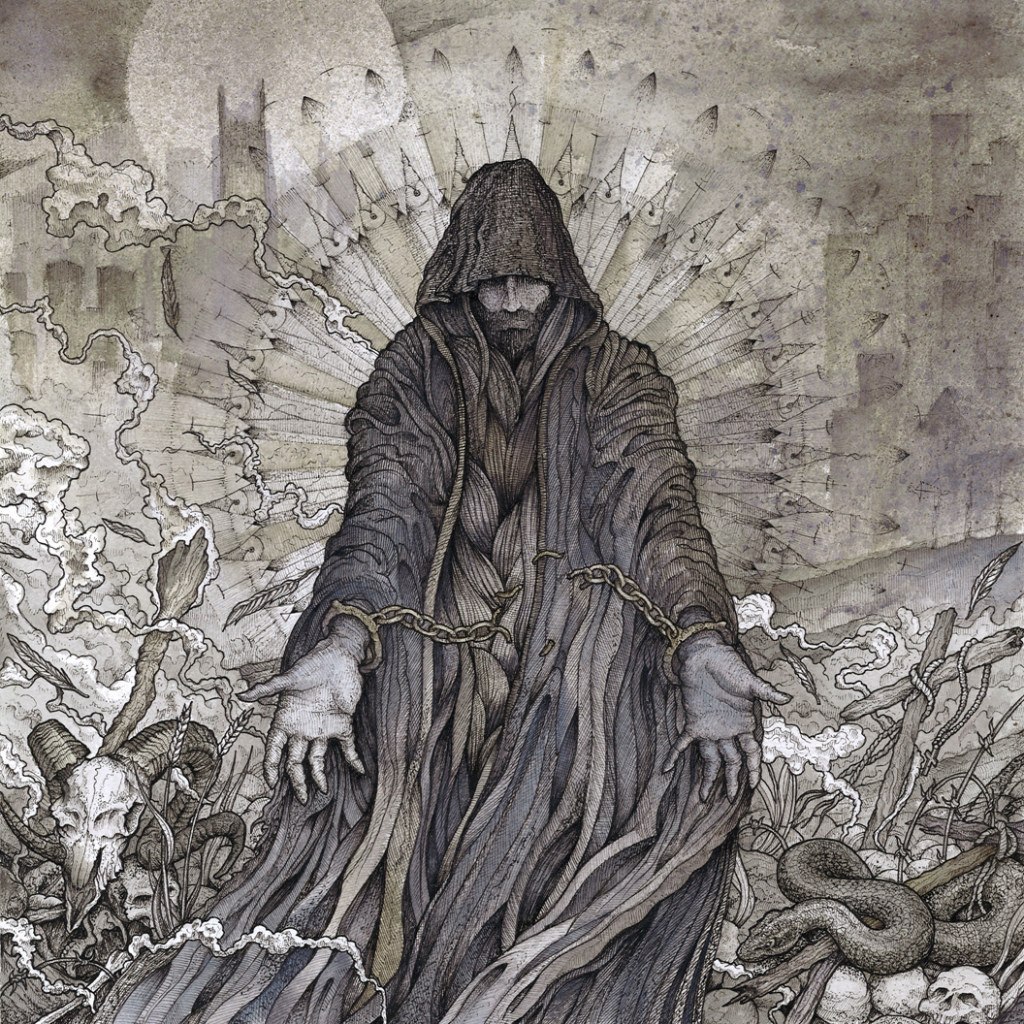
Good time. If possible, could you elaborate on methods of creation and methods of annihilation…
Great post! Who would teach this – control of intentions :-)?
It is obvious that to create a vortex, it is not necessary to resort to any rituals (in the narrow sense of that term). A vortex can be created if, say, you do something daily, or think in a certain way every day. If you cultivate within yourself, say, a gloomy and depressed state, then, of course, while it is not a fact that you will soon get cancer, or become an alcoholic, or commit suicide, or end up in a mental hospital, but you will certainly enter the top three of the unhappiest people in your area. In the East, they say: ‘Thought gives birth to emotions.’ Also that the problem exists to the extent that we think about it as a problem. One can change their life partner, work and place of residence seeing them as sources of their problem. Ultimately, arrive at the conclusion that it’s good where we are not. After all, it seems that attitude towards the problem as a problem is also a kind of vortex or entity that clings to its own existence; and if it has been fed and has grown for years, then whatever the external situation is, it will find a loophole. It will make its ‘master’ think of it as a problem, thereby confirming its existence. Things like watching series or playing computer games can also create vortices. Moreover, they have certain realizational power. It could have been a mere coincidence (although they say, there’s no such thing as coincidence), but when I was engaged in science, I got hooked on the game ‘Diablo’ and often played during work hours. When my immediate supervisor got sick with some kind of flu, I dedicated myself to this activity throughout the entire workday. But then, one day, she came to work. She arrived later than usual. So, in the morning, I thought she wouldn’t come, and therefore, I was fully engaged in fighting various evils in dungeons, only breaking to make tea. So, when she suddenly came, I felt upset: ‘Here it comes, brought by the light!…’ She sat in front of the computer on the very chair I had occupied about ten minutes prior – and within a few minutes, she started feeling so unwell that she fainted, and we had to call doctors who said: ‘Hungry fainting’ (!). After this incident, she went on sick leave again for a long time (it seems they even admitted her to the central hospital with the diagnosis of ‘vegetovascular dystonia’ or something like that). And when she had become unwell, I had a clear idea in my head – the game took on the character of a phantom. I had become so absorbed that I was not playing the game, but it was playing with me. And then there arose an obstacle hindering the game from playing with me sufficiently, which the game swiftly eliminated. In my imagination arose the picture that all that evil with which I was battling had fallen upon the unfortunate victim, already weakened by sickness. Perhaps it happened that way. But, in any case, I eventually got off that game – simply switching to something else.
Indeed, one can speak of the emergence of a vortex each time there is an engrossment in something (if not obsession) – and this ‘something’ can be anything: hunting, fishing, mushrooms, football, hockey, ‘Formula-1’, horse racing, poker, preference, shopping, etc. What is bad about it? The main thing is that you begin to spend your most precious resource (as it is truly irreplaceable) – time. You start spending significantly more time on certain deeds than they truly deserve.
But it all starts with paying attention to this, why does one not get absorbed by this while another does? Because the inner magnet of one is stronger than the external magnets around, while for another, the opposite is true… One has a strong will, while the other is weak-willed…
Pleroma unity forever! =)
In magical operations, one can take advantage of already existing vortices – for example, creating a talisman that already exists. In this case, you are simply tapping into a ready-made vortex for yourself and your needs (for example, finding a talisman in ‘The Key of Solomon’ for acquiring wealth, properly crafting it, and sanctifying it). In this case, the question is not so much about annihilation, but about disconnecting the vortex from yourself. In such situations, I destroy the talisman (for example, using fire) while reciting such a formula: ‘Forces associated with this talisman, now I release you! Return to your source! Go peacefully, causing no harm to anyone! Be ready to be called upon by me again, and may peace and agreement remain between us, and may Heaven’s blessing abide upon you!’ If we are speaking about talismans of another kind – those that bear a sigil crafted personally, the source of which is one’s own Subconscious, then here is precisely the case when everything that is written in this article becomes relevant.
One of the features of creating certain vortices is that to implement the desires embedded in them, people, or even some of the magicians are used. In this case, the situation with the vortex becomes even more complicated, as besides the consciousness of the magician and the vortex’s consciousness, the consciousness of people intervenes in the process. And these people’s consciousness, which are influenced by the vortex’s consciousness, affect the energy losses of the magician and their attraction by the exhausted vortex – like a large pendulum. The gaps in the magician’s consciousness, which compel them to ‘feed’ the spent vortex, have a Goetic nature and are analogs of demons. An important aspect for the disembodiment of the vortex is impeccability and strict adherence to the set goal. The ability to embody desire as a RESULT, rather than as an eternal process with no beginning or end, is also important. Materializing a vortex as an object or item usually also grants it the necessary stability, completeness, and ends the necessity to feed it with energy. Inhumanity, understood as the absence of human weaknesses in the magician’s consciousness, contributes to decisiveness in severing ties with the exhausted vortex and the people involved in the vortex, in the context in which they are tied to it, and subsequently assures confidence in the necessity for the disembodiment of the exhausted vortex. The body of desires is an important source of youth and power, therefore it needs regular training, improvement, and growth.
Doctor, inhumanity – no, ruthlessness – yes. Ruthlessness to oneself helps a magician to be impeccable (to minimize energy scattering), to put a period knowing that there is no return. P.S. Several images expressed by the same word – concept generate vagueness and lack of clarity.
There is the path of the magician and there is the path of a human. The path of a human is the ACCEPTANCE of human distractors and denial of awareness of them. In some cases, it is even the cultivation of distractors and indulgence towards them. (AVOID everything said above EVERYONE :-)) The path of a magician is, first and foremost, the acceptance of one’s MAGICAL essence and nature, which requires the renunciation of the old human personality. By renouncing the human personality, one implies a renunciation of everything human – including both pity and ruthlessness. In this, the magician may externally experience the aforementioned feelings and even immerse themselves in them, but while being aware of their nature and acting within the framework of CONSCIOUS STUPIDITY (according to Castaneda). This means that EVERYTHING the MAGUS does – they do it in such a way as to AVOID FEELING IN FAVOR OF DISTRACTORS, but to manifest their feelings where it contributes to the DEVELOPMENT OF THE VESSEL OF POWER and fills it with LIGHT. Words indeed poorly reflect the multifacetedness of this process because both MAGICALITY and inhumanity are pretty conditional descriptions of ATTAINING MAGICAL ESSENCE. What’s important is that the MAGUS recognizes themselves as a MAGUS every second and moment. A magician has neither human nor, in other words, non-magical feelings or actions. A magician consciously exhibits ruthlessness towards themselves when expanding the vessel for receiving the power of awareness, but this ruthlessness is yet another projection of a human viewpoint on the magician. From the MAGICAL perspective, the MAGUS enjoys the storm of battles they go through THROUGH THE ENERGY OF OVERCOMING, increasing the LIGHT VESSEL each time. A MAGUS does this through AWARENESS, ACCEPTANCE, and REALIZATION OF THEIR PATH. (By the way, realization of the path is the PRIMARY LIFE REALIZATION for the MAGUS – a ritual lasting a lifetime). A MAGUS consciously pities themselves, making stops along the way when initial signs of destruction manifest in the physical body, which are the criterion of OVERLOAD, but even this pity is just a projection of a human viewpoint on the magician. From the MAGICAL perspective, the MAGUS enjoys the restoration of the BODY as A SUPPORT FOR POWER and uses this time to fill the INCREASED LIGHT VESSEL with the power of awareness.
Let’s be healthy, Doctor! Isn’t ‘human’ a more general category than ‘magician’? Listening to you, a magician seems to be some sort of extraterrestrial being, while a human is such a diagnosis. Is it legitimate to contrast a human against a magician like this? I think: nothing human is foreign to the magician.
No matter what happens, a magician must maintain neutrality. A magician is one who creates and directs. They are a Player, but not a pawn.
Doctor, you are an engaging conversationalist. Let’s continue…
You are right, the mage rejects “human” pity as indulging weakness and inaction, recognizing oneself or others as victims, and the mage also avoids “human” ruthlessness as heartlessness and insensitivity to the pain of others.
The mage’s ruthlessness is a choice to avoid intending to be a victim for oneself and others. The mage chooses to act rather than fear losing, to act rather than hope that everything will somehow work out; hence, he dissipates less energy than the “average” person on the path to achieving a goal. Carlos’s “conscious foolishness” is an effective technique of the art of stalking aimed at preserving and not dissipating energy – it is a game without diving into the feelings provoked by the parasite of consciousness that lead to a leak of power. Does a mage pity himself? – No. The mage realizes and satisfies the body’s needs as a basis for the strength necessary to maintain health (absence of diseases)
… as for words… Words by themselves are NOT Knowledge, but selected and intertwined in the right way words act as keys that can partially open the door behind which True Silent Knowledge – Power within us is hidden.
I have also had such moments. Things went so far that I had to neutralize the desire without waiting for its fulfillment. After reading this article, I realized what my mistake was – I underestimated the moment that within the vortex, a separate entity is created, which begins to live by its own laws. I naively thought that this was only my creation and it was under my control. But at some point, the realization suddenly came that this was far from true. The desire became so manic that I was ready to destroy any obstacle in my way. Any. The end justifies the means became my motto. Fortunately, there were moments of ‘clarity’ and I realized that this was abnormal, that I was obsessed with this desire. I severed the connection, destroying the point of support. It was difficult; the desire did not want to die, and I had to fight. Your article, Enmerk, appeared at the right time, as an answer to my immature actions. Thank you.
Let’s say, I would prefer to use a more specific term instead of the broad concept of ‘human’ – for example, ‘socially conditioned person,’ or ‘average person’ – after all, the magician is not an elf, not a goblin, not an angel, not a demon, and not a fungus from Yuggoth. After all, he belongs to the realm of humans. Rather, it is precisely a magician who fully embodies being human (human in the esoteric sense of the term – a completed Microcosm, resembling the Macrocosm, where One dominates the Four). This ‘ordinary person’ does not fully embody being human in an esoteric sense. So the binar ‘magician – human’ is not entirely correct. However, everyone will surely understand what the Doctor meant by ‘human.’ Nevertheless, to avoid confusion, excess specificity will not hurt.
Oh, such a correction is to my liking. I perfectly understand who the Doctor meant by the term “human” 😉 I spoke out against what seemed to me a dry, technical approach to the concept of “mage.” How can a mage not have human feelings and actions?! To the “human” perspective, a mage is ruthless, but in reality, he “enjoys the battle.” Or if he noticed bags under his eyes – “a sign of overload,” he turned off the machine and went to sleep. The body is as if a console for the magic wand. Perhaps, mages, just like humans, have different feelings and actions.
Dear Doctor, this is my feminine unifying, integrating nature deciding to balance your masculine, dividing, differentiating one.
Is a mage a human when he has turned into a raven? Is a raven a mage when he returns to human form after having been a raven? Can a mage be a raven? And can a raven be a mage while remaining a raven and having the possibility, as a mage, to return to human form again?
And to what extent does a mage remain a human when he penetrates a cat’s consciousness to lull it? And how much does he himself become a cat for this? Does he remain a human in all transformations, or is attachment to human form only a distractor forming a barrier limiting the mage’s freedom and ultimately preventing him from winning the final battle? I do not know the correct answers to these questions. 🙂
But what I do know for sure is that on the energetic (magical) level we are talking about one and the same, dividing the path of Strength and the path of Indulging distractors, and on a verbal (human) level, we call it by different words. 🙂
How interesting! I still don’t know a lot about a mage’s life. I thought that the idea that a mage can turn into, for example, a raven, comes from the same collection of fairy tales where God is an old bearded grandfather in the sky. I can only make assumptions. And it is this: mages are subject to the same limitations of our reality as all living things. For instance, their body is mortal, and their soul depends on the body, that is, the current incarnation.
Here Enmerkar says:
“A mage whose consciousness has been relocated to the ‘animal’ level is not a human merely ‘looking’ like an animal; it is an animal that perceives the world like an animal, thinks like an animal, although at the same time retains certain energetic traits of a human.” I can imagine a mage who has turned into a raven for the “statistical humans and ravens.” These are games of consciousness. This means that ravens take him for one of their own, while to humans, he seems a raven. But, after all, he doesn’t cover himself with feathers?
But, Doctor, if you are the lord over four (I read – the elements), thank you for not turning me into a worm or a piece of cheese. 🙂
Brother, what do you mean by “one dominates the four”? What I know says that it’s more correct to say either one dominates the three or three over one?
One is the Spirit (Fifth Element). Four are Fire, Water, Air, Earth.
As I have felt, every conscious step imposes responsibility, especially those which can lead to changes. There is a feeling that accepting responsibility is a desire. Escaping responsibility is a whim. Can the situation be interpreted this way?
It means that in the realization of intention, essentially we join a part of the world to ourselves, with some goal and “annihilation” happens at the moment of humility and acceptance of the result, while depending on what was laid down at the formation we either realize it, expanding consciousness, revealing light, or also realize it, but another way – revealing programmed illusion (insincerity…. that which is not from the heart, selfishness, greed, for example, in the case of money), becoming humble and changing, gaining freedom…. then 1, 2, 3.. exam, transformation, new vortex, etc. Right?
Or is there some kind of “antivirus” option, at the entry point (when forming the intention)? ….probably talismans, runes to help…. something like that?
Or do we become food..
Wow!!! Thank you.