
Liberating and Enslaving Actions
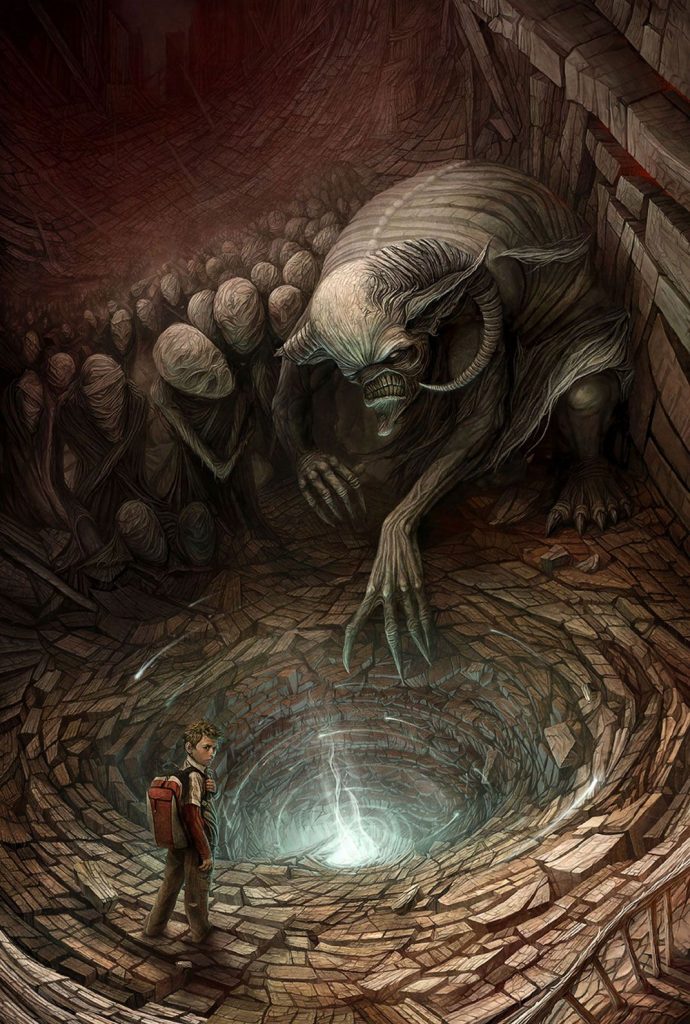
As we have already discussed, the driving force of the world cycle — the gilgul — is surplus energy that has not (fully) been transformed into awareness.
On the one hand, the very phenomenon of manifestation — actual existence — is a necessary form of Self‑knowledge and self‑revelation of the original reality, occurring through activity — establishing and reflecting on interactions between different aspects of that reality. On the other hand, because the energy of the potential for such interactions — desire — is used inefficiently, the process of manifestation becomes trapped in a loop transforming from a spiral into a circle whose endless motion loses all meaning and purpose.
So long as the mind remains inside that wheel, it has no chance to break the senseless cycle of endless repetition; to gain such a chance it must “remember” its “original,” natural nature, disidentify with the gilgul. Yet even a glimpse of such disidentification requires an enormous surplus of energy to resist even briefly the colossal inertia of the cycle.

As mentioned, two fundamentally different strategies are possible for this maneuver at the level of an individual stream of consciousness. One consists of extinguishing the impulses that drive the cycle, the other in their “burning out,” which respectively form the Eastern and Western Ways.
We are discussing the Western Way, which consists of liberation through realization, and therefore we must clearly understand which actions restore the world process to its original — spiral — mode of unfolding.
Since, from the point of view of time, the gilgul has no beginning and endures forever, it is clear that the question of liberation is not about performing “new” actions, since over unlimited time all possible interactions have already been carried out. In other words, the question is not what to do, but how to do it. Given that we are still in the cycle, it is obvious that although we have performed (and likely many times) all possible deeds, we have been performing them wrongly. Exhausting the gilgul is not achieved by increasing the number of actions, nor by inventing new actions, but by changing the manner of acting from inefficient to efficient.

This efficiency, from the point of view of the Myth we are considering, consists of a shift in emphasis from the goal of action to the process itself, summed up in the familiar formulation “action for the sake of action.” In other words, as long as the motivational basis is striving for results — an action cannot be effective.
The reason for this is obvious: action arises as a way to realize desire, and the nature of desire is changeable; it is not in order to “do” or “obtain,” but to “be doing” and “be obtaining,” therefore desire is not satisfied or exhausted by attainment — it merely flows on, generating new strivings and impulses. At the same time, if we aim simply to “do” something, to “achieve” something, we artificially constrain the stream of desire, attempting to “interrupt” it, to terminate it with that achievement; hence, regardless of the success of the achievement itself — we inevitably produce uncompensated energy that seeks to flow on but is blocked by the idea of “achievement.” We feel this surplus as dissatisfaction, we try to invent some other new action to channel it into, and thereby we break the stream, violate its integrity and naturalness, and create turbulence and dispersion of energy.
If, however, the motive for action is the natural impulse to manifest, to become aware — if we do what has ripened for action, what is ready to manifest — we do not cut the stream, we do not step out of it, and therefore we use its energy effectively. This idea is summed up in the familiar maxim: “one should do only what one cannot not do.”
It is precisely attachment to goals and results, which slices the unified stream of life‑awareness into separate fragments, causes the constant outflow of energy, rooting the mind in the gilgul.
What has been said does not mean that Magi do not take actions lightly. On the contrary, Magic is the art of perfect actions. Just as the Magus strives to live his life to the full, he also strives to fully carry out his realizations, not abandoning them halfway.

Magic is the art of “finishing things,” a mode of action in which the energy of desire is wholly and without residue transformed into realization. Yet realization is not the aim; it is simply the natural consequence. And even if the battle is lost, if the energy is exhausted, realization can still be effective.
Accordingly, the active engagement of the Magus is directed toward the effective, and therefore natural and continuous, realization of his desires — specifically his own desires — that is, the natural strivings toward self‑revelation and self‑knowledge. Such activity, although it does not by itself extricate one from the gilgul, yields the necessary surplus of energy, and that surplus can serve to change one’s point of view, to shift identification from a gilgul‑bound self to a free, unbounded, and unclouded mind.

Surplus energy – Change of perspective (the point of assembly of the bundle of emanations) – Change of lifestyle – Transformation of energy exchange of the vessel with the environment. _______________________________________ Have you already accumulated the necessary surplus of energy to change your perspective and exit from Gilgul? Your personal example of exit would become an ultra-powerful impulse to right actions for those who are in the know.