
Madness and Possession
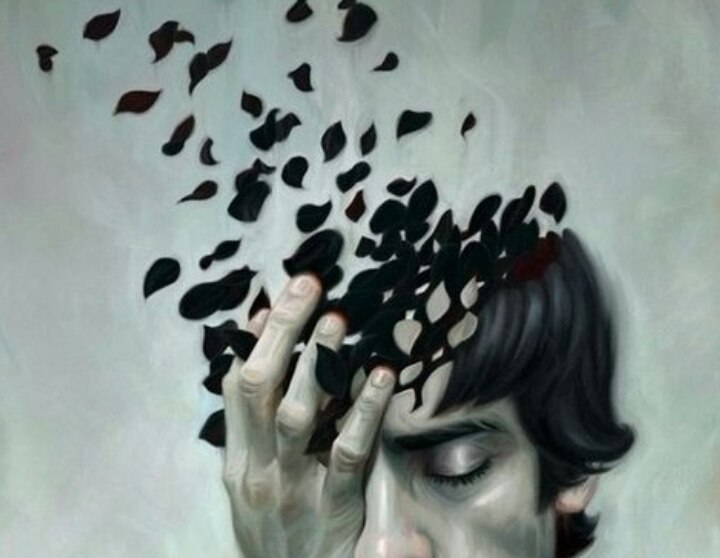
The stream of mind, immersing itself in subject–object interactions and expressing them through embodied existence, manifests as an assemblage of more or less active matrices that form and direct their corresponding flows of energy. The conglomerate of such matrices, arranged and manifesting in parallel with the arrangement of the mind’s conduits, is commonly called a personality. In other words, from the viewpoint of the Myth in question, personality is a dynamic ensemble of psychic processes that arises as the result of the interaction of the stream of awareness with its object field and is intended to optimize those interactions.
If a personality is well suited to the stream’s tasks, it is constructive or, as one says, “enlightened.” However, in reality, the formation of personality and its psychocosmic environment is usually far from perfect, and the mind contains not only constructive but also destructive ones. Activation of destructive matrices is in itself natural and inevitable, since destruction is the other side of creation, and any insufficiently perfect system must pass through stages of disintegration in order to dismantle less optimal structures and build better ones in their place. Nevertheless, the energy of destruction easily escapes control and becomes an autonomous, unbalanced agent, losing its evolutionary direction. Destructive energy, deprived of reinforcement by the general creative stream, is traditionally called “demonic,” since it requires absorbing “constructive” energy to sustain itself — that is, it displays the properties of an obligate predator.

We have already said on several occasions that destructive matrices active in the mind can be divided into two types depending on their source: those arising in the mind itself and those penetrating it “from outside,” respectively called parasites of mind and Demons. In addition, the mind can reduce the constructiveness of its manifestation as a result of disturbances arising in its conduit, the body, including in the integrating organ — the brain. Accordingly, three causes of ineffective manifestations of the mind can be distinguished: 1) “organic” (disorders of the body and/or brain), 2) self-destructive (the dominance of destructive matrices of the mind — “parasites” — over its creative activity), and 3) “demonic” (activation of destructive processes in the mind due to implantation of “external” predatory programs/matrices).
Note that the third group of destructive manifestations is heterogeneous. It can appear as “content” (when the mind is subject to influences of external predatory programs but does not harbor them internally) and as “possession” (when the “external” destructive matrices are implanted into the stream of awareness itself, affecting both it and its manifestations via the conduits).
This classification is important primarily because the methods of overcoming destruction differ depending on its cause: in the case of organic disorders, a medical corrective approach is necessary, aimed at repairing structural or functional failures of the mind’s conduits; in the case of a “psychoparasitic” etiology, psychological or psychoanalytic therapy will be more effective; and in the case of demonic invasions — exorcistic approaches.
Accordingly, to choose the correct corrective strategy, it is very important to identify correctly the cause of the mind’s ineffective manifestation. A number of criteria have been developed for this.
First, one should speak of destructive functioning of the mind when the energy expended in response to stimuli of the external or internal environment is disproportionate to those stimuli (in both directions — either excessive or insufficient).
Second, one must take into account that these causes can lead to mutual disturbances: possession often leads both to bodily damage and to psychic disorders, and hyperactivation of the Lamassu frequently creates favorable conditions for invasion by Demons.
Third, one must understand that most often the cause of destructive functioning of the mind is its subjugation by the Lamassu and/or the content of Demons, whereas psychological or neurological disorders are less frequent, and possession is even rarer.
If a person behaves inappropriately in response to simple, “basic” stimuli — then most likely we are dealing with an “organic” disorder; if the inadequacy concerns any manifestations of the mind’s evolution, then there is likely an overgrowth of Lamassu; and if the manifestations of inadequacy are provoked by “spiritual”/religious stimuli, then possession can be suspected. Of course, every particular case requires additional study and verification, and before declaring a person “mentally ill” or, even more so, “possessed,” one must carefully take a medical history. In general, in any case of possession (if it has not yet reached the stage of integration) two entirely different personalities are usually clearly distinguishable in the manifestations of the mind — the person’s own personality, and a far older, more sophisticated personality of the Demon. Accordingly, for diagnosis it is necessary to provoke that personality to reveal itself: to demonstrate some knowledge or skills that the person could not have, and so forth. Diagnosis of possession is substantially more difficult: it requires knowledge of the characteristic signs and symptoms of potentially possible “agents” — Demons. In addition, content is almost always accompanied by Lamassu activity, and therefore resistance must be comprehensive. If content typically manifests in one (or several) areas corresponding to the gates of the dominant Demon, the Lamassu usually acts “on all fronts,” forcing the mind to disperse energy across as many situations as possible and interactions.
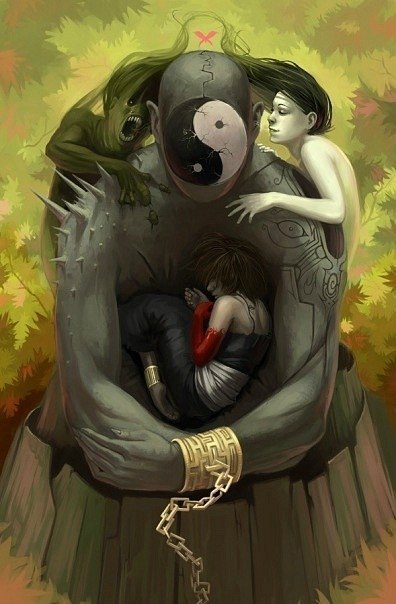
We repeat that an alarming sign of energy outflow from the constructive stream of awareness is a reduction or loss of the capacity for love and empathy, since any predator, first and foremost, promotes and sustains a sense of separateness, closedness that fosters opposition and competition for resources.
In general, the most constructive stance is usually the “presumption of self-destruction,” when one begins by first considering the hypothesis of Lamassu’s destructive influence, and if additional symptoms are discovered — such as a general decline in adequacy or the emergence of added knowledge/skills — other possible causes are investigated. In any case, one must approach the formulation of a correct “diagnosis” with the greatest care and balance, understanding that an incorrectly identified cause will not only fail to aid therapy but may aggravate the pathogenesis.

“We are all ill, seriously, for a long time, either rose-colored or genetically: ‘Make yourselves comfortable, patient – the wards are full, but we’ll find a place for you here on this planet’ – I am the sickest of all those madmen (in the 21st century) and there are no doctors left, tired and departed. I forgive. Without awards. In vain, they won’t be able to return happiness to us. And I won’t go to them anymore – I’d rather die a fool – but the memory – of everything that was; don’t try to fool me! Even Christ is not a Doctor. I kindly read your text, I don’t promise, but I wish for myself and everyone, let us be healthy! Save us from becoming ‘Normal and Democrats’
Could you please tell me: 1) Is there a way to see the Lamassu directly? So far, I only have access to the consequences in the form of phenomena of my own awareness. 2) What channels and/or methods of initiation are the most probable? I suspect that ‘Roskomnadzor substances’ can serve as such a catalyst, but what else?
I forgot to ask: can penetration ‘from outside’ happen without an invitation, in a one-sided forceful manner at the moment of vulnerability of consciousness?
Since consciousness is the Microcosm, that is, a complete and self-sufficient system, no artificial, violent intrusion into it without its consent is possible; therefore, predators and parasites must exert considerable effort and ingenuity to provoke such a permission. However, in this lies both the reason for any destructive influences and the path to liberation from them: we ourselves allow destruction to occur, and we ourselves can stop it.
En, tell me, why do you consider the evolution and degradation in all such articles from the perspective of ‘small systems’? In the sense that ‘bad destructive’ manifestations from the viewpoint of individual embodied beings are indeed ‘bad’ and counterproductive for evolution. However, if we do not consider separate consciousnesses, but large groups, then the ‘non-constructive’ phenomena you describe are not so unambiguously non-constructive. A consciousness that has been devoured and disintegrated by a predator may not evaluate what happened, yet I see no reason why this phenomenon cannot be regarded as a driving force of evolution – natural selection. In nature, predators care about the evolution of their prey last, but what they destroy the weakest is precisely what drives the evolution of the victims as a species. Moreover, the absence of predators inevitably leads to the weakening of the species (not to mention the imbalance of the ecosystem). I strongly suspect that life on Earth would not have emerged from a unicellular state without the appearance of predators. In principle, this can also be extended to ‘the individual’, or rather to ‘the individual Monad’. If its incarnation turned out to be so weak, would not the ‘self’ itself benefit (from the perspective of evolution) from being eaten, digested, and starting all over again? More precisely, to the original question. Why not – we are all here separate incarnations and descriptions of who may eat us and what to do with this are useful to everyone. However, I see no reason why a description of ‘how to fight wolves’ must elevate them to the rank of a ‘non-constructive’ phenomenon detrimental to evolution.
Of course, from the perspective of evolution, predators are necessary and inevitable, and I have said this more than once. Nevertheless, the myth I describe in this blog considers evolution more in a Lamarckian than in a Darwinian interpretation. For this myth, the driving force of development at both micro and macro levels are the personal individual efforts of each singular manifestation of awareness. And for any such single system, a predator is an enemy precisely because it deprives it of resources and opportunities for development. Accordingly, all the regularities that are studied in the Darwinian system at a macro-evolutionary level are, from the perspective of the myth (based on analogies: ‘the higher is like the lower’), valid for a particular being: the being develops, gaining its evolutionary impulses precisely in the confrontation with Predators. And this idea runs through many articles of this blog: predators can serve as a stimulus for development if actively confronted, but can also be an obstacle to personal evolution if succumbed to and indulged.
Please advise what to do if I saw the illusory nature of the division between I and not I (it was like an epiphany) within the individual stream of consciousness (Microcosm)? Does this understanding play any role on the Path? Being contemplated.