
Exorcism in Religion and Magic
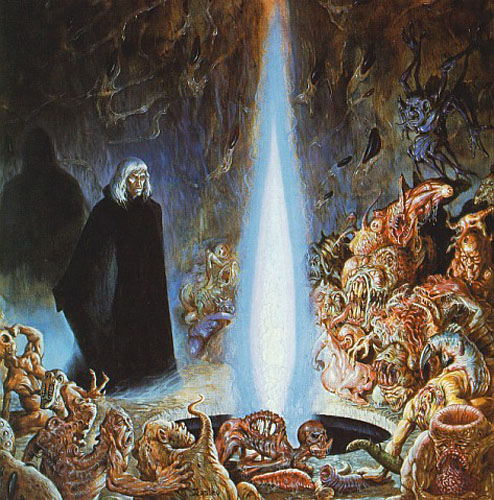
Interest in “exorcism” has traditionally been high, especially since Hollywood films on the subject.
The word “exorcism” comes from the Greek “exosia” — “oath”. It is rendered into Latin as “adjure” (adjure), and into Russian as “one who brings an oath.” To exorcise means not so much to expel as to “compel a spirit or demon to swear” or to invoke higher powers so that they compel the being to act against its will.
At the same time, the phenomenon of exorcism itself has deep roots in the most ancient beliefs and shamanic practices, although the ideology of attitudes toward possession in Christianity and paganism is completely different.
In traditional cultures a shaman is expected to be able to achieve positive results in situations where prayers no longer help. Such results are possible thanks to that special alliance shamans have with spirits.

Archaic cultures regard any illness as an foreign intrusion in a person’s life. Shamans divide the causes that influence the emergence or intensification of illness into two main types: 1) loss of a spirit vital to health; 2) acquisition of a spirit harming his well-being. In any case, any illness is seen as an active attack by a foreign spirit against which one must defend.
Ancient cultures also differed in their approaches to treating illness: in some peoples treatment was carried out by shamans, in others by healers, and in still others both. The shaman and the healer stand out in the community as specialists in treating the sick. But unlike the shaman, the healer possesses knowledge in the field of medicine — herbal, animal, and mineral remedies — even though this treatment is also aimed at “removing” the spiritual cause of the disease. The shaman, however, is ascribed direct communication with spirits. At the same time, both shamans and healers operate within a healing system that does not exclude other methods of treatment but considers them complementary.

Modern views are different. Contemporary Christian training in exorcism notes that, out of tens of thousands of cases of mental disturbance, only one may be related to demon possession and thus amenable to exorcism; the rest are recommended for medical treatment. Currently the Catholic Church trains exorcists at the Athenaeum Pontificium Regina Apostolorum. The training program consists not only of ecclesiastical subjects but also includes, for example, courses in psychiatry so that future exorcists can distinguish true cases of possession from manifestations of mental illnesses such as schizophrenia. This view reflects the Christian notion that illnesses arise “by God’s will” and are usually directed toward trial, strengthening the spirit, and the like. That is, unlike the pagan belief that illness must be fought, there evolved the idea that one must seek deliverance from illness (“if it is God’s will”). Of course, such a distinction is dictated by the ideological features of paganism and Christianity.
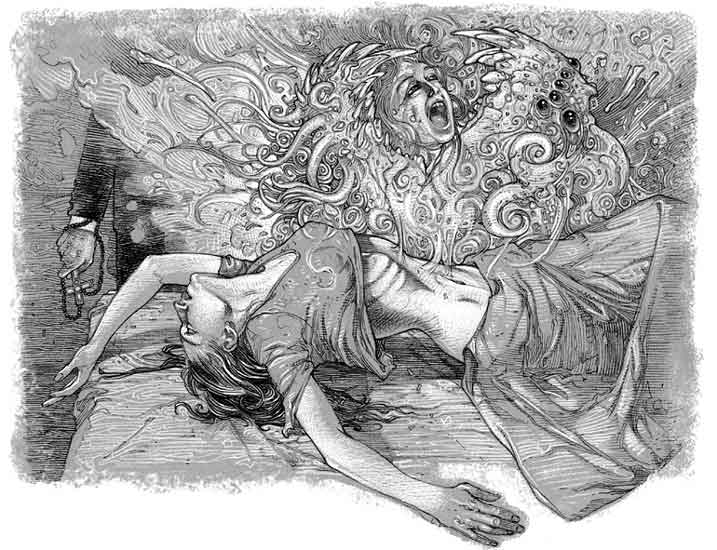
The Catholic-approved Roman Ritual (Rituale Romanum, 1614) instructs the exorcist to ascertain that the person is truly possessed and not suffering from a mental illness. Even during the expulsion the priest must continue to question the victim about his mental and psychological state. Under no circumstances should the exorcist prescribe medication, leaving that to a physician. The “Ritual” requires the exorcist to find out whether the evil spirits were sent because of witchcraft accusations or other occult enchantments. Unlike the Catholic Church, the Orthodox Church does not specially train priests to read the rite of deliverance. Any priest who has received the blessing to do so and knows the rite of deliverance may perform it.
From the pagan point of view, a spirit possesses a person in order to feed itself, and in that sense the expulsion of a spirit is a simple struggle for resources, for survival. In a world filled with predators, such a phenomenon is not uncommon.
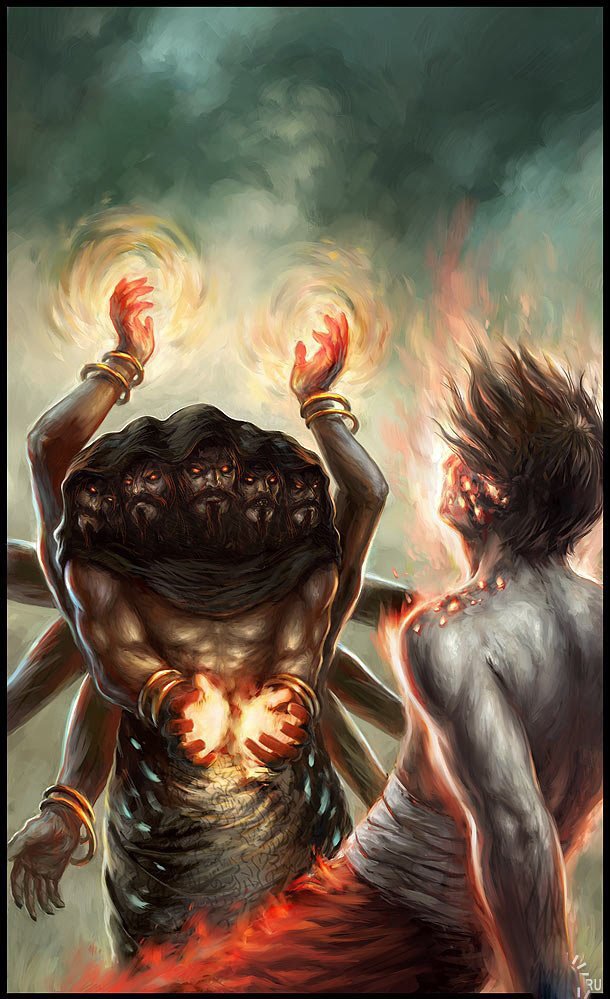
In modern religions the meaning of possession is interpreted differently — it occurs within the framework of the “struggle of good and evil“, God and the devil, and is aimed at the capture by the forces of hell of another stronghold of the divine world; as Basil the Great put it: «Understanding his powerlessness before God, the devil inclines the image of God — man — to sin». At the same time, Christianity asserts that with God’s help all Christians can overcome demons; the devil, by virtue of Christ’s sacrifice, has lost power over them. However, this inability of Satan to win in open combat forces him to seek indirect ways, to attack stealthily, and by means of craft and deception to gain control over people.
Nevertheless, even in archaic cultures it was believed that the assisting spirit of the exorcist, for whom the ritual was performed, should rank higher in the spiritual hierarchy than the evil spirit, and a shaman was considered stronger when helper spirits rank higher than his helper spirits.
Christianity, using the name of the Son of God to cast out demons, follows the same principle. At the same time it holds that possession in principle cannot be cured by traditional methods, is not, strictly speaking, a disease but a completely distinct phenomenon. Contemporary religion separates the concept of “illness,” avoiding an answer to the question of its causes, from “demon-possession.” Traditional cultures did not know such a separation.
From the point of ethics, the cornerstone of shamanic practice is that the shaman acts only upon the patient’s request (in the case of a small child there must be a request from a parent) and never attempts to presume what is good for another person. At the base of this approach lies the understanding that the shaman’s goal is to relieve suffering and pain, not to preserve the life of the patient in ordinary reality at all costs. Shamans long ago discovered in their journeys that the Middle World is a realm of suffering, arising from the harsh laws of existence — the “coexistence of predators.”
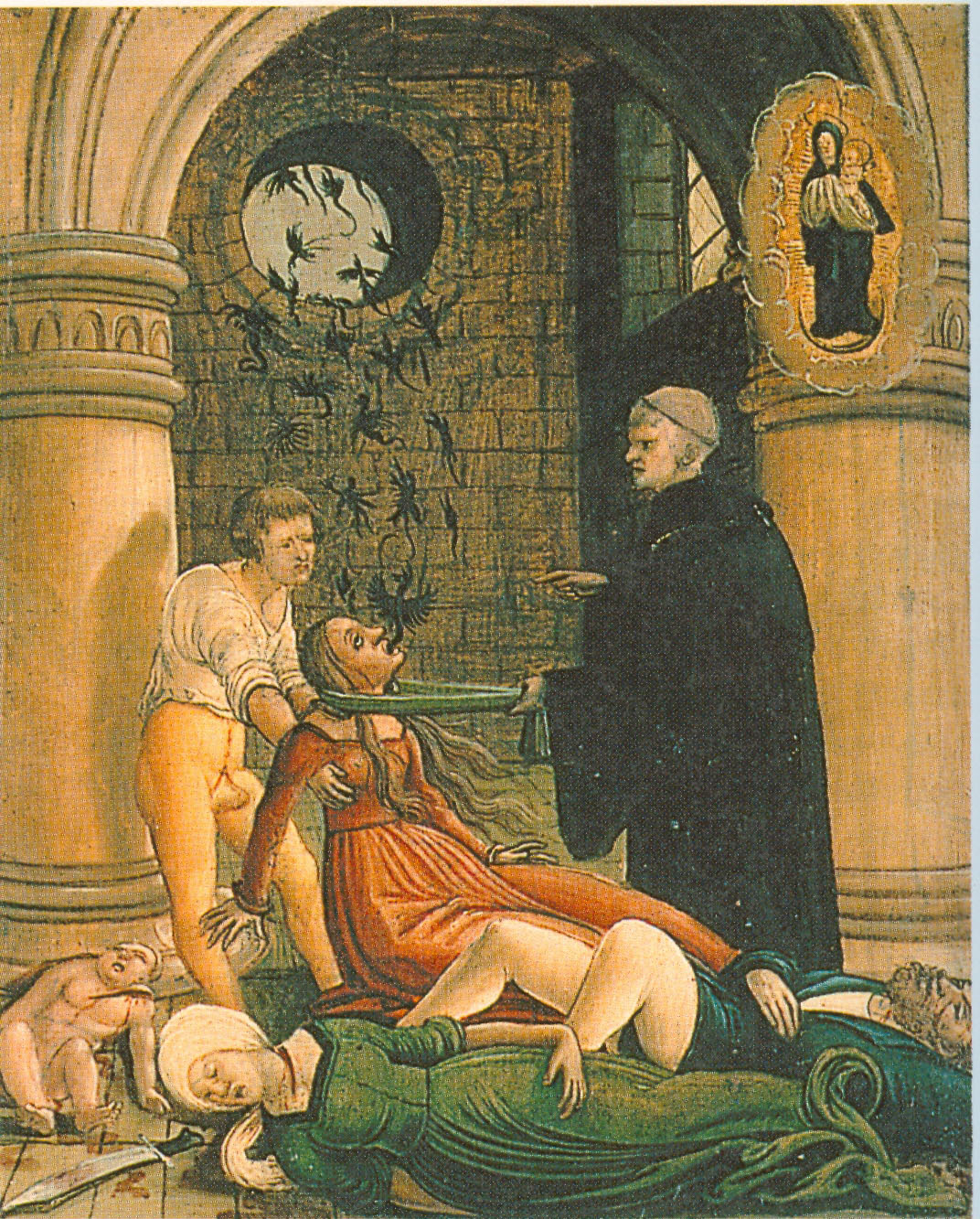
On the other hand, the Christian approach holds that the removal of demons must be carried out regardless (since it is part of the struggle of “good against evil”), although, of course, today it is also carried out only with the relatives’ consent. In the ancient Christian Church the rite of exorcism was traditionally part of the baptismal ceremony for Jews and pagans, since Christians believed that evil spirits inhabited the souls of all pagans. In the Middle Ages exorcism was also part of the baptismal rite for children. As noted by the Second Vatican Council, in modern church life exorcism has lost its former significance, remaining in the rite of baptism, which removes the stain of sin from a person. In the contemporary Church the rite of exorcism may be performed only with the blessing of a bishop, without which any sacred action, and especially a deliverance, becomes an “anticanonical act“, harmful both to the exorcist and to the patient. The office of exorcists (they were counted among the minor orders of the clergy, which included the ostiaries, lectors, and acolytes) appeared in the Catholic Church in the 16th century after the Council of Trent. Initially this title had no relation to the modern understanding of the word “exorcism” as a special practice of expelling demons from the possessed and was connected with the rite of exorcism performed during the sacrament of baptism to cleanse the catechumens from original sin. At first performing this rite was one of the duties of exorcists; later this rite, like the sacrament of baptism, came to be performed by the priest.
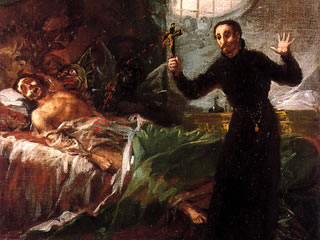
In the Middle Ages some priests even staged the ritual of exorcism for the public in town squares, calling demons such as Lucifer, Nambroph, Bechet, Nashtaroth, and Nabam to depart. Of course, such performances paid little attention to those expelled and served only propagandistic ends, demonstrating the power of the Church.
The reality of a person’s interaction with the spirits that surround them is evident both to religion and to magic. At the same time, modern religion, moving away from the magical idea of such constant interaction, regards “possession” as a rare manifestation of qliphothic forces in the material world, significantly narrowing the spectrum of interactions. By considering illnesses a “physical” manifestation, “permitted by God,” people limit their outlook.
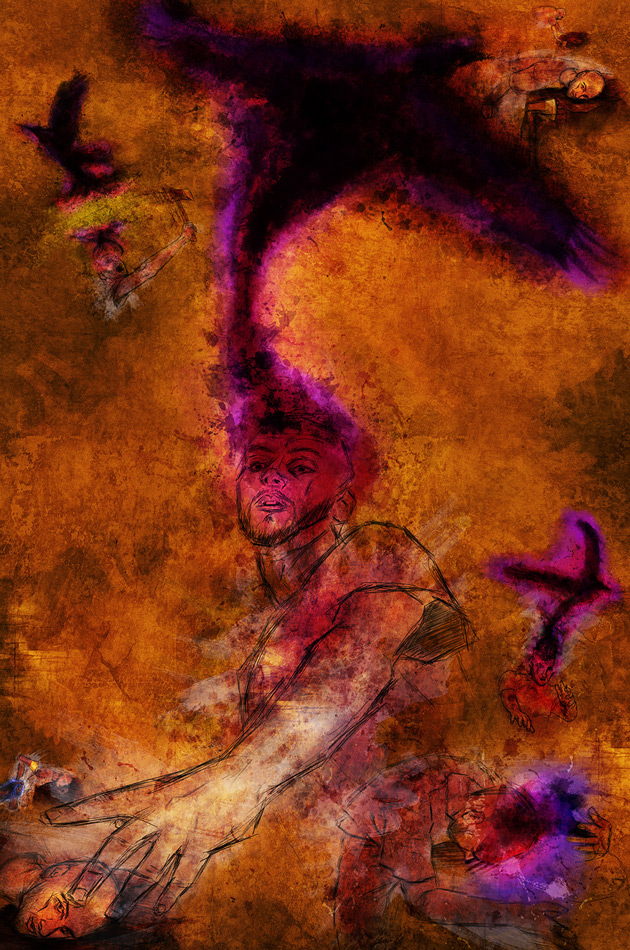
For Magi it is obvious that, although any illness can be regarded as an alien intrusion, this does not mean that one should fight it only by direct contact with spirits that caused it. Magi, of course, are far from the notion of illness as a “means of instruction” and consider it necessary to combat it by all available means.
At the same time, the very concepts of “norm” and “pathology” in magic are much broader than in ordinary thought, and even more so than in religion. For Magi individuality has many expressions that are often valuable, and before considering something pathological a magus must ask the usual question: “what is happening to the Power in this case?” Only if a phenomenon leads to a sustained, permanent loss of Power can it be regarded as pathological.
Being pragmatic and oriented above all to practical value, Magi assert that describing an illness or demon possession as either an “invasion” or as a “set of symptoms” can be equally effective depending on the particular case.
At the same time, to combat “dense” manifestations it is more appropriate to use material means, and therefore Magic in this respect is closer to folk healing rather than to shamanism.
Even in the case of expelling a spirit, as with all practical magical operations, exorcism should be accompanied by corresponding “dense” measures — a ritual “embodiment” of the spiritual action.
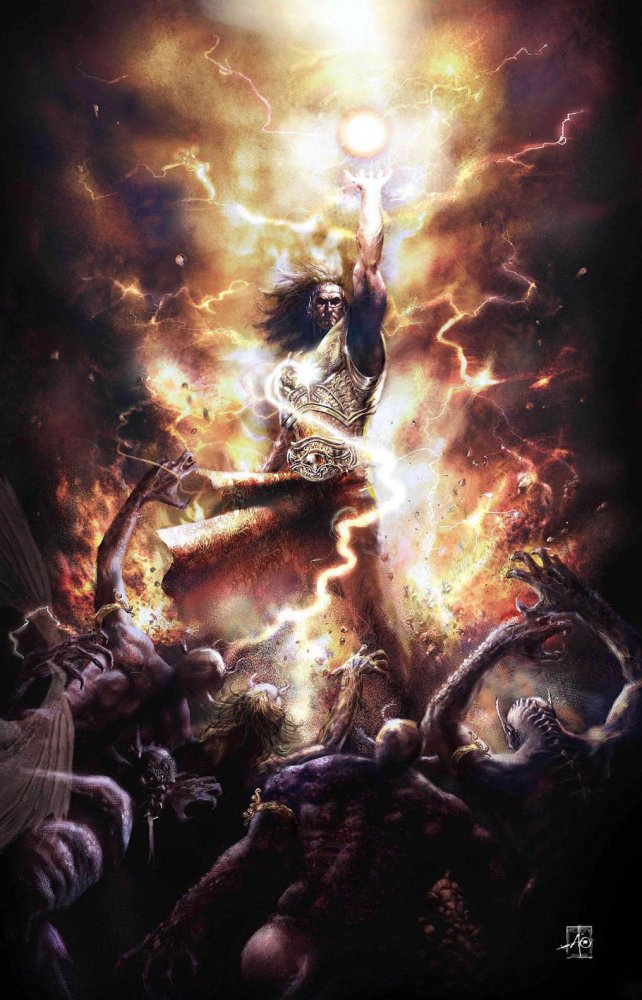
The article is not complete, lacking a perspective from Orthodoxy. Priest Radion (Alexey Moroz) wrote a book on this topic titled ‘Demons and Devils’. Exorcism can only be successful when the medium is pure from sin. If the medium is not, the process occurs not from God but from unclean forces, thus exacerbating the situation for both the possessed and the medium. An exorcist must have extensive knowledge of the influence of spirits on humans and the Laws of God. When starting to purify the soul, the exorcist must take care of purifying his own soul. And most importantly, one must have this gift from God; it is not given by bishops but by God. During the path of one’s spiritual improvement, a person gradually receives this gift as a divine reward for striving towards the truth. One cannot buy it with money, nor can one access it with rationality; it is given to the humble who have endured all the trials that the soul is tested with. Then, one needs to know the reasons for the affliction, the curse, and the sin that influenced the situation. But, is it pleasing to God to purify this person? Perhaps his path to salvation lies through these sufferings. Therefore, all these concepts must be considered to avoid harming anyone. This is the highest school of Wisdom, given only to the chosen, and not for common knowledge so that people do not harm themselves and do not converse with demons nor perish.
1. No one can be pure on this Earth.
2. Exorcism is often performed by ministers not by their own will, but by the blessing of superiors. And they succeed.
3. Bless us, or rather give a text of the recitation to the Simple Mortal and everything will work out. There are plenty of sick people!
Good afternoon. My name is Irina Alexandrovna. I live in the Yaroslavl region, not far from Moscow. People, please advise a verified person who is engaged in magic. I am looking for a white witch or a psychic who can help me remove a curse of death.
My email is toikunova.ira2015@yandex.ru
I have had a misfortune. My phone number is 8 910 969 15 78
In 2000 I went to the sorceress Khabrova just to ask for a card reading. But she told me to sit on a stool, and I did as she said. Then she came up to me, took a wax candle, and began to wave it over my head while whispering something and crossing me. After a while, she moved aside, turned her back to me, and again whispered something. When she had done everything, she told me to put 12 wax candles and go to the cemetery. I didn’t do that.
In 2005, while washing, I heard something unclear, some kind of music, but very quiet. And what those words were, I didn’t pay much attention to it. I didn’t understand anything; I didn’t even suspect anything.
In 2013, at night, I heard someone speaking in syllables very quietly from a distance. I even felt like someone was breathing nearby.
In 2014, I read 2 books by Alexander Aksyonov, I am not a sorcerer, I am a healer.
In it, he writes about unclean forces and curses of death. The most important thing I read is that one of the reasons is sorcery and the imposition of curses through unclean forces.
Everything he writes is true; I myself did not believe and found myself in a similar situation.
I realized that I hear the devil’s unclean forces from a distance.
I hear the devil only at night in the room near me (breathing, speaking in syllables). He himself tells me that he is the devil, I won’t strangle, look for help from a psychic, who will help you get rid of me, etc.
I went for help to Lyuba Musina, who lives not far from me.
I told her everything that happened to me. She told me she would put protection in place so that it would be easier for me. I believed her and agreed. Lyuba Musina said to raise my hands up, and I did. I sat at a distance from her on the sofa. She took a lock, whispered something over it, and then slammed it three times. Then she took a hollow and drove in 2 nails. Lyuba Musina talked about some sort of death net and demons.
She did everything with me when we were alone together.
When I got home, I was very upset; I realized what I had done and that I had been deceived.
When I was home, I tightly stuffed my ears and heard the unclean force (entity) in my head as a settler. And I also hear this demon from afar.
I hear it constantly, both day and night at any time of day.
I don’t know what to do now; who will help me, I can’t even find a place at home.
I am very upset about how to live further.
Everything I am writing is true; I am very confused in life and do not know how to live further.
I am urgently asking for help; give advice on what to do.
I can’t find a way out of this difficult situation.
Please write if you can help me.
In what city do you live?
Sincerely, Irina.
Irina, not everything we hear is unclean force. Maybe they are just neutral spirits or even your guardian angel? Perhaps you just opened a channel to hear the world of spirits? There is no curse on you, you made it up. The old lady you went to might have simply opened a channel for you, so you could perhaps become a witch. And you can become one by making friends and reaching out for mutual assistance with those you hear. If you don’t want this, you want to close the channel and still haven’t found anyone who can do it, then the most reliable way would be to consult a psychotherapist. Modern medical chemistry can block those parts of the brain that allow hearing voices. If you want to develop as a witch, go to shamans. The only thing I know is that occasionally people involved in shamanic practices come to give seminars at the Moscow shop ‘White Clouds’. I don’t know how competent they are in mentoring students who have ALREADY opened a channel.
I often encounter the fact that either close people or those closely connected with them enter destructive flows: they are filled with malice and other mortal sins. For example, it may seem that malice exists on its own. Initially, it is not directed at anyone specific, targeting everything within reach, and deliberately seeking reasons to be angry (the napkin is not lying the right way, a plot from television, other reasons that are in no way personally related to the person). Some of the reasons are exaggerated tremendously, while many are made up in the most absurd ways. If you consider it coldly, the logic of such a malicious person significantly deviates from common sense; it would even be funny if it were not destructive. At such moments, a person indeed “becomes a demon for others”. And it seems that almost all of their statements and actions are covertly aimed at provoking weaknesses in others, debasing what has value, and causing pain. Moreover, at some point, this rolls in like a wave, like an avalanche starting to go. It seems as if there is an “exacerbation”, and the person “goes nuts”. This often happens under the influence of alcohol, though it is not a mandatory condition. In general, I am not writing about something “fantastic”; many are surely familiar with such examples. But what to do? Shouldn’t one read exorcism texts over such a person? And they won’t submit anyway. Perhaps it is important not to lock one’s heart towards this person. Perhaps this will help to some extent, even though you are not directly involved in the conflict but only a witness. And similar to how they recommend lighting a candle “for the health” of your adversary, here too, one should try to see the good seed of this person, calling for the blessing of their true beginning… Honestly, I don’t see how this could save someone, but perhaps it will at least slow down their fall, maybe it will grant them some chance. You write: “the magician acts as a “conductor”, finding the own will of the victim and helping them escape from the clutches of obsession”. Is this possible when the victim consciously does not wish to seek this will? It would indeed be wonderful to guide a person to their own will. How is this possible in such “magical exorcism”? After all, under normal conditions, the journey to one’s own will takes incredible efforts, persistence, and skill on the part of the magician, given that they genuinely wish to change their world. So what resources can be found when the controlling stake of consciousness of the possessed (dybbuk/ibur) does not wish it, and what can be relied upon?
Difficulties in transforming the surrounding world are often related to the fact that we think about what we should “do”, instead of thinking about who we should be. And although it is well understood that someone who cannot swim is hardly likely to effectively save drowning people, very often this is precisely the course of action that takes place. To bring someone out of the depths of destructive matrices, one must first find that path for oneself. It would be incorrect to say that only a saint, completely devoid of flaws and alien to everything destructive, can be an effective exorcist. Nevertheless, only someone who has learned to confront darkness within themselves, who can track the activation of destructive flows within themselves and exit them as quickly as possible, will be able to help another along the same path. And this means that helping another needs to start with helping oneself. It is clear that knowing ways to exit dark matrices, the ability to interrupt their influence on oneself does not immediately make us entirely immune to their influence; to fully “uproot” eitzachor from consciousness takes a long and difficult path, but nevertheless, having learned to find these “seeds of evil” within ourselves, those grips that are held onto and fed by destructive flows, we contribute not only to the purification of our own consciousness but also act as a catalyst for change in our surroundings. And in cases where one’s own efforts are insufficient for someone in the grip of destructors, it is precisely the induction of constructive matrix activity within them, partially “automatically”, and partially as a result of the willful efforts of the exorcist, that helps initiate the cleansing process.
Thank you, an interesting and accurate article.
Thank you.