
Logoi and Daemons
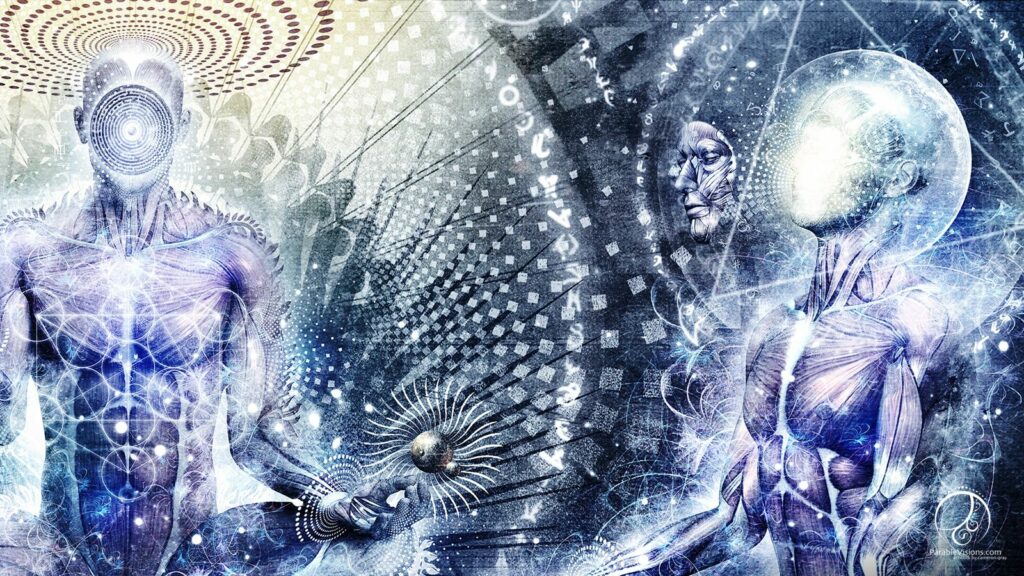
As we have mentioned repeatedly, according to the Myth we are considering, by virtue of the Tetragrammatic law, in the psychocosmos of any embodied being one finds four levels, four manifestations of mind, which can conventionally be called “mind itself” (selfhood, ו), the “god of mind” (logos, SAH, י), the “angel of mind” (daimon, shedu, ה) and the “demon of mind” (parasite, lamassu, ה״).
The being’s “own” mind, its self-identification, reflects the current level of development, the degree of awareness, of the psychocosmos, and is its most “variable” and mutable component. It is an “androgynous” component and is described as expansive or attractive depending on gender identity.
The “Angel-Guardian” and the “Demon-Tempter” of mind are its two psychoelementals — shedu and lamassu — expressing, respectively, the constructive and destructive drives of the mind (as is commonly said today — its libido and its mortido). At the same time, in “ordinary” mind, surrounded on all sides by predators feeding on the energy it generates, it is lamassu that is the “shepherd,” directing the psycho-emotional flow into the “draining mechanisms” of inefficient actions and inadequate reactions. Meanwhile, the “awakening” of mind to constructive influences, learning to “listen” to shedu, and, even more so, to recognize the voice of logos, requires considerable effort. It is not surprising that such complex and energy-intensive Rituals as the Abramelin Operation Abramelin were developed to identify the “voice of logos,” while the Rituals of the Vision Quest allow one to “glimpse it.”
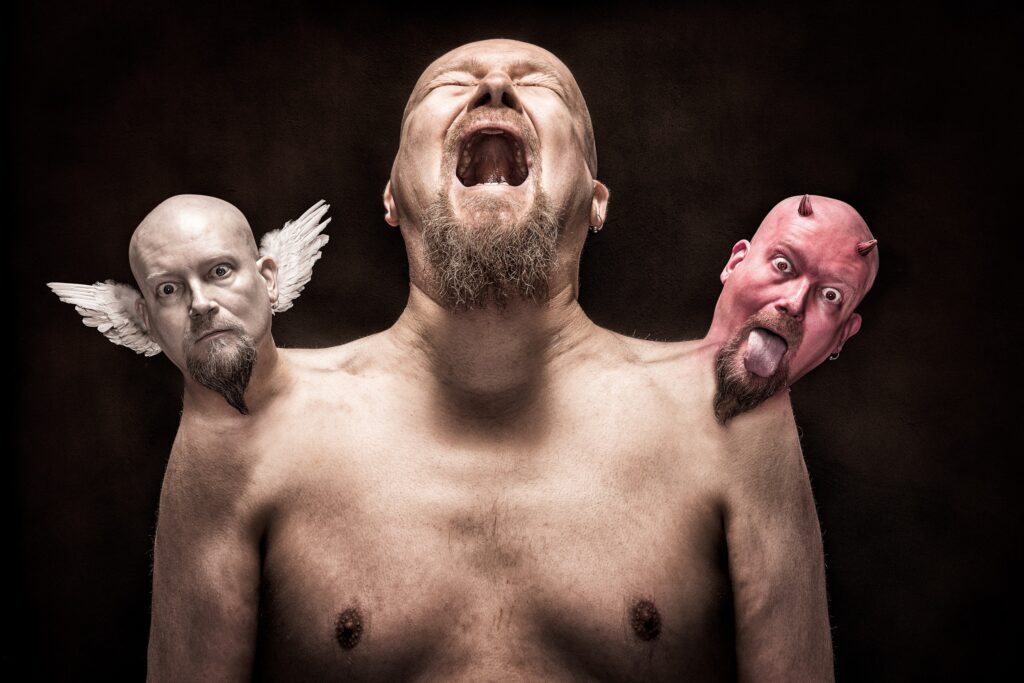
This situation appears paradoxical, since the source of all activity of mind is precisely logos, while the “true pair” of selfhood, its “completion,” is shedu. However, because of a habit of destruction, cultivated in mind by hordes of predators over countless life cycles, it much more readily listens to the obviously harmful promptings of lamassu than to the “useful advice” of shedu, and does not hear the essential commands of logos at all.
Accordingly, the restructuring of the psychocosmos, the restoration of its natural order and harmonious hierarchy, must begin with balancing lamassu and shedu, and then — by restoring logos to its rightful place as the Guiding Star of mind.
At the same time, traditional paths and methods often confuse identifying shedu with recognizing logos, which does not lead to creating a stable and “working” structure of mind.
Although shedu is a “favorable” force for mind, this force is limited by the mind’s current state, and therefore it cannot provide a vision of developmental strategy and prospects, performing particular protective (and sometimes overly patronizing) functions. In fact, the role of shedu is known to modern psychology in the form of the concept of the “paired soul” — “anima and animus.” “Selfhood” and “daimon” are comparable to this pair, with a small caveat about their hierarchical nature: daimon is hierarchically “higher” and therefore, after all, “wiser” than selfhood (and even more so than the subpersonalities expressing it). Therefore, the role of daimon is rather the function of a “wise parent” who, undoubtedly, supports and helps, but has its own limitations and delusions.
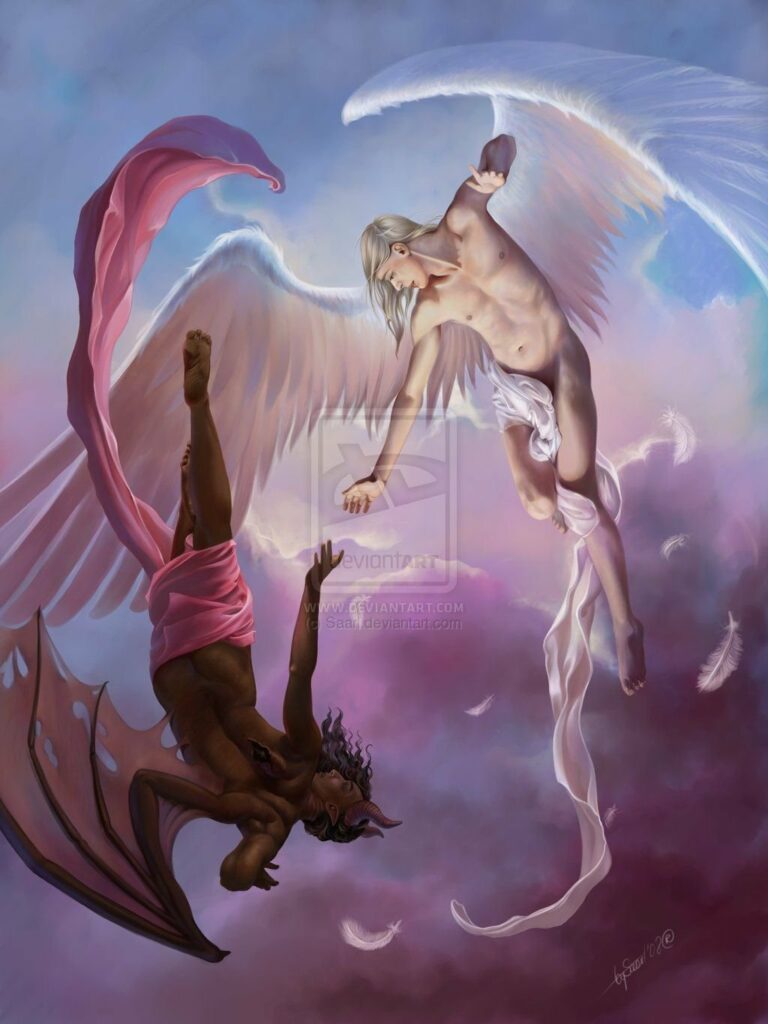
At the same time, the reports of many practitioners who carried out the “Quest for Knowledge and Conversation” show they encountered shedu (this is if we discard the vast majority of such reports, testifying to a “conversation” with lamassu or even with “external” predators). It is precisely such an error that makes many wayfarers shortsighted who listen to a “benevolent,” yet still limited in wisdom, voice.
Identifying the logos of the mind is an important stage that establishes selfhood at the center of the psychocosmos, determining the structure and driving forces of this stream of consciousness. Whether it is recognized as a “light-bearing center,” a “deity,” or simply the “inner core” of mind — establishing such a connection provides a solid foundation for harmonization, actualization, and expansion of the mind.

Leave a Reply