Imprints of the Mind
As we have already discussed, the Hermetic description of the world considers “reality” as a product of mutual reflection, interpenetration of the “subject” and “object” components of a single foundation.
Namely, the manifest world as a whole can be seen as an “imprint” of mind in the medium, while localized consciousness is an imprint of the medium in mind. We said that the “traces” left by mind in the medium are traditionally called “reshimot” (from “רושם” — “impression”), and the product of imprinting, the “imprints” of interaction with the medium in mind — “khotemot” (from “חותם” — “seal”).
It is clear that we are talking about “two sides of the same coin”: every interaction of mind with the medium and every act of awareness, creation, and description is accompanied by a “record” of it in the medium and an “imprint” in mind.
We have already said that the totality of khotemot constitutes “Sod ha-gimol”, “karma”, that is, the burden carried by the stream of mind, shaping its tendencies and aspirations. In the same way, the totality of reshimot forms the “inertia of reality”, its “active” component, “natura naturans”.
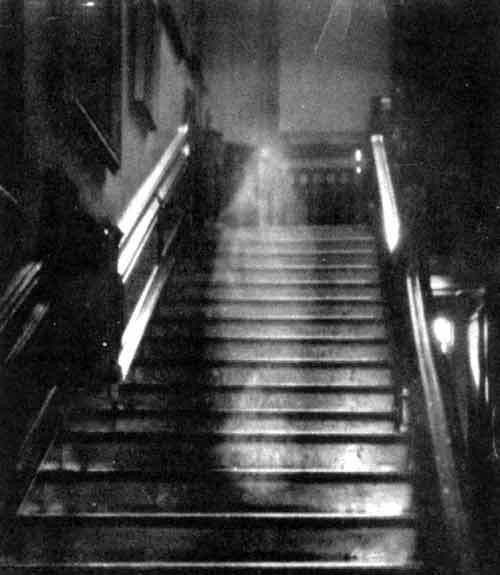
At the same time, we said that it is precisely reshimot, the imprints left by mind in the fabric of being, that are often perceived as “agents” — spirits, ghosts, or even deities, to whom independent existence and their own will are ascribed.
Therefore, whenever a person encounters a manifestation of such “activity of the medium”, they need to understand whom exactly they are dealing with: a being, an entity, or an imprint.
In the first case, it is about the formation of reality; in the second, about its emergence; and in the third, about an “aftereffect”.
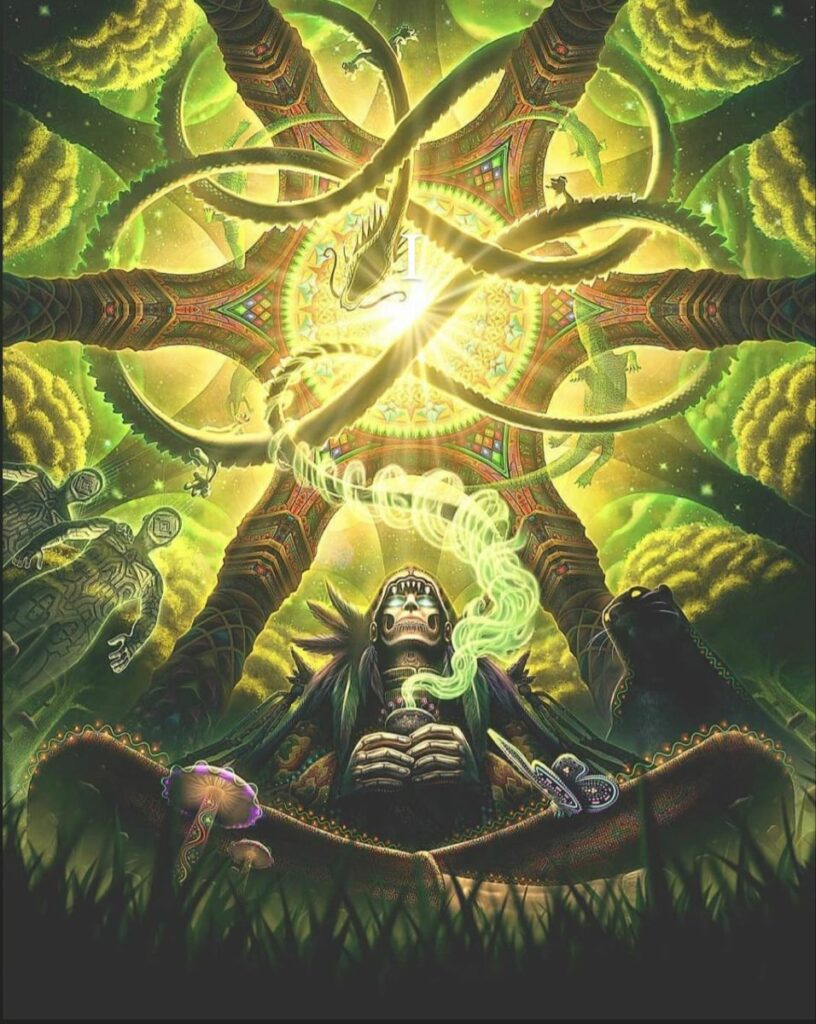
Accordingly, if we encounter a manifestation of will, then the result of such an interaction will be both a new state of reality itself and the creation of imprints; that is, a karmically significant interaction. If we “help” the manifestation of the will of a deity, mana, or another creative being, we “pour” our will into the unified creative stream; if we oppose such a will, we “go against the current” of that stream. In any case, we alter the state of our body and mind, change our fate, and thereby change our evolutionary prospects. That is, such interaction one way or another always generates energy.
If, in interacting with vortical entities — larvae, egregores, and the like — we display our own formative activity, that is, we act as independent shapers of reality, which, if handled correctly, can help reduce energetic tension and thus serve as corrective or liberating measures. Accordingly, such interaction usually takes place at the level of preexisting energetic knots, loosening them or, on the contrary, tightening them further, but without creating new driving forces or impulses.
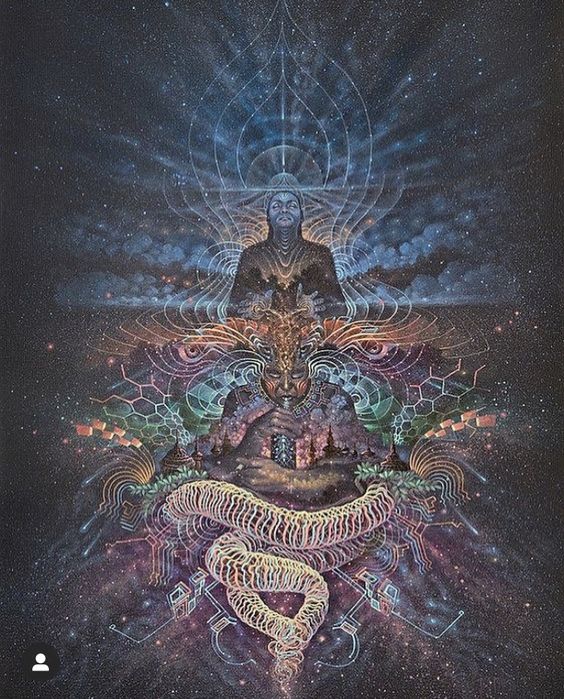
When interaction occurs with an “echo”, with imprints, it is usually “evolutionarily neutral”, meaning it doesn’t carry a significant energetic load by itself; however, it can help accumulate experience and one’s impressions. Accordingly, interaction with reshimot is only “reading memories”, which may be interesting but is merely reference material.
In other words, “ghosts” and often other “supernatural” entities possess neither special knowledge nor any additional wisdom, transmitting only what “remained” in them from the being that formed them. That is, their “knowledge” is limited to the moment of their emergence and is also often fragmentary, since not the entire “surface of the mind” passes into reshimot, but only its least integrated parts.
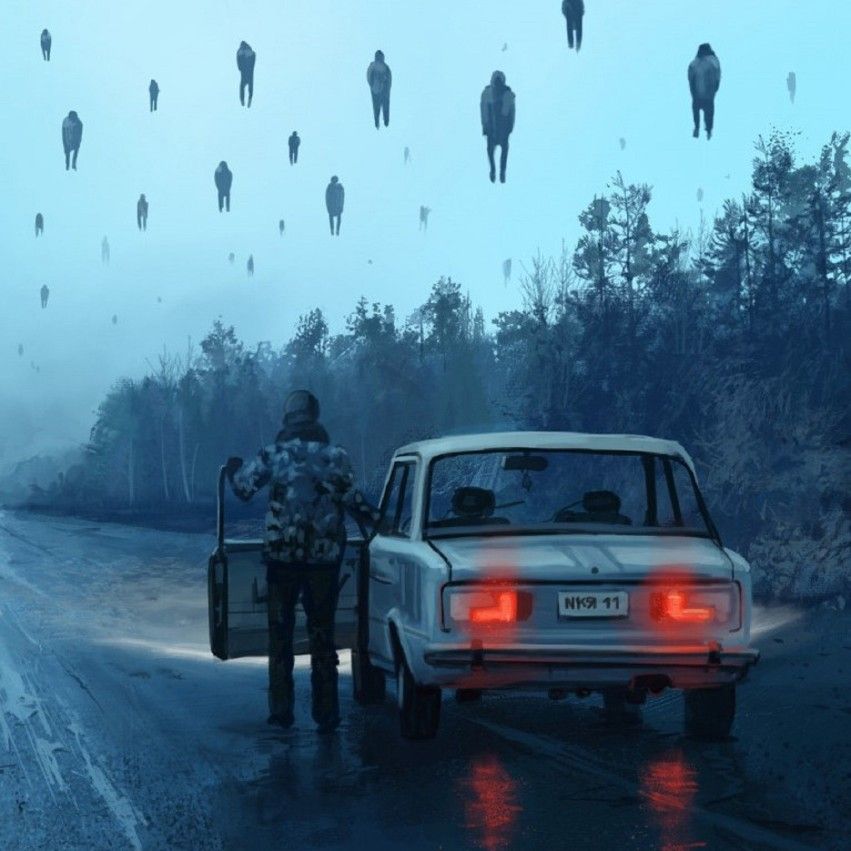
Unfortunately, often both ordinary people and some magi, fascinated by such “visions of spirits”, are too credulous toward their “words”, not fully realizing that they are interacting only with an “echo”, an imprint left by a long-gone stream of consciousness. And just as modern (still imperfect) generative “artificial intelligences” often “generate” false information, imprints transmit data, often outdated or incorrectly combined, without any intent to deceive or cause harm, but simply due to the imperfection of their “quasi-mind”.
Thus, entering — while awake, in a dream, or in a trance — into contact with this or that carrier of mind, a magus must, first of all, determine whom or what he is interacting with. In this sense, the most reliable criterion is the magus’s own state: by observing it, one can determine whether his tension is increasing, decreasing, or whether “reading” is simply taking place. Such an analysis will help avoid many mistakes connected with taking an “echo” for instruction or warning, and an imprint for a real agent.
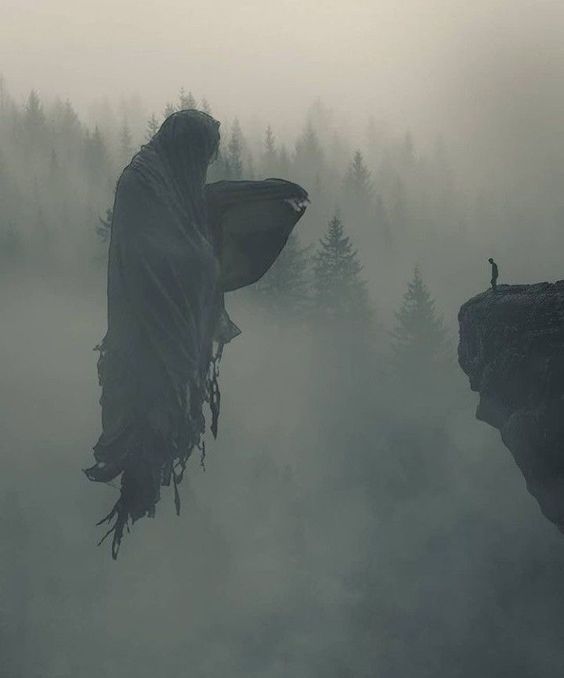
Hello. How to understand the quote:
‘In this sense, the most infallible criterion is the magician’s own state, observing which, one can determine whether tension is increasing or decreasing, or – simply ‘reading’.’
, specifically, is the increase of ‘tension’ this feeling of a different consciousness, or fear, or how is ‘tension’ manifested?
Thank you!
Hello.
Tension is the urge to act, however, depending on individual characteristics it can manifest both as fear and as a desire to realize, but in any case – not sitting still.