
The Energy of Fate
Because Magic as a worldview tends to build its view of the universe from a “physical,” mechanistic standpoint, it seeks concrete bearers of every manifestation, reducing notions like “mastery,” “luck,” and “inspiration” to particular kinds of energy. Energy itself is understood here in a strictly physical sense — a system’s ability to perform various kinds of work, to undertake activities, to enter into interactions.
In this sense, the notion of “fate” (Icel. Skuld) is no exception; as we have already mentioned, it too is reduced to two kinds of energy — potentialities, “orlog,” and actual impulses — “wyrd.”
In its “universal” form, the energy of Skuld — “karma,” or, as Traditional Germanism calls it, “Sod ha-gimol” (literally “knowledge of the hidden”: סוֹד means “secret,” “mystery,” גמל — “saved retribution,” so the phrase can be rendered as the idiom “everything hidden becomes manifest,” with the added sense of “retribution”) — is the “engine” that determines the flow of awareness from incarnation to incarnation, from manifestation to manifestation. We have argued more than once that any action, any impulse of desire, any manifestation of will that is not “drunk” to the dregs — not exhausted in realization — becomes “hidden,” and thus propels the mind toward further movement.
This perspective leads to an important conclusion: since “fate” is energy, it can “accumulate,” “transform,” and “be spent,” but it cannot “appear from nowhere” or “vanish into nowhere.” In other words, with each unfulfilled impulse we add to this “saving” (גמל) which, like a camel’s hump (גמל), accompanies us, being expended and altered over time. Hence the distinction between “good” and “bad” fate, between “favorable” and “burdened” karma.
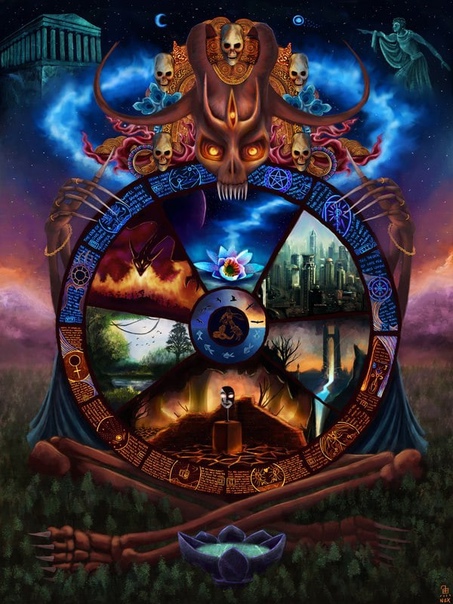
At the same time, it is clear that any “fate,” any “deferred” impulse, will sooner or later be exhausted, and therefore the “chain of reincarnation” is rightly seen as a “cycle,” a “gilgul.” Neither the sojourn of the mind in the “higher” nor in the “lower” worlds can last forever; sooner or later even a god is fated to be born into hell-worlds, just as sooner or later an inhabitant of hells may be born as a deity.
At the same time, the degree of freedom, and therefore the ability to “shape” one’s “stock of fate,” varies greatly between worlds; consequently, evolutionary prospects and speed differ as well. For example, for deities the possibilities of creating “good fate” are very limited, since “good” as energy is their very “duty,” and doing something “beyond” that is difficult. Thus the gods live off their “past” merits, gradually exhausting them, and subconsciously (and with dread) await the inevitable fall into the lower worlds. Likewise, in the sheols or the darker regions of the Interworld, the means of creating a “good” share are scarce: in inherently predatory realms survival depends on aggression and cunning, so escaping such conditions requires the mind to manifest extraordinary ingenuity and almost unimaginable acts of compassion.
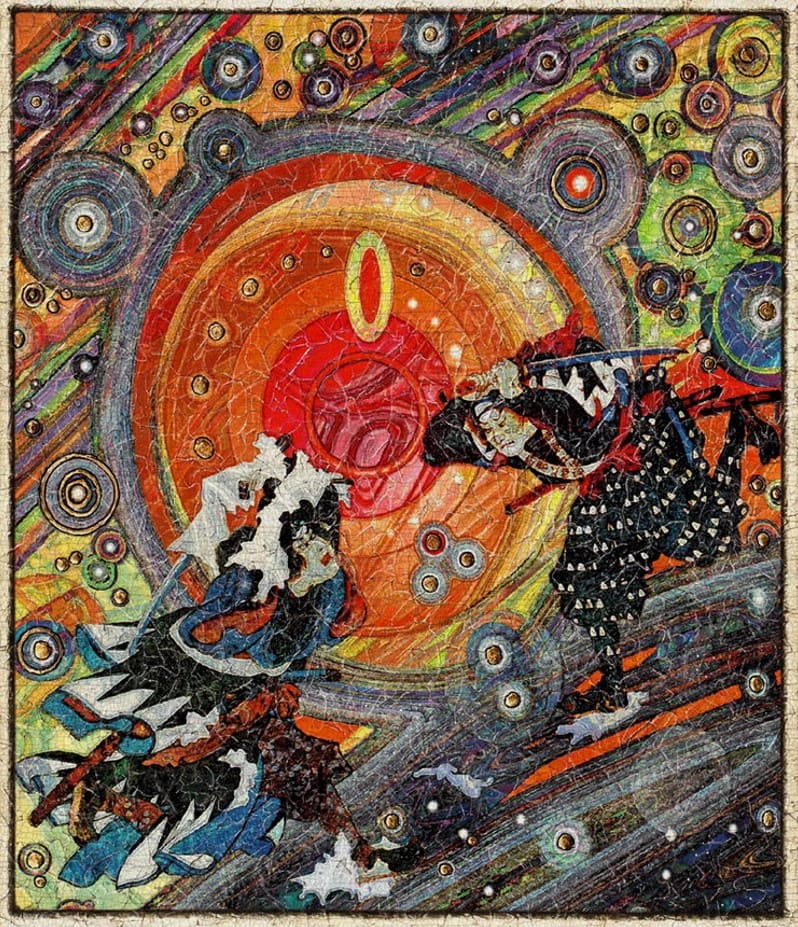
In this respect, “human” birth is the most favorable precisely because of its considerable freedom; yet it is also the most intense in how quickly fate is “sown,” and many gods and other higher beings must later “reap” the karma they sowed during a human manifestation of their stream of consciousness.
It is for this reason that liberation from gilgul is possible only at the human level, and for a god striving for freedom the sole chance is to arrange a human birth and hope that this human will have sufficient awareness and energy to pass one of the corresponding Ways.
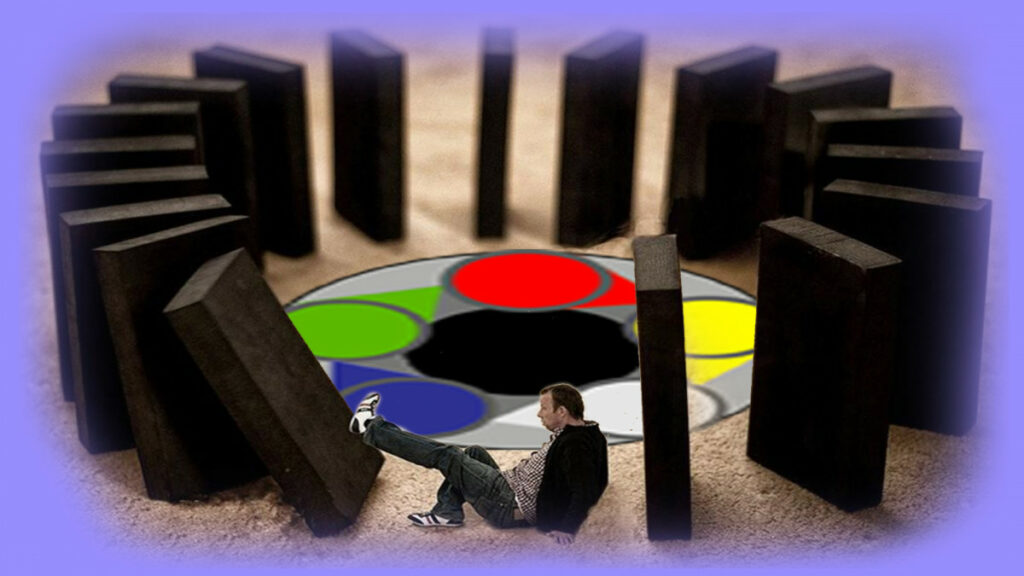
It is equally obvious that “fate,” understood in this way, cannot be “canceled” or simply “destroyed,” but it can be “transformed,” “exhausted,” or “replaced.” To counterbalance negative tendencies one must use energetically equivalent methods; desire or prayer alone will not suffice.
Work on fate is a special “article” of the Magus’ Way, in which one must take into account both the correspondence of one’s present activity (“wyrd”) to larger tasks (“orlog”), and measure one’s efforts, striving not to leave unfinished business, unrealized desires, and unfulfilled aspirations. And, of course, one should avoid romanticizing the idea, treating it frivolously, or acting irresponsibly.

Hello! Is the idea of ritually defining Fate/Path acceptable in your view? What do you think of the idea of igniting and sending self-directed vortices from our today into a conditional tomorrow? Being more pure and composed in the ritual space, sending “surplus” Power into the space around oneself, so that the daily, noisy consciousness compared to the ritual catches flashes of Power in the future. Is such a method of self-induction possible?
Hello.
Yes, of course, this is fundamentally possible if there is energy to sustain it.