
Repression, Substitution, and Transformation
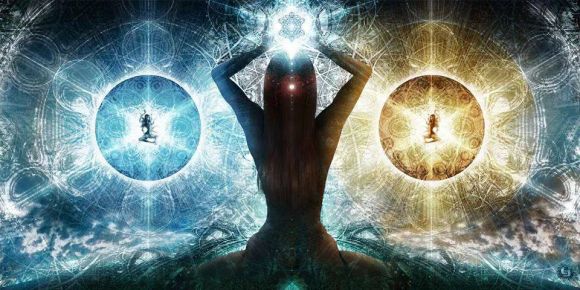
Since the current state of any embodied consciousness is usually far from its potential, from its “ideal nature,” and is formed under the influence of both constructive and destructive influences, every being that perceives this “imperfect” state as a source of inner discomfort or suffering, faces the question of how to correct the situation.
We have already said that the cause of this discomfort is the ordinary mind’s inability to reconcile conflicting impulses within itself, the poles of unneutralized dualities, whose oscillation leads to constant energy losses.
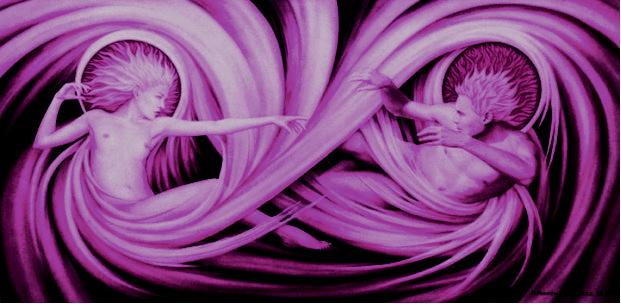
Typically the mind attempts to overcome the suffering caused by its conditioning by denying one pole of the binary, repressing it and transferring all activity to the opposite pole, which, of course, leads to the subjective sense that the discomfort has ceased and to a semblance of equilibrium.
It is clear that this approach does not solve the problem per se, although it does subjectively neutralize it. In fact, much of the contemporary means of attaining a relatively comfortable state of mind amounts to shifting it into a single “positive” pole, denying everything that contradicts it or does not fit its idealized picture of such self-perception. To say: “I am the Absolute Spirit” — is, in a way, to tell the truth. More precisely, only half the truth, because the embodied being is not simply a manifestation of the Absolute Spirit, but a manifestation of the Absolute Spirit knowing itself through its reflection in matter. Or — the manifestation of Matter striving to develop itself into Spirit.
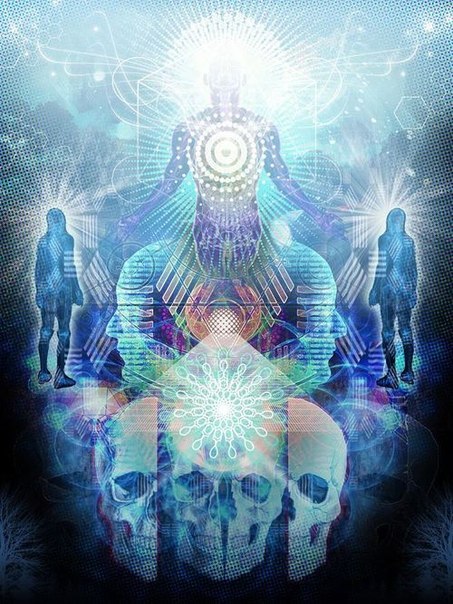
Therefore, alongside repression, there are also other ways of overcoming the limiting influence of unbalanced duality.
We have already noted that there are two principal paths or identified methods — substitution and transformation (perhaps one could speak of two kinds of transformation, since substitution, as we will see below, also includes a transformative element).
Vivid examples of the first path are mystical Christianity and certain branches of “inner alchemy.” The essence of the substitution method is that the mind creates a focal point of integral wholeness, a kind of “ideal child,” which is then “nurtured,” “raised,” and, upon reaching a certain maturity, assumes governance of the mind, “ascends the throne” within it. Symbolically and esoterically, the Christian myth describes this process: first, in a gloomy cave the God-Infant is born, then he is “taken up” into a mind consumed by destructive drives; that mind attempts to change him by evolutionary means, he loses, suffers, and is suppressed (“crucified”) by that mind, but then he rises, enters the final battle with the mind’s destructive manifestations (“the Antichrist”), defeats them and is enthroned. Reproducing in the mind the scenario of this myth requires the systematic “raising” of the “golden infant” and preparing it for its future integrative role in the mind.
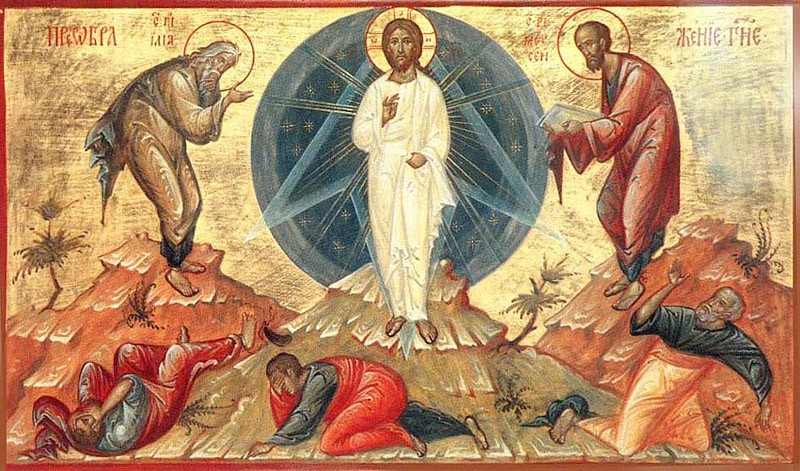
As discussed at length, transformational approaches for the development of the mind. A striking example of this path is Tantric Buddhism, along with several other approaches to “inner alchemy” and Inner Goetia. The essence of this approach is that the mind transforms its destructive streams into their constructive counterparts, for which it identifies pairs of destructive force/”genius” (or “poison/antidote”), using the mind’s latent potentials (in Buddhism these “transformational” potentials of mind are symbolized by the pantheon of tantric deities). The more such pairs one manages to discover and transform (“overcome”), the greater the harmony and integration of the mind itself.

Again, we repeat that this distinction is rather conditional, since creating the “golden embryo” already requires a certain transformation, preparing the ground for it, and so on. Thus the question becomes how “advanced” the process or mind matrix we intend to transform is: when we try to raise something from an inactive core — that is “substitution,” whereas when we seek to “heal” an already active process — that is “transformation.” Therefore Magic, as an integral Way for the development of the mind, combines both approaches, using substitution when development proceeds progressively and transformation when obstacles and dead-ends are encountered on the Way.
However, regardless of which approach (or combination of approaches) the mind employs, it is necessary to understand that only integration — unification and transcendence — allows one truly to neutralize duality, remove its limiting influences, and thus to attain the purpose of manifested existence. The perfection of the “Absolute Spirit” as such is potential; the perfection of the Spirit that has known itself through reflection in the environment is actual, and only by passing through dualities — without losing oneself in them, but by integrating them within oneself — is it possible to reach that perfection of the Pleroma toward which the Magi strive.

I read your book; it’s interesting and, I suppose, it’s fair to say that it’s unique in its own way. I couldn’t finish it because I am not a mage and will never become one, and this book is specifically for those who want to be mages.
You see, to perceive life as a set of energies, their vectors, the names of these energies, and to observe what is happening around me in a detached manner requires a great deal of strength. To desire to understand life in such a way is no small feat. The most haunting moment in your book was the episode about the guy who didn’t make it. I feel like I would do anything to ease his suffering. I can’t imagine what he felt or how he continued to live. This wild fanaticism of the KIs, despite everything… after all, you came up with a solution to the problem, and they – the mages – are indifferent, thinking, “If he didn’t make it, that’s fine; maybe the next one will.”
I’m sorry; I know this sounds like judgment, but I’m not judging anyone, really. It’s just that if, to be a mage and follow this path, one has to become either like those KIs or like the guy from the woods (and only a few can become like you, which means that the options for the majority are just two), then what’s the point?
Repression, substitution, transformation. I keep trying to simplify and schematize for myself. I understand it as trying to find those energy poles, which means attempting to feel myself not as a body but as an energetic system. If this is achieved, at least at the level of the strongest energies, then I will be able to assess which of them are abundant, which are scarce, and dilute something with something else to achieve balance. Am I understanding this correctly?
Essentially, every person is a magician, as people constantly work with energy (think, act, influence). The key is understanding oneself – naturalness. Try to find and carry yourself in this, and that will already be a significant step.
I do not want everything to go according to the old and worn-out script, which the system (in my case, the system is a set of destructive forces with which I cannot negotiate, cope, or escape from, and which ruin my life and the lives of the people around me, those who love me) presents as fate. Although, in essence, it initially creates the prerequisites for shadow, and then pulls into that shadow and simply destroys those dear to me. This is the reason why the demon is interested in its victim; it creates one picture of understanding for me, and another for others. If I had not started reading Enmerkar, I would not have understood this. Thus, if I cannot cope with this system of destructive forces, the best thing I can do is not to start any scenarios at all if they benefit the system, and if everyone who falls into this scenario ends up victims.
GLA, I advise you to fully familiarize yourself with the articles on the site, activating your observance, ability to analyze, and track. By the way, the articles are generally useful for building a healthy human psyche; it’s just that they are described from a magical perspective on this site. And your internal panic, which you are, by the way, wasting your energy on, convincing yourself that nothing can be changed and the enemy is too strong (which is unlikely to actually be your thoughts), will pass over time if you take control of yourself and stop being a marionette of ‘your’ frightening and negative thoughts.
Thank you for the advice and wishes. Certainly, learning is necessary. It’s essential to draw conclusions from everything that happens and to change. Panic has passed. Everything will be fine and as it should be. In the sense not fate, but as it should be. And in general, if it happened, is happening, then it is necessary. And with gratitude, everything must be accepted both from those who give to us, and to oneself for the ability to accept correctly.
I also wanted to add that I read in Enmerkar about happiness that not all the best roads of others should be ours; we have our own, not every super wonderful person of ours will make us happy; we need to find ours. And I would add from myself that it is necessary to let go calmly; if he is mine, he will remain in my heart. After all, I found him, which means he exists.
The shadow is the energy of unrealized desires. It needs to flow somewhere. I communicated with the Dragon of Shadow in his world. I remember he was very surprised by my appearance for understanding his essence. The best thing you can do is continue to think, understand, seek while reflecting.
Does it not seem to you that the path of replacement, in its foundation, carries too great a risk that cannot be avoided? This path relies on the assumption that the “seed” found, which is cultivated and developed to the state where it can “reign,” was “true,” “correct,” and all in that spirit. However, by default, the consciousness that has just begun this journey is not the wisest or most perceptive and is unable to distinguish the “seeds from the tares” with absolute certainty. But if an error is made at the very start of such a path, then it becomes practically impossible to correct it later, because the entire system grows and builds itself upon that mistake. And, I must admit, I personally have great skepticism about how easily one can capture some demonic entity as such a seed. Even if we consider the option of a moderately benevolent tradition without direct “deception,” how interested are traditions and pantheons in the limitless development of their followers and their subsequent “ascent from the tradition”? Instead of “cultivating” semi-servile spirits that will serve the tradition. After all, the tradition is correct; why would one want to ascend from it? One could remain within it as a “saint.” And yes, one can do moderately good and righteous deeds within the framework of the tradition. But will this be a choice of consciousness, or a feature of the cultivated seed that “took control”?
At first glance, the path of transformation lacks this fundamental flaw, as hypothetically any part of it can be revisited and “redone” if, as development progresses and wisdom accumulates, consciousness notices certain mistakes. I want to emphasize that I am discussing the fundamental possibility of correcting something, rather than the ease or complexity of the paths themselves.
Yes, of course, in order to begin ‘growing’ something, it is necessary to ensure that this ‘seedling’ or ’embryo’ is healthy and viable. However, this approach stems from the assumption that the depths of consciousness are pure and luminous, and thus it is precisely from them that one should draw the ‘grain’ for growing. Nevertheless, you are right that the danger of deception exists and cannot be ignored.
Zarak, as stated in the article, the path of substitution is not possible without transformation. Since in my understanding, the ‘seed’ is always inside a person, not outside, external traditions and religions can indeed be destructive if a person has not gone through a period of internal hermitage. It is precisely in this period of departure – the period of the dark night of the soul – that the ‘light-bearing infant’ is born, that image and idea of oneself that begins its embodiment from a potential state into an actual one. This transition is transformation. But there are people who, without withdrawal, in the conditions of reality, and only when faced with reality, including encountering destructive traditions and religions (life is the best teacher) get good tempering and diamond cutting, transforming their personality into the ultimate ideal of which they initially had no conception. This is the distinction of paths for me.
Displacement, substitution, transformation… If something was substituted for something, then it should have transformed into something similar. But if displacement occurred, and nothing replaced it, or what replaced it went somewhere, then anything could get into that free space.
I think the best way to feel the naturalness of self-discovery is to work in correctional institutions; there the barrier, the very ‘blade of the knife’ one has to walk on, is clearly visible… And the main thing is to fight for the light there, but it will also create problems with the home demons)) but the barrier will be clearly visible!!! And I think that’s worth a lot.
This may be a strange question, but you all write so polarizingly about love. For some, it is something exalted-idolic, for others, something very mundane-primitive, at the level of ‘content and free.’ I am just curious, can a magician love as a person, or does it interfere (hinder) with his path and is something permanent not in his plans at all, implying what people understand under the notion of ‘love’? Some people interpret the notion of ‘love’ as very close, trusting, friendly, and at the same time heavy, laborious, long-term relationships, implying a close connection between just two (and not as you wrote ‘two or more’ people.
I read in your blog about the importance of hunting for power. Do you really think that this hunt is more important than everything else, that it doesn’t matter how you gain this power, as long as you get it? You don’t have to answer. You are a true mage, and in the mage’s world, as well as magic, there is no morality. Good luck with the hunt. And… about possessiveness, envy, etc. You know, despite everything, there are exceptions, there are those ‘freaks’ who do not understand the meaning of envy, who regard possessiveness just with a feeling of ‘disgust,’ and ‘mine’ does not mean ‘I won’t share, envy me,’ but simply that if it’s mine, then it’s a part of me, my life, my world. I wish you all the best, dear Enmerkar.
And also, not all the nonsense that is written online turns out to be nonsense. I just read this: ‘Don’t rush to burn yourself for someone; maybe they just wanted to light a cigarette.’
gla, why do you invent someone else’s thoughts for them?) These thoughts are not Enmerkar’s, but yours… From your thoughts, one can conclude that you harbor a deep resentment, which is expressed here as a claim. For what? How did Enmerkar hurt you, what did he do that was so bad? What truly bothers you? What gestalt are you trying to complete here? I have many such gestalts. Let’s unite…))) For example, the gestalt of rejection and ignoring (especially from a certain authority – Guru), this very situation has worked and manifested from the conversation with you. But let’s start by discussing the feeling of acceptance… Acceptance of other people and their shortcomings, acceptance of the situations that arise, acceptance of your own mistakes and those of others, acceptance of yourself as a whole… How are you doing with this?
And a general question, probably for everyone – why do claims arise, what are the mechanisms of their emergence?
Here’s the English translation of your text:
“A strange question from someone advanced in the magical realm. There are claims against oneself and against others too. The mechanism is simple. There’s a problem that one wants to solve. This is a problem involving two people, for example. It needs to be understood, clarified, and ways of resolving it found. Some want to search for solutions, while others are perfectly fine with keeping their partner in the dark (for some reason). And from unresolved questions arises irritation, which can grow into illness, psychological or mental disorders. In your language, this is called a “shadow.” When there is a desire (true or not), but it cannot be realized in this situation. Thoughts come that can distort everything to the impossible, and no one can or wants to dispel this stream.
Then there are baseless complaints, like “you must,” simply must, and that’s it. And there are real complaints, where something or even everything depends on a person, but they do nothing. And then there is only one solution: to put an end to everything, to stop it all, or to continue destroying your psyche with guesses, grievances, allowing inner evil to brew, twist, and lead to despair. And in reality, you are allocating a lot of energy to these demons or to a person who specifically wants this. There are indeed energy vampires.
But everything has its limit. And there is a measure that can be endured, or maybe you just don’t have the strength anymore.
Well, generally speaking, people can simply respect each other and, if they can, are unlikely to resort to manipulation, stupid usage, or indifference. After all, saying “no” to a person primarily signifies respect, understanding that pain will lead to liberation and a new life. Silence will lead to terrible consequences, and only disrespect and complete apathy towards the fate and life of another person explain such behavior.
And since it’s anyway “a volume of Marx before bed,” meaning I’ve written a lot, I will also touch on forgiveness. For example, the situation when one person gets carried away, becomes fervent, and messes things up, causing pain to another, etc.
When we forgive, we take on the guilt and consequences of another person’s wrongdoing. So, if we forgive someone we will be living with for life, we will tackle those consequences together. But if we forgive someone who doesn’t care at all, then we will add their consequences or payment for someone else’s mistakes to our own problems. Thus, you should forgive those you live with and who are truly ready to atone for their guilt with you. They will be grateful that you agreed to share this burden with them. As for others, they should not be forgiven but removed from your life, consciousness, and mind, so that they have no chance to control you any further.
As one wise person said, “You need to live with a person, not just cohabit.” To live means to talk, understand, respect, forgive, endure, feel. And yes, I don’t see anything terrible in adoration either! I would like for myself to be both respected and adored, and if I want this, then why shouldn’t someone else want it too?
Oh, esteemed Enmerkar, if you have the strength to read this, I would be very grateful if you could shorten it to a manageable size; I trust you. Well, of course, I respect you and even sometimes love you. But that can also be disregarded; you already know it.”
“When we forgive, we take on the guilt and the consequences of another person’s wrongdoing.” It can also be understood differently: if we forgive, it means there was a grievance. A grievance is pain. If we forgive, we free ourselves from that pain, we free ourselves from the influence of the offender’s actions. Then the question of trust arises. Can you trust, that is, be vulnerable to the person who causes you pain, or not? If you can trust, then you can live together and deal with the consequences of their actions; if you cannot trust, then you will not live with them and will leave. There is no guilt anymore – you have already forgiven their wrongdoing.