
Symbolic Acts
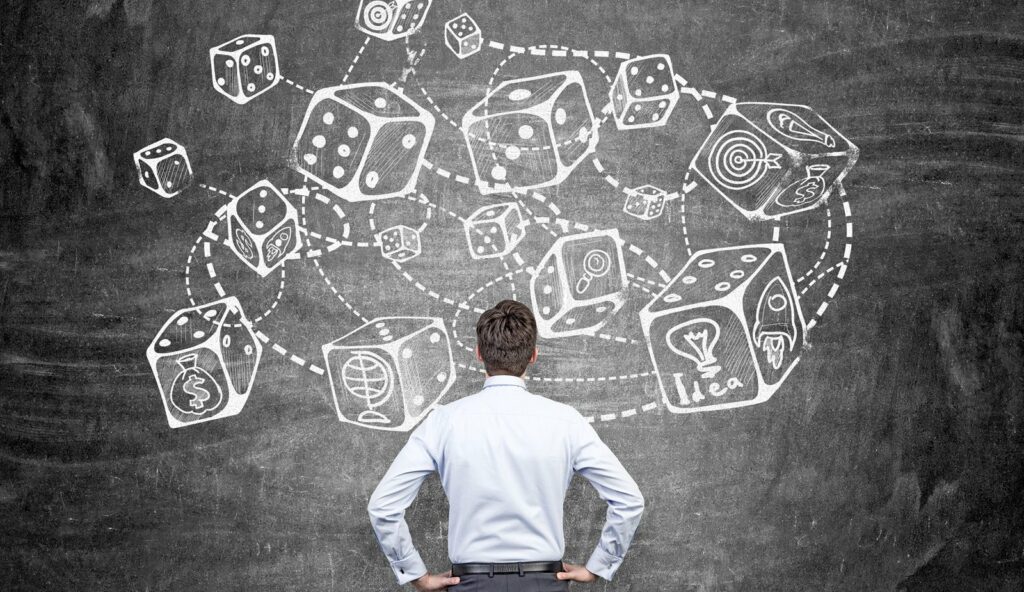
Since, from the point of view of the Myth we are considering, the manifested universe is a field of probabilities, each of its possibilities, each of its potentials can be realized in many ways and by different agents. In other words, for any potency the main concern is that it manifest, while how, by what method, and with whose participation is a secondary question.
It is precisely this notion that underlies the system of symbolic and mysterial actions used since prehistoric times to influence the game of chances.
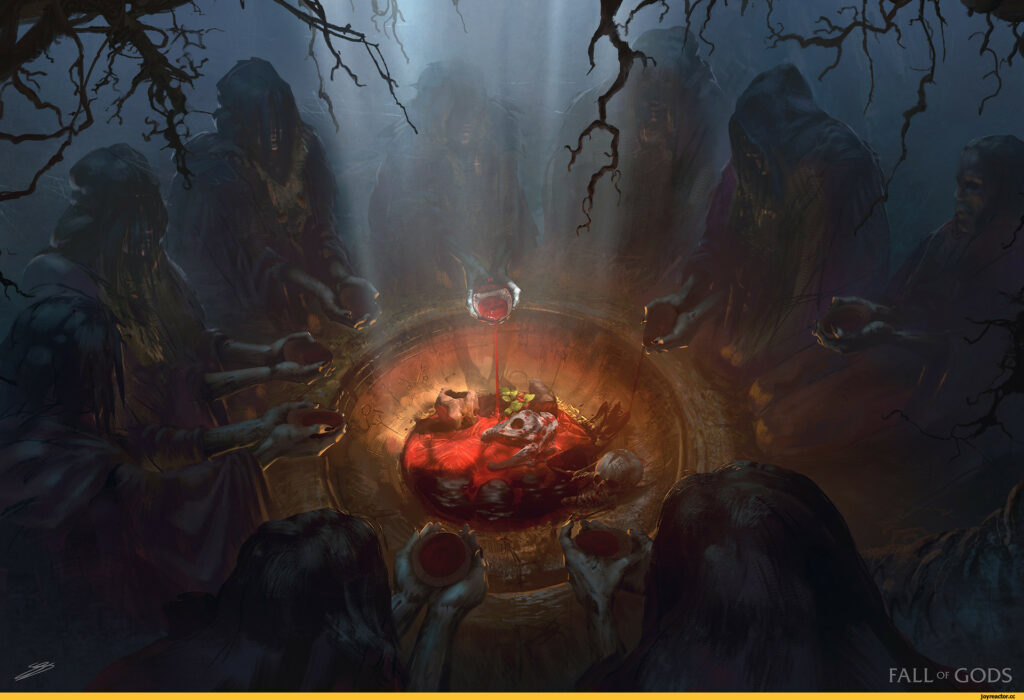
At the same time, in any event, as the manifestation of the corresponding logos, one can find the most characteristic features that express its identity and serve as indicators of its actualization. Just as language possesses a certain redundancy (that is, you can read sentences and understand their meaning even when most of the letters are omitted or rearranged) and needs only certain marker combinations to preserve meaning, the event sequence likewise allows variability in a large portion of its elements, relying only on a limited number of constants.
Thus, by manifesting a set of invariant features, we, in fact, bring about the event, even if it usually manifests differently.
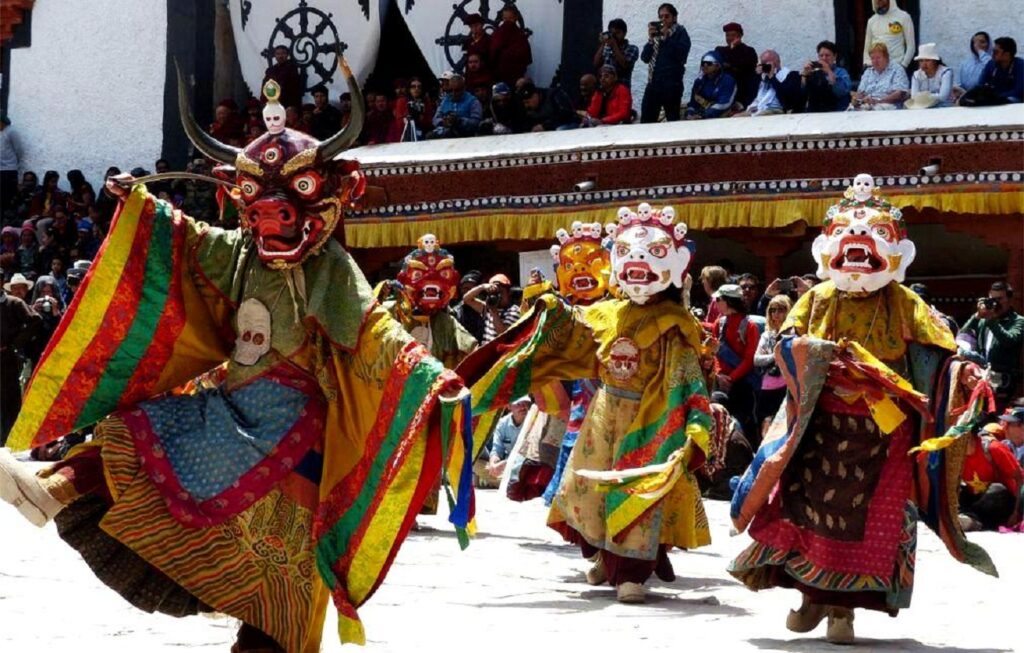
For example, when Tibetan lamas perform the ritual dance tsam, expressing the game or war of demons with an auspicious outcome for the spectators, they, in fact, enact the possibility of that game, and therefore for its destructive course (which the dance is meant to prevent) in this space no free possibility remains.
What has been said can also be explained with simpler examples. Let us imagine that in a family a grandmother likes to go to the store for milk every day, and at the same time constantly quarrels with the saleswoman, creating a negative image of her family. If, before her, her grandson goes to the store first, buys milk, and speaks to the saleswoman politely, then the grandmother will no longer have reason to go, and the level of negativity will decrease (a real grandmother, of course, will find a way to take it out on someone else, but if the goal is to spare the saleswoman’s nerves, then that goal is achieved). That is, by realizing a “substitutional” scenario, it is possible to avoid or reduce the negative manifestations of a process.
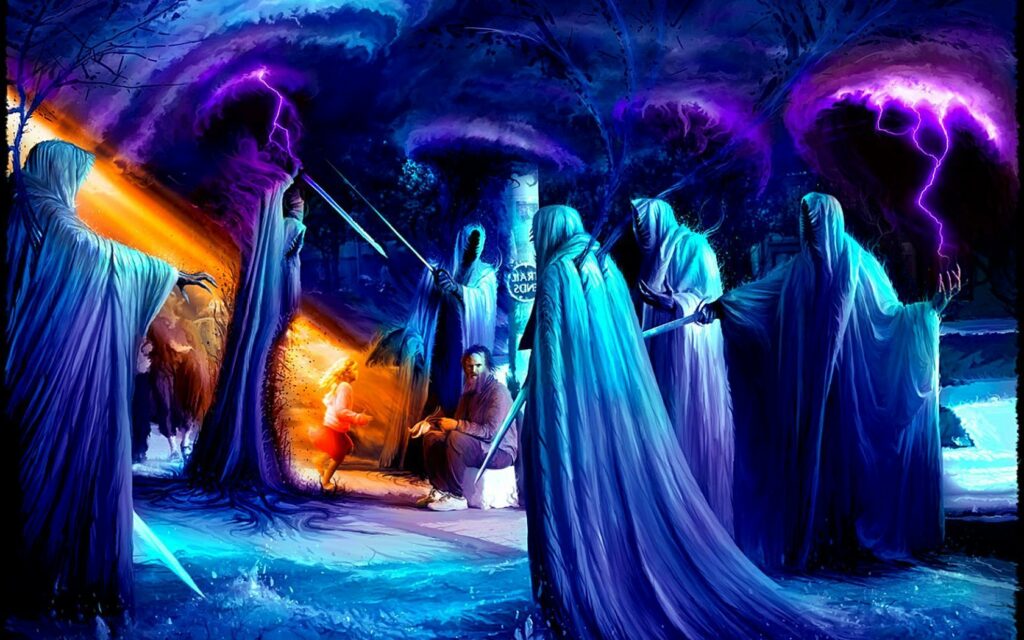
In a similar manner, when, in Ritual, a magus acts as the creator of his mini-Universe, he enacts a scenario that suits him and thus obtains the result that would be unattainable under a different course of the process.
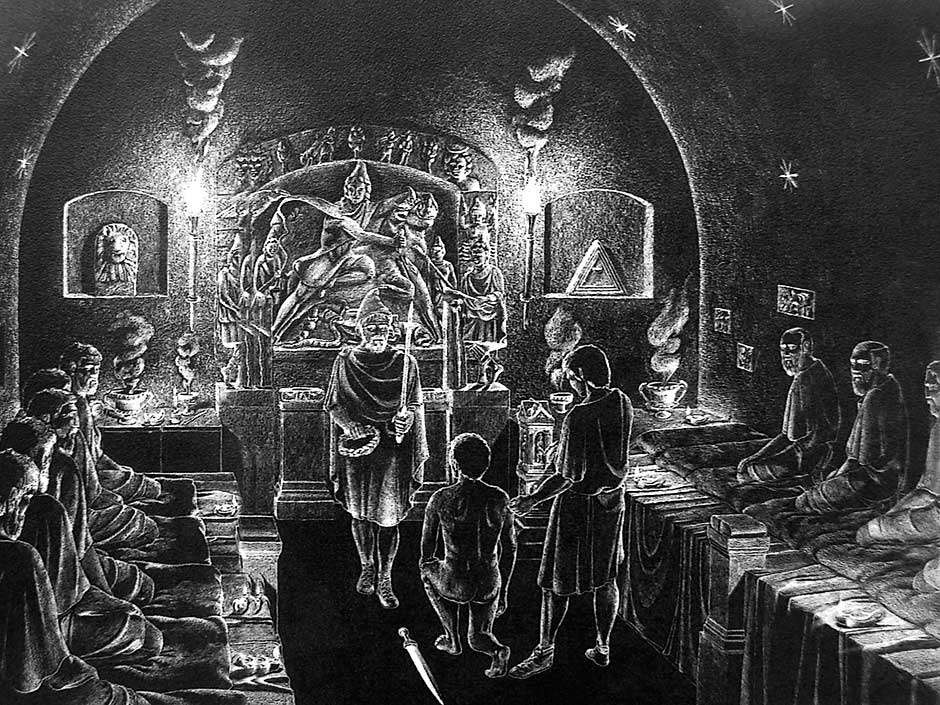
Passing through a symbolic event scenario in a mystery, the mystic enacts one or another archetypal event in his own experience, and in doing so not merely imagines, but actually attains on his level the stage or degree that a deity or hero attained elsewhere by a deity or a hero.
Accordingly, for such a “substitutional action” to work, the main thing is to find those key signs that determine the identity of the corresponding logos. In the same way that, by reproducing the attributes of one or another mental matrix, we activate it in ourselves, by manifesting the key attributes of an event we, in fact, bring it about in the space of probabilities.
Therefore the study of symbolic series and systems constitutes such an important part of the art of Magic. A magical symbol is not merely an “indication” of one object or another; it is one of the forms of existence of this object, and therefore working with a symbol is, in fact, manipulating the object itself (or being).
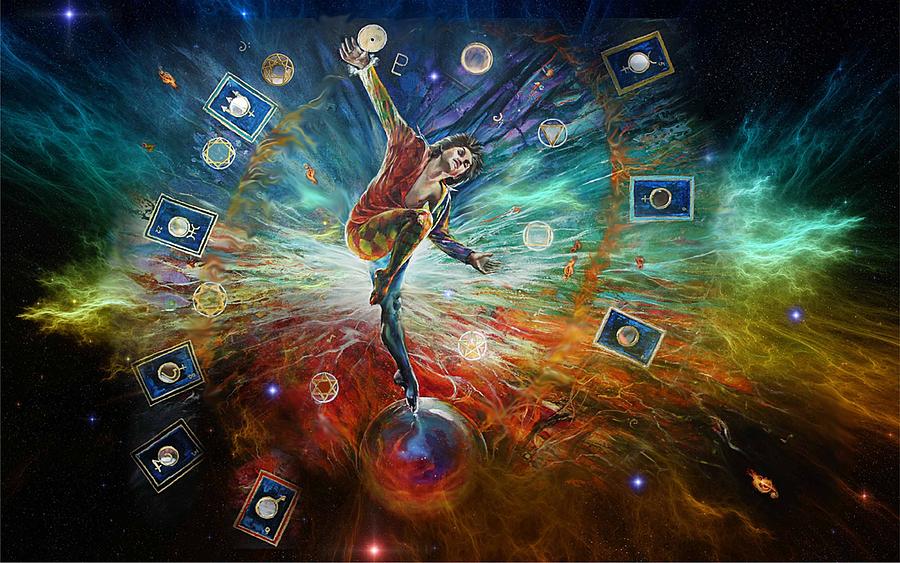
Moreover, participation in a ritual itself, taking on the role of the Creator, is a “double” action which, on the one hand, has a manifesting effect, and on the other hand transforms the operator himself. For example, when an eril carves runes, he, in fact, activates within himself Odin’s matrix, transforming his very being.
The notion of how and when one should interfere in the natural flows of probability is an indicator of the traveler’s wisdom and maturity. Sometimes, by “replaying” the seemingly unfavorable scenario of one event, one can set in motion far more destructive probabilities for another event. The art of magical transformation must always include knowledge both of the nature of the flow being reconfigured and of the specifics of its interaction with others.
Yes, one can indeed change the past. The more energetic echoes (and the stronger they are) of past events, the more they affect the present and the future. And where it is, in which reality, is not important. Especially if it is being fueled here and now.