Interspace and the Threshold
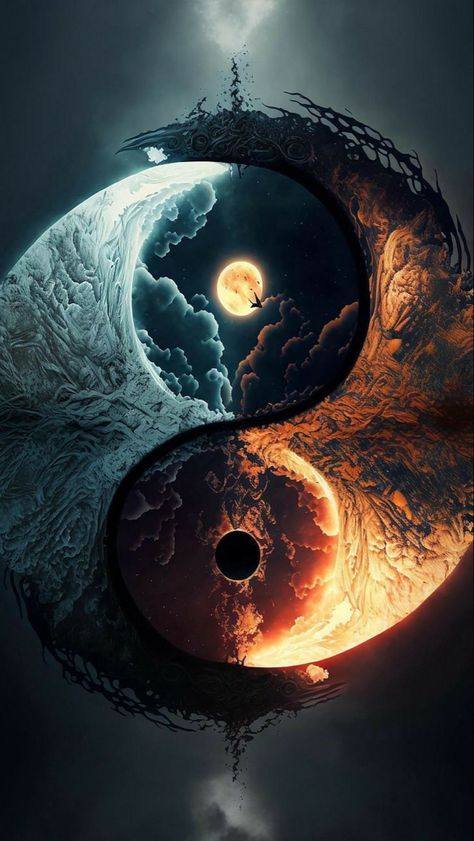
When it comes to the immeasurable and boundless expanses of the Interworld, it is very important to remember that these expanses are potential — i.e., they have a completely different nature of reality than the manifested world known to us. At the same time, the very concept of “space” is applicable to the Interval only conditionally, since there is no way to “measure” the Interworld: the process of measuring or observing immediately shifts it from a “virtual” state into a “real” one — i.e., it limits it, isolates certain properties from its totipotent fabric, creating a world or its semblance.
That is precisely why the Interval is both an immeasurable space and an infinitesimal boundary, and it can be described equally accurately as having unlimited extension and as having no extension.
The terms proposed to describe the Interval — Lat. “Limbo” (Limbo), Heb. “Kav” (קו), Arab. “al-A‘rāf” (الأعراف), Greek “Horos” (χορός) — all take this ambivalence into account, describing it simultaneously as space and boundary (Lat. limbus — “edge,” “border,” Arab. الأعراف — “barriers,” Greek “χωρέω” — “to separate,” “to demarcate” or “to limit,” and at the same time “χόρος” — “chorus,” “assembly”).
Gnostics also distinguished the Interval as a Boundary (Horos) and as Space (Ahamot, Greek άχαμωθ”, from Heb. “חמות” (chamoth) — “emptiness,” “waterless desert”), viewing them as two aeons or two manifestations of Sophia; Ahamot was considered the “impure” part of Sophia, her “fallen” part, whereas Horos was described as a force preventing the mixing of the higher spiritual aeons with the lower material world. Moreover, in Gnostic texts Ahamot and Sophia are often regarded as different aspects of one and the same aeonic presence, and they may have similar names and attributes.
In other words, while Gnostic teachings speak of aeons as spaces, describing the forces and agents generated by them, they conceive of the Interval as extension. However, when it comes to the Gates that ensure transitions between aeonic subspaces or between the Interval and the worlds — there arises a need to regard the Interval as a boundary, and it is precisely for such a description that the Gnostics used the term “Horos.” It is in this sense that Horos is often called the “thirty-first aeon,” implying that it is an arena of confrontation between service hierarchies that maintain the balance of energies.
In John Dee’s system, the role of such a boundary between the material world and the world of aethers (which is considered a higher level of reality) is played by the Watchtowers, but this is not entirely accurate, since in this terminology it would be more accurate to speak of the “outer circle” of the aether Tex, which is what the Towers maintain.
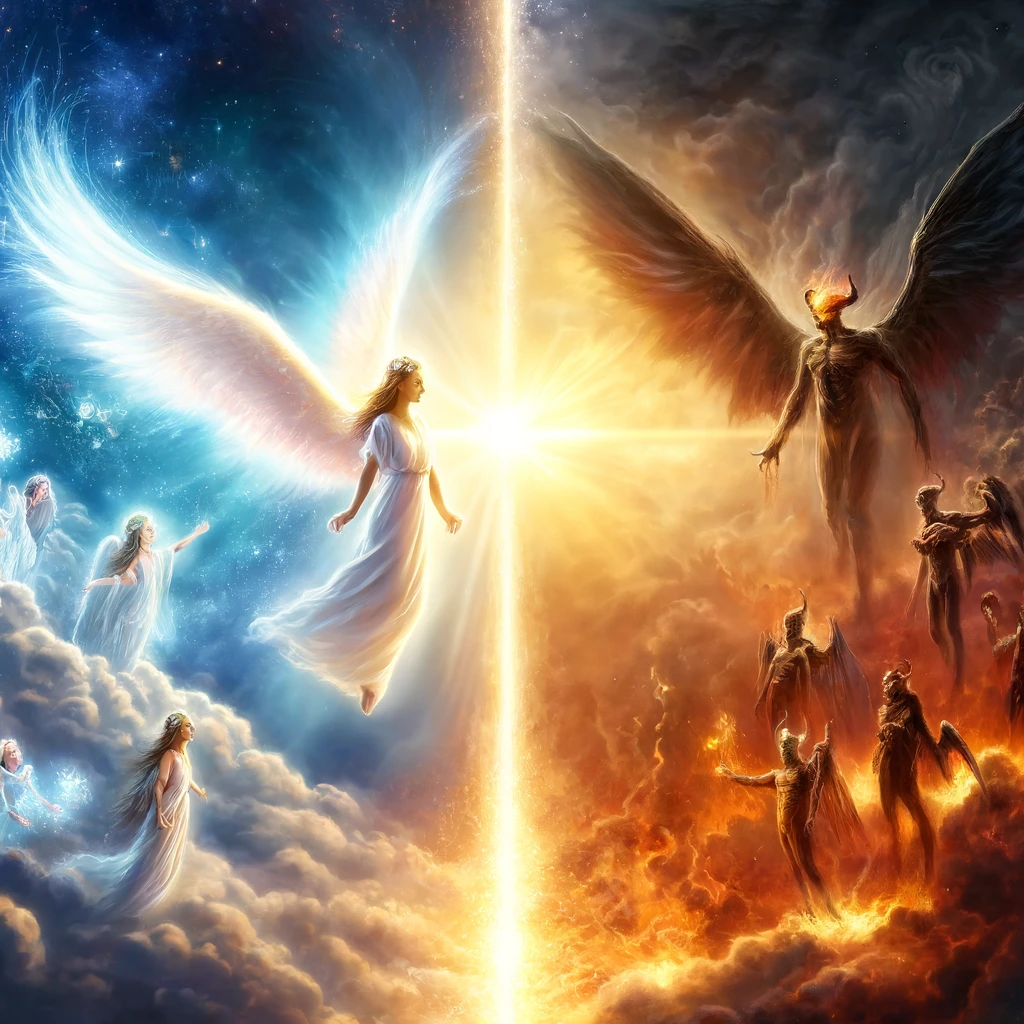
Similarly, Horos in Gnostic teachings is also viewed as a boundary between the material world and higher levels of reality, represented by the worlds of aeons, and both images are linked to the idea of passing through a boundary within the framework of spiritual development or initiation.
Accordingly, the mind in the Interval also experiences this dualism: it is simultaneously limited and wandering, asleep yet dreaming, alive and dead, etc. And just as from any point in the space of any of the worlds mind can instantly move to any point of the Interval (in sleep, trance, or postmortem), and in the Interworld itself — instantly move between its “regions,” all forms of mind, all beings that are in this state, are simultaneously scattered across its expanses and concentrated in a spaceless singularity.
Therefore, when we speak of Gatekeepers, Epikletes, Archons, and other forms of intermediate existence, we can simultaneously describe the areas of their habitation, spheres of influence, functions — and understand that all this is only potentiality, a dream, a vacuum, in relation to which it is incorrect to speak of “actions” or “functions.”
Thus, it hardly makes sense to try to describe the “life of Asmodeus,” the “character of Kaspiel,” or the “appearance of Hagith” in and of itself: all of them acquire tangible reality only by manifesting in one of the worlds, by virtue of energy and with regard to the laws of functioning of that world. We have already said repeatedly that each of these forces can with equal probability be viewed as a being or as energy, as an agent or as a tendency, and both descriptions are equally valid, though limited.
In the same way, “journeys” of mind across the expanses of the Interworld can also be described as its various states, and both descriptions will be equally true and equally incomplete.
Accordingly, the question: “Where is the Interworld located?”, like the question: “Where is Dreaming located?” has no unambiguous answer: they are simultaneously in being and in the mind of the perceiver, in reality and in mind, in energy and in possibility.
For a Magus it is very important to understand that when speaking about these categories, one should not apply to them the familiar templates and measures of the manifested world; and in discussing the nature and influences of the inhabitants of the Interval, one should not ascribe to them the properties of manifested beings.
Taking these features and ambiguities into account, it is necessary to develop a special methodology for studying the “spaces” and “peoples” of the Interworld, because one thing is absolutely clear: it is precisely there that the causes and motives that govern manifested processes in the worlds are rooted; it is precisely from there that the origins of will, gravity, aspiration, and attraction emanate — which we call our life and world.
There are no birds in the interval. right? There are no birds there, because a bird is life. Could you comment on this statement? Thank you.
I think that to better understand the difference between the virtual and the real, one needs to contemplate the concepts of Energy and Potency. You often use the term Abyss; is it the same as the Interval or different concepts? From your video about the astral: physical reality, astral – augmented extrasensory reality, and the Abyss.
Abyss (Tehom, Abaddon) is a general term for all potential, aeonic reality. The Interval (Bardo, Khoros, Duat) is that part of the Abyss that participates in the formation of reality. This is the place where potentials are already ready for realization, and where impulses are “departing” into a potential state.
What will happen to an unrealized intention? For example, I have wanted and tried to create a computer game (write a book, … build a factory) for many years, but have never succeeded.
Such intentions go into the Shadow.
https://enmerkar.com/en/way/lack-of-realization-dissatisfaction-and-the-shadow