
Guides and Gatekeepers
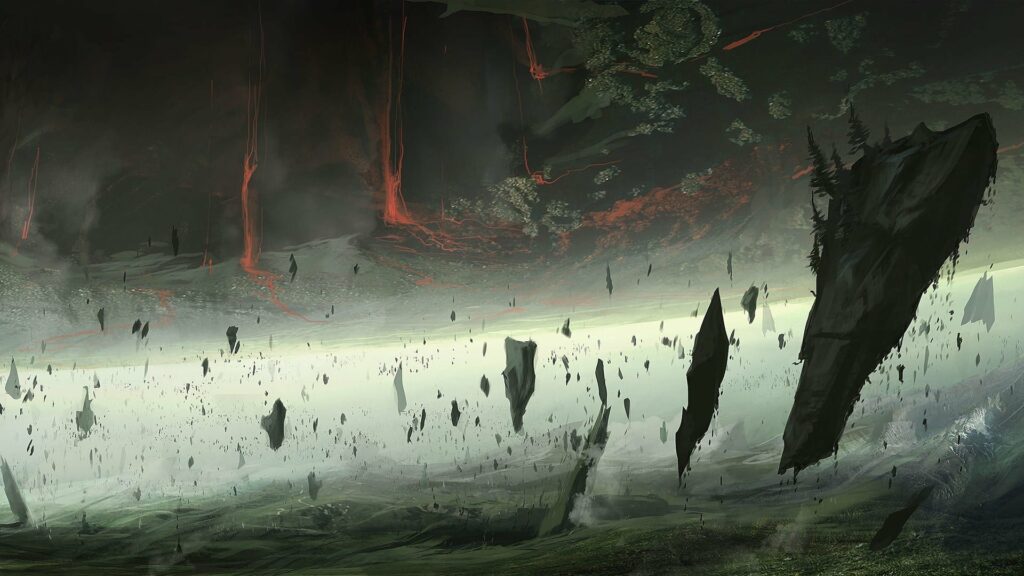
Since the fundamental property of the Interval is its otherness relative to any world, it is precisely this that separates manifested spaces from one another and serves as the “inside-out” of each of them.
We noted that the Interval is both the “cauldron” in which reality is born and the “shell” that makes this reality stable and productive. No creativity in the absolute sense of the word is possible without drawing on the Interval’s resources; everything genuinely new that appears in the worlds comes from the Interworld, emanating from its totipotent hyperspace.
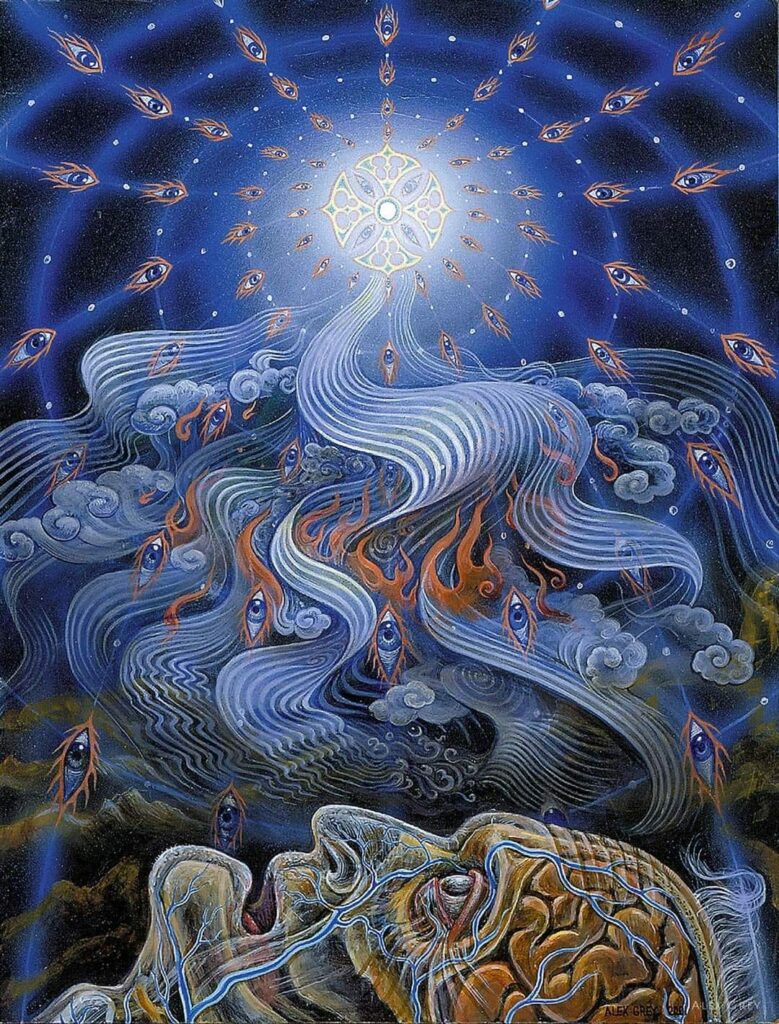
In this regard, for the worlds, the Interval is the source of their life and the forge of their generative forces; however, it also acts as an energy sink, since all outflows of pneuma into qlippoth also pass through the Boundary of the Interworld.
We have already said that all the forces governing the “separating” aspect of the Interval can be reduced to two main hierarchies: the Guardian of the Threshold and the Opener of the Gates. The most important property of the Limit is its selective permeability: it cannot be completely closed, because in that case the worlds, deprived of an influx of new possibilities, would quickly perish in “heat death,” equalizing all their potentials; but it also cannot be easily traversable, because in that case streams of predators would rush into the worlds, likewise bringing doom.
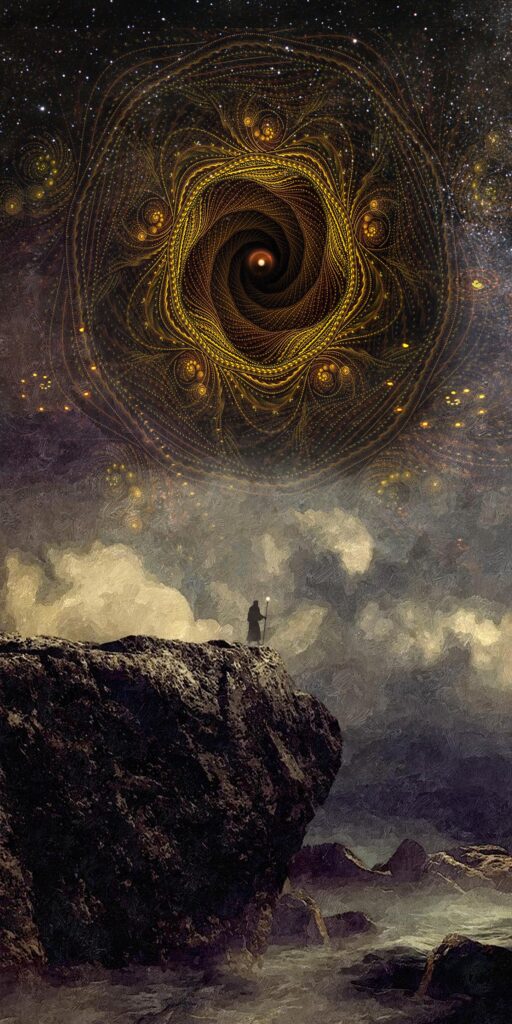
Accordingly, the balance between the two hierarchies mentioned takes on special significance.
The boundary’s strength is upheld by many gods, and it is also the responsibility of angelic hierarchies and extra-hierarchical Guardians.
The limit’s permeability, however, is supported by a wide variety of beings, among which there are both servitor and free beings, and extra-hierarchical entities, since crossing the Boundary is a very specific process, and each type of its crossing requires a special “carrier,” adapted precisely for this narrow purpose.
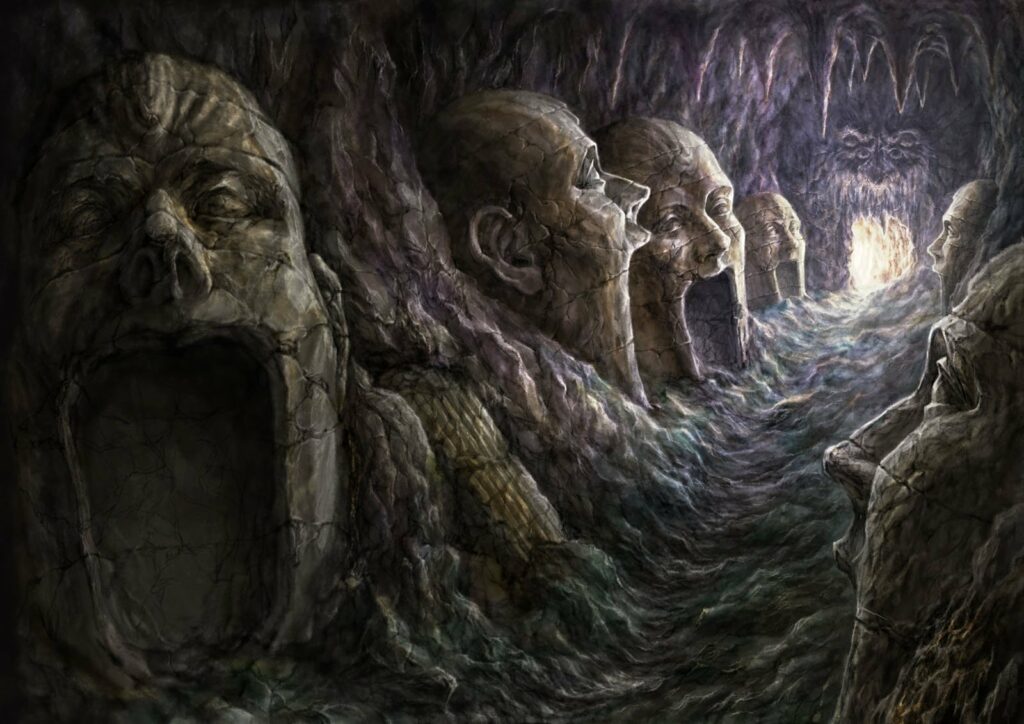
We have already discussed that the fundamental property of the Boundary is the presence of special structures within it (or beings) called Gates. Each Gate is simultaneously a being, an element of space and an act of exchange between realities.
The concept of Gates was especially developed among the Ancient Egyptians. According to descriptions found in the wall paintings of the royal tombs of the Valley of the Kings, each Gate or Pylon consisted of three parts:
- a fiery serpent standing before the entrance — the Guardian of the Gates,
- the Gates themselves, which are described as an architectural portal and as a goddess,
- guardian deities.
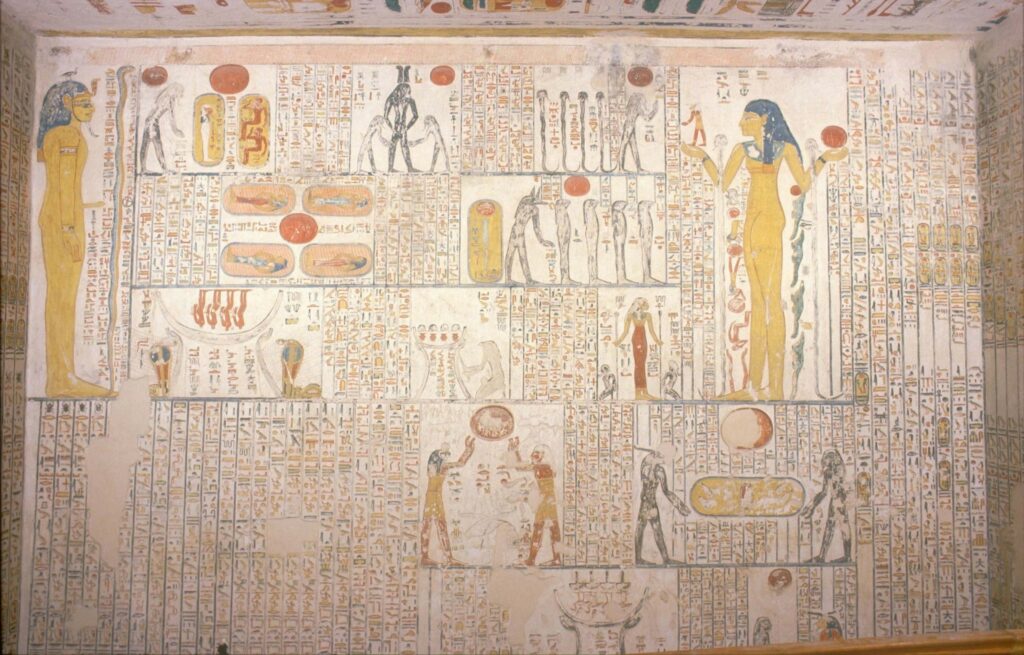
As an illustration, let us provide a description of the system of Gates:
- 1st gate: the god Sia (the personification of perception), standing at the prow of the solar barque, calls upon the serpent “Defender of the Desert” to open the gate for the arrival of the god Ra, who in the form of Atum (the personification of the setting sun) watches the destruction of his enemies.
- 2nd gate: the guardian of this gate is the god “Devourer of Sinners,” and in front of it is a lake of fire.
- 3rd gate: the guardian of this gate is the serpent “Sting,” and the portal itself is the goddess “Mistress of Food.” Several jackals guard the “Lake of Life,” access to which is closed to the dead, since here Ra gains breath.
- 4th gate: deities carry ropes with which they measure the fields of the underworld — just as in the everyday life of the Egyptians, measuring fields served for taxation. Also depicted here are four ethnic groups: the Egyptians (“the cattle of Ra”), the Levantines, the Libyans, and the Nubians.
- 5th gate: this gate is guarded by the goddess “Lady of Duration,” and their guardian serpent is “Flame-Eyed.” The serpent Apophis lives here — the embodiment of evil and chaos, the chief enemy of Ra, called the “Evil Face.” 20 deities restrain his destructive power while the heads of his victims appear from his coils. The barque of Ra continues on its way.
- 6th gate: Ra’s boat approaches seven pillars with jackal heads, to each of which two enemies are tied, awaiting execution.
- 7th gate: it is guarded by the goddess “Shining,” behind it are 20 gods holding a rope that ends in four whips, four falcon heads, and four human heads.
- 8th gate: in this passage lives a fiery serpent that burns the enemies of Osiris.
- 9th gate: here Horus and Seth stand on a lion with the head of a hawk.
- 10th gate: Apophis appears again, but is bound in chains so as not to harm Ra.
- 11th gate: they are called “Mysterious Approaches” and are guarded by a cat-headed god named Miuti (“Meowing”).
- 12th gate: here stand the goddesses Isis and Nephthys in the form of serpents. The journey through the gates of the afterlife ends, and the sun rises above the world in the form of the sacred scarab Khepri, personifying the morning Sun.
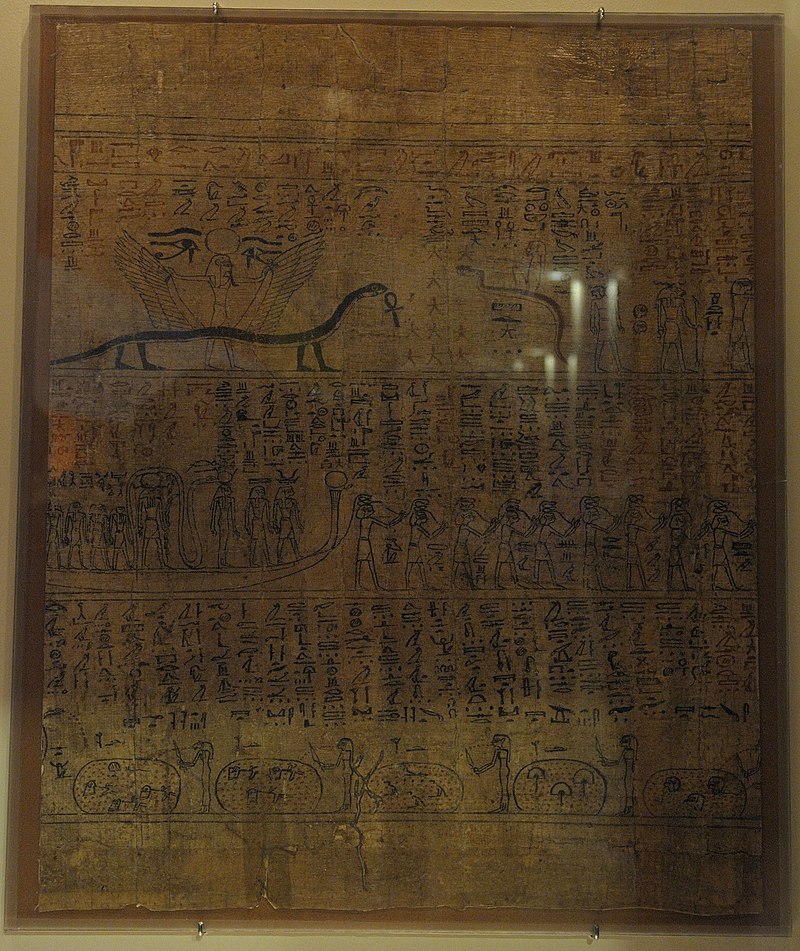
Thus, the Gates are, in fact, a regulated means of transition of beings, things, information, or energy from one fixed state to another.
To determine the possibility and mechanisms of such transitions between worlds or states, the direction of transfer is of particular importance: into worlds or out of them. Then, the object of transfer also matters — beings, their remains, or energy.
- Into the worlds, energy is introduced by primary creator gods, giving an impulse to further creative forces. Such are Uranus, Brahma, Svarog, Dagda, and others.
- Energy out of the worlds is drained from them by archons and kidnemon, as well as, in smaller volumes, by other predators of the Interval.
- Mind is clothed in a new incarnation with the help of pro-generating deities — dís, rozhanitsy, and the like.
- after-death departure is carried out by the hierarchy of Abaddon: reapers and ferrymen.
- Wisdom comes into the worlds with the help of initiatory forces — hierophants and luminaries.
- Beings are taken from the worlds by valkyries, Fomori, and some ussids.
At the same time, any type of transition requires the ability to switch the mode of a being’s functioning: all boundary beings and entities are simultaneously real and virtual, formed and chaotic, powerful and limited; one could even say that they are simultaneously alive and dead.
The ambivalence of such forces is clearly seen in the images of transgressive gods, who are creators and destroyers, benefactors and criminals without any apparent contradiction. This dual nature is very important to take into account when interacting with them; it is important to understand that the Forces of the Limit can always “turn” an unexpected side, show their “shadow” face, and many magi have paid dearly for carelessness and inattention in communicating with them.
So, does every transition cost the mage his energy? And each conduit is individual. By the way, there is a very interesting movie on this topic. Ink by Jinas. Hello.