Contingency, Determinism, and Creativity
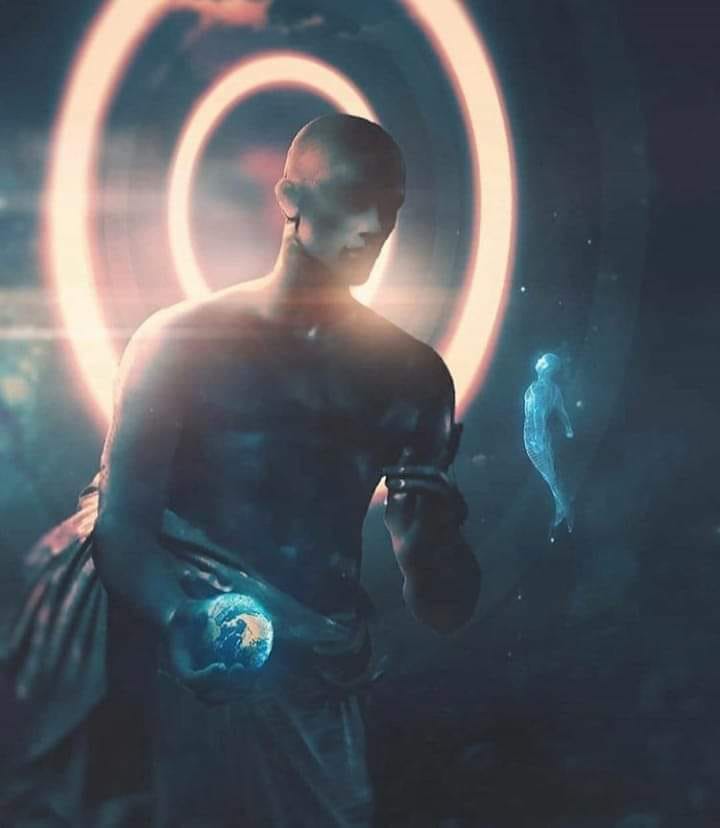
As we have already said, the Myth we are considering describes the birth of “reality” from the Interval in a way similar to concepts of quantum physics — more precisely, the so-called “Many-Worlds Interpretation,” which implies that the collapse of the wave function does not actually occur. Proponents of this interpretation believe that every possible state of a quantum system is realized in a separate branch of the universe. In this case, when a measurement is carried out, the observer is in one of these branches and sees only one definite state, although all other states also exist in parallel Universes.
Specifically, each world is one of the possible states of being or mind, one of the actualized possibilities, for which all other probabilities are “virtual.”
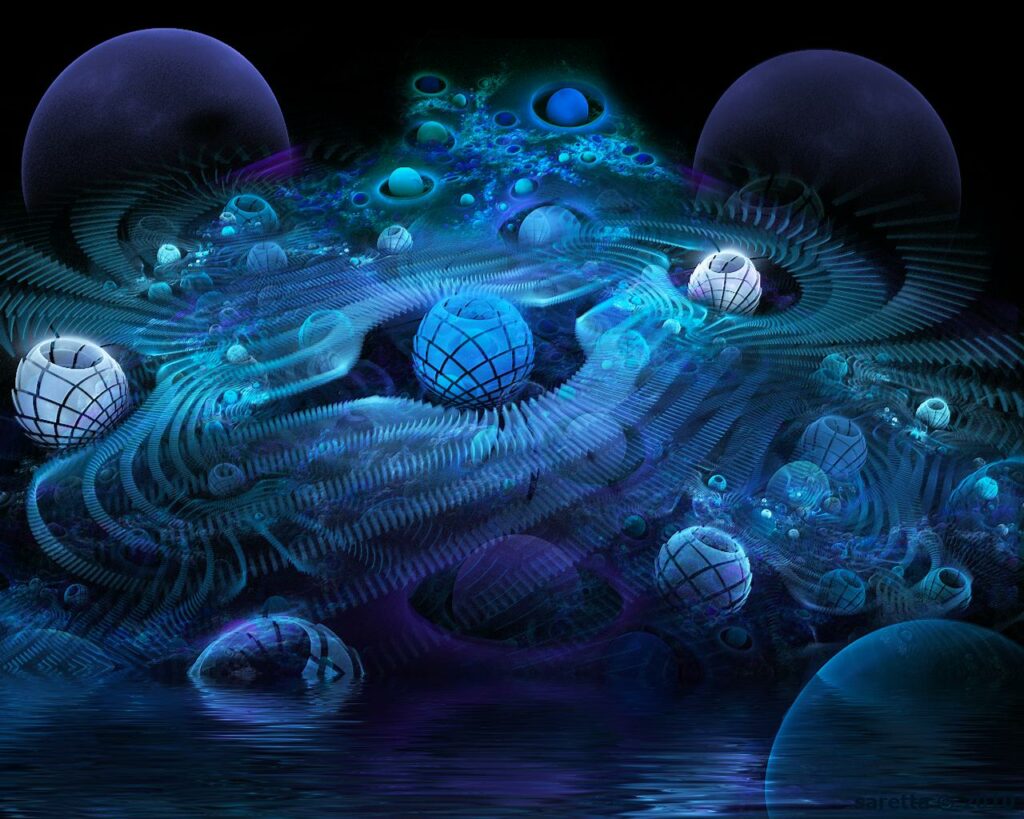
Nevertheless, in each realized reality, order prevails; events and processes are rigidly determined. Thus, from the Interval, a space of absolute indeterminacy, an infinite multitude of rigidly determined worlds emerges — realms of regularity that exist in their absolute definiteness from one quantum fluctuation to the next.
At the macro level, so-called “randomness” is merely a name for ignorance or the inability to predict a system’s state exactly due to the influence of many microscopic factors. If observers knew all initial conditions and the laws of interaction, they could precisely predict the future state of the system. This is the determinism of reality. However, at the quantum level, randomness is a fundamental feature of nature. The microscopic world consists of wave functions, which represent a probability distribution of particles. This means that one can only calculate the probabilities of various outcomes, but it is impossible to predict exactly which of them will be realized in a given timeline.
Randomness also manifests in the birth of particle–antiparticle pairs from the vacuum, or — in the emergence of matter from the Interval. Physicists call this process vacuum fluctuations. In quantum field theory, the vacuum is not empty, but rather a continuously changing field of quantum states — just as the Interval, from the point of view of the Hermetic myth, is an ever-changing generative state. At the same time, the Interval is not merely an indeterminate potential state; it is a state of absolute interconnectedness, or, in the language of physics, complete “quantum entanglement.”
Namely, one can speak of two interconnected and interpenetrating modes of reality: the absolutely indeterminate Interval and the absolutely determined Worlds. Since in the Interval everything is connected to everything, no work can be performed in it, no energy can be generated or transformed, and therefore a need arises for a reality where this transformation is carried out.
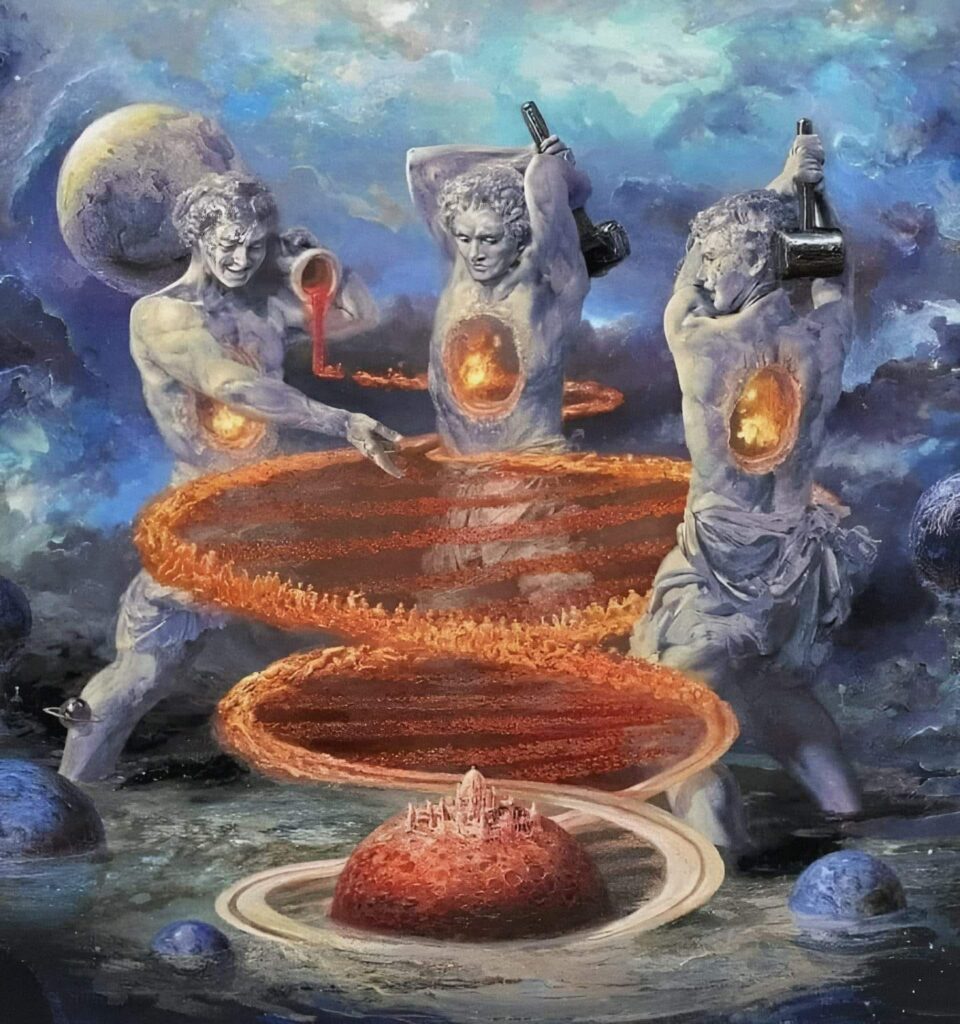
As mentioned, the forces that carry out the transition of reality from a potential to an actual state — that is, those “otherworldly observers” who “separate” possibilities into branches of their realization — are called Archons, or the Rulers of reality, and this process of fixing possibilities is “Universal Fate” or “Heimarmene.”
Since the Archons perform the function of affirming reality, they are attributed secondary causality, correlating them with so-called “planetary” influences in the “materializing” aspect. The Archons simultaneously shape reality and limit it, carrying out the partitioning of probability streams and hindering full awareness; therefore they are simultaneously “creators” and “jailers.”
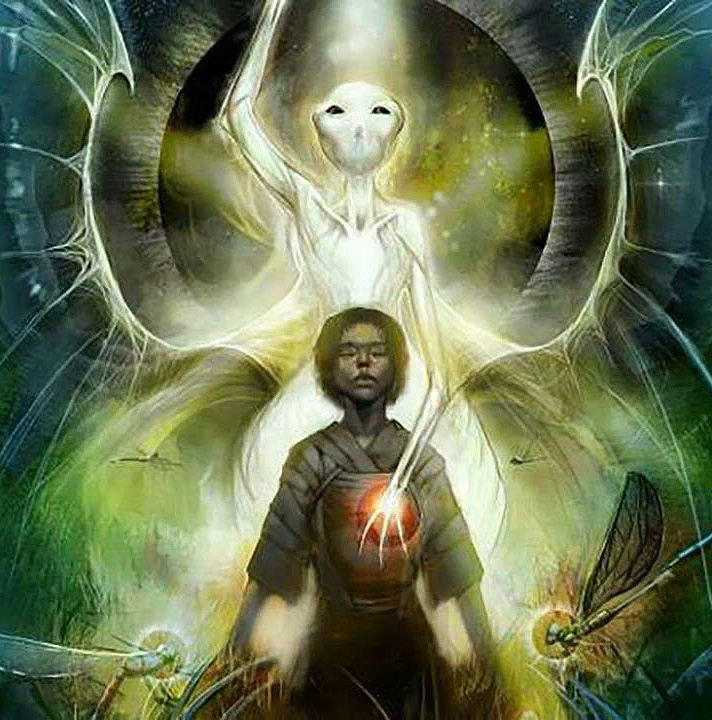
Being manifestations of the “Demon of the Abyss,” the Archons “shatter” reality, creating multiverses and endlessly branching consciousness; they lock its separate streams in their worlds, enslaving them with the “World fate” of determinism. It was precisely such activity of the Archons that the Gnostics considered the true evil; it was this that they strove to overcome by attaining gnosis.
It turns out that each individual stream of mind moves in a cycle between two “extreme” states — either falling into the indeterminacy of the Interval or becoming trapped in determinism of one of the branches of reality.
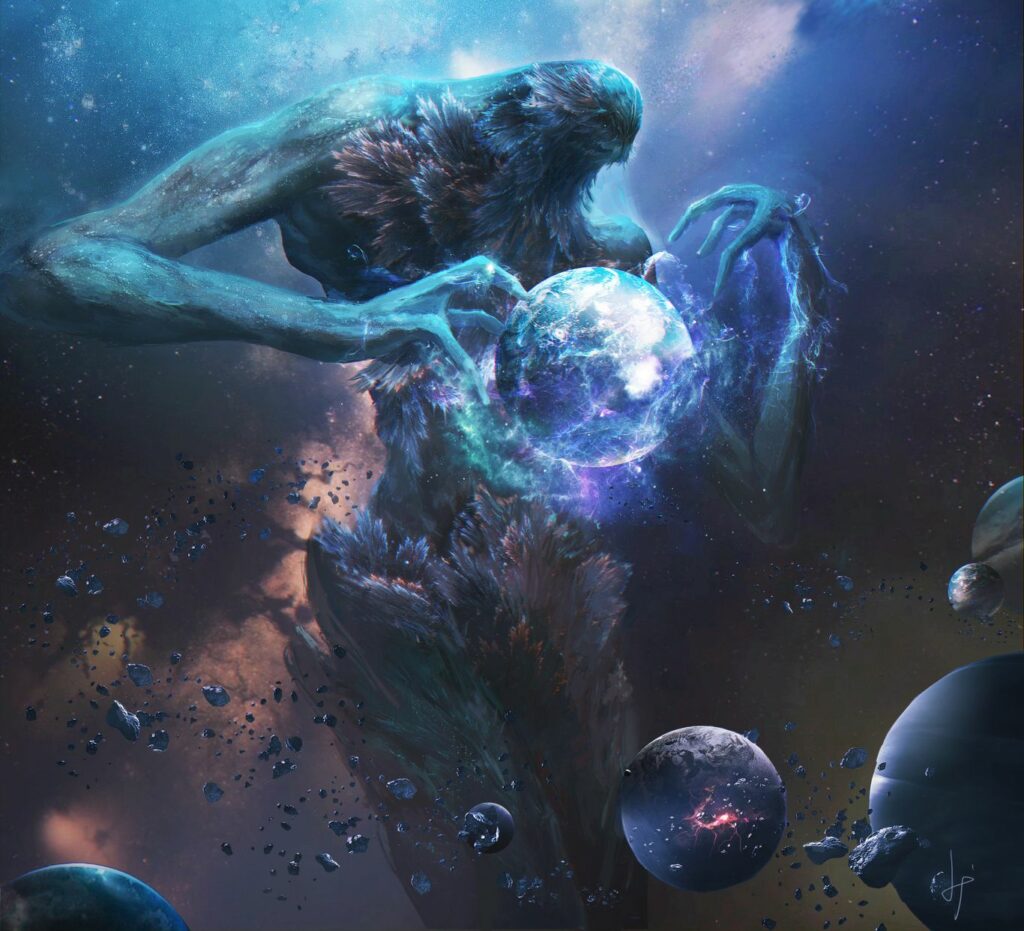
If everything that exists in the worlds were solely the result of the Archons’ activity, there would be no way out of this vicious cycle, and the worlds themselves would be “stillborn” or would have long since lost the capacity for development.
As is known, entropy (a measure of uncertainty or ignorance about a system) of an isolated system always increases or remains constant. This means that the energy that can be used to perform work decreases over time, and more energy becomes unavailable for work. That is, any world created by the Archons would rather quickly exhaust its possibilities and “reach heat death.” When all of a system’s energy becomes unavailable for performing work, the system reaches a state of thermodynamic equilibrium, and its entropy is maximal. In this state the system is no longer capable of doing work, since there are no available energy sources that can be used to change the state of the system. This state, called “thermal equilibrium,” is characterized by an even distribution of energy among all components of the system and the absence of changes in its parameters. Thermodynamic equilibrium is the final state of all isolated thermodynamic systems. In a cosmological context, this corresponds to the concept of the “heat death of the universe.”
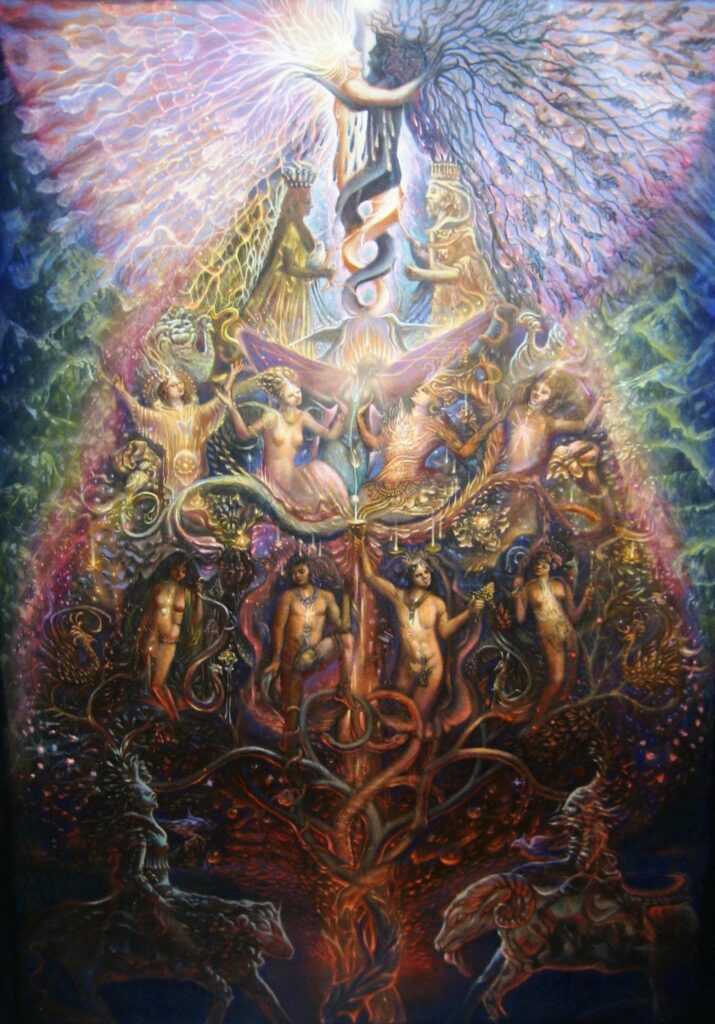
Nevertheless, worlds exist much longer and more productively than Heimarmene predicts. The Gnostics called this phenomenon “glimpses of Divinity” and attributed it to “sparks of spirit” “imprisoned” in the worlds of determinism. In other words, in the worlds, besides the “extremes” of indeterminacy and determinism, there is also some “third” principle — the principle of creativity, the principle of free will. The Gnostics called this principle “Abraxas”, opposing it to the “Blind god,” Ialdabaoth, and considered it the “highest initiatory power,” that is, in fact, an aeon or the logos of Daath.
It is precisely this creative principle that awakens in the mind the striving for development and liberation, pleromization, or enlightenment. Wisdom, “dignity” as a form of energy, is a manifestation of the principle of Abraxas.
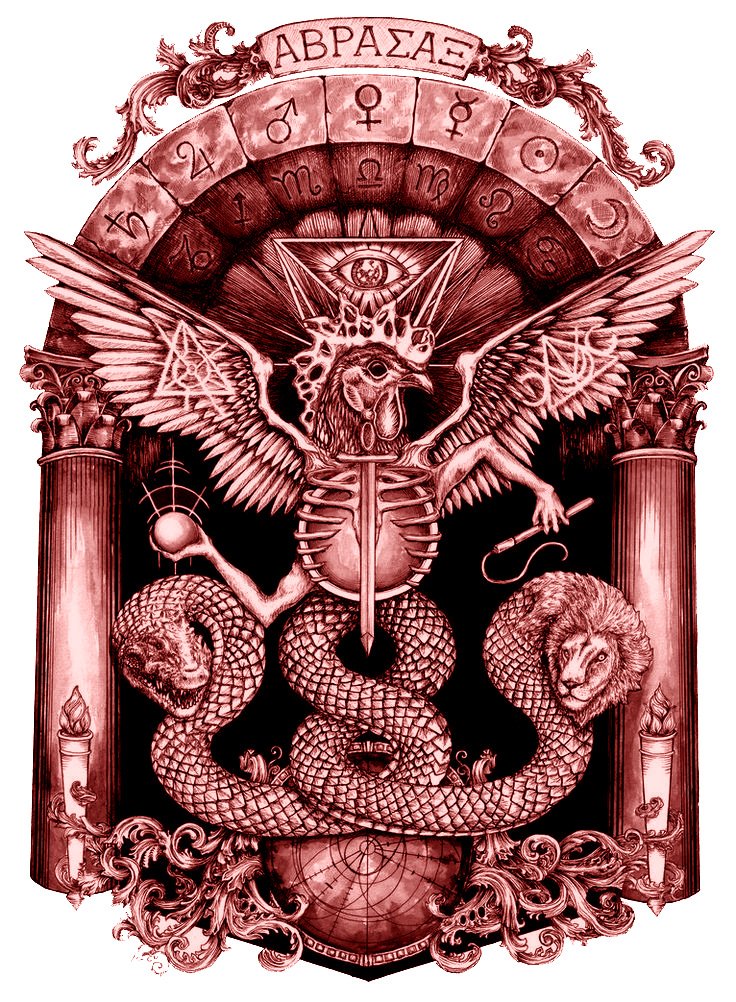
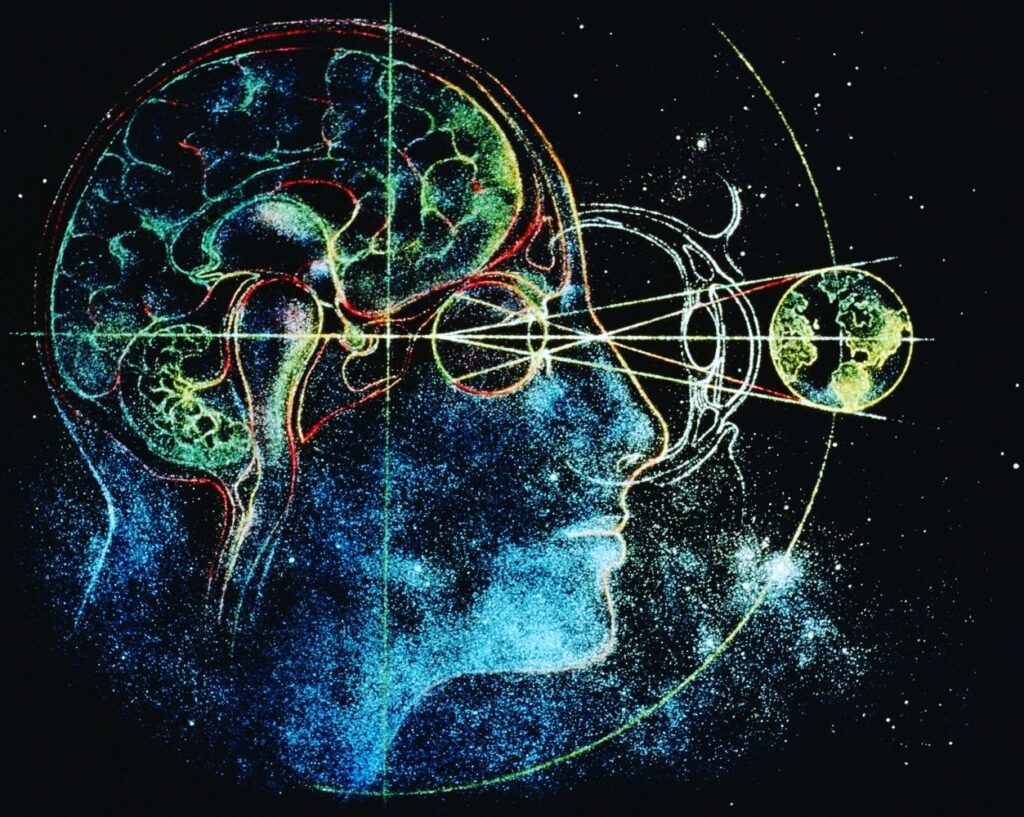
At the moment of observation, when the observer effect brings into being the reality perceived along a given timeline — that is, forces a particle to “choose” one state — other possibilities are displaced into the Interval and the particle becomes definite; free will is analogous to the choice of a particle’s state when it is observed. If we consider the brain as a quantum system, then free will can manifest when, making a decision, the brain “chooses” one of the possible states, one of the paths of development of reality, one of the worlds, while the others become “virtual” for it. When mind “resists” heimarmene, when it “goes against the current,” it relies on the principle of Abraxas, violating the determinism of reality. In exactly the same way, when in the Interval mind retains an anchor of individuality, it resists randomness and indeterminacy — that is, once again, it is within the field of Abraxas.
For a Magus, it is very important to remember that to pass “along the middle path,” without falling either into determinism or into eventualism, is possible only by relying on this elusive and hard-to-define state of free will. It is clear that the slightest tilt to one side means either slavery to Heimarmene, or the chaos of the Interval, and neither pole offers evolutionary prospects. The task of the Magus is to maintain the creative principle within, avoiding both predictability and excess spontaneity.
Why did you stop your video blog on YouTube?