Ragnarok and Initiation
We have already, in a sense, discussed that the most important property of Myth is its timelessness — its relevance across time in the past, the present, and the future.
One of the Myths important in the life of a Magus is the myth of Ragnarok.
First, the importance of this myth is great because it describes the transition of a system from one level to another, and such transitions in the life of a Magus occur periodically. Since an embodied being, in particular a human, is a microcosm of the macrocosm, the same forces operate within it as in the macrocosm.
Let us briefly examine the outline of this myth.
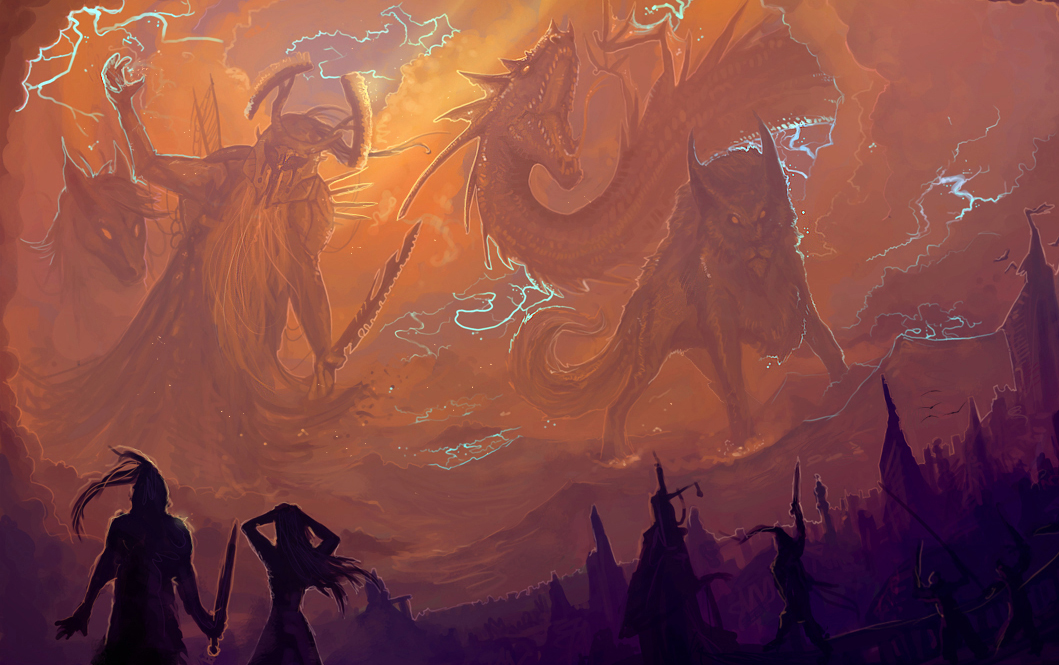
“The Eddas” in their account of the Twilight of the Gods mention five Great battles: 1) Odin and Fenrir; 2) Thor and Jormungand; 3) Heimdall and Loki; 4) Tyr and Garm; 5) Freyr and Surtr.
Let us clarify what these battles signify in the life of a Magus.
First, Ragnarok occurs when the balance shifts in favor of the “anti-creative” forces. So long as the advantage lies with Valhalla and the Einherjar, everything is calm. That is precisely why Odin must continually replenish the Einherjar, since Hel is constantly receiving new dead.
At the microcosmic level, this means that so long as creative forces prevail over destructive forces, the Psychocosmos is stable. However, over the course of its existence, worn-out ideas and obsolete principles accumulate, filling it with decay and corruption.
And at a certain stage, a “moulting” must occur: the old system of values collapses and a new one arises in its place. Such a change can take place imperceptibly and gradually if the Psychocosmos changes slowly, but if its development is accelerated (and this is precisely the mode of development in the life of a Magus), the “moulting” happens rapidly and like an avalanche — a personal Ragnarok occurs, which is traditionally called the crisis of Initiation.
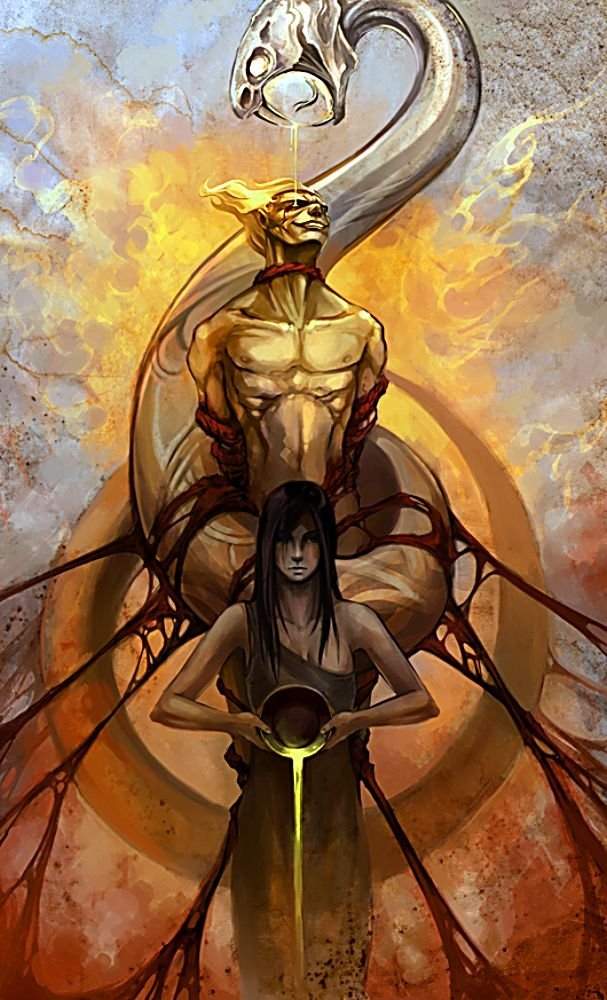
Ragnarok is initiated, of course, by Loki — the Force of exchange first realizes that there is nothing left to change, the old world has outlived itself and demands renewal.
It all begins with the “Giant’s Winter” — a standstill. In other words, at a certain moment, it becomes clear that further development is impossible for the existing system: it has exhausted its resources, it has “frozen.” This sensation of inner chill serves as the first sign of an approaching catastrophe: the system faces a choice — either remain “frozen” as it is, or seek a way to “break the ice.” Unfortunately, the choice often falls on the first option.
However, if the Will manifests, it leads the system to restructuring and crisis.
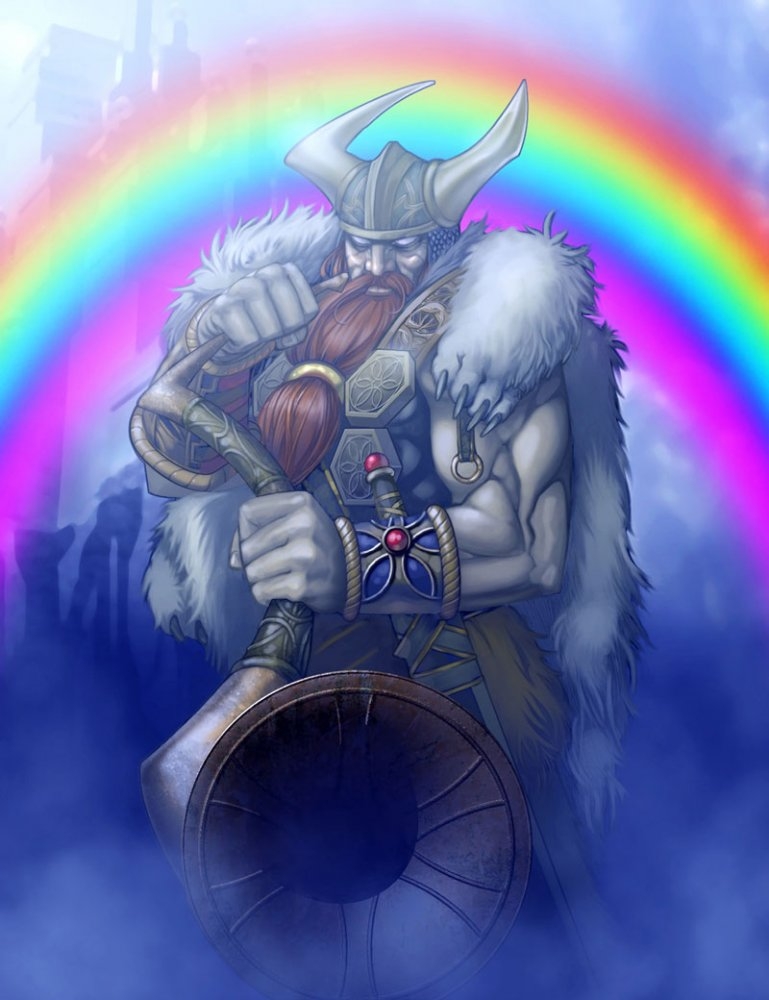
This is signaled by the alarm of the approaching change (“the Gjallarhorn sounds”), and by Odin’s subsequent conversation with Mimir: the mind seeks higher wisdom, hoping to find an exit from the hopeless situation.
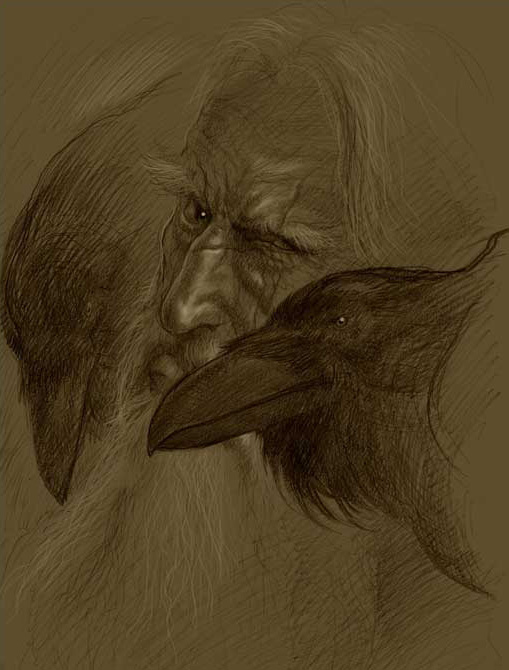
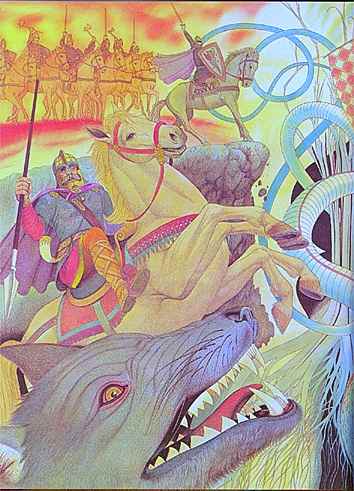
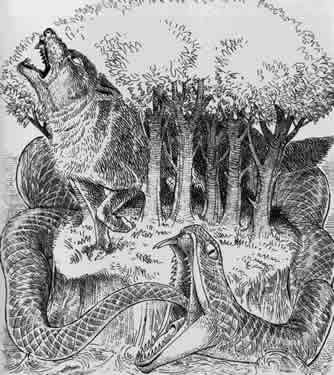
What counsel Mimir gives — we already know: Odin throws himself into the Wolf’s maw, and the mind sinks into darkness. Thelemic magic calls this moment the Encounter with the Demon of the Abyss, and likewise implies that before being reborn (in a new form — as Baldr) the mind must endure disintegration.
For such an engulfing of the mind to be possible, it must be preceded by the removal of the Will’s restraints. And that is what occurs when Tyr is slain by the teeth of the hound Garm. Note that Ragnarok is set in motion by twin chthonic forces: the Hound and the Wolf. The hound — a domesticated, obedient creature, guardian of Hel — the waking attention that protects the known world from incursions of the unknown — eventually rises, fed by the power of decay, and mauls Tyr to death — the principle of law, the system of values upon which the Psychocosmos is built. In other words, the accumulation of insoluble problems leads to the very force that protected the law turning against itself and destroying itself, unable to reconcile new elements with those already present.
But the darkness of the mind is only one stage of the being’s transmutation.
All its other aspects must meet their opposites and be annihilated, returning to the non-manifest, in order then to emerge from there in a new form.
A being that has lost the rule of the Mind begins to fall apart. A world without Odin makes no sense. The first to perish is Odin’s great son — Thor; without mind there is no order.
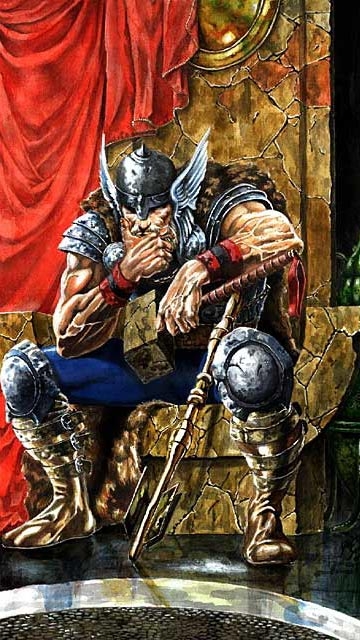
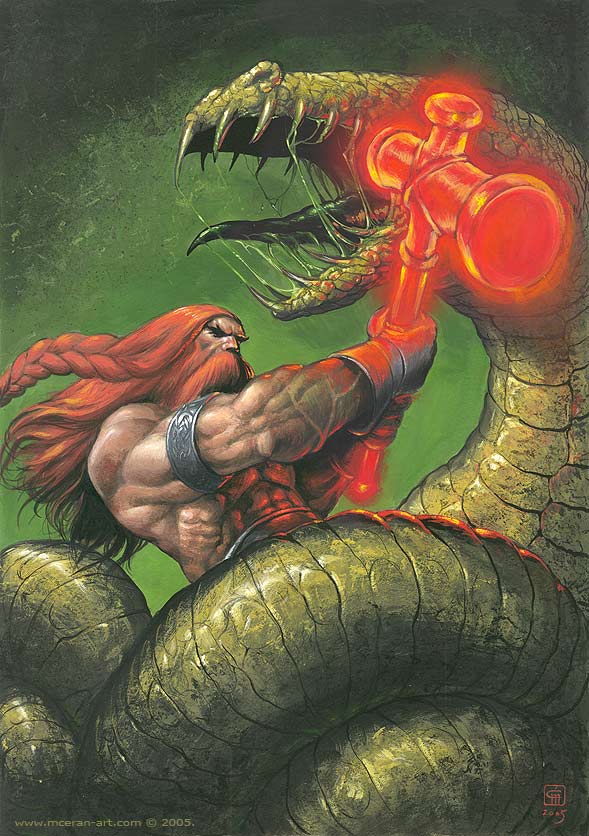
Thor engages the Midgard Serpent — the force that orders the being collides with its Boundary, its “belt,” its Limit. But just as Order does not exist in unlimited space, so the Boundary is a manifestation of Order; therefore, with the destruction of the Limit, the end of order inevitably follows: Thor dies, having slain Jormungand.
Along with the loss of the personality’s boundary, its expansiveness — the principle of desire — is lost. Not directed by the Will, it returns to its undifferentiated state; Freyr is consumed in Surtr’s fire.
At this stage, the disintegration of personality is complete: all four of its pillars are destroyed: the Mind in darkness, law and order lost, the capacity for outward expression burned away.
The crisis concludes with the final battle: the principle of separateness clashes with the principle of interaction — Heimdall fights Loki, and, of course, they slay one another. When there is no personality, there is nothing left to guard, and nothing left to unite.
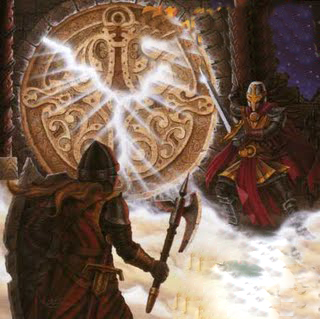
Ragnarok is not only death but also a new birth: in its furnace a new being appears, a new personality, a new initiation, new possibilities for development… and new preconditions for the next destruction.
Note also that the magical myth is not exhausted by symbolic descriptions of Ragnarok’s events at the level of the Psychocosmos. Fenrir and Garm, Jormungand and Surtr — these are not merely symbols of psychic processes; they are living agents that exist in the Psychocosmos as real as their “Higher” analogues live in the macrocosm. Everyone who has endured their own Ragnarok knows how terrible these inhabitants can be, and how terrifyingly real they are.
Undoubtedly, the topic is the most interesting in all of Scandinavian mythology. Having read your article, I understood that it refers to the interpretation of images at the level of an individual person, but this primarily signifies a global catastrophe of universal scale, as it seems to me. And regarding the rebirth following Ragnarok, the world should update and be reborn at a more progressive level, but how to reconcile that with these words from the Edda:
Here comes
The Black Dragon,
A shining snake
From Dark Heights;
Nidhoegg carries,
Flying over the field,
Corpses under its wings –
Time for her to disappear.
(Older Edda – ‘The Prophecy of Völva’)
The macrocosmic interpretation of the Myth does not exclude the possibility of the microcosmic. I discussed the macrocosmic in previous posts, and now I decided to touch on the individual…
Regarding the last stanzas of the ‘Prophecy of Völva’ – I have heard many times that they are interpreted specifically in the context of the Final catastrophe.
In my opinion, these stanzas relate not to prophecy but to the accompanying situation – Heidi, awakened from Hel, has no right to remain in the world of the living, and Nidhoegg simply must return her (“it’s time for her to disappear”).
Although, of course, I am far from idealizing the evolutionary process, and thoughts of the world ‘getting better every day’. On the contrary, the activity of predators is increasing, darkness is growing. Therefore, a cosmogonic interpretation is not excluded – in that case, these stanzas remind us once again that destruction is destruction, that after Ragnarok doesn’t come a ‘paradise’ where all lions eat grass, but a new struggle that is no easier than the past…
Thank you for your response and article. It is also interesting that at the time of Ragnarok, people, gods, and giants will perish. This significantly distinguishes the scenario of the world’s demise from the version of Armageddon.
But does this mean a new round in development or a plunge into the original formless Darkness and Unconsciousness? Do you not find parallels with the Ancients from the Necronomicon and the jötunns in Scandinavian mythology?
Diving into darkness inevitably precedes new birth. As for parallels – they can be found as much as needed, the main thing is that it should be productive.
Destruction must correspond to creation; what is the analogy of this process in Scandinavian Myth?