
Crossing the Threshold
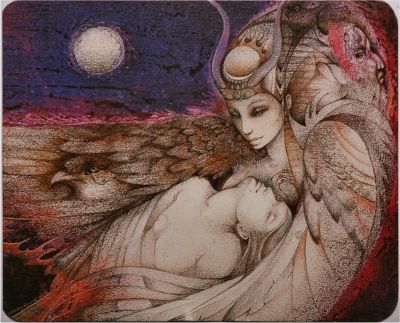
The development of the world process involves a constant expansion and development of mind and its appropriation of ever more regions of Potential reality. Both individual centers of awareness — beings — and the world mind as a whole carry out this continuous, and in essence endless, process of reintegration of being, fragmented by the Breaking of the Vessels. As Isis, gathering piece by piece the body of her torn brother and husband, weaves consciousness into the body of her embodiment — the actual Psychocosmos.
At the same time, the development of the cosmos left to its own devices occasionally stalls, reaching states of quasi-stability in each of its syntheses. In other words, as elements accumulate, the system (provided its development is relatively harmonious) enters a tentative equilibrium in which it seems perfect to itself, and the need for further development ceases to be obvious.
Therefore, to continue the development of such a system, external shocks are needed, which “knock” it out of a state of self-satisfaction and compel it to further development.
What has just been said holds true both on the micro- and macro-level, and such a destabilization of a system, subjectively extremely unpleasant for it but absolutely necessary for its life, can occur in only one way — by forced actualization of an element that categorically does not fit into the equilibrium structure created by the system.
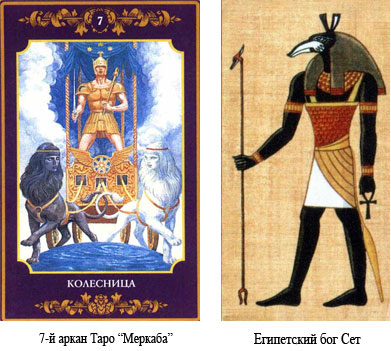
This action is performed by a force long perceived ambivalently by the human mind — acknowledged as necessary, yet constantly avoided.
Indeed — a peacefully grazing flock of sheep is not especially fond of the herding dog running about and nipping at their heels, even if they understand that without it, having eaten all the grass in one place and not moving on, they will perish or become prey to the wolves prowling nearby.
Such a destabilizing force appeared to many peoples in the images of ambivalent gods — not exactly evil, but certainly not benevolent, dwelling at the threshold between worlds and frequently crossing it, preventing stagnation.
Loki, Seth, Semargl, Hermes — all these gods expressed the action of a force necessary for development, yet subjectively neither simple nor pleasant.
Two of these figures have found their fullest expression in the human mind in connection with the theme of our discussion — the wily Aesir Loki and Seth, the God of the Desert.
Each God-Disruptor figure is characterized by the aspects mentioned above – on the one hand, nudging the system toward development, on the other, perceived as unpleasant.
But where would the Aesir be without the aid of Loki, hurling them into battle yet helping them prevail?! And could Horus of Behdet have defeated Apep without the help of Seth, who fought on the Barque of Millions of Years?!
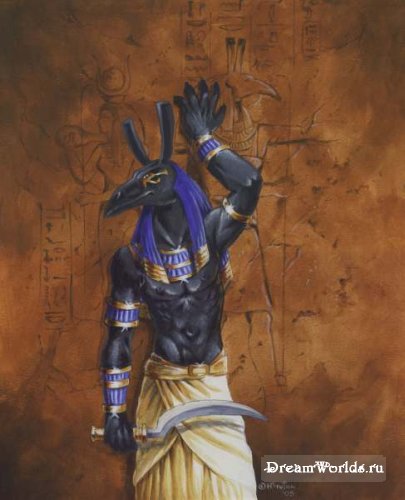
Let us repeat once more — the essence of the God-Disruptor’s activity is the bringing of new objects from potentiality into actuality necessary for the development of the cosmos, which destabilize the cosmos and thereby compel it to move.
Despite all the later Egyptians’ negative attitudes toward Seth, the Pyramid Texts describe him as a force that quakes under Osiris’s feet and lifts him to heaven, and will sustain him forever, raising him again and again throughout eternity. Therefore, in spells, Seth is called “lord of the ladder,” and in other texts he bears the Eye of Horus on his wings.
In other words, the ascent, spiritual development, is impossible without the intervention of a destabilizing force that dwells on the border of waking consciousness and frequently crosses it.
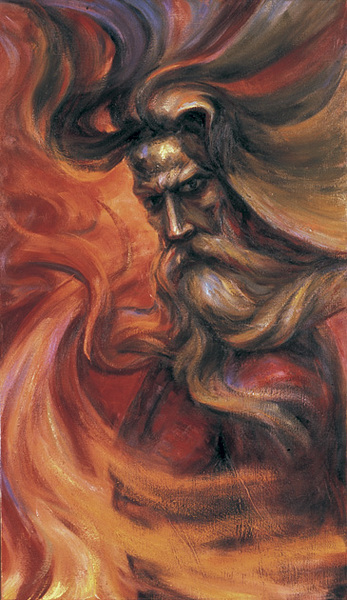
Enmerkar, perhaps if you have time, you could tell us more about Set, how he differs from Loki, and how he is similar, etc.
Set (Sutakh) is one of the border deities, whom the consciousness of the ancient Eastern peoples referred to as gods of the desert, as the desert was associated with a transitional state between life and death, between this and the other worlds. This group also includes, say, Nergal in Mesopotamia or Azazel in Palestine. The main manifestation of the Border God is to bring an element of death (isfet) into the realm of life (maat), and it is in this way that he maintains the imbalance necessary for development. Loki is also a Border God, but his borderliness is in his very nature, not in the place of his habitation. Accordingly, his destabilizing influence manifests in provoking and then easing various conflicts between the gods and the giants resisting their shaping influence. In other words, he provokes the same opposition of cosmos and chaos, only in a different way.