Faery: Beings and Principles
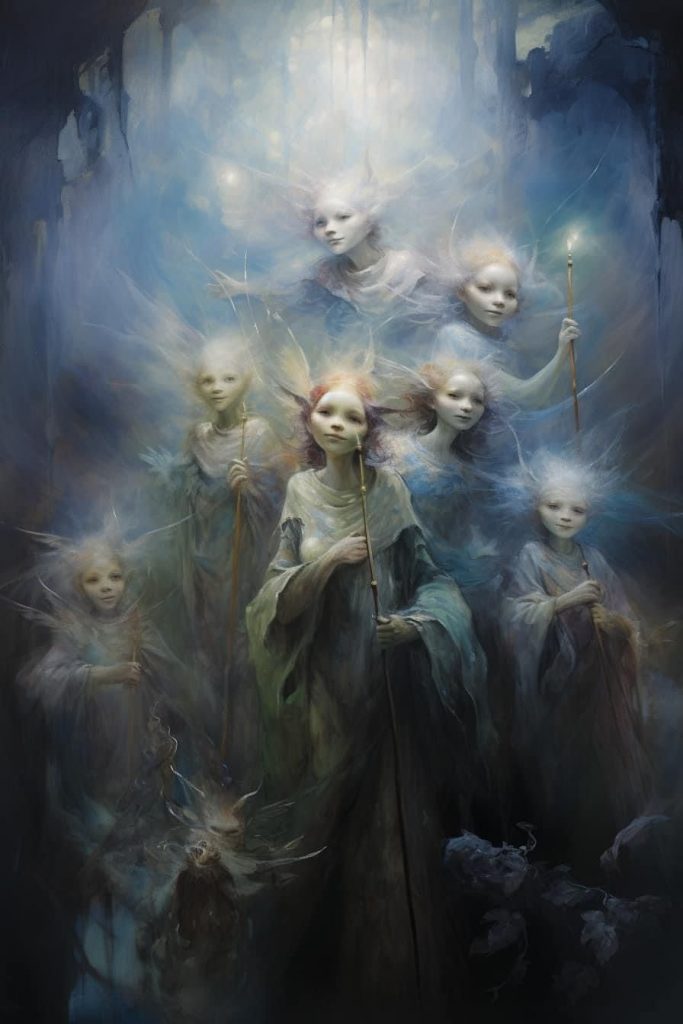
Up to now we have been describing faery as embodied beings who possess a kind of materiality different from that of humans — flowing and nonlocal — yet still as distinct beings.
However, it is not hard to understand that beings can also be described as abstract principles of manifestation.
In the same way, a human, from a certain point of view, can be described simply as a principle or an activity.
For example, a human keeps bees. Yet in the description of the world of the bees themselves, humans are absent; they live their own lives, see the world in a different spectrum and from different positions, and therefore the hives made by humans, as well as harvesting honey from them, are simply natural phenomena or conditions of life — and if some particularly clever bee tried to describe the human, it would describe a human as a “principle of honey collection” or a “force of building hives.”
Or, for example, if we imagine a being that perceives the world in parameters completely different from those of humans — different parts of the light spectrum, or, for example, in electromagnetic or radio ranges — then for it an individual human will be either entirely unnoticeable, or will appear very different.
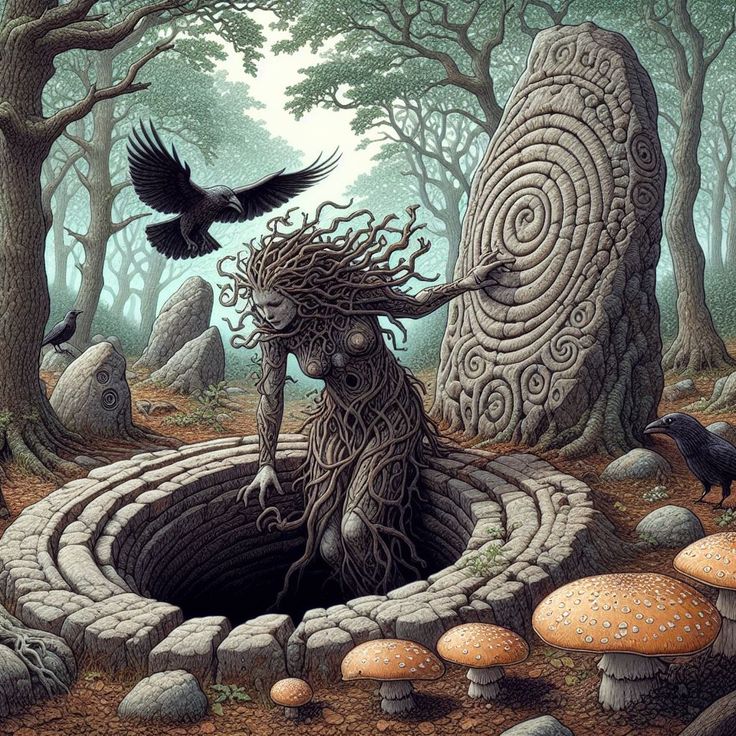
Accordingly, faery can be described simultaneously both as beings and as principles of manifestation that are noticeable even to those who have never seen their “embodied” appearance.
Faery presence is always closer to natural phenomena, to weather or seasons, than to a fixed form. It manifests as a specific personality when a conversation is required, but it can also be an abstract condition when it flows in the stream of being. Put differently, faery can be imagined as manifestations gathered on the boundary of reality and the Interval: they appear where the boundary becomes more permeable, where possibility condenses into actuality, where Portals between worlds appear as lived reality. It is precisely under such “tension of the Edge” that one can notice that the usual chain of cause and effect lags behind, while thoughts, feelings, and decisions turn out to be woven into a larger, multidimensional fabric.
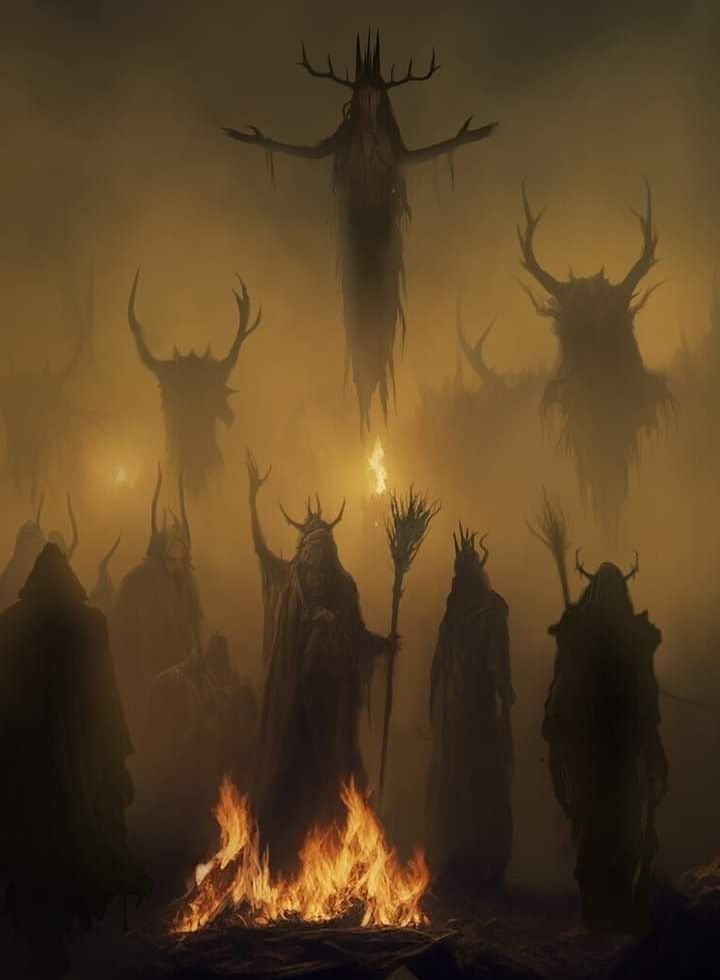
The bodies of faery always appear as temporary forms, sustained only by an inner attunement with the environment. They emerge from the landscape itself, from ideas and pulses, from what for a human seems like a subtle atmosphere or mood, but for the Interworld is the fluid nature of its space. Accordingly, faery can be described both as beings that can manifest in a certain form where the Threshold is thinner — and dissolve into the fabric of being where the processes of the universe require a lower density of presence.
In other words, faery can be described as the ability of form to be multiple, as an entire set of possible manifestations that adjust to the situation. In connection with this, the impression of the multiplicity of their forms arises so often: one or another appearance often serves as an adequate response to a situation, which changes when conditions or demands change. That is why legends often speak of changes, masks, and substitutions — describing not so much the cunning or treachery of the Magic People as the property of the multiplicity of their forms.
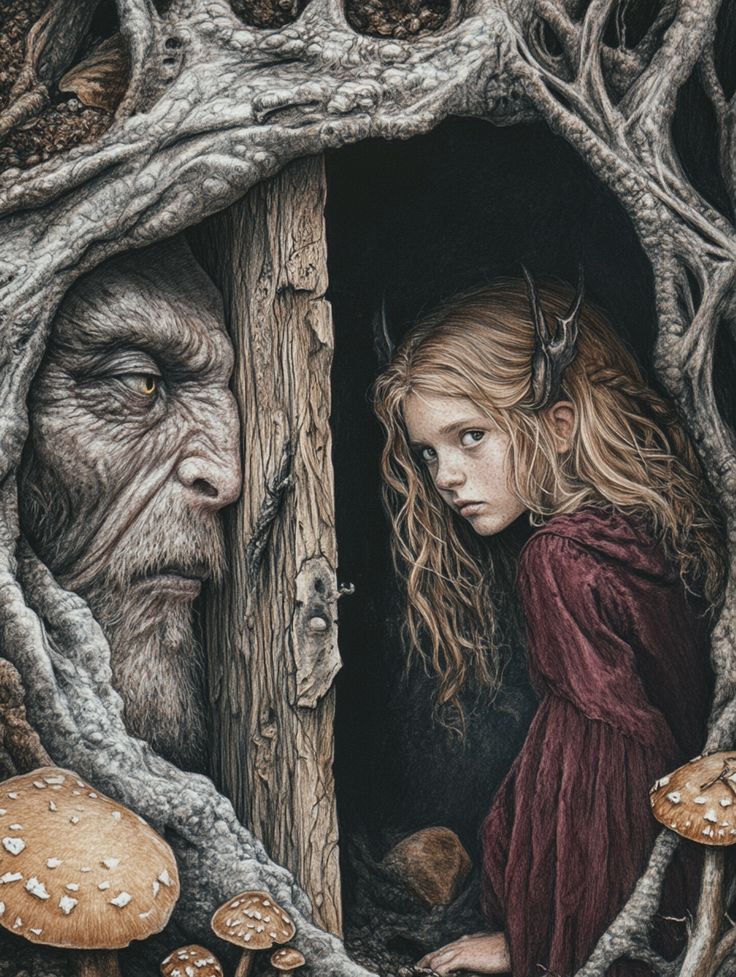
On the most abstract level of such a description, faery can be understood as principles or properties of translating probability lines. We can speak of the presence of faery when the force of choice for one scenario or another is at work: when several future timelines are first seen as almost equally valid, but then one of them seems to be realized “by chance” for a given observer and becomes fixed for them. This presence is usually accompanied by a strong sense of coincidence, sudden turns, blessings or rewards that come as if from the very essence of the world. In such an understanding, faery act as the principle of “detour causality”: under their influence, conditions change so that the world seems to fold itself differently.
In other words, faery can be described as the principle of “translating the possible into what has happened”, as the way in which uncertainty becomes an event, and “could have been” turns into “became”.
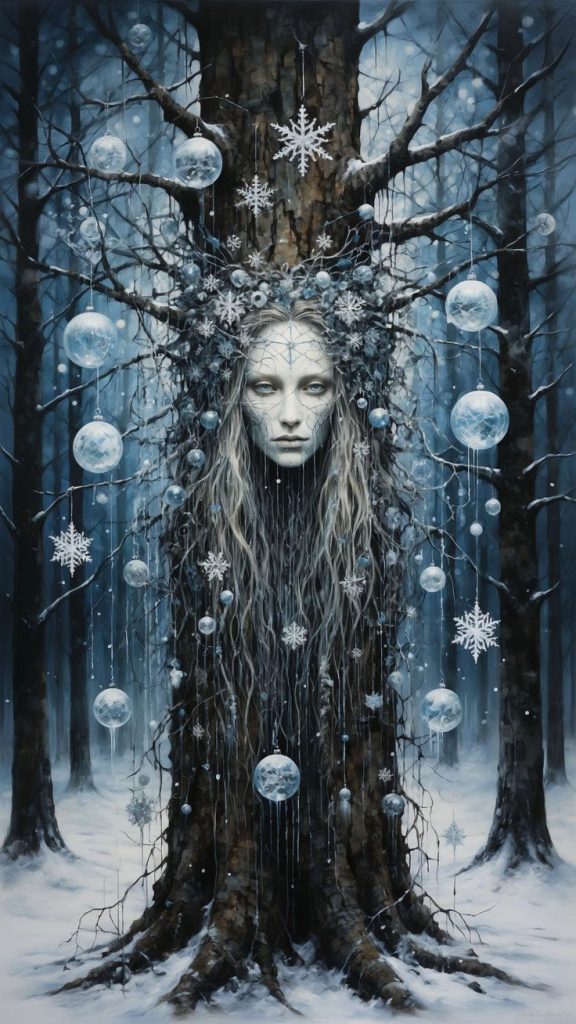
In this sense, faery are a kind of “ancient life” that exists on the edge of probability and form-giving, and is itself a way of turning potentials into actuality through a subtle shift of circumstances, when an event ripens and happens as if by itself. Put differently, one can say that faery are the principle of “non-direct causality”. They manifest as a shift of conditions, after which events come together “by themselves.” This is like how a gardener doesn’t uproot a plant, but changes the soil, light, and water — and growth happens.
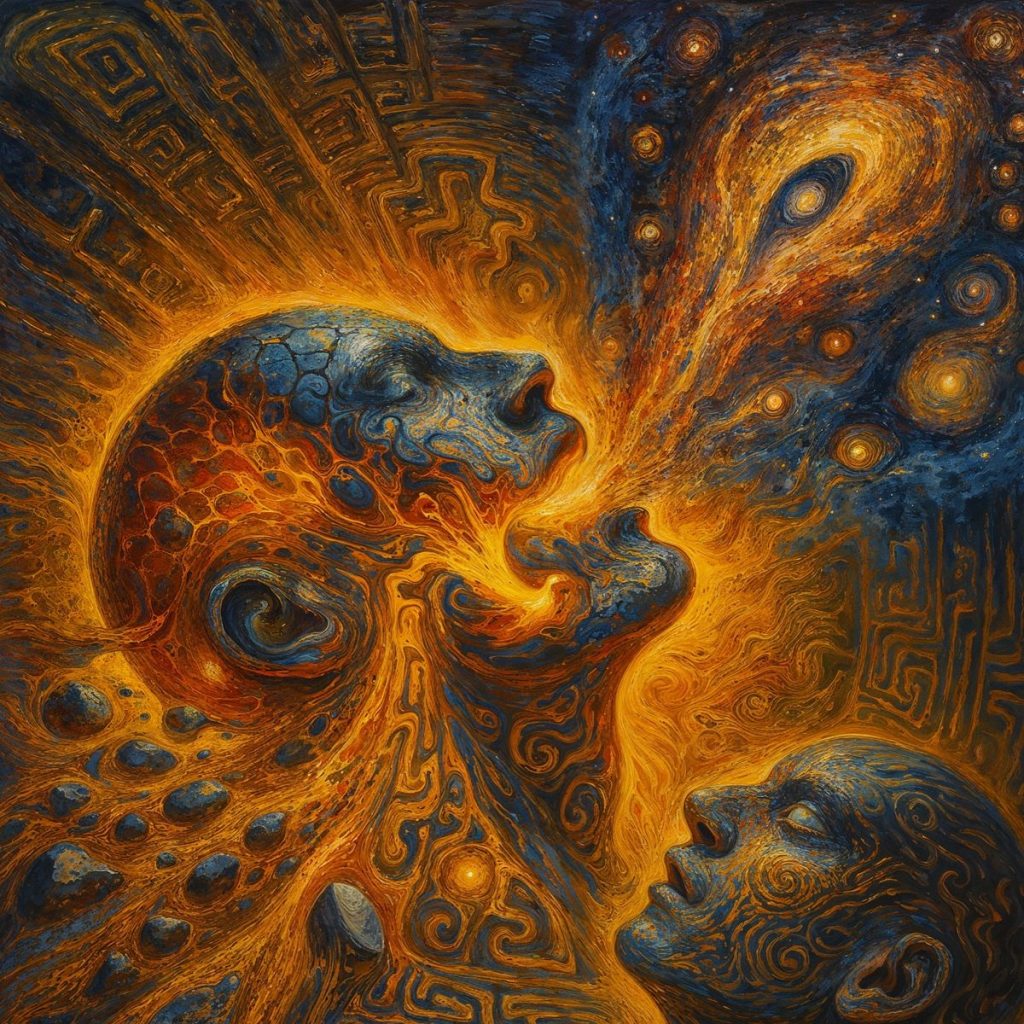
In earth and stone, where the influences of Falias are strong, faery presence manifests as the ability to draw life from dry mountain rock and impart fertility to it. In the watery depths of Murias, it manifests as the ability to connect disparate elements, merge currents, heal human fragmentation and restore clarity to emotions. In the winds of Gorias, the faery principle is connected with shifts in perspective, with easy transitions between meanings, when the same event shows another facet and can be perceived anew. In the fiery tension of Finias, it manifests as a flash of transformation, when the old burns away, making room for new forms, and the mind recognizes in loss the beginning of new growth. In each of these examples, faery simultaneously act as beings and appear as principles by which the environment changes without altering itself.
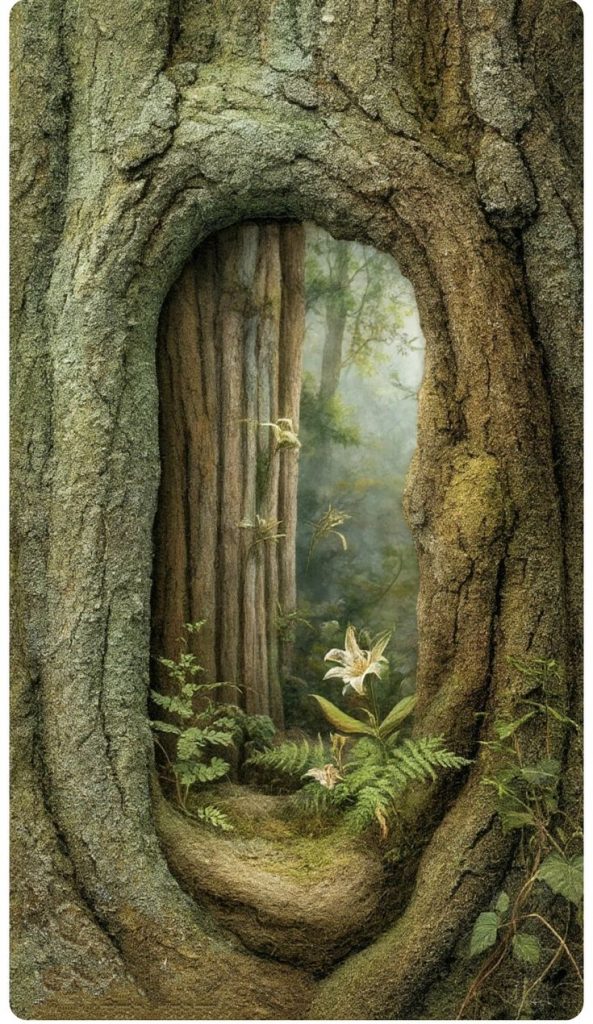
On a more concrete level, faery can be considered certain properties of the boundary. Where two worlds or spaces touch, “faeryness” always appears as a distinct phenomenon. Threshold states of nature (shores, fogs, the edge of the forest, twilight), threshold states of the psyche (the boundary between sleep and wakefulness, inspiration, trance and ecstatic states), threshold elements of culture (changes of eras, languages, religions) — all this can be described as the “field of faery”. From this point of view, faery are what make the boundary permeable, while preserving its essential integrity.
From a historical point of view, faery can also be described as the memory of the world before the total urbanization of the Logos — as a fluid counterbalance to definiteness, to rational Western civilization. In this sense, the European “city of reason” always stands in the midst of the “forests of faery”, and the whole history of Europe looks like a long confrontation between the principles of form and flow.
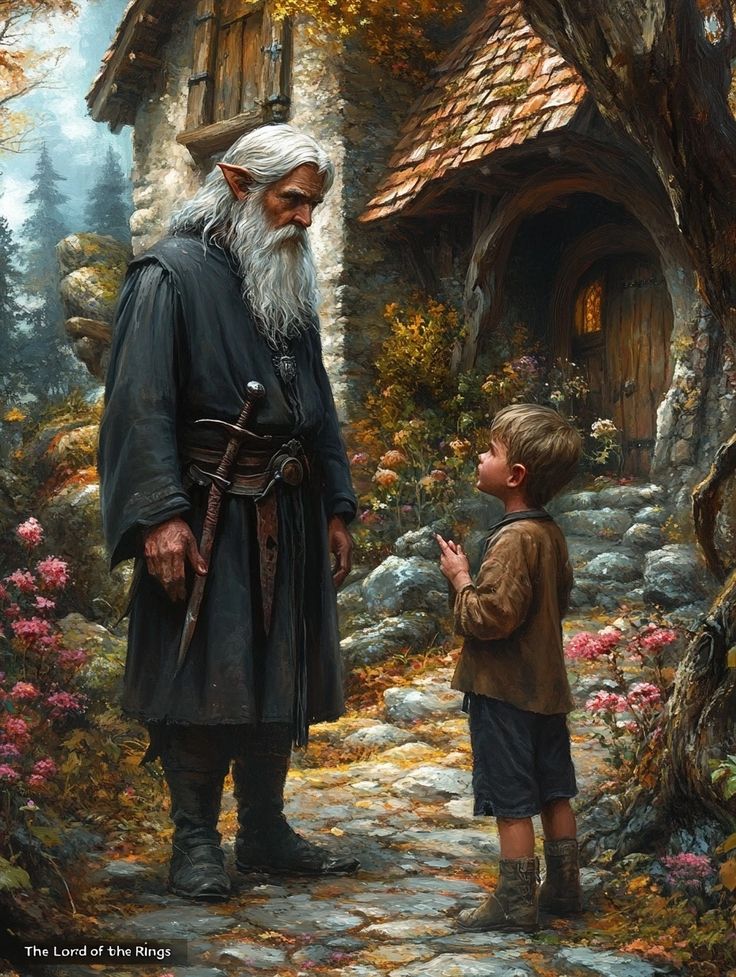
We have already discussed that faery are always characterized by significant inner discipline and composure. Their energy disperses outward far less than that of humans; it is harder to draw them into outbursts of passion, fears, ignorance, or thirst for superiority. Accordingly, beside them it becomes noticeable how exposed humans really are, how much energy they inadvertently give away, how much they get carried away by traps that promise joy but drain energy and leave one depleted. Demons are drawn to the fire of desires and know how to fan it to exhaustion; Fomors know how to turn dreams into deep sleep without awakening; Archons support predictability and make it attractive until it stifles mental growth. And faery — on the contrary — help a person preserve their resources, preserve one’s inner resources, and consciously choose where and how much energy to give. And from this point of view one can say that faery are a way for life to remain whole, without giving predators excess energy and without dispersing it in vain.
If one looks at a human from a similar point of view, it is not hard to understand that for faery they rarely appear as a stable image; they are perceived as a phenomenon that brings warmth and smoke, food and smells, salt and an iron aftertaste, straight lines like roads and fences. A human constantly hastens change: they build, cut down, resettle, change the terrain faster than the land can register what and why is happening. They fill the world with words, give names and explanations, express experiences in stories, and stories simplify into schemes, thereby making reality convenient for survival and description. From this side, to faery, humans resemble a force of expansion, like a principle of ordering and settlement, which strives to impoverish the mystery of the world.
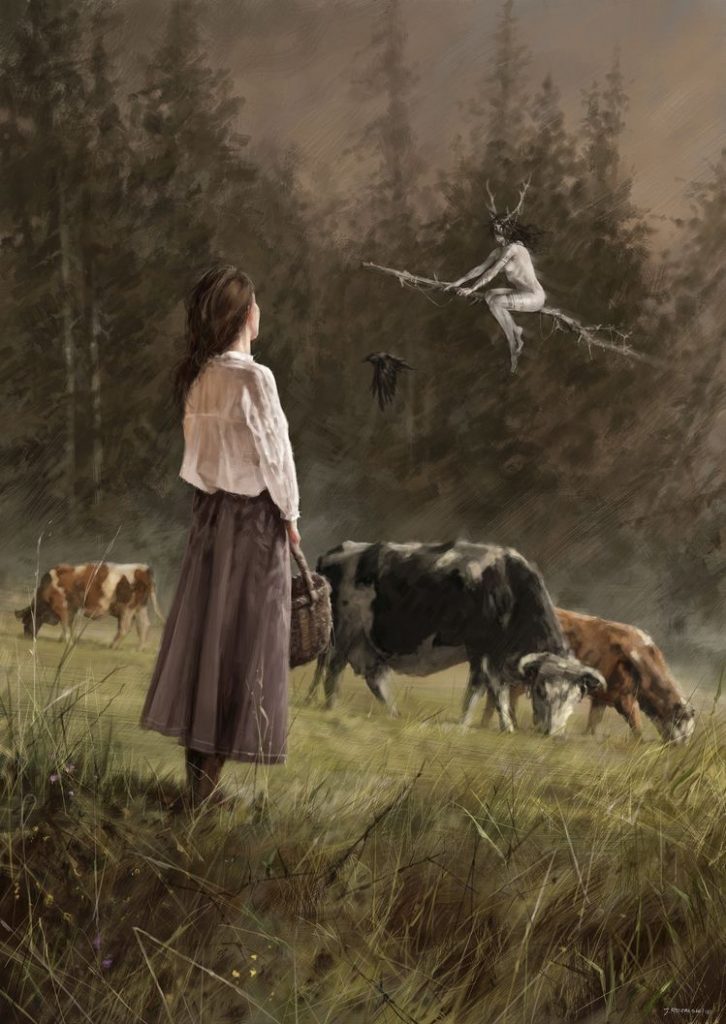
This same feature makes a human an “accidental” violator of boundaries between worlds. Strong emotions, oaths, fears, death, delight, illnesses create tensions and instabilities at the Edge, through which the Interworld interacts with reality. A human opens such passages, often without realizing it, and also unconsciously pays for them with their own energy, since any passage requires compensation. In fortunate cases this is expressed in initiation and growth, when a human learns to keep their mind focused and constantly return it to the center of presence. However, in a more common, dark variant, this ability feeds predators, who know how to substitute meanings and turn desires into channels of loss. Therefore faery see humans simultaneously as a danger to the terrain and as a rare opportunity: human strength is capable of developing and transforming the world, but also capable of destroying it.
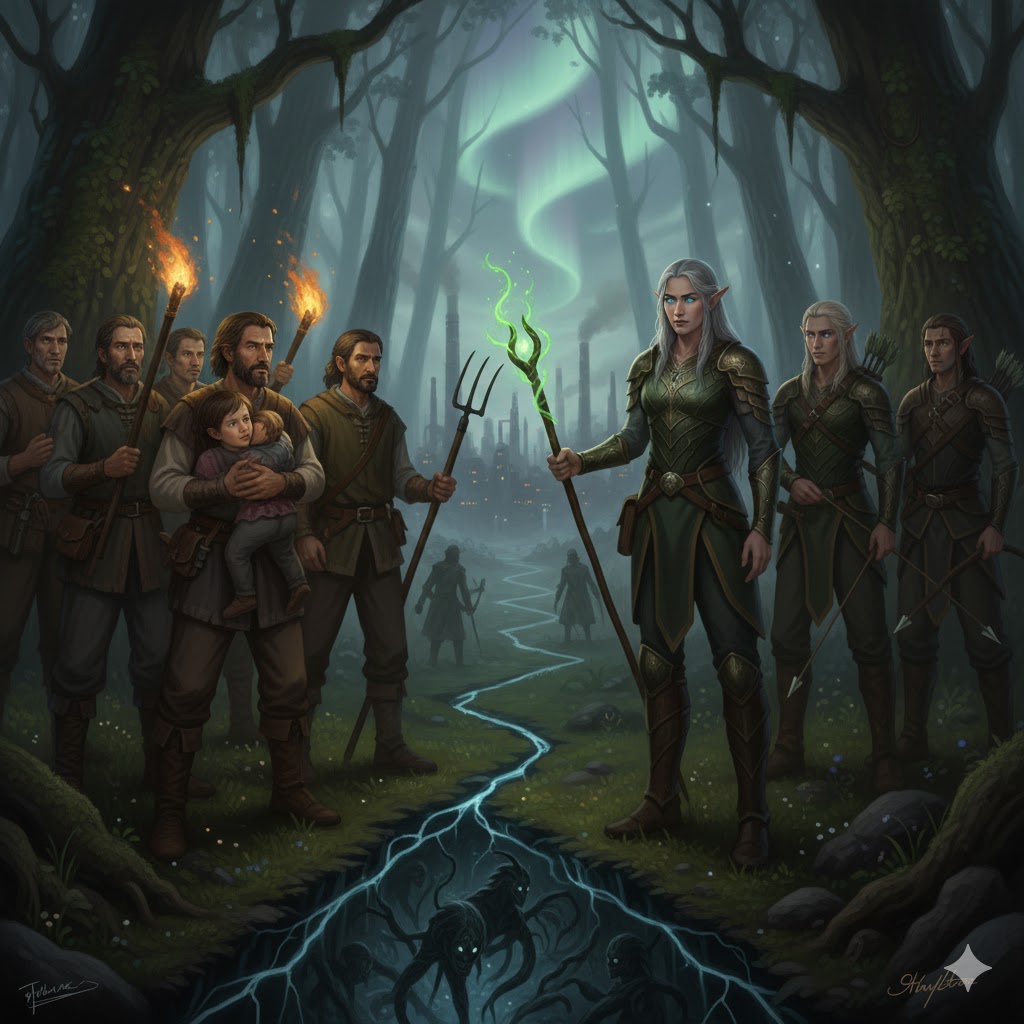
From this position it becomes clear why faery respond even to the same people in such different ways. They recognize a human by what energy or principle they bring into this or that place. One leaves caution behind; Vanir fertility and respect resonate within them of fertility and respect for limits, and then space seems to open a road for them. Another comes and “straightens” everything around; through them the forces of the Aesir manifest, and then the world turns into an arena of struggle and competition. A third creates forms that give support for life; they contain an alv element, capable of building inner architecture. A fourth carries only definiteness and inevitability; they strengthen archontic influences, with the help of which the world becomes too convenient, too subject to control, too poor for freedom. And it is clear that faery react differently to these principles: for them, what matters most is that influence, that imprint that a human leaves on the boundary, and even their personality traits themselves may be secondary. In other words, faery often see in a human what humans may not know about themselves; they see their nature and their scale, their real influence and their unmasked energy.
Thus, regardless of how we describe faery, we can judge their presence by signs and changes — how the boundary behaves, whether the tempo of events changes, whether a new branch of probability appears, whether the ability to directly experience events grows without rational commentary. If patience increases, attentiveness to the place, respect for one’s inner resources, and the ability to choose where to give strength, then one can say that a human has touched the faery realm. And this does not necessarily mean that they saw fairies or goblins; however, it means that contact has occurred, and, in the end, it is precisely such changes that make studying faery worthwhile and worth attempting to interact with them.
Please advise, if it is appropriate under this post.
If we follow the logic that Fairies are largely the children of the Elves. And fairies often, in their fluidity, take on animal traits. Is something similar characteristic of the Elves on a higher level?
For example, is there any correlation between the Elves and “animal” gods like Cernunnos?
The aspect of connection between the Elves on one side with nature, and on the other side with “informational abstractness”, which can often be considered from your descriptions, is a bit unclear.
Fairies are only “half” children of the Elves, as they also carry within them the “blood” of the Grigori, and strong Vannic influences. It is precisely the latter that is connected with the zoomorphic appearance of many of them:
https://enmerkar.com/en/myth/fairies-stikhials-and-elementals
As for Cernunnos, he, as we discussed, arises as a “joint projection” of two forces – threshold and Vannic, Gwynn and Dagda, Heimdall and Freyr:
https://enmerkar.com/en/way/the-horned-lord-of-the-forests
So the fairies borrowed mainly from the elves a special relation to reality, seeing it as a flow and as a non-local field of variations.
And their naturalness is the result of close “cohabitation” with the Elementals.
In the context of the article about authorship in the era of AI development – “..and if some particularly clever bee tried to describe a human, it would describe them as ‘the principle of honey selection’ or ‘the force of hive construction'” – this was definitely invented by Enmerkar.