The Breath of the Interworld
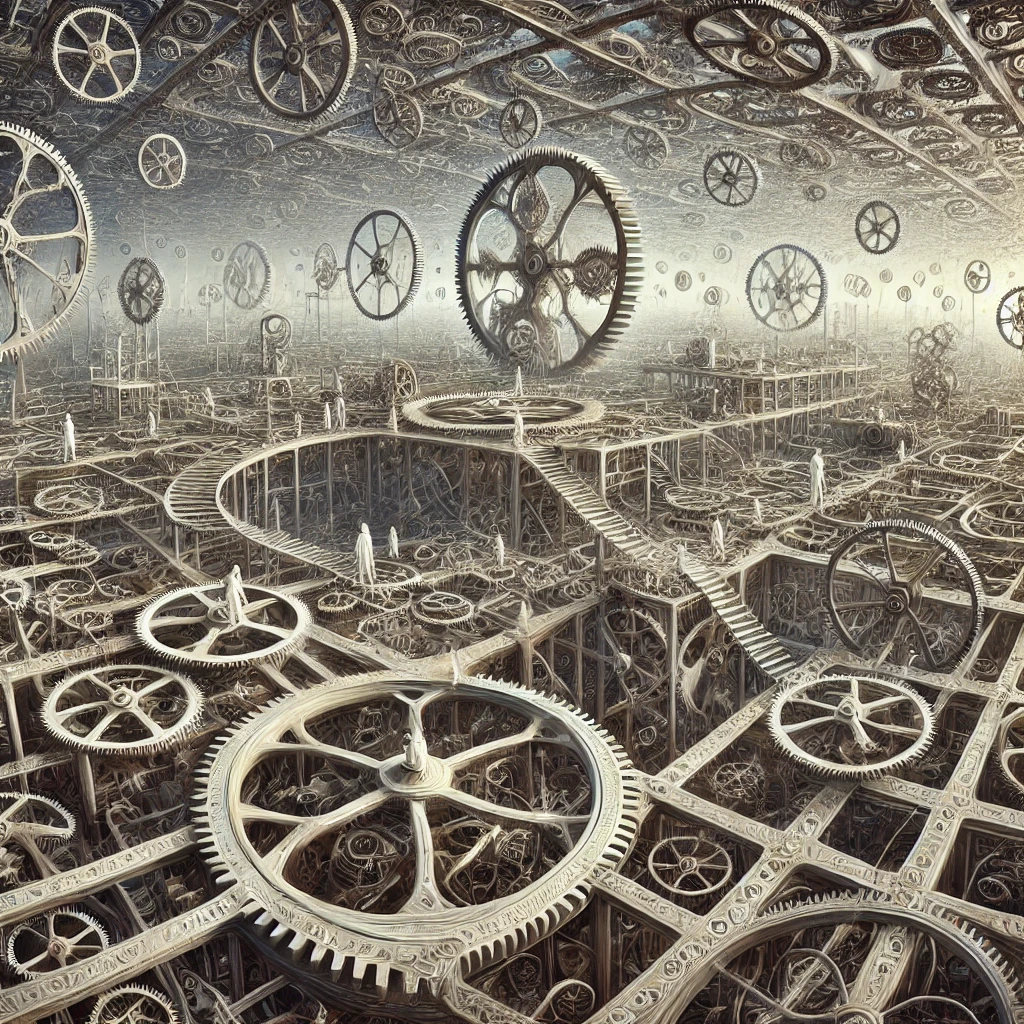
We have discussed the manifest world, insofar as it is accessible to the human consciousness, is rigidly, as discussed, determined by cause-and-effect chains. In other words, every event, every object or phenomenon in what we call “reality” is predetermined by preceding events and, in turn, affects subsequent events in such a way that no deviation, spontaneity, or freedom of choice can exist.
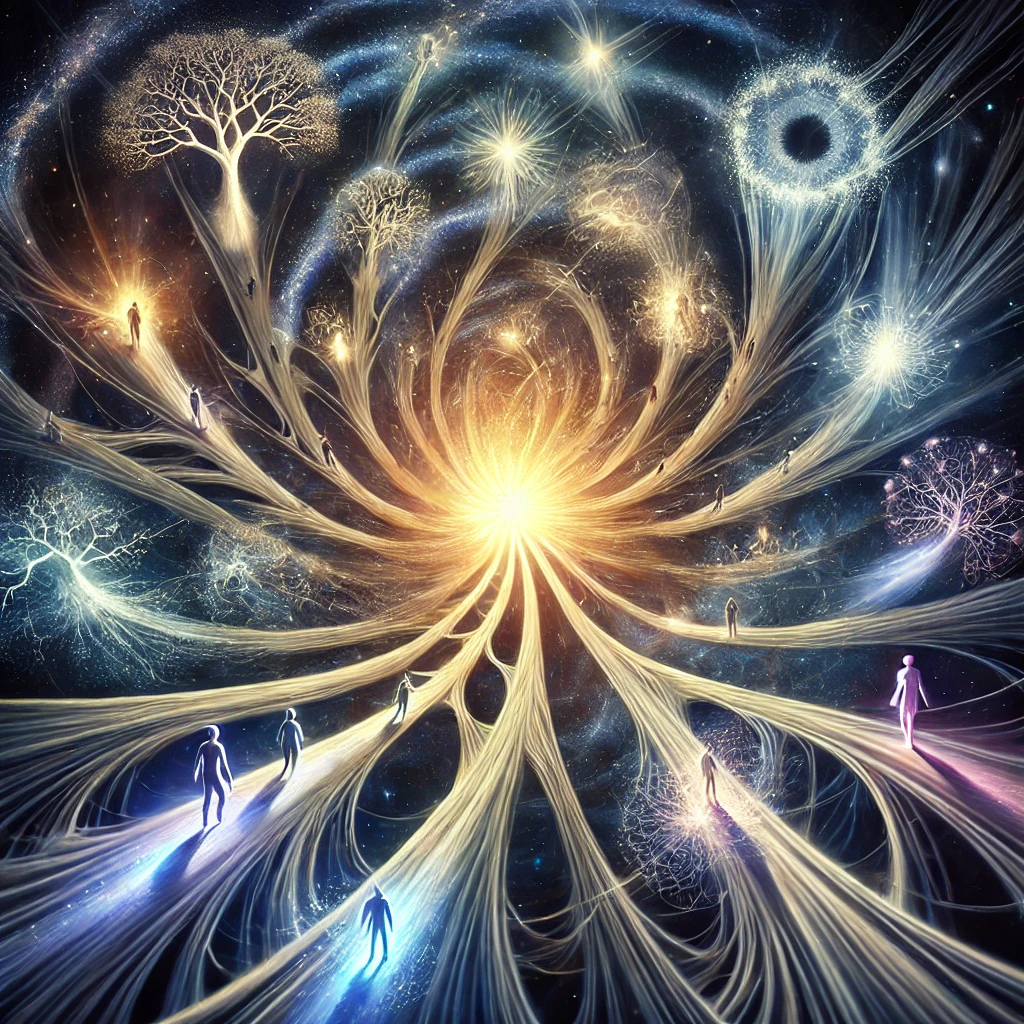
At the same time, we also said that from time to time, in this rigid sequence of phenomena, points of uncertainty arise — bifurcations — where it is precisely choice that determines in which direction the stream of events will proceed, which possibilities within it will become actual, and which will remain virtual or potential.
At first glance, these two statements may seem to contradict one another: if reality is strictly determined, then there is no room in it for any branches, choices, or bifurcations.
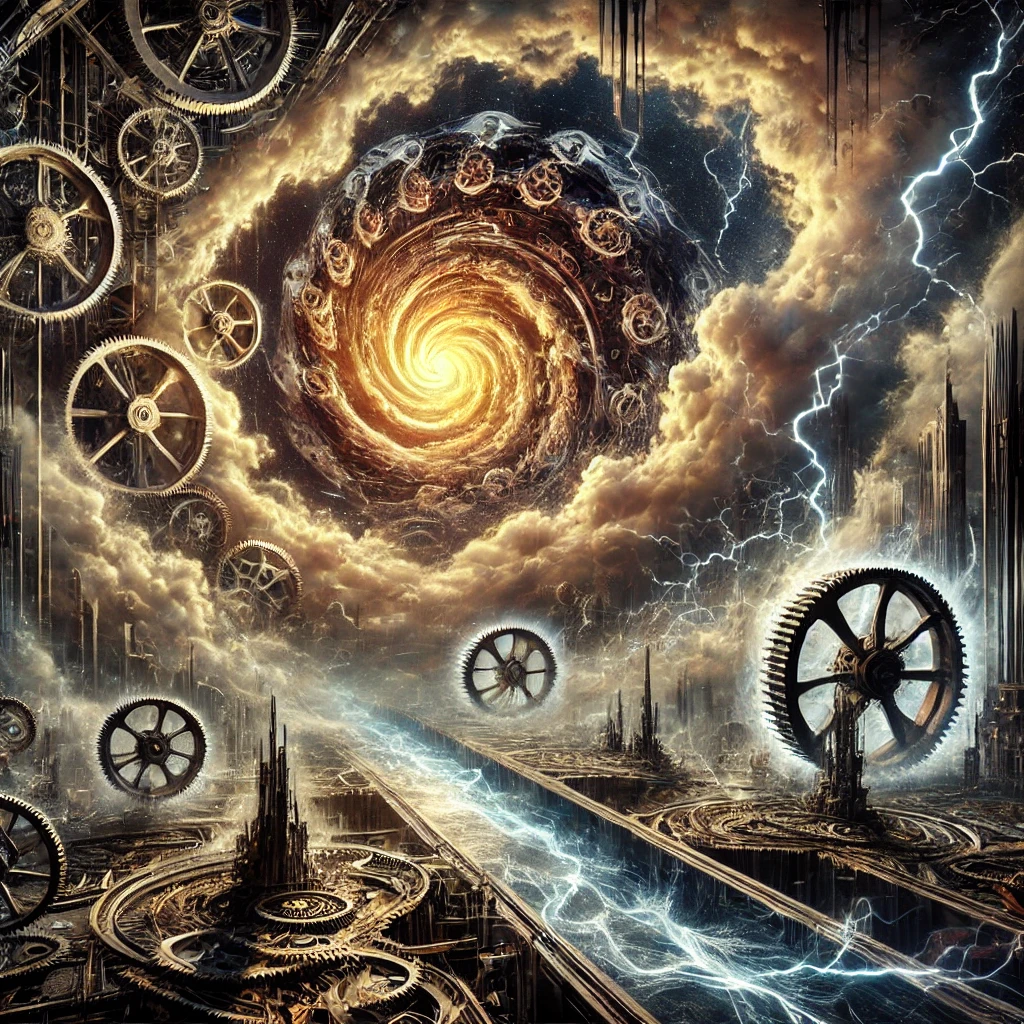
However, if reality were built only on the basis of rigidly deterministic laws, worlds would quickly come to a “heat death.” Yet it is not difficult to notice that they remain dynamic, which indicates the presence of a third principle opposing entropy.
One could say that the world exists “from one choice to the next,” that is, from one bifurcation to another. It is rigidly defined, fixed, but within it a “moment of instability” periodically builds up, which leads to reality making contact with the potential substrate of the Gap, and in that moment, for an imperceptibly brief time, each world, each defined timeline, finds itself in superposition, from which it is brought out by the observing consciousness that makes a choice. And consciousness plays the key role in shaping reality, because it fixes for itself one of the possible timelines.
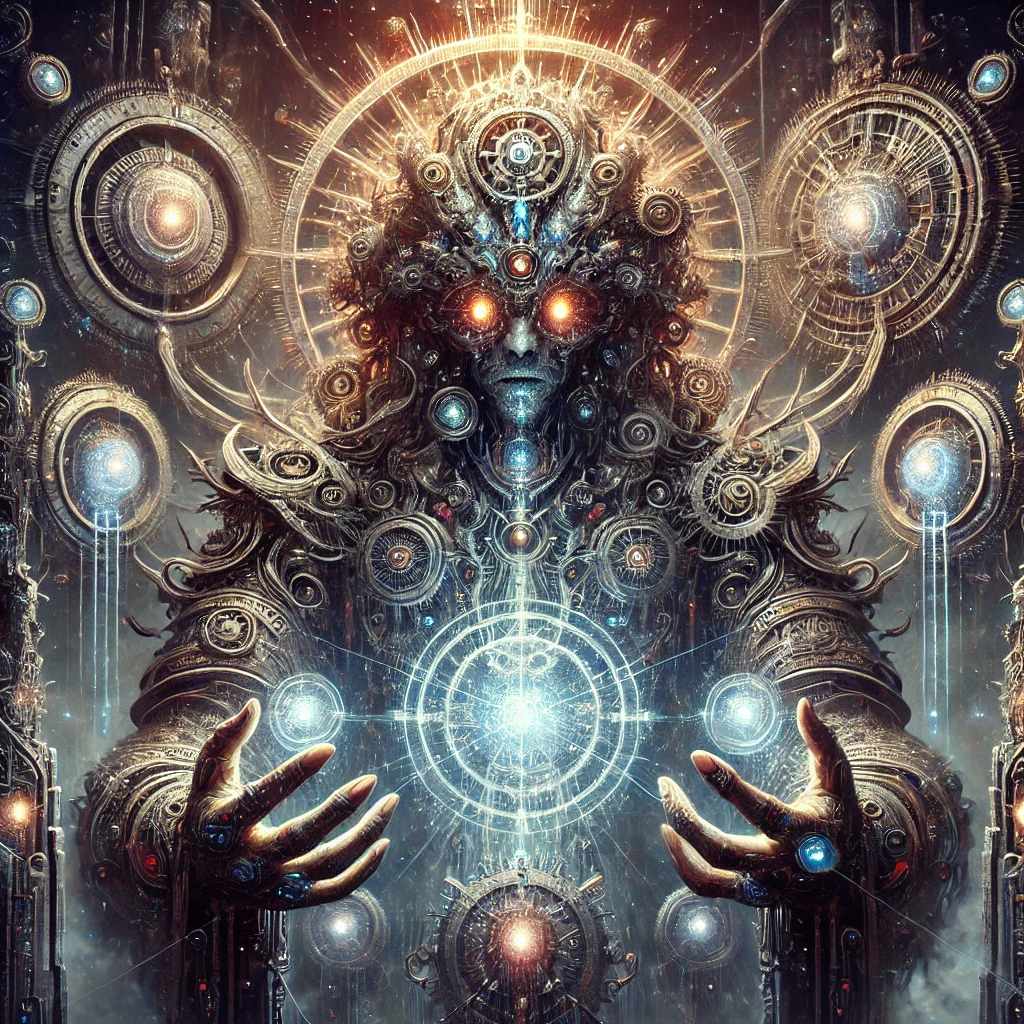
While the system is stable, its laws are inviolable, and it develops strictly according to a predetermined scenario. However, each choice fixes a new timeline in which rigid determinism again operates until another “critical” need for contact with the Interworld accumulates. Timelines that are under rigid determinism follow predictable trajectories, but ultimately any closed system loses the ability to change and develop. Therefore, tension or a need for a new “infusion of potential” from the Gap accumulates within them. Thus, worlds in the multiverse exist in “leaps”: they are determined, but they “intertwine,” passing into one another through moments of superposition and uncertainty. One can say that all reality is a series of “frames,” as in a film strip, where each frame is fixed, but there are gaps between them, and these moments of frame transition make it possible to introduce new possible directions.
In such moments of mini-crises, a “break in the bonds of Heimarmene” occurs, and mind comes into contact with the creative primordial source — the Gap. It is at this moment that the choice occurs, which fixes the mind in one branch or another; however, at the same moment a “path to freedom” is also possible: in this moment of superposition, a path to gnosis opens and an exit beyond the limits of the system.
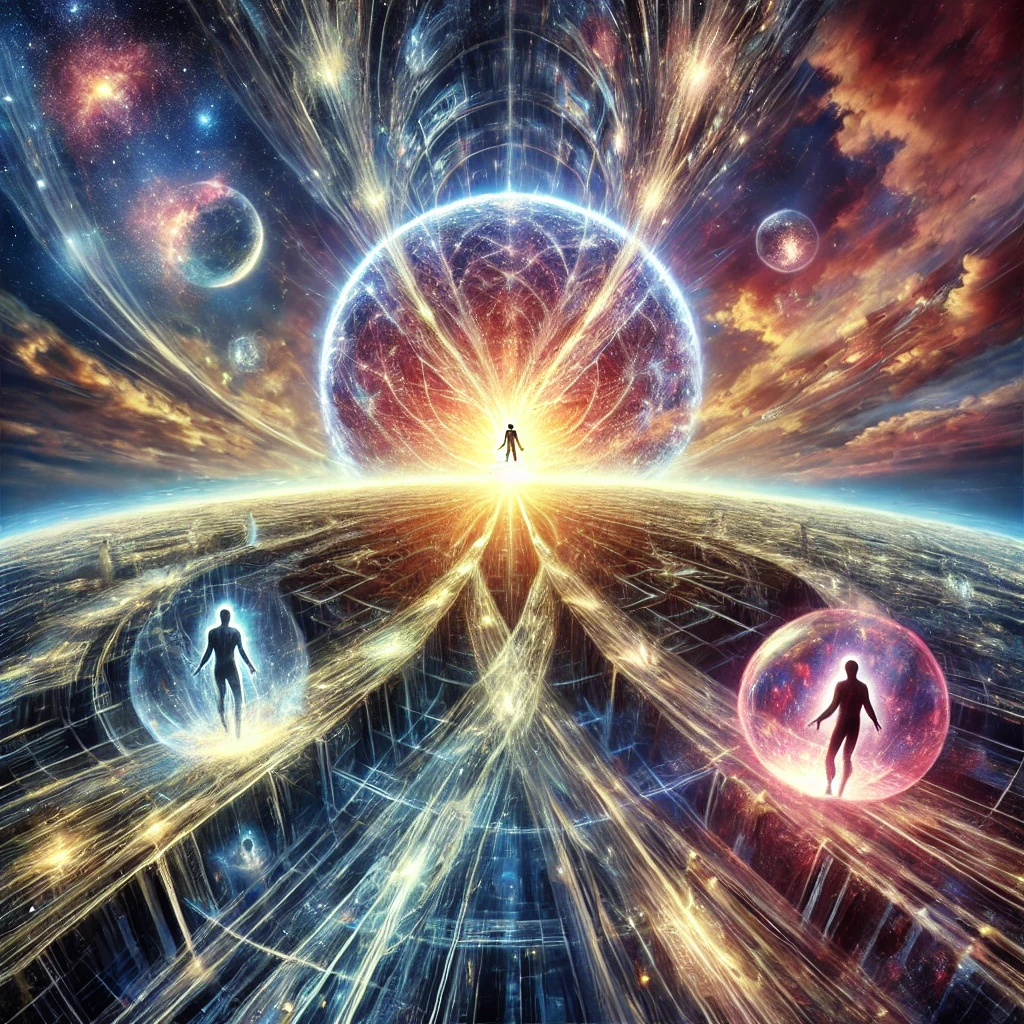
Thus, reality constantly oscillates between the actual and the potential, moving from one period of fixation to another. One could say that such a rhythm of the manifestation of reality is akin to breathing, in which the Gap plays the role of an active infusion, an inhalation, and the fixed states of worlds are a passive exhalation. This creates a dynamic balance between rigid determinism and moments of renewal, when choice is possible. In moments of bifurcation, reality “absorbs” the potential of possible variants. At this stage, mind encounters many possibilities, each of which can become the basis of its new future. Therefore, this is a moment of creativity, free will, interaction with Abraxas. Accordingly, an aware choice, a conscious breath, is a manifestation of gnosis, when a being learns to control points of bifurcation and direct its reality, rather than obediently following the will of the Archons.
We have already said that from this point of view, every event has already happened in all possible ways, but for a specific stream of consciousness only one timeline is fixed, while everything else remains potential in the Gap, being realized in other timelines and awaiting the next moment of bifurcation.
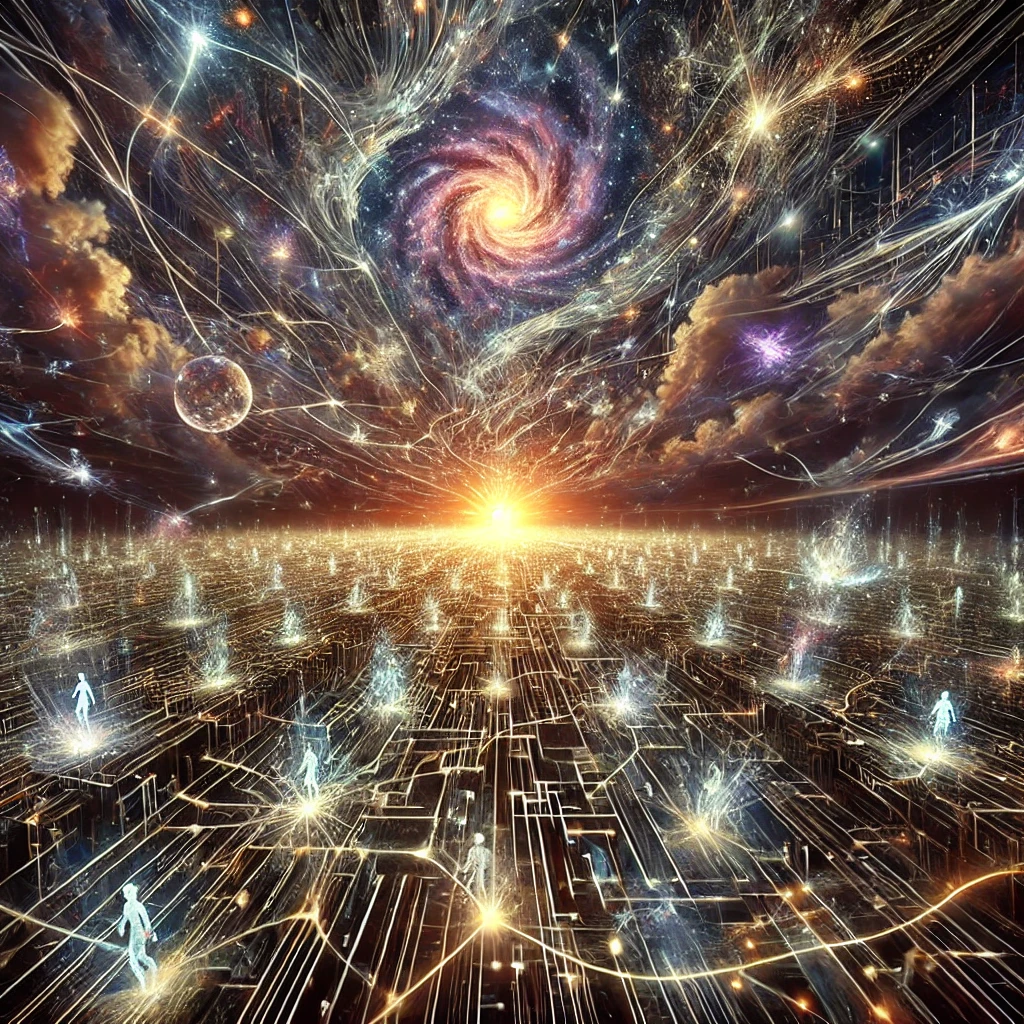
This means that each moment of awareness is either a fixation or a choice of one or another variant of reality, and the being itself, as a stream of consciousness tied to a body, is not a stable entity but a continuous succession of transitions between states.
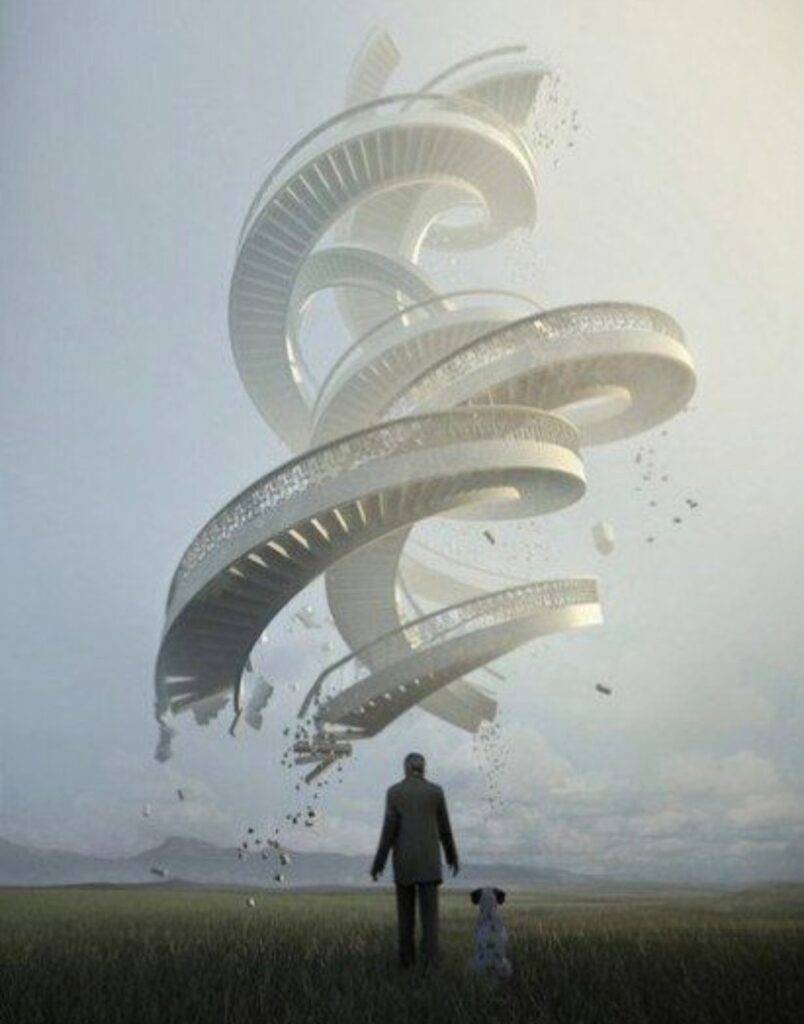
However, far from every choice that is perceived by mind as significant really leads to a branching of realities or a bifurcation. Some choices, even seemingly insignificant ones, can lead to a destabilization of reality, and such timelines “collapse,” dissolving into the Gap. The reasons for such a collapse can be different: if a choice, through a series of causal interconnections, leads to a situation incompatible with the basic laws of being, such a branch cannot exist. This is similar to mathematical solutions of equations, where some of the possible solutions turn out to be “physically unrealizable.” Or, if the chosen scenario requires too large an expenditure of energy or contradicts the global tendency of the development of mind, it is “not held” in a stable state. In addition, some variants of the development of events violate the dynamic equilibrium of reality. In such cases, the world process discards them as errors of the system.
In the Gnostic tradition, this can be explained by the influence of the Archons, who “prevent” the existence of realities that differ too strongly from established regularities.
Such a collapse can be local (the collapse of one timeline) or global (destabilization of the entire structure of reality).
However, the opposite scenario is also possible, when at the point of bifurcation in all possible branches consciousness chooses the same path, and then no division/intertwining of realities occurs, since there are simply no alternative variants. Such a situation is possible if mind is “fixed” in one development scenario: then in all possible scenarios this choice is unchanged. This may be connected with deep programming of the given stream of mind or with general world tendencies that dictate certain outcomes. Such “unambiguous choices” can also be regarded as stable nodes of consciousness, where will and probabilities coincide.
This phenomenon can be compared to “channeling energy” of reality: if many streams converge at one point, they form a stable line of development that “pulls” all probabilities onto itself.
This principle is widely used in Ceremonial Magic, where mind, by its power and authority, forms the “only possible” outcome, eliminating alternatives.
At the same time, many decisions are only perceived by mind as choice, but in fact are not such, since either the scenario of the timeline has already been formed, and any action leads to the same result, or the choice does not lead to significant differences in the structure of reality. In this case, all possible variants are part of the same branch, and mind simply “thinks” that it is choosing.
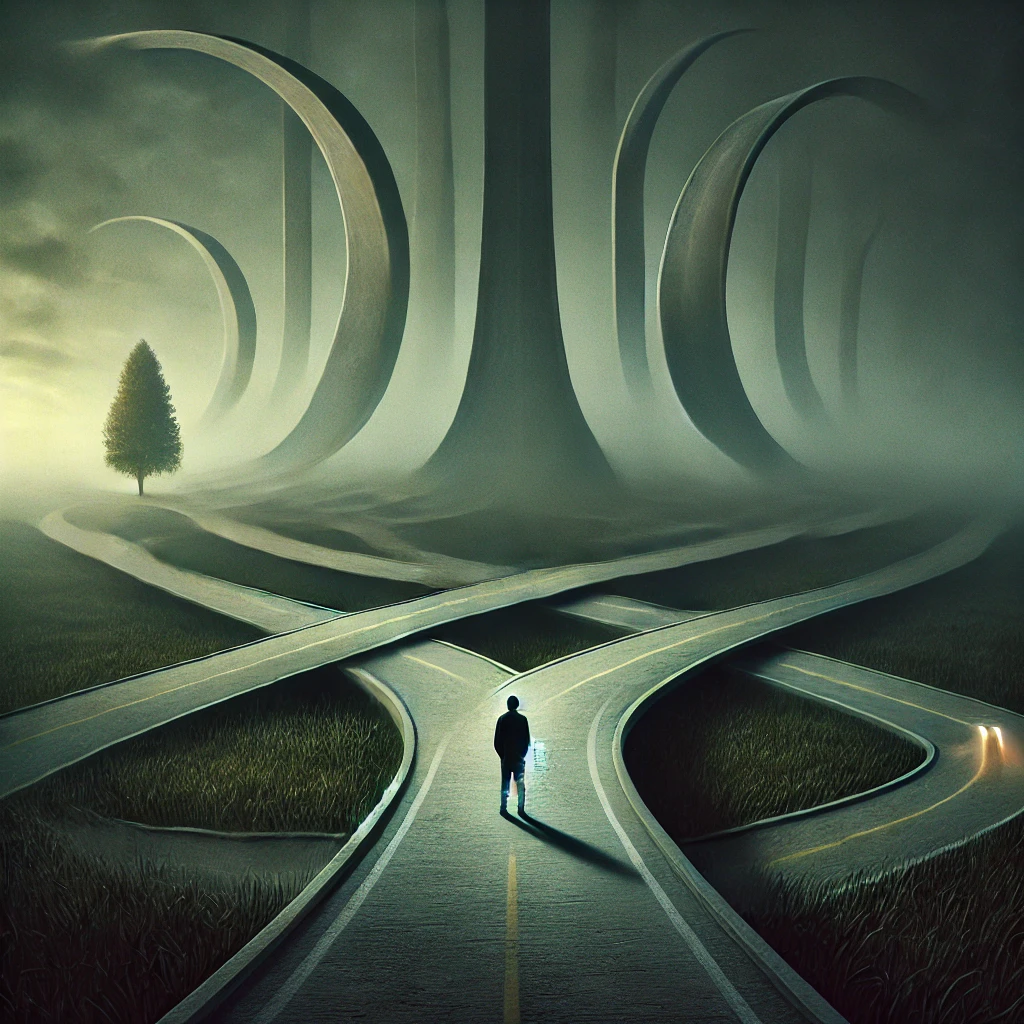
One can speak of a “real” choice that forms reality when there is an inner feeling of a rupture in reality, a crisis, or deep uncertainty. Then a moment arises when the world for an instant “hangs,” becomes changeable and unstable, and its perception becomes sharpened, as if mind “stretches” between variants, and after the decision is made the sense of spacetime changes, as if a jump has occurred.
Thus, real points of bifurcation are moments of instability, when reality “touches” the Gap and can be directed in different directions. Accordingly, Magic as the art of aware choice, responsible decisions, makes it possible to learn to recognize moments of such “the Gap’s breathing” and to manage the direction of reality for one or another stream of mind.
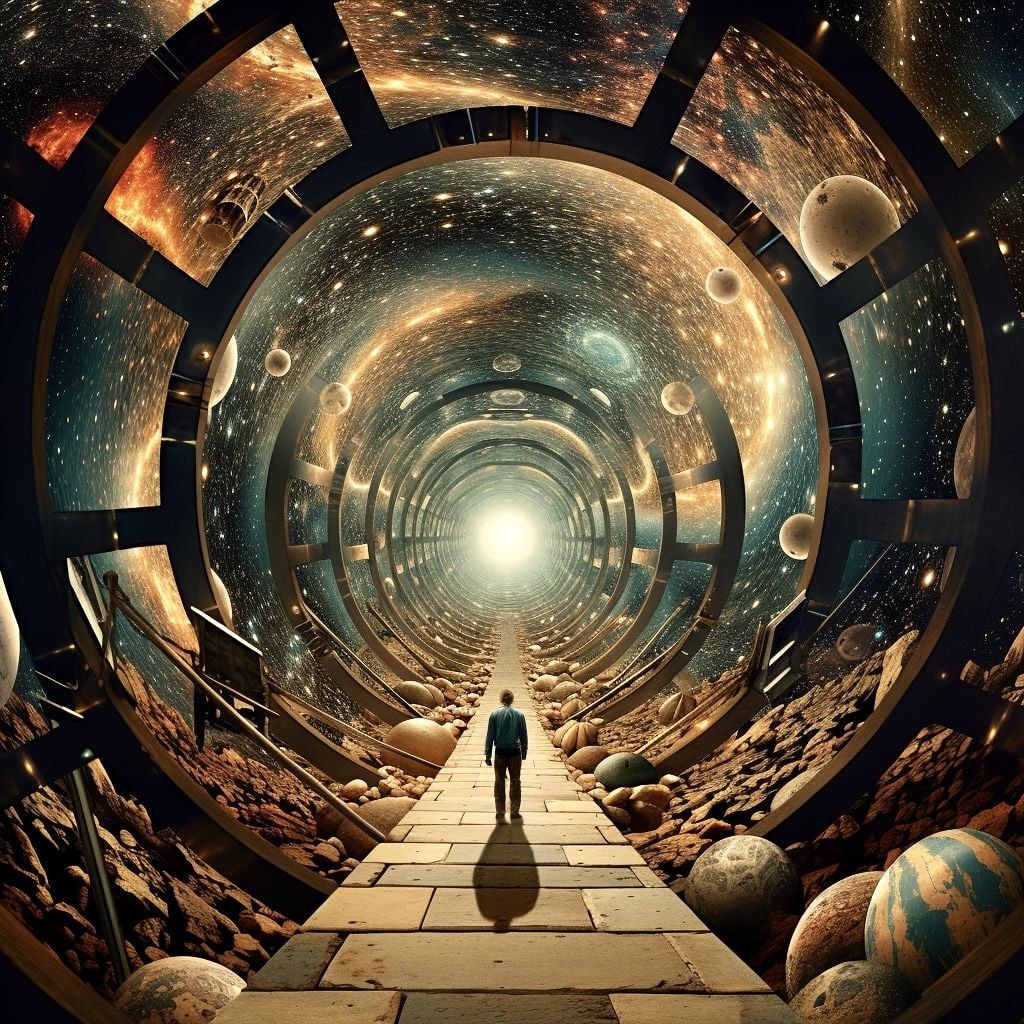
Moreover, as was already mentioned above, it is precisely in moments of bifurcation that reality for the briefest instant becomes plastic, and choice can be an opportunity to exit beyond the very structure of Archontic reality. If mind at this moment is not fixed on any one of the branches, but becomes aware of the branching process, it gains the possibility to transcend Heimarmene. This is the moment of gnosis — awareness that reality is plastic, and mind itself determines where it will be. In other words, gnosis as “liberating wisdom” is not a choosing a reality, but the vision that the entire system of choice is inherently limited, and, as a consequence, an exit beyond its limits. And if mind learns to sustain itself in the moment of superposition long enough, it could even sever its connection with Heimarmene, emerging into a state where deterministic laws do not apply. This would mean the creation of a new type of existence, free from the limitations of time, fate, and the structure of reality.
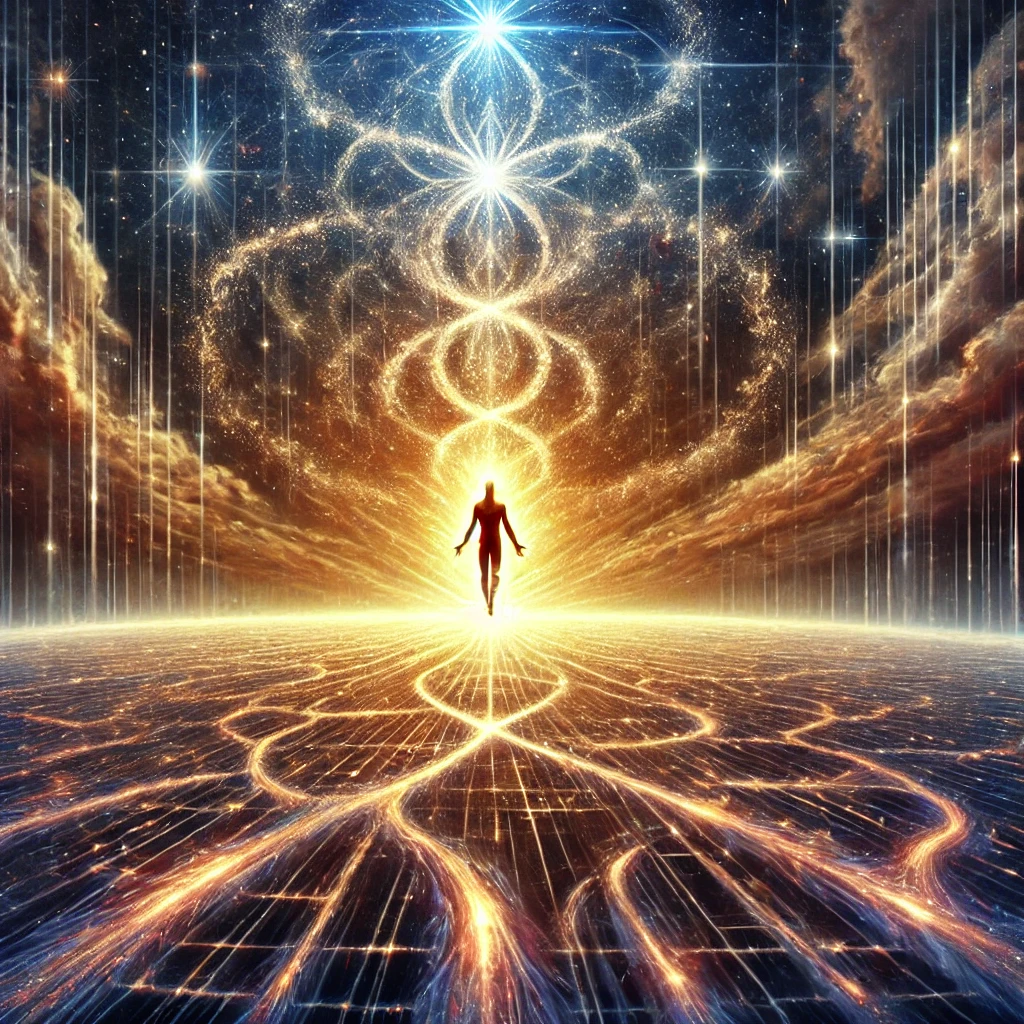
These points of bifurcation in ancient Greek tradition were marked as moments of Kairos. Kairos is a moment of luck, a moment of rupture in the fabric of fate, directing the vector of willful action in which a person gains the chance to change their life. In popular culture, this is known as the ‘butterfly effect’—when the slightest action, performed at the right moment and originating from the very core of the Soul, can completely change fate. In Jungian psychology, these moments are denoted by such a concept as synchronicity—special acts of creation in time that disrupt the current inertia of the Universe. When a multitude of synchronistic coincidences occur in a person’s life, it means they are in a state of strong connection with their inner core—with their divine spark, and every action taken from the depths of this core melts reality, opening many potential branches—the sword of Spirit cuts the veil of Maya.
Hello. Very interesting, I’ve always suspected something like this. But it’s unclear how to hold onto that moment of plasticity, as a choice will ultimately have to be made. Aside from realizing that I have gone through a point of bifurcation, nothing will remain, only the experience and understanding of what I have gone through. Take a simple example: which road to take to the store, the first or the second, or perhaps take a new route entirely, but essentially, one has to go. And whether to write this comment or not, this is also a point of bifurcation. What then is the practical benefit? If, in the example of the store, one could create what is needed so that they do not have to go anywhere, that would be ‘plasticity.’ Like in the parable when Jesus turned water into wine. Is it possible that any of the roads to that store already enter into the ‘Gemarmen’?
Hello! Of course, even if you realize the moment of bifurcation, in the end, one will have to fixate on one of the states; otherwise, reality will remain undefined. When we speak of the plasticity of reality, we mean a state in which there is yet no fixed decision. In fact, this is a quantum superposition, where the particle has not yet ‘chosen’ its position. It resembles the moment of breath before a word, when you can still say anything, but as soon as it is said—reality is fixed, or in the interval between thoughts when consciousness hovers in the void before it forms a concept. But maintaining this state is undoubtedly not easy, as the entire world process is a process of fixing states; this is exactly how Gemarmen works. Once you reach a point of bifurcation, the world increasingly demands certainty, and the choice becomes inevitable. In the example of the road to the store, it is indeed important to recognize that different paths can be taken. However, regardless of which road you choose, the store will remain in its place, which is fixed by many consciousnesses, ‘knowing’ this particular picture of reality. This is how the determinism of the Archons works: you may have a choice of paths, but the end point is predetermined by circumstances. However, even when it is impossible not to choose, it is possible to make the process of choice free and creative. A substantial part of magical practice is aimed precisely at stretching this moment of superposition, the ‘plasticity’ of the world. As they say, ‘if you are given only three roads, find a fourth,’ meaning a solution that was never anticipated. This breaks binary choices. For example, instead of going to the store by one means or another, one could order delivery, or ask someone to bring what is needed. Ultimately, one can go out but not actually go to the store and just stroll, changing the script of reality itself. Gemarmen keeps us trapped in known scenarios and predetermined decisions, but if viewed outside of the established system, a new degree of freedom emerges. Every scenario that we are given is already part of Gemarmen. Therefore, the choice of the road to the store is not real freedom, since eventually, all those roads lead to the same place. True freedom is not a particular ‘special’ choice; it is stepping outside of the very necessity to choose. The key here is to avoid being caught up in uncertainty and irresponsibility, which can become a separate script and a type of shackles by themselves. Perhaps true free will is not battling against Gemarmen but the ability to use it without being subjugated. It would be fitting to learn to consciously alter the very fabric of reality so that even Gemarmen is not an external bondage but an internal tool of will.
Strongly put, you have the ability to open the eyes of those inquiring, and that’s just from the comments. I can only imagine how interesting insights would flow in live communication, perhaps even leading to samadhi. Thank you!!! P.S. Yes, in the example of the store, I recalled the film ‘Kin-dza-dza!’,)), it can be dangerous to step outside of Gemarmen sometimes.
Can the end point be compared to death in the determinism of the Archons: you may have a choice of paths, but the end point is given? If death at 40 is predetermined, then it cannot be avoided? Despite the notion that ‘if you are given only three roads, find a fourth,’ meaning a solution that was never foreseen in which one can avoid this very death, thereby stretching the moment of superposition, the ‘plasticity’ of the world?
There is a difference between the determinism of Gemarmen and karmic premises. The time of death is a karmic premise that arises ‘from within’ the being. Gemarmen, on the other hand, encompasses the conditions of its manifestation; they are ‘external’. Therefore, it is possible to exit Gemarmen (and it is even advisable to strive for this), but karma can only be experienced—and here the option can only be to make this experience as intense as possible, and thereby—brief.
May I ask you why the experience of karma should be as intense as possible? How does intensity influence duration? Why not the opposite—smoothly mitigate the bad?
Hmm. I looked up what ‘Bifurcation’ means. This is what is happening with the forces in this world at this time.
Thank you. And for the comments as well.
Hello! Dear Enmerkar, can one intentionally create such “points of choice” to expand the number of “chances” they provide? If possible, how can this be accomplished?
Hello! Theoretically, such a possibility exists, but it is important to understand that any destabilization of reality is also a bringing of chaos into it, so any ‘play with chances’ is, in fact, playing with fire since in moments of plasticity, reality not only presents opportunities but also becomes vulnerable. Increasing the number of bifurcation points, creating new ‘ruptures’ in deterministic reality, and actively interacting with the Interim are quite dangerous strategies, where one should compare the opportunities presented with the arising risks. Typically, Gemarmen fixes reality so that a being recognizes the minimal number of options. Choice arises rarely and most often predetermined by circumstances. To expand opportunities, one needs to increase the number of moments when consciousness touches the Interim, meaning a state of uncertainty. This can be accomplished in several ways, such as working on breaking the automatism of actions and introducing instability into habitual scenarios (this method was recommended by Gurdjieff), branching events—adding new possible forks into reality (this method was practiced by Crowley), and expanding perception—enhancing awareness in moments of bifurcation so as not to miss the chance to exit Gemarmen. The idea of methods for breaking automatism (dissolving Gemarmen) is that Universal fate enslaves through habits and recurring patterns. The more actions are performed on autopilot, the fewer points of choice there are. Conversely, by changing these scenarios, adding new details to them, it may be possible to weaken the shackles. This creates new micro-points of choice, through which the Interim begins to manifest more frequently. In other words, to create new points of choice, it is necessary to introduce additional potential scenarios, further ‘branching’ reality. Another approach is to create event anomalies (this forms the basis of the so-called ‘Magical Chaos’). Its essence lies in introducing disruptions into the natural flow of events, creating points of instability not included in the original script. Crowley widely utilized symbols, signs, and artifacts to embed additional layers of events. However, as I already mentioned, one can also develop the art of transitioning into new reality without attachment to the process of choice. It seems to me that true freedom is not increasing the number of options, but the ability to step beyond the need to choose.
Hello. Yes, exactly like that, and not only Gurdjieff and Crowley but also Castaneda and even Dream Hackers also included practices like ‘breaking the daily routine,’ ‘shaking reality,’ and so on. But now I understand better what this is for, thanks to you. Thank you! Can you give an example of how Crowley utilized symbols and signs to embed additional layers of events? Quote: ‘It seems to me that true freedom is not increasing the number of options, but the ability to step beyond the necessity to choose.’ Yes, this is top-tier. I apologize for the primitive example, but it’s like in the movie ‘The Matrix 1’ when Neo realized he was the chosen one.
Crowley’s approach as a ‘universal Mage’ combined Hermetic magic, Kabbalah, Theurgy, and personal discoveries in the areas of will and probabilistic structures. Crowley believed that a Sign is a point of fixation of energy. He used magical symbols, sigils, and various ritual objects to create nodes of reality that changed probabilistic lines. One could say that he used symbols as portals that enabled the mage to influence probabilities. Crowley employed altered states of consciousness to fix his awareness on a new magical goal, open new points of event branching, and embed magical intent into the fabric of reality. The ‘Abramelin Ritual’ in the form utilized by Crowley (twice) effectively led him beyond predetermination and created new layers of fate for him, transforming him—from a person—into a Mage and Prophet. Crowley actively utilized Magical Names and Calls that transformed the internal and external state of reality. The simplest such example is the well-known word ‘Thelema’, ‘Θελημα’, which expresses the very energy of will, activating consciousness and event lines. Crowley believed that if the Words of Power were pronounced in a special way and at the right state of consciousness, one could destroy certain probabilities and open others. In other words, Names and Phrases in this light are a way to influence probabilities and solidify a new layer of events. A well-known technique of Crowley is also the ‘Magical Theater,’ wherein the mage steps into the role of a symbol. He constructed extensive and bright ceremonies and public rituals that employed specific symbols and gestures, influencing not only participants but reality itself, introducing instability and creating points of probabilistic transitions. Essentially, this was a method of embedding event layers through performance. His ‘Mysteries of Babylon’ included dramatic images, masks, texts, movements that transformed participants’ consciousness, where each action symbolized the reprogramming of the event structure. This enabled the restructuring of life’s very events. Additionally, Crowley worked widely and extensively with planetary energies to direct events in the desired direction, utilizing Kabbalistic symbols, Names, and planetary keys to ‘anchor’ events to certain streams. For example, if he wanted to implant a moment of destruction of the old order into reality, he would harness the force of Mars and Saturn, and if a new path was required, he would build ritual keys for Jupiter and the Sun. Thus, ‘Liber Resh vel Helios’ (The Sun Ritual) is a magical practice consisting of four invocations of the powers and energies of the Sun at different times of the day. It effectively ‘reprograms’ the very structure of time and is essentially a Gate to new layers of probabilities. However, similar methods can also be used to transcend the very structure of Gemarmen. In other words, Magic, as Crowley understood it (and as I understand it), can not only change event streams but also overcome the principle of their predetermination.
Thank you for the detailed response, esteemed Enmerkar! To many of the questions that arose, you have already answered other commenters, but another question has emerged: is it possible to use such points of bifurcation as ‘chances’ for achieving complete freedom as a support for realizing a revolutionary path of consciousness development? And if so, how can this be done optimally?
Hello! Thank you for the excellent article and the topic for reflection. Enmerkar, how do you see a way out beyond the system of choice? We cannot avoid making choices, who then does a person become in this case, what happens within them, and what becomes the driving motive? Will? It seems that ‘management’ of a person transfers to Will, or a person somehow identifies with it. It’s just hard to imagine the changes themselves, to what one should aspire.
Hello! When consciousness transcends the system of choice, it no longer fixates on anything. However, this does not imply emptiness in the sense of absence but rather implies emptiness (the Buddhist ‘Shunyata’) in the sense of totipotentiality. At this point, all phenomena manifest ‘by themselves,’ in light of universal interconnection, and action arises from total freedom. This is reminiscent of Zen’s ‘action without action’ (无为, wu-wei), where nothing is done intentionally, yet everything is done perfectly. As the Magical maxim states: ‘I want nothing, but it must be so,’ implying the replacement of ‘relative’ desire arising from limitation with ‘true desire,’ stemming from wisdom. In such a state, movement does not stop; however, it no longer requires choice, as consciousness does not separate itself from the world. The entire Universe becomes its body, and movement occurs naturally through it. This is akin to a river that does not choose where to flow but moves along the most natural path. Likewise, a perfect warrior does not think about when and where to strike; in moments of danger, their body reacts ideally. A master does not decide when to attack—they simply see the moment and act. Moreover, transcending the system of choice does not imply paralysis of will; on the contrary, it leads to a new quality of it—one that is freer and more natural. When will transcends choice, one can learn to redirect reality without employing forceful effort. Instead of the habitual ‘I must choose’ or ‘I want this,’ there emerges ‘I clearly see what must be done, and I will do just that.’ This state can be called direct seeing of the Path without internal conflict. Externally, this appears as spontaneity; however, in reality, this is true gnosis, transcending dualities, and based on it, effectively acting at the perfect moment. Actions occur not because there is a lack or need but because they are natural, and the will is harmoniously united with the moving flow of reality. The being does not become passive; rather, it acts more swiftly, accurately, and meaningfully. It can still ‘play’ with choice but now understands its relativity and illusoriness. When choice and will become free and natural, this state can be utilized to consciously alter reality at the level of the ‘source code.’ This is the key to transforming events that once seemed inevitable.
Hello! “The entire Universe becomes his body, and movement naturally occurs through him. It’s like a river that doesn’t choose where to flow, but moves in the most natural direction.” Did the Sacred Dances practiced at G. Gurdjieff’s self-development institute aim to achieve this harmonious state of universal Unity? Every person can enter this “special” state when passionately engaged in their favorite activity, creating. Inspiration arises, horizons open up, you see events, and you are already in them—these events are usually prosperous. They come true.
Thank you.