
Aesir — the Shining Lords
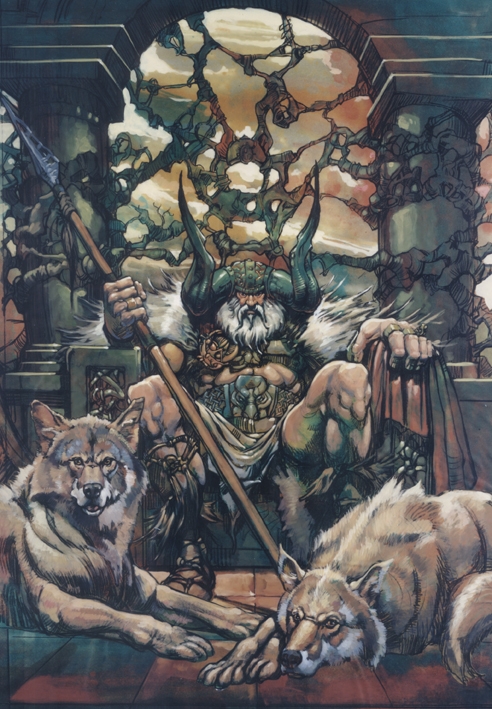
The ancient Scandinavians sometimes used the term Aesir to refer to all gods in general, but in a narrower sense the name properly belonged to the tribe of Asgard, whose chief function was to maintain the world in a clearly defined state.
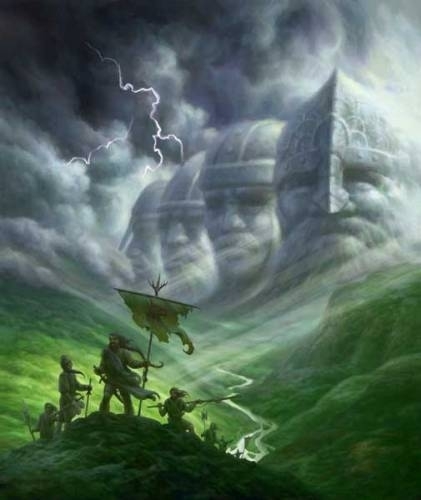
It is precisely this differentiating role that allows the Aesir to be regarded as gods of intelligence — more precisely gods of the mind, since “pure intelligence” characterizes the Alvs — because it is this principle that creates the world as a collection of distinct objects. In this sense the Vanir express the creative energy of life, the Jotuns embody the secondary principle of will, and humans embody the principle of desire.
From the perspective of awareness, the Aesir uphold the boundaries not only of the world as a whole but of each particular object within it, and this upkeep requires constant effort, since it opposes the primordial undifferentiated unity that would engulf the world.
This sustaining is mythologically represented as the paired feast and battle — the two constant activities of the Aesir.
The battle represents the efforts to maintain the balance of forces, while the feast represents the restoration of those forces.
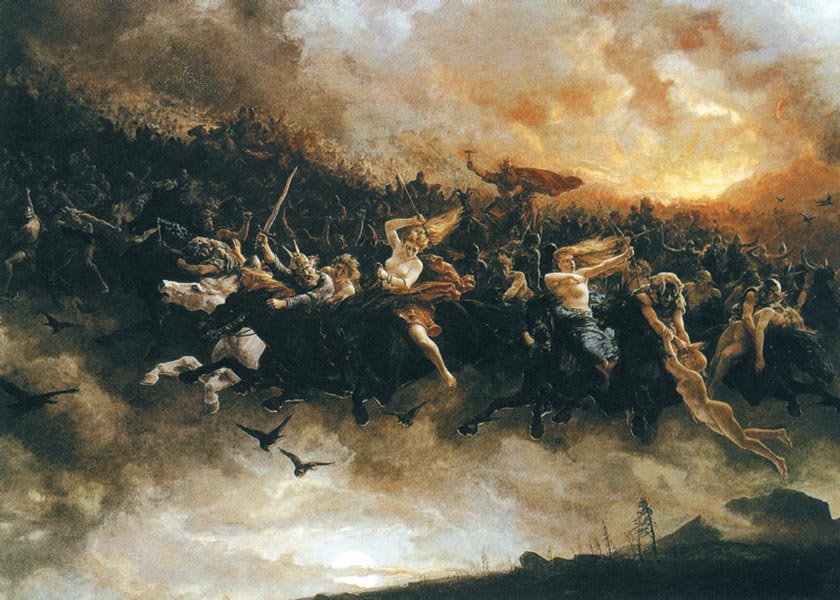
In this struggle — that is, in the constant struggle to carve the formed world out of the ocean of chaos — the Aesir enlist the help of all other inhabitants of the realms; poets (skalds) are especially valuable to them,
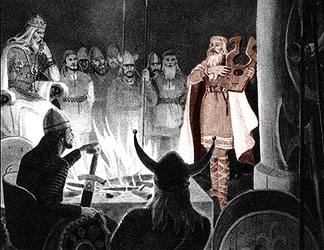
for they produce verbal descriptions of the world, and description is regarded as a way of creating objects and events, and the einherjar — warriors who devise battle strategy.

Enmerkar, can you tell me if the Asuras are the same as the Aesir, or not?
“Ásuras are closer to ‘not gods,’
Ás is closer to ‘prime gods.’
They are approximately the same concept.”
In my opinion, the Asuras are the Dark Elves, as their function is to prevent the world from stagnating and to ensure continuous development. If the Asuras cease to introduce some sharpness into the existing order, the Devas will be bored with the monotony of their duties.