Traps of Reason
The Principle of Intelligence is revealed in the Psychocosm as the biner linking the categories of reason and intelligence. The former arises as the “self-reflection” of this principle, while the latter results from the Principle of Intelligence reflecting the Principle of Feeling.
Although the dangers from an unrealized biner here are far less than those from the biner of the Principle of Feeling, Magi who fall into its traps are not uncommon.
Focusing the mind on reason robs a person of Magic. Pure intelligence knows no mercy, knows neither miracle nor fairy tale — it does not know Magic.
The tradition calls reason (discernment) the capacity of the mind to choose solutions to a new problem based on knowledge of solutions to similar problems. It calls intelligence the capacity to find solutions based on knowledge of the laws governing the cosmos.
Civilization favors the simpler category of reason. From its point of view, all comprehension should proceed mechanically, and a person, for any intellectual construction, only needs to know of the most convenient and rational way to thread once-and-for-all worked-out logical schemes onto some guiding axis that is directly derived, in the given case, from the sum of accumulated experience. Let us note again that reason does not create new knowledge; it merely systematizes what already exists.

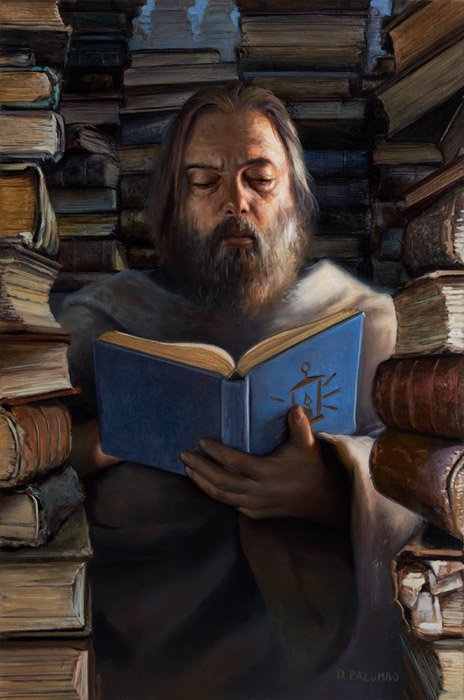
Magi who indulge in such constructions risk becoming forever entangled in their thickets, turning into philosophers, and falling out of the living flow of Power. If reason as the thinking aspect of the mind is directed toward the world and accepts non-contradiction between knowledge and experience as its chief principle — that is, consistency with itself in thought — then intelligence relates not only different contents to one another, but also itself to those contents.
Very often instruction in Magic is reduced to the study of “authoritative” writings, ideas, and ready-made answers. Such teaching leads to a one-sided infatuation with external regularity and the subjectivity of forms, ignoring inner unity.
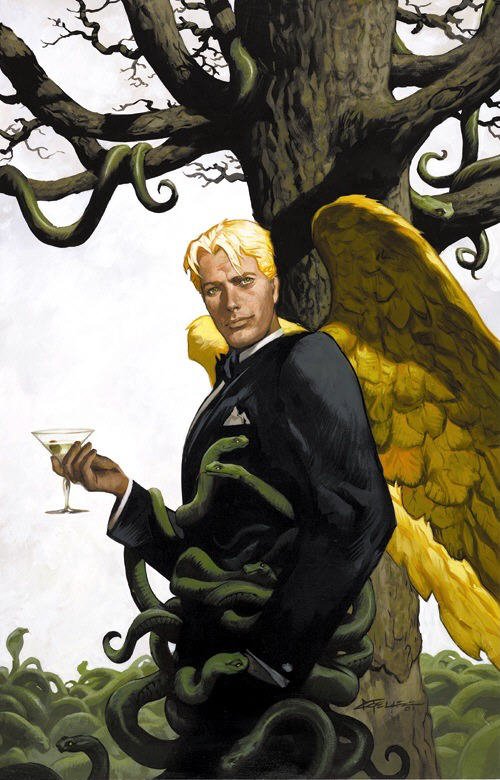
We have already discussed how, in this case, the principle of Apollo degenerates into the principle of Astaroth. Instead of seeking answers within their own mind, on their Way the practitioner begins to imitate others. A person caught in such a snare often exclaims things like: “What nonsense! See what is said about this in Guru Pupkin’s classical works!” Inspiration in this case dies, and Magic disappears. At the highest development of such a person, only flexibility of thought, paradoxical constructions, nihilistic sophistry, and utterly destructive, caustic irony can prevail.
On the one hand, the striving for concreteness is a primary sign of a living mind, and therefore everything alien to concreteness does not partake in real being. We have spoken about how important it is for a Magus to have a complete description. Yet one must not be left with the impression that there is no — and cannot be — an absolute mystery in the world, for it is precisely the world’s incomprehensibility to intelligence that constitutes the condition for the possibility of Magic.
Psychocosmic principles that are closed in on themselves are unproductive; they bear fruit only in mutual reflection — just as absolutizing emotions destroy Feeling, so an obsession with intellectual constructions cripples Intelligence.
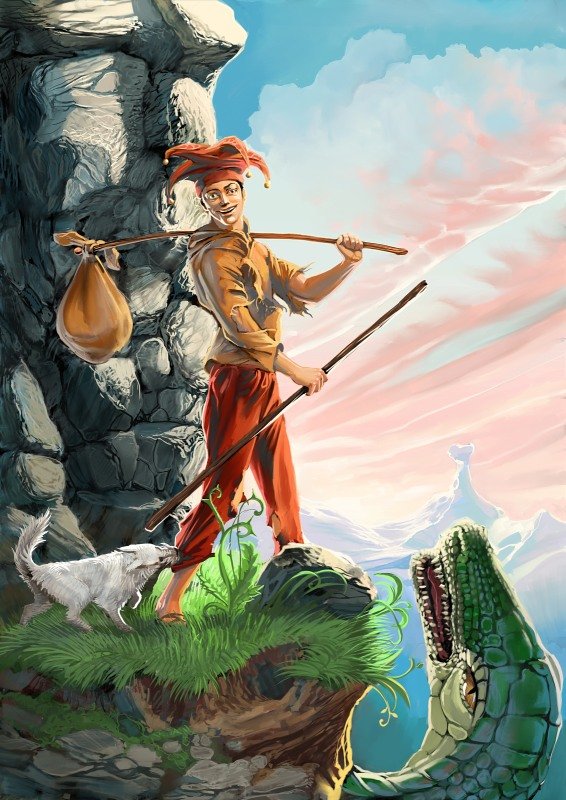
Only one who does not seek templates, who does not walk the well-trodden paths, but rejoices in life’s mysterious variety while charting their Way, and without turning into either an all-knowing intellectual or a half-conscious mystic, can be a Magus.
no-no-no!
The knowledge of the laws of the universe should not turn a magician into a philosopher in a shabby robe! It is simply the foundation upon which he stands, it is merely _awareness_ that grass is green and water is wet; it’s not about studying, but recognizing it as your own to the last scratch, it’s a merging with the soul of the grass and the soul of the water… something like that, dang, I can’t find words for this 🙂 it’s not reason, not emotion… rather identification – that’s the word that comes closest.
And books are more like a protective mechanism of Power against fools than a help on the path. They are those many side dead-end paths that are so easy to stray onto.
True knowledge is always “recognition”, “remembrance”, but never new information.
I open books not to learn something,
but only to compare.
So is your site. Great site, by the way!