
The Magus’s “Great Work”
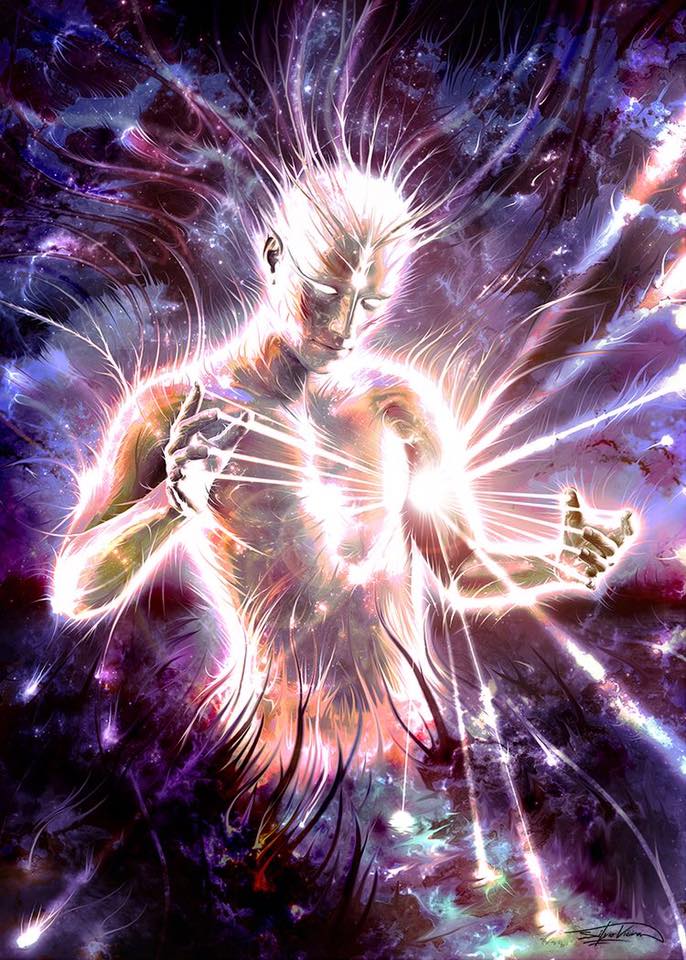
A person becomes a Magus when he turns his life from a set of random, automatic actions, from busyness and satisfying needs — into a quest, a transformational undertaking, aimed at transforming his being from a jumble of disparate impulses — into a symphony, into a vessel through which the Great Spirit’s light of self-knowledge is manifested.
The idea for this transformation arises from seeing the fragmentation and disintegration of the human being, in whose inner world various currents, strivings and drives coexist (and conflict), making it impossible for consciousness to manifest effectively through such a disharmonious vessel.
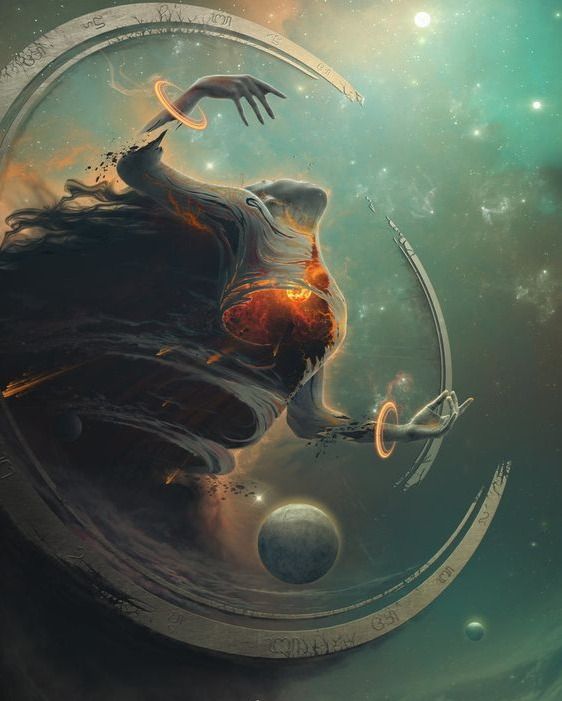
At the same time, as has been discovered, if one transforms that heap of chaotic bursts and surges of consciousness into a single, integral, hierarchized system, the resulting vessel will not only be able to bear the light of consciousness itself but will also serve as a “focal point of crystallization,” a source of ordering for both the physical and psychic universe around it.
Even “magical” descriptions of the world often suffer from a lack of holistic perspective, for example by dividing the Tree of Life or the Light of mind into separate “spheres” or domains, treating them not as aspects, manifestations of a single system, but as discrete components, details or links.

Of course, such a Transformation is in itself only a “preparation,” a foundation, merely returning the ensemble of manifested consciousness to its “basic” settings; yet without it that ensemble remains a destructive cacophony, darkened by the poison of selfishness and destructiveness.
Therefore Magic, as a set of transformational, practical, and ordering practices, is a basic system necessary not so much for the “perfecting” of the human being as for its “repair“, purification and restoration to a workable, “originally intended” state.

Magical perspective holds that the flow of mind, distorted since beginningless times, can remain in a disharmonious state for ages — endless aeons and myriads of lives repeating the same meaningless games, sinking into rat races of varying complexity, endlessly trying to sate the insatiable and suffering from perpetual dissatisfaction, yet never moving to its “original” purpose.
Nevertheless, if one senses the unnaturalness of this vicious cycle, a long task lies ahead: eradicating destructive tendencies, integrating and harmonizing one’s inner makeup — a work that no one will do for him, does not happen “with a snap of the fingers,” nor is it achieved instantly as the result of revelation, illumination, or samādhi. Any “enlightenment,” any transcendence of mind, is the result of long and painstaking effort, and although the light-bearing nature of mind has never been lost or damaged, reaching it and ensuring its steady manifestation in the conditions of the manifest world is far from easy.
Two mistakes often made on this path are either neglecting effort or imagining transformation as a change in the very foundation of mind. The first error is frequently committed by contemporary “spiritual seekers” who, thanks to good karma or significant surges of fortunate energy, have sensed the primordial perfection of mind and decided that this is “Enlightenment,” in practice becoming “spiritual addicts” dependent on new doses of pleasure, displaying selfishness and consumerism just like the worst representatives of “unenlightened” humanity.

The second mistake, by contrast, is made by ascetic seekers who have discovered the “viciousness,” the “sinfulness” of their mind and lock it away by suppressing it instead of recognizing and “illuminating” their shadow aspects.
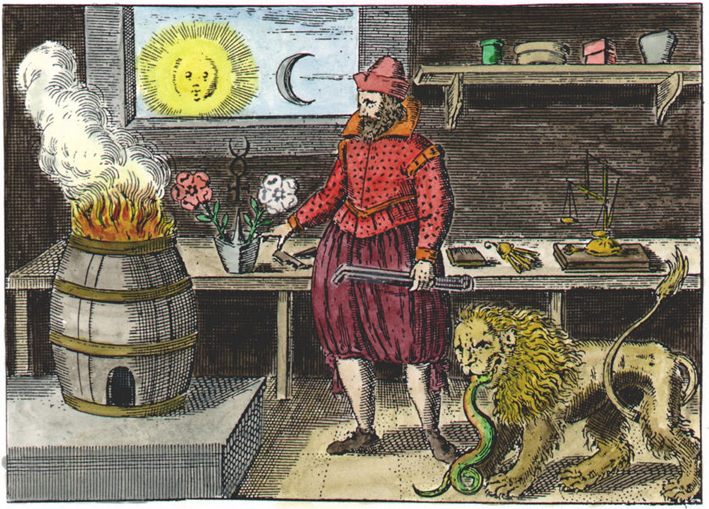
A Magus, striving to achieve a pure manifestation of his nature, step by step carries out the transformation of the stream of consciousness, turning it into a “philosopher’s stone” — not only perfect in itself but capable of inducing restructurings in its environment, turning that environment into “gold.”

All magical practice, all the Magus’s actions, are organized around this idea of the “Great Work,” guided and governed by it. By integrating and purifying his being, the Magus turns himself into an ideal vessel of Power, establishes contact with Power, and becomes its pure conduit and channel. As the worlds of the being’s psychophysical layers (Guf / Khuš ha-Guf, nefesh, ruach, neshama, chaya and yehida) are integrated, separateness and isolation disappear, transforming into a sense of unity (through the light of chaya) and a selfless individuality (the light of yehida).
The striving for the Great Work is not a striving for “growth” or the “perfecting” of mind; it is a striving to correct the mistakes that have been made, to restore the natural state, the proper course of things. For the Magus this is the foundation of his Way, the basic motivation of his activity.
How to integrate and harmonize your composition?
Amazing.