
Acceptance and Rejection
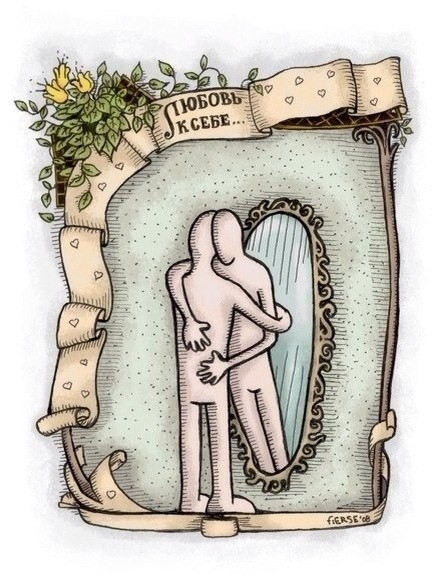
In the contemporary quasi-spiritual, quasi-religious community, two ideas prevail that describe the way the mind interacts with its parts.
The first, more traditionalist and morally oriented, speaks of the necessity of rejection, of ridding oneself of undesirable elements and states, classifying them as “sin,” vice, mental clouding, and the like.
The second, more modernist, insists on the need for “acceptance,” “making friends with one’s inner demons,” claiming that it is precisely through this “acceptance” that inner harmony is achieved.
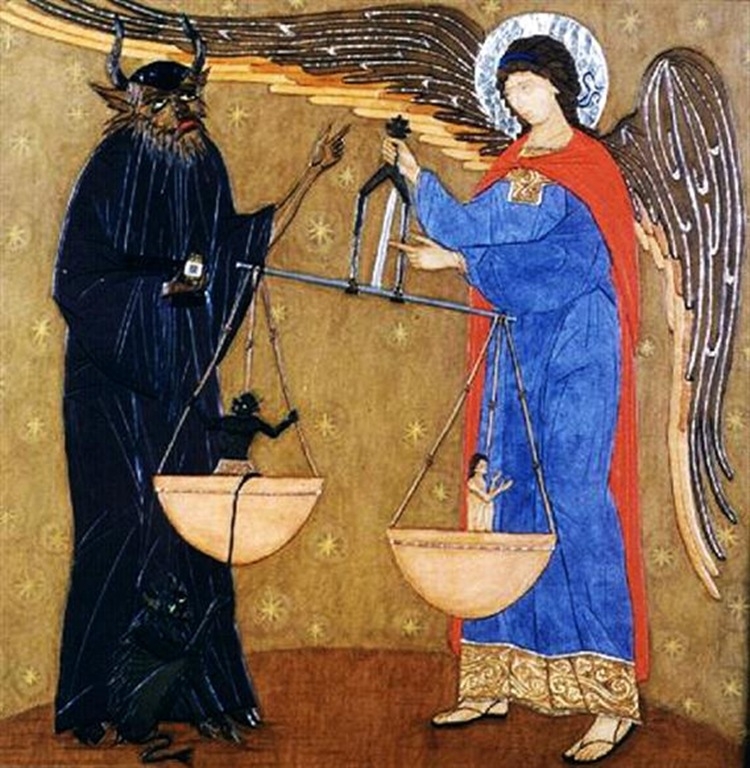
In fact, the situation is such that each of these viewpoints, instead of serving as a genuine foundation for the development of the mind, easily becomes a cage that shackles spiritual freedom.
Falling into the trap of rejection, the mind, instead of identification and transformation of its undesirable manifestations into constructive driving forces, descends into self-suppression, becomes bogged down in endless conflicts between its inclinations, and in interminable efforts to “figure itself out,” to “separate the wheat from the chaff,” and to “sort the sheep from the goats.”
From a formal point of view, rejection is, of course, a distortion of the original force of repulsion, since it is based on the attempt to separate the “I” from the “not-I.” Yet, by relying on external criteria, moral maxims, and socially approved markers, it loses its constructive character. Repulsion is productive only as a means of self-definition, and only to the extent that it is necessary for the affirmation of the individual center of consciousness. Still, its distortions loop back on themselves, losing the possibility of transcending separateness.

Falling into the trap of acceptance, the mind, instead of relying on the discovered system and using it as raw material for self-purification and self-harmony, gets stuck in passive “observation,” vainly trying to “accept” conflicting currents, and thereby loses creative energy and willpower.
It is clear that, being a “bloodless,” hollowed-out form of the power of attraction, such “acceptance” lacks actualizing potential; yet, because it is devoid of inner tension — which many seekers inclined to laziness perceive as negative — this way of behaving is attractive and widely popular.
For a Magus striving to constructively apply both forces – and attraction, and repulsion, and, moreover, to avoid falling into becoming dependent on either, it is vital to avoid the traps of acceptance and rejection. By studying himself in various interactions with “ordinary” and “supernatural” forces, the Magus learns to identify his “weak spots” — that is, unrealized potentials, distorted desires, and blocked realizations — but not to “accept” them, nor to “reject” them, but in order, after carefully examining the force, to exhaust or transform it, prudently using its energy, preventing destructive manifestations, and redirecting it into a productive channel.
Leave a Reply