
Devekut — Realized Love
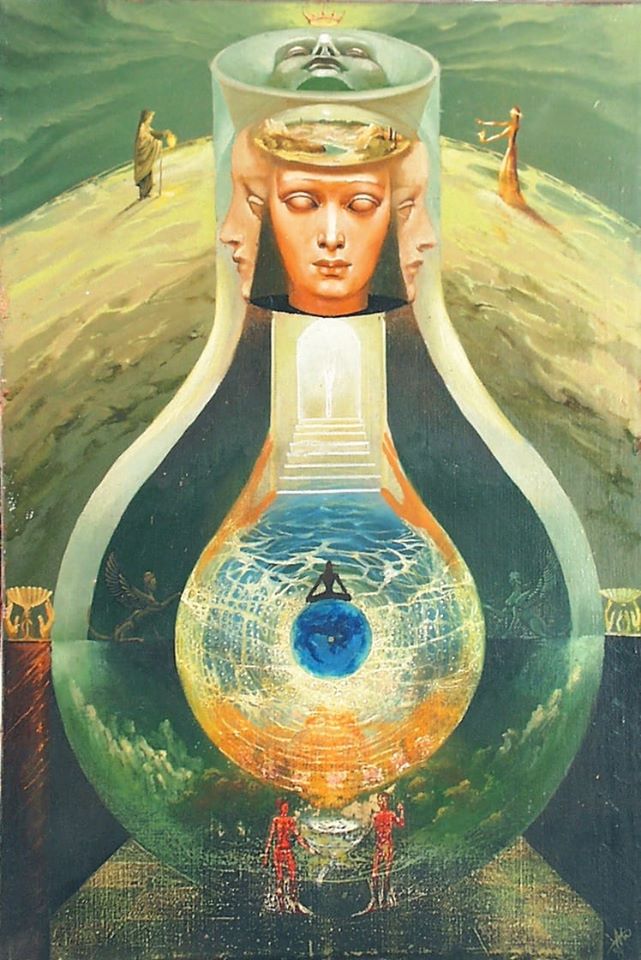
As we have discussed more than once, the Magus’ chief task is the integration of his being. The Myth under consideration holds that the ordinary person’s mind is fragmented because of the heterogeneity of the “lights” forming his system and because of destructive tendencies.
The world’s repulsive force, Naxash, arising as a distortion of the Light of Yechidah and manifesting on every level, introduces division into human nature and resists its union with others. The opposing force — Chayyah, expressed as attraction, love, the power of union — by contrast promotes the reintegration of the psycho- and macrocosm.
Since the force of repulsion is needed only at the “first” stage — self-differentiation, the differentiation of the One into the world’s assemblage of monads and energies — for the next stage, Chayyah (Eros) assumes primary importance.
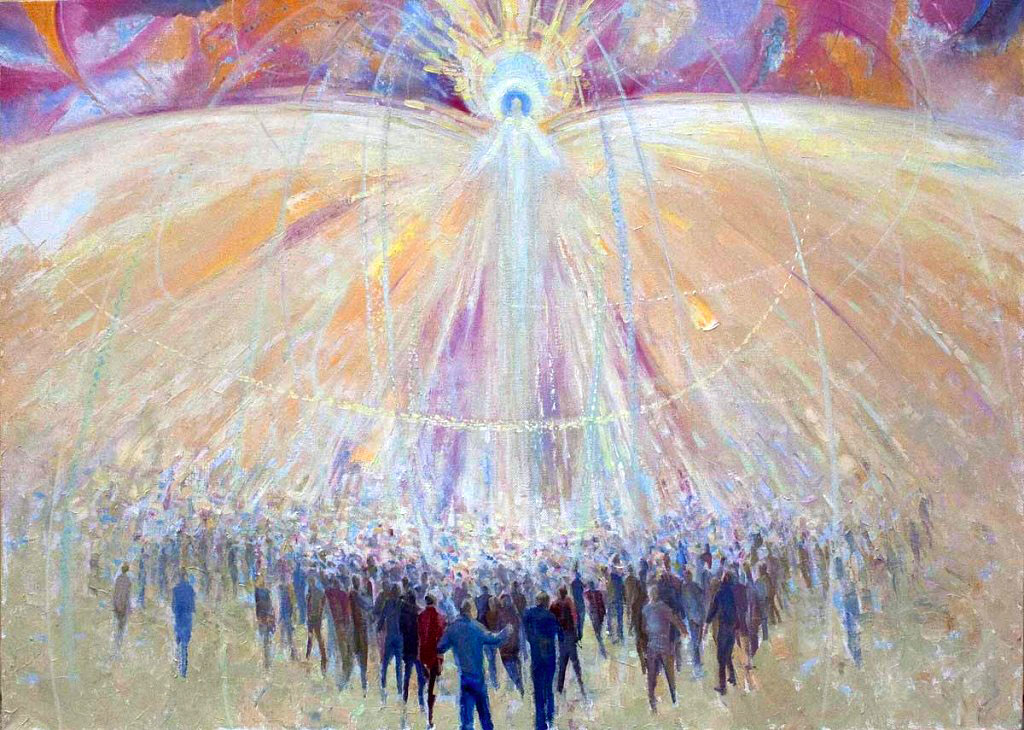
At the same time, just as Naxash was fully actualized, in the process of the “breaking of the vessels,” “shvirat kelim“, Chayyah can also be fully realized in the state that Kabbalah calls “devekut“.
The word “devek” (דבק), which in modern Hebrew denotes glue, literally means “to cling,” and precisely in this sense verbs from the root דבק are often used in the Bible, especially in Deuteronomy (4:4; 10:20; 11:22; 13:5; 30:20).
This “clinging” can manifest on any level — both as a lasting bond between people, “a man will cling to his wife,” and as a form of interaction with the Divine, and as the integration of the created worlds.
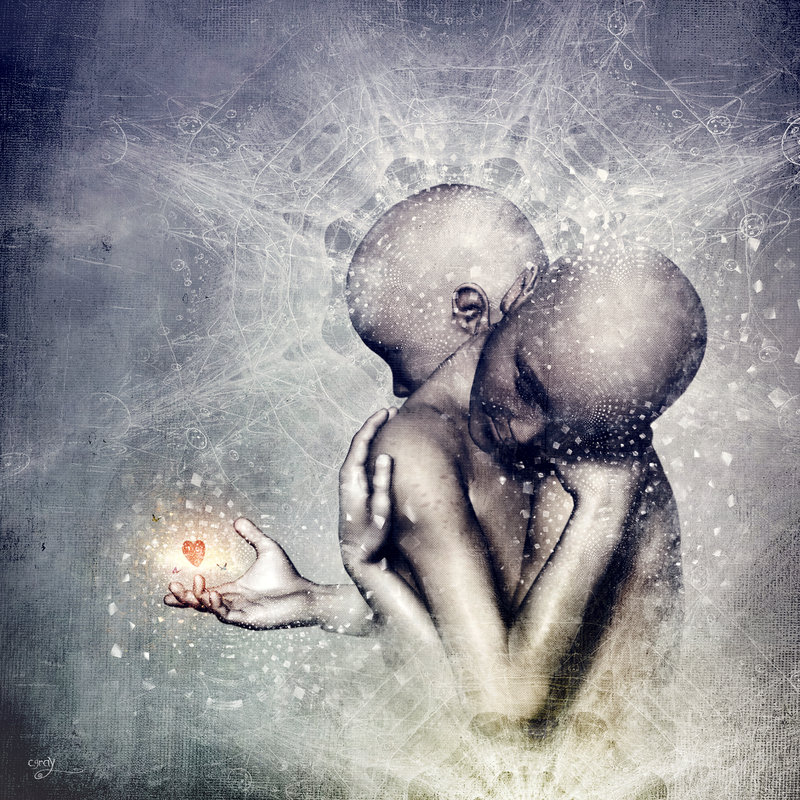
A superficial analysis may give the impression that this is merely a mystical experience, a sense of “unity,” or a religious trance familiar from various traditions. However, devekut is somewhat different. It is a constant, stable, independent of one’s state of mind, sense of integration — a sense of connection, as a vessel, to God as Light. Thus, unlike ecstasy or trance-union with a deity, devekut is not an experience; it is a state. Correction, Tikkun (תִקוּן) is achieved through devekut when it manifests as steady striving toward the Light — an attraction and earnestness independent of circumstances.
At the same time, since, according to kabbalistic conceptions, “the Lord… a consuming fire” (Deuteronomy 4:24; 9:3), whom a created being cannot approach “directly,” in practice, devekut can be realized in two ways.
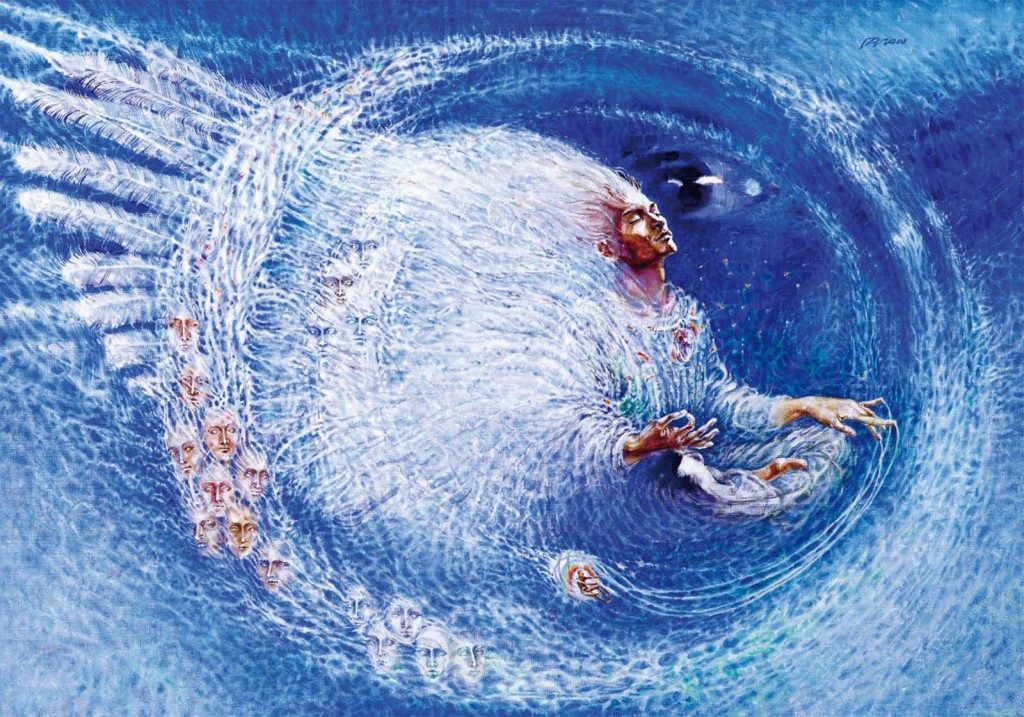
The first is union with those who likewise strive for perfection. The sages of the Talmud, and later Maimonides, interpret the commandment “to cling to God” as an injunction to remain as close as possible to “…the learned men and their disciples, to be allied with them, and… to maintain close ties with them in every way“.
The second is union with the Light within oneself, and thus with manifestations of the Divine present in the world. We have already discussed that, from the kabbalistic point of view, the Light in each partzuf is manifested through a series of “layers” corresponding to different levels of its interaction with the vessel. Since ordinary identification of the self occurs with the “lower” layers — nefesh, ruach, or neshamah — there arises a “falling away” from the “parental” Lights, which is perceived as “chaos,” עוֹלָם הַתֹּ֫הוּ.
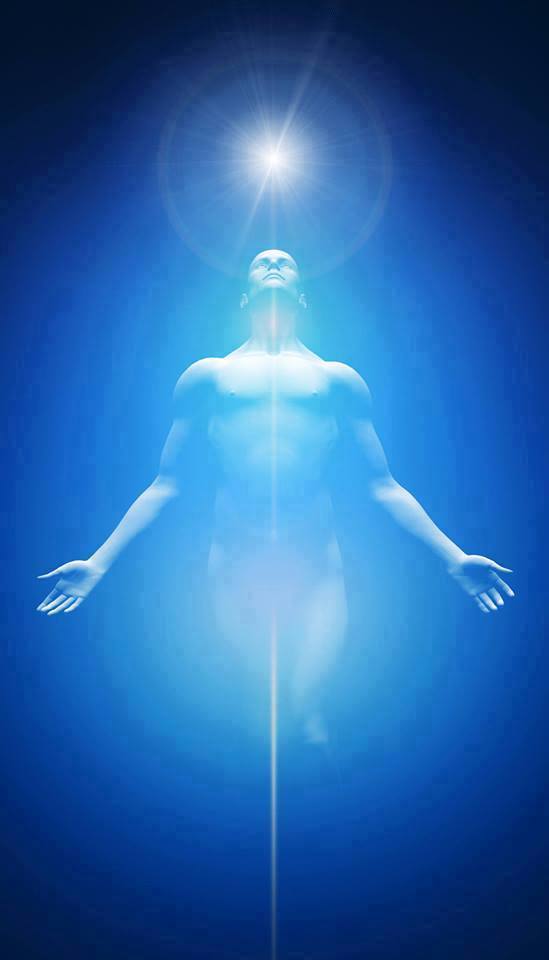
Thus, from the kabbalistic standpoint, devekut is necessary because of the “fragmentation” of the world that arose in the course of shvirat kelim and manifests as the state of Nekudim. In other words, devekut is a state of union, the opposite of separateness — of being severed from oneself and set against others.
Thus, the foundation of devekut is love as the cosmic force drawing all things toward the Divine Light — to the Light of the Divine. Moreover, devekut is “realized” love; it is not merely a “striving for union” or a force of attraction — it is actual union and reintegration. Hence the search for love within oneself is identical to the discovery of the divine sparks, nitzotzot, contained in every being. As the kabbalists say: “upon one who clings to the Shekhinah, the Spirit of God rests” (Rabbi Elazar). Note that, with regard to a particular person, the role of the Shekhinah is most often played by another person when interaction with them fosters mutual development, self-knowledge, and self-realization.

Thus, devekut is opposed to “undivided,” “non-reciprocal” love, as well as to the currently fashionable notion of “objectless love.” Integration is always concrete, and just as the Great Spirit knows itself only through reflection in its environment, the ultimate self-realization of a person is possible through reflection in a spiritually kindred being.
On the individual level, devekut is, above all, a steady striving for the reunification of the “lower” souls within a being with its “higher” layers, up to the attainment of the Lights of Yechidah and Chayyah, and this “microcosmic” reintegration is a necessary condition for macrocosmic reintegration.
It is evident that the optimal approach combines both indicated ways of devekut — both “internal” integration and external union with fellow travelers and loved ones — because the two modes mutually reinforce and induce one another, and often constitute the necessary and indispensable condition for mutual actualization.
How beautifully you explained the topic of love. Very interesting and clear. Thank you.
How does Dvekut differ from Eros? Eros is also attraction, but only between opposites; polarities, being separated, are drawn towards each other because one is attractive to the other by its nature. There arises Sympathy.
Eros is ‘horizontal attraction’, that is, the universal attraction of one-dimensional objects to each other; Dvekut is ‘vertical attraction’, an attraction of phenomena to their Source.
How can one understand the Love of the Absolute, or Divine Love? I encountered this interpretation ‘The Absolute, to establish itself as an absolute, self-denies itself and for this affirms something else for itself, with which it then identifies.’ Then the mystery of the Crucifixion of Christ becomes clear. It’s very difficult to understand, and the main danger is falling into a state of victimhood, so to speak into sacrificial love, isn’t it?
The self-limitation of the Absolute, tsimtsum, is indeed a Sacrifice, however, there is a significant difference between common understanding of sacrifice as oppression, consumption, or exploitation and the voluntary allocation by the Spirit within Itself of the opportunity for self-reflection. Tsimtsum is not a denial of the Absolute nature; it is a manifestation of one of its potentials. Since from the perspective of Spirit, time does not exist, that is, time is merely one of Its potentials, in It Creation simultaneously progresses, has never happened, and is already complete, and the same can be said of Its Sacrifice.