Anatomy of Vortices
We have already discussed, from the point of view of the field of potentials, the World Environment, any manifestation of will appears as the emergence in that environment of a particular kind of motion – a vortex.
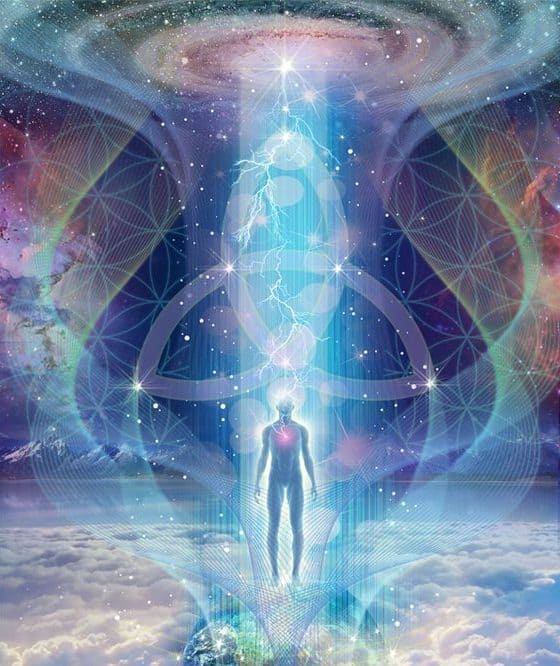
In the terminology of the Myth under consideration, a vortex (Lat. turbo, Heb. מערבולת) is a more or less stable structure formed in the Environment according to the tetragrammatic law, and capable of quasi-independent existence for a more or less extended period.
Let’s examine the process of a vortex’s formation and its structure in greater detail.
The World Environment is a field of possibilities, “primordial matter,” the probabilistic basis of any existence, from which the materials of any world come into being (in the case of our “physical Universe” — the elementary particles and antiparticles that form it), and in which those materials dissolve. The Environment itself is unmanifest, homogeneous and undifferentiated, yet possesses absolute plasticity and pliancy, and it responds to any manifestation of the mind, which together with it constitutes the original existential biner. Therefore, the birth of any manifested reality, any world, from the point of view of the Magical Myth, is the result of the activity of the mind in the Environment, and thus the creation of the world and its cognition are regarded as identical processes.
In any actual world the mind manifests itself through the aggregate of its bearers — bodies — which enact its activity through numerous interactions with one another and with objects. Thus the first group of conscious beings is formed — the so-called “free” beings. Their “freedom” lies precisely in the fact that through them, the mind effects the “choice of reality“, its birth from the Environment, and the subsequent modifications aimed at unfolding the maximal number of possibilities and potentials of the mind.
At the same time, manifestations of the mind’s activity within the Environment also give birth to its carriers that have a vortex-like nature. If a vortex is born from the activity of the primordial mind in the Environment, a “ministering being” is formed; if the vortex is generated by the activity of a mind already manifested in another being, then it is an “entity“: a larva, an egregor, and so on.
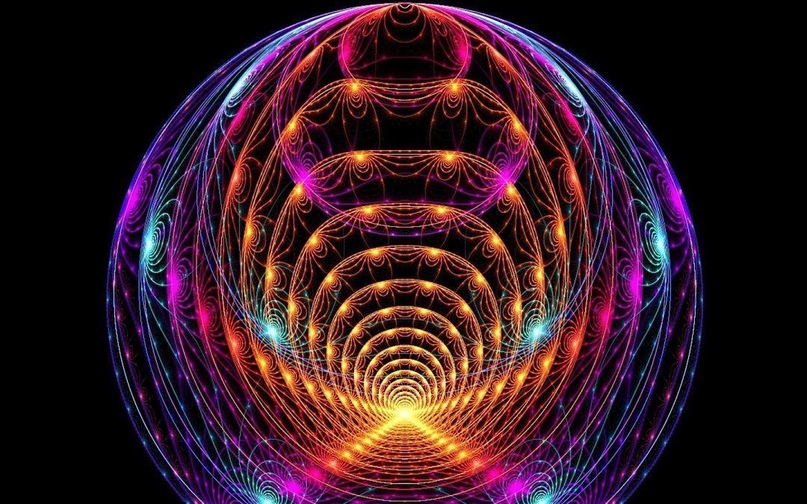
Note that “free” beings themselves also have vortical manifestations — from the environment’s perspective their bodies are, of course, collective vortices (this form is traditionally called the “Desire Body”, or, in confused contemporary terminology, the “astral body”), born of the whole aggregate of their aspirations, desires, and drives. One could say that the Desire Body is an “individual egregor” formed around the axis of individuality of the manifested being.
Vortices may interact in different ways — they can touch, merge, absorb one another, and form various collectives. The sum of all vortical manifestations of the Environment coalesces into the world vortex — Baphomet, the universal egregor.
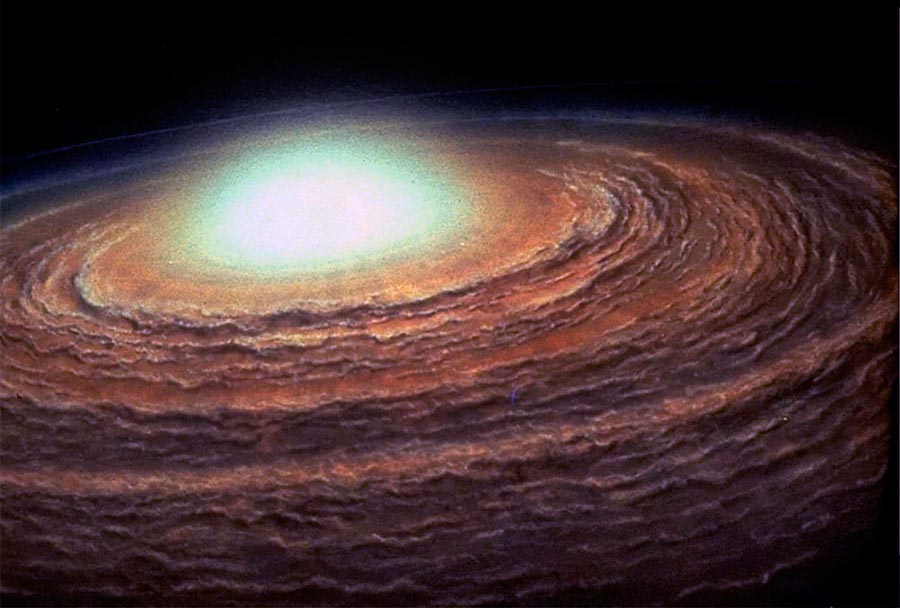
In any case, every vortex possesses all the characteristics of a living being: it is born, it dies, it requires nourishment, and it is capable of diverse interactions with other vortices and the foundational environment. Any vortex also has its own “will” — the direction of its motion, the character of its interaction — and such an intrinsic will of a “secondary” vortex is not always aligned with the will of the being that created it.
The “core” of each vortex is the volitional impulse that brought it into being: in the case of ministering beings this is a function, a task they perform; in the case of larvae and other entities it is the desire of their creator; in the case of egregors it is the idea that unites the collective.
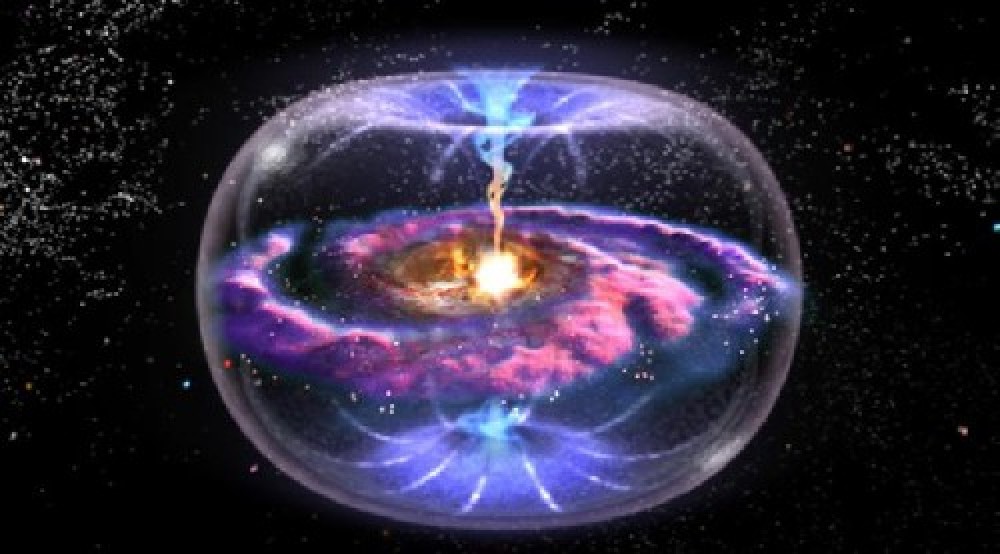
The second component of any vortex is its axis, and the “poles” located on it — the “vertical” constraints of motion. The axis of a vortex is the idea, method, or means of realizing the desire, the “unfolding” of the vortex’s core. Depending on how large the central impulse is and how many resources it requires for its fulfillment, the axis may vary in size and create poles that generate potential differences of varying strength. The axis itself is the Vav of the Tetragrammaton, and is born as the result of the attractions of its Yod (desire) and He (possibilities).
Finally, the third component of a vortex is its “diameter” — that is, the scale of its manifestation in the Environment — the second He of the Tetragrammaton. The more resources required to realize an impulse, the more extensive the vortex, and the greater the volume of the Environment it draws into its motion.
Understanding the structure of vortices, the patterns of their formation and their interaction with one another is a key point for creating effective strategies for realization, since any striving or impulse in the “physical” plane is accompanied by the birth of a vortex in the Environment, and that vortex then becomes a full participant in the developing system of interactions. Such a view makes it possible to avoid surprises and side effects introduced into the realization process by the activity of the vortices involved.
Leave a Reply