The Turning Wheel. The World Wheel
From the point of view of the Myth under consideration, the world process results from the mutual attraction of the poles of the Quaternary.
The Active, Passive, Neutral and Receptive principles attract one another not only along the axes of polarity, but also between the quarters of the Quaternary.
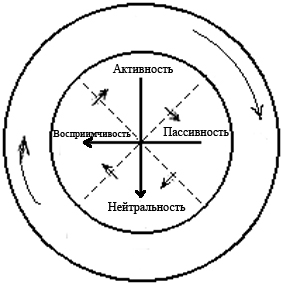
When Activity is attracted within Passivity, it endows Passivity with its qualities, is reflected in it, and thereby moves into its position. This causes Passivity, in turn, to gain the ability to be reflected in Neutrality alongside Activity. At the same time, Neutrality, bearing within it the nature of Activity, is reflected in Receptivity; and Receptivity, by adopting this property, assumes the role of Activity. The whole cycle then repeats. Thus, in each quarter, all the components of the Quaternary appear in turn.
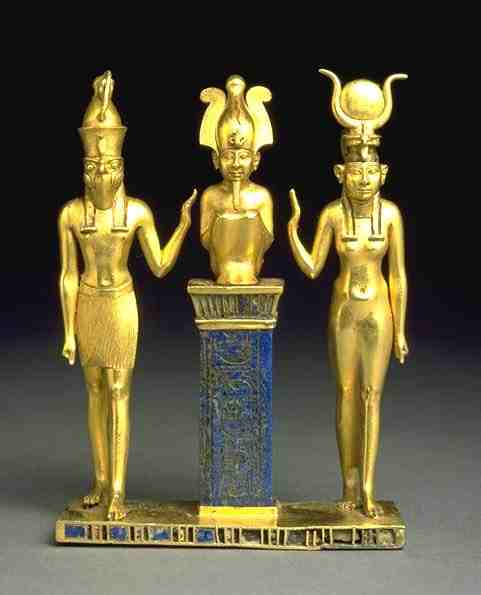
In other words: the Great Father, drawn to the Great Mother, begets a Son who takes His place. Descriptions of the World Wheel appear in many myths. Osiris and Isis beget Horus. Odin and Frigg beget Baldr, who, living in Asgard, performs no actions, yet after Ragnarok returns from Hel and takes the Throne of the Worlds. Svarog, drawn to Lada, begets Dazhbog, who fertilizes the Earth and brings forth life.
Odin and Svarog, as Creators, by assuming the role of begetting (rather than creating), enter the Mother’s domain (Frigg and Lada), who, in her maternal function, acquires the properties of Activity — that is, becomes Neutral. The Divine Child, neutral by nature (since it bears within it both the Father’s Creative Principle and the Mother’s Receptive Principle), is at the same time receptive to their influence, and thus moves into Receptivity. Yet because manifestations of Activity generally predominate, the Child transforms Receptivity — acting upon it — and confers this property on it as well.
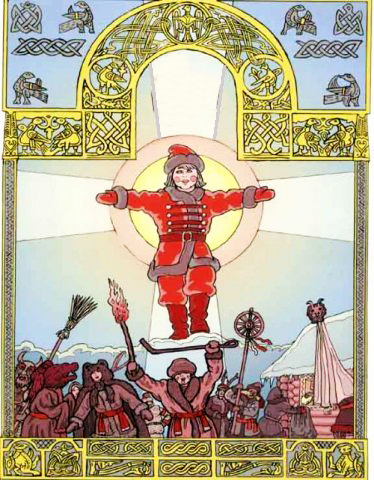
The active resistance of the environment (Hel takes Baldr) forces the Father (in a passive position) to elicit a response (Odin sends — almost as if begetting this action — Hermod to Hel for Baldr; he does not go himself; in this situation, he is passive), and thereby moves into neutrality.
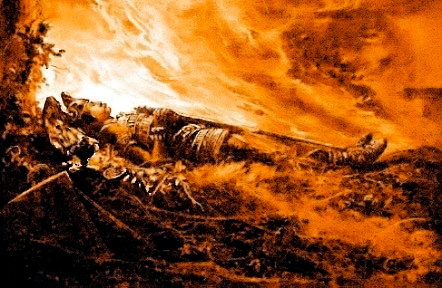
The Mother, who was in Neutrality, thereby moves into Receptivity (having lost her son, Frigg becomes, once again, childless). Now the Environment (Hel) becomes active, able to dictate terms — which it does. 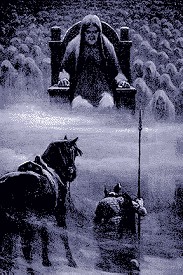
However, it is compelled to yield, to agree to release Baldr (that is, to return him; in doing so, it moves into a position of Passivity), while Frigg, sending messengers into all worlds with a demand that they lament, assumes active functions. All the while, Odin merely watches; he is receptive to Baldr’s gift (Baldr returns the ring Draupnir to his father). By giving objects back to the world of the living, Baldr and Nanna, as we have already noted, restore them — at that moment they occupy the position of Mother. Finally, when Baldr cannot be returned before Ragnarok, everything returns to its original position.
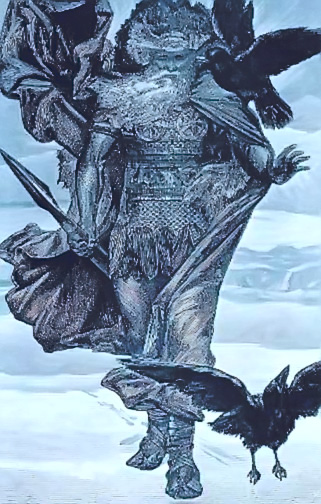
The cycle closes.
Because the Myth applies both at the moment of its performance (in mythological, atemporal time) and at any other moment, this dynamism is present everywhere.
Moreover, such transitions generate 4 additional intermediate states. And since, as mentioned, an object in different states effectively has a different nature, we thus obtain not four but eight elements.
Father; Father drawn to the Mother; Mother; Mother begetting the Child; Child; Child transforming the environment; Environment; Environment answering with Active resistance — these are the 8 elements of any dynamic process.
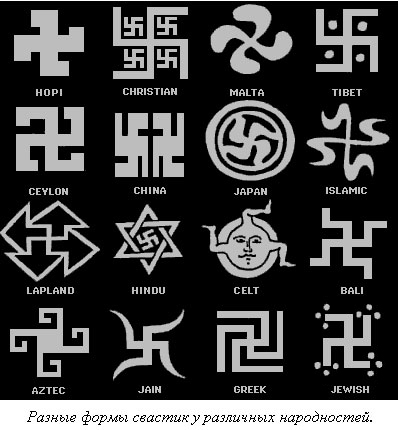 The transition of the Quaternary to a dynamic state is symbolized by numerous swastikas. However, to emphasize the dynamism of this process, its circular turning, mythological systems since ancient times have also used the symbol of the Wheel with eight spokes.
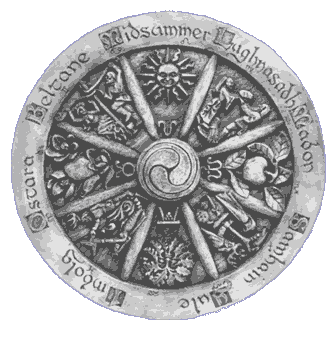
Any dynamic process is eightfold. We see this in the Runic Aettir, the Bagua, and the I Ching. Both of these symbolic systems describe Movement itself and therefore inevitably enclose an octad.
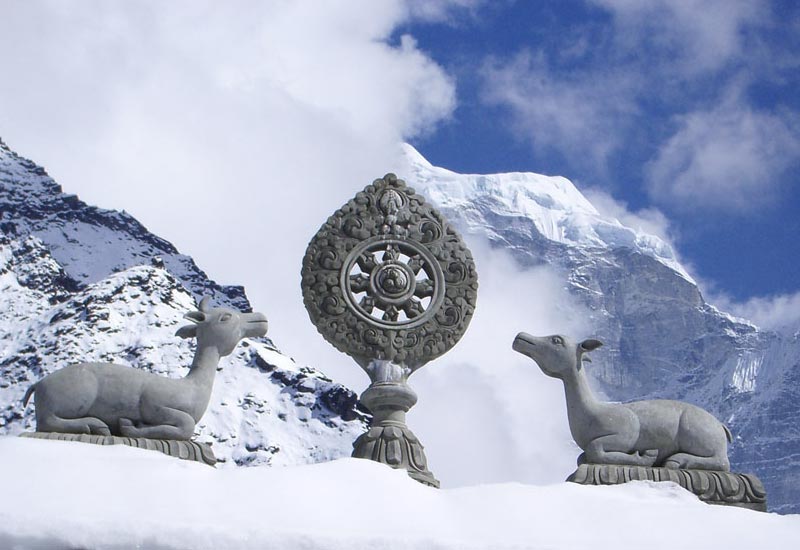
We see the eightfold pattern in the Solar Whorl, the Symbol of Dazhbog, and in the Wheel of Kalachakra. The hermetic concept of the Quadripolar Quaternary describes the same principle: it is precisely this that underlies the system of the Minor Arcana of the Tarot.
It is very important to understand that the Quaternary and the Octad actually describe the same phenomenon: the Quaternary as a momentary projection, and the Octad as an extension.
Eight is divisible by two fours, each four is divided into two twos, and each two is divided into ones, thus restoring the monad. Hence, the eight steps of Raja Yoga, the eightfold royal path of the Buddha, the eight-level path of ascent in hermetic tradition, and the concept of eight chakras.