Ka, subpersonalities, and the “fragmented afterlife”
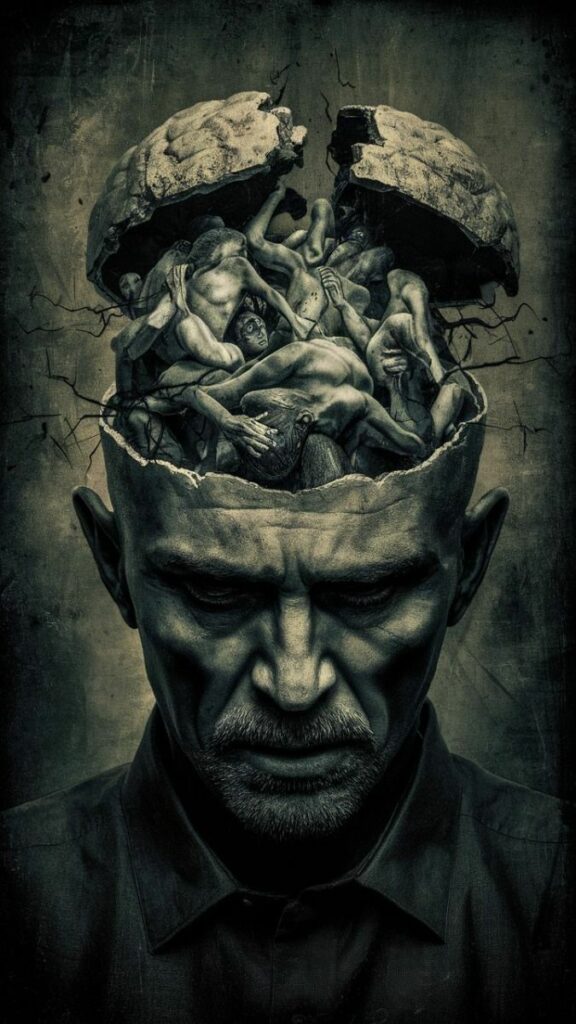
We have already noted more than once a very important fact which, nevertheless, is often ignored or causes anxiety in those who reflect on it: the same deceased person often has several “parallel” experiences of postmortem journeys.
We said that a person’s mind rarely constitutes a single, harmonious, monolithic structure. Usually it consists of many “stable states,” quasi-stable forms that are usually called subpersonalities. Each of them arises as a response to specific tasks of life: one ensures interaction with family, another with the work environment, a third with a conflict situation, a fourth with creativity. A subpersonality is a way for the mind to be adequate, “successful” in a given situation. And although each of them is temporary and “switches on” only under certain circumstances, repetition reinforces them, turning them into habitual patterns.
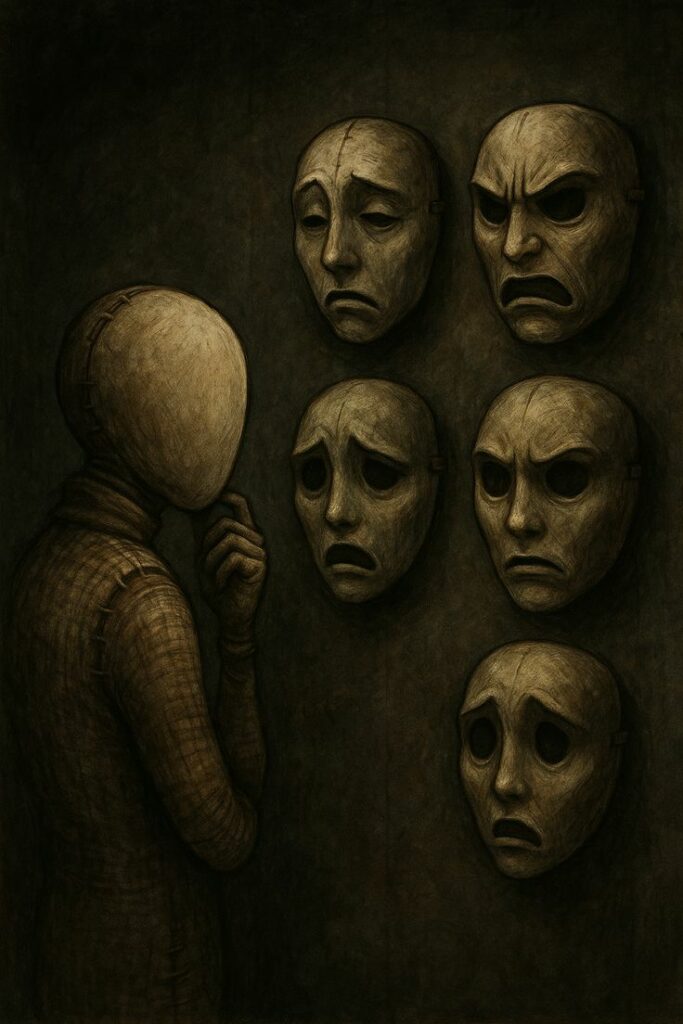
Over time, an entire spectrum of such subpersonalities forms in the psychic cosmos, and this spectrum is often not necessarily unified. Conflicts can arise between subpersonalities: one displaces another, subjugates it, or even tries to destroy it altogether. In extreme cases this takes the form of pathologies, when different subpersonalities exist almost as independent beings, sometimes warring with each other.
But in less dramatic variants this is familiar to everyone: the “work” personality with its cold rationality has difficulty coexisting with the “home” one; the “playful” one with the “serious” one; the “creative” one with the “defensive” one. Inner tensions and contradictions become a constant field of struggle, and only reliance on the body and the potential power of individuality keeps this motley choir appearing as a single “I”.
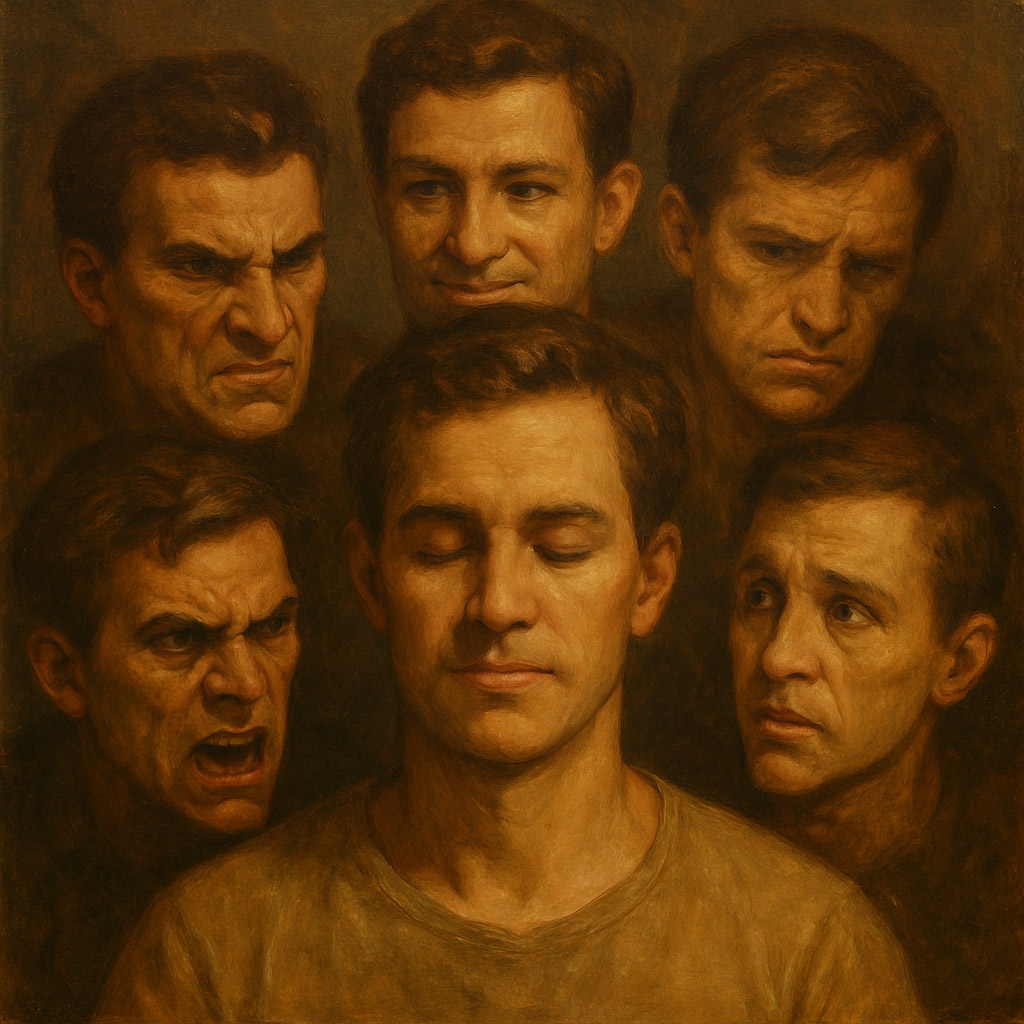
Thus, what is usually called “personality” in fact represents only a conditional unity, linked by the sense of selfhood — that primordial division into “I” and “not-I.” This sense is what binds subpersonalities together, creating the illusion of continuity, although in reality they constantly replace one another, like actors on the stage of a complex performance. Moreover, the less developed the mind, the more fragmented it is: the more mutually contradictory pieces and “piles” of inclinations, desires, and thoughts fight for power in the psyche, the less its wholeness. And conversely, the development of the mind in magical terms is a path toward integration, toward turning many subpersonalities into a harmonious whole.
And the more a person in life managed to integrate their subpersonalities into an integral mind, the less fragmentation there will be, the higher the chance that their ka and ba will complete their course properly and integrate again into akh, without losing themselves in the chaos of the Interval.
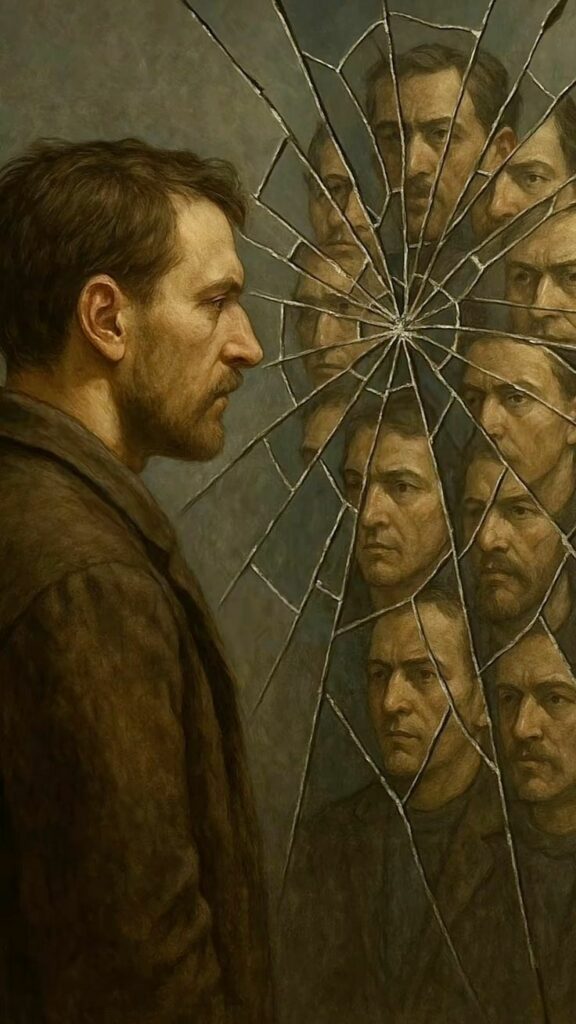
However, it is precisely the multiplicity and relative independence of subpersonalities that leads to the fragmentation of both life and afterlife: when the physical body dies, this complex ensemble does not depart wholly along a single road. Different ka, generated by a single stream of mind, embark on parallel paths, living through different postmortem scenarios. Since in life the mind is a complex tangle of roles and states, it is difficult to expect that at the moment of death it will suddenly turn into a simple and single entity.
In the process of disembodiment, many subpersonalities lack independent energy, and therefore quickly dissolve into the general field of the Interval, disappearing without a trace. This is a natural process of purification: the mind casts off everything unnecessary, fleeting — everything that has no inner basis to persist.
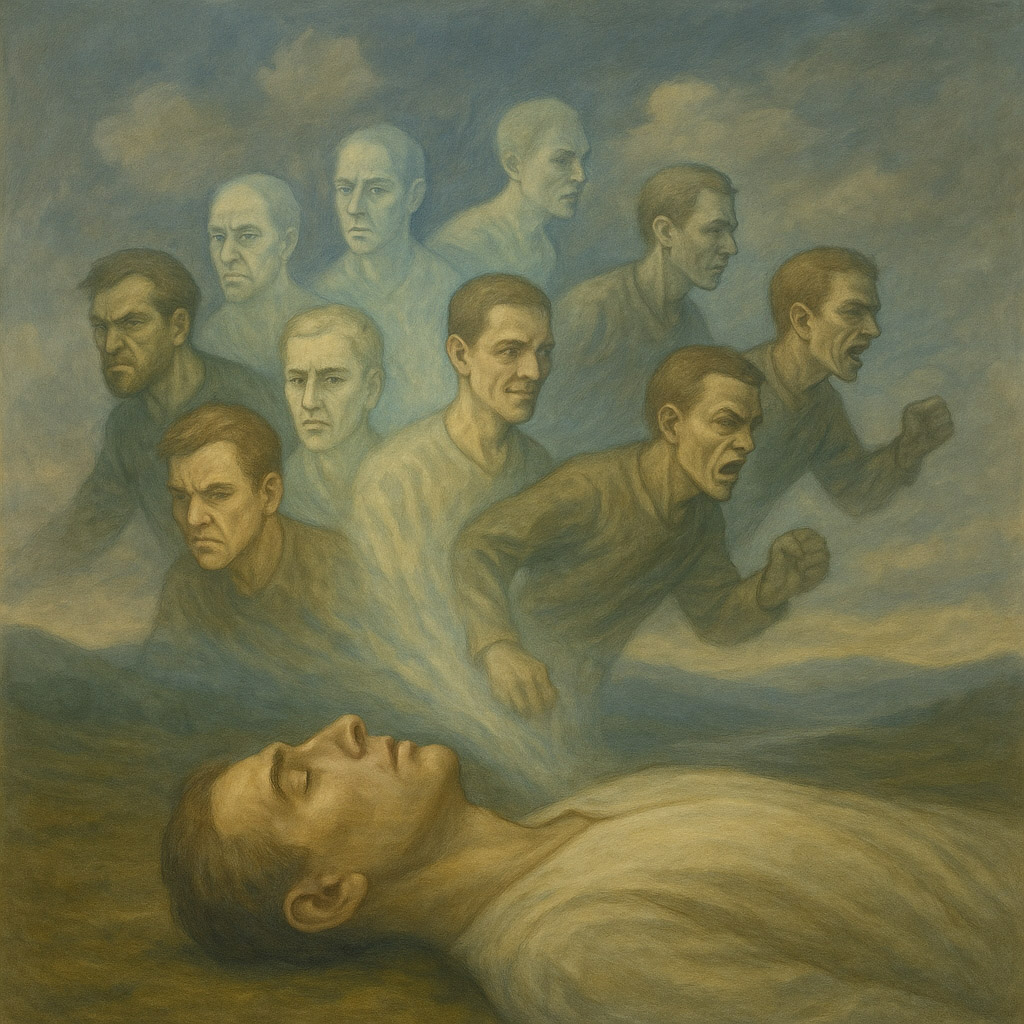
However, those states that were deeply rooted in life and sustained by large energy reserves are what generate separate ka, so that the same deceased person can generate an entire spectrum of postmortem experiences: one ka will be drawn to the light and the higher union, another will be trapped by fears, a third will strive back toward earthly attachments.
In Egyptian thanatology, the problem of the multiplicity of ka occupies a special place. In inscriptions and texts dedicated to pharaohs and gods, there are repeated mentions that they had not one ka, but many. For deities this was considered natural: their power, authority, and abilities were such that each facet of their being gave birth to an independent emanation, a special stream of life force. For pharaohs — earthly incarnations of the gods — the situation was similar: their status required a multiplicity of ka, which were distributed among various functions — sacral, royal, military, priestly.
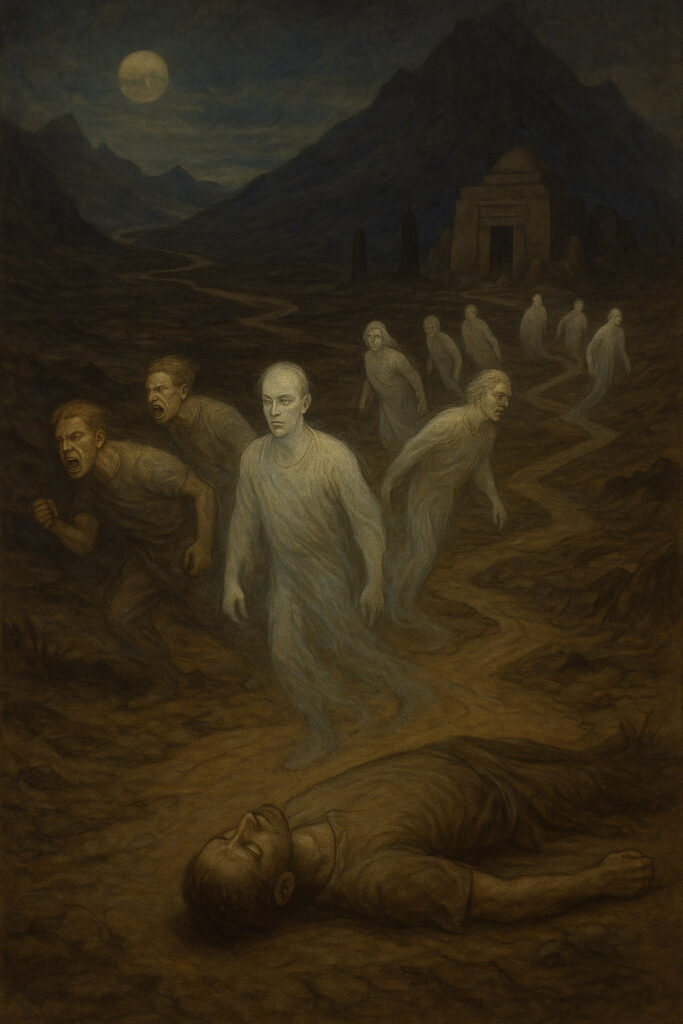
However, such multiplicity is characteristic of every person. The only difference is that among gods and “deified” rulers the “ensemble” of ka is an ordered system: they act in concert, obey a single design, and form a harmonious totality. In an ordinary person, the same multiplicity of ka is most often chaotic: different subpersonalities generate different directions of will, different habits and aspirations, which are often not connected to each other, and are often even contradictory.
It is precisely this chaotic quality that makes the afterlife so difficult for a person: ka often go off in different directions, creating the illusion of a multiplicity of fates and “parallel lives” of the same deceased. And only in the case when at least some part of ka turns out to be sufficiently strong and finds the path to union with ba, does it become possible to attain akh — the higher individuality.
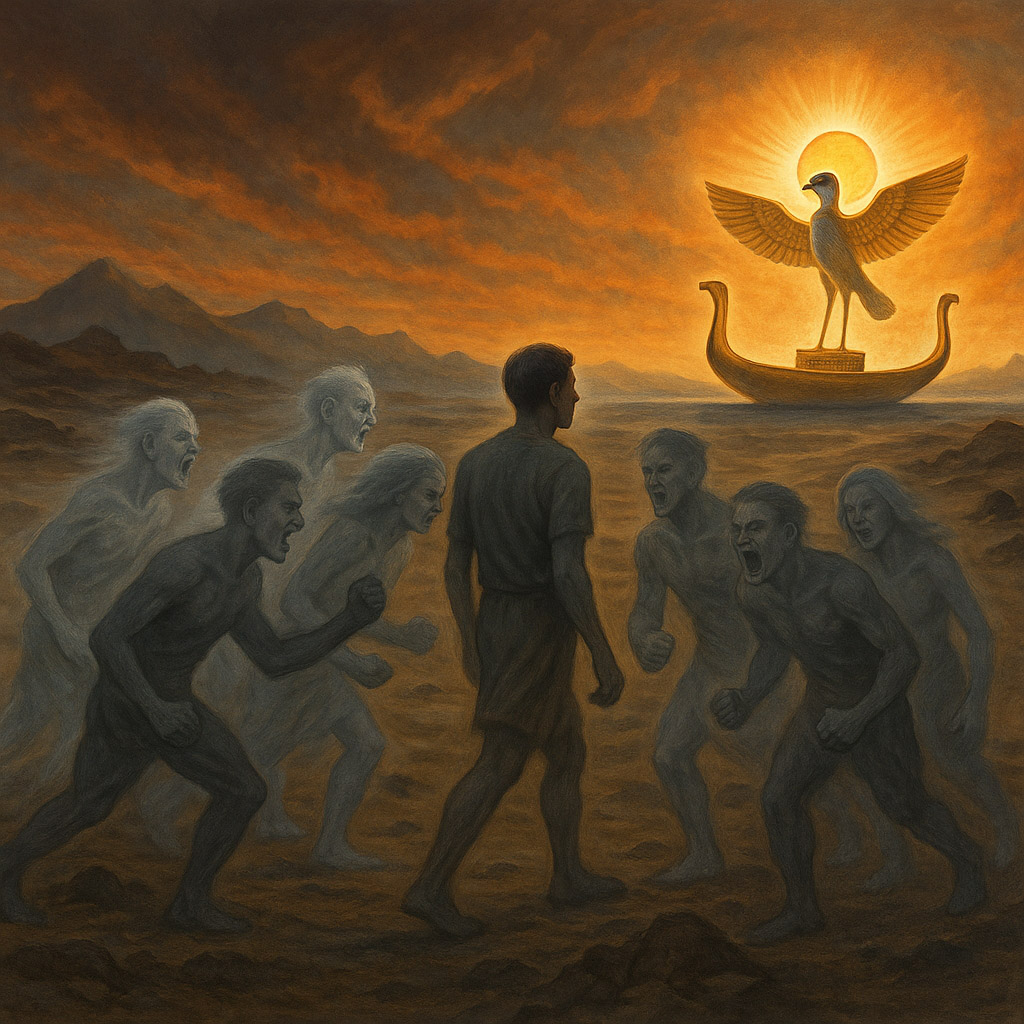
Such multiplicity explains why traditions describe such different pictures of the postmortem path: they do not exclude one another, but can coexist, because each ka perceives its own Duat.
Nevertheless, this scattering has a purpose and a limit. Ba — the reflexive soul — gathers the experience of all these paths, cleansing it of the temporary and the accidental, and, if the outcome is favorable, unites it again into akh. This is one of the tasks of the afterlife: that each ka passes its path, imprints its experience, and all of this gathers individuality into a new wholeness, already free from its former fragmentation.
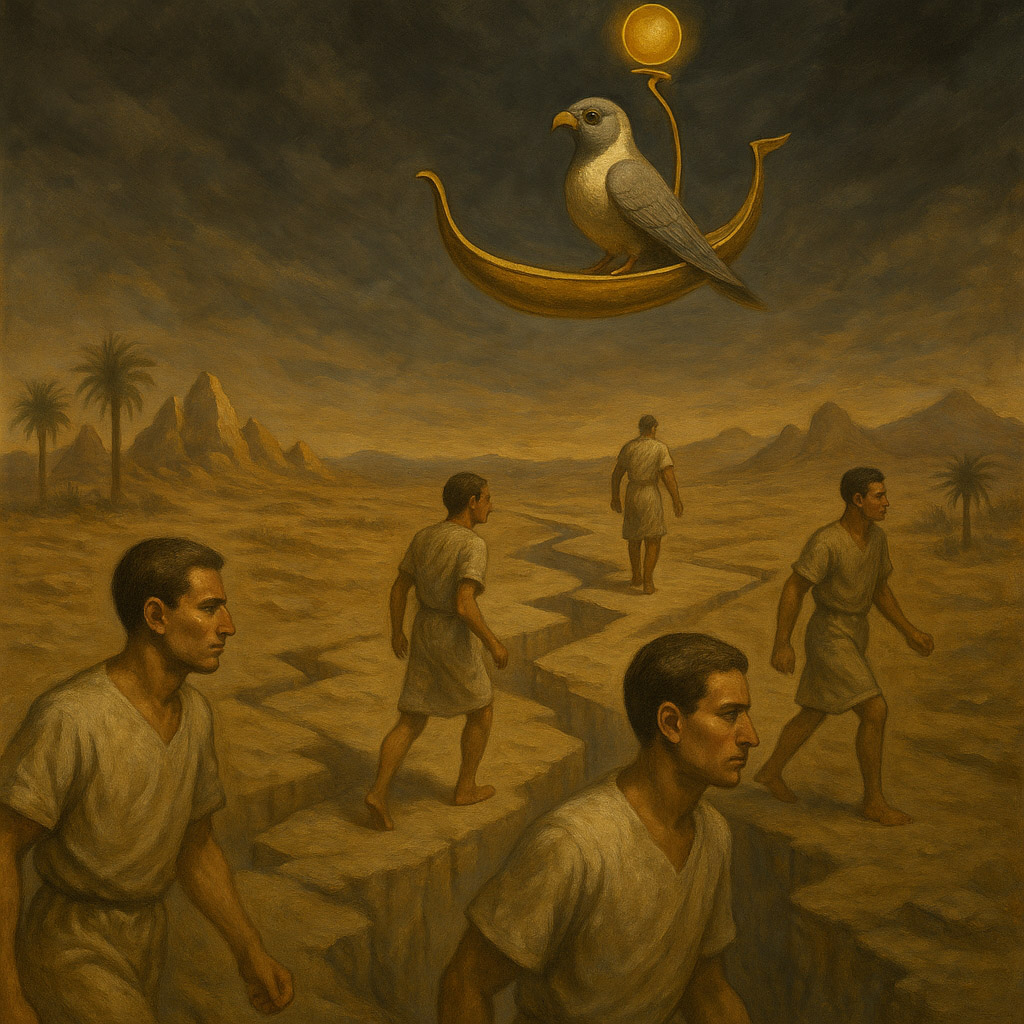
In the multiplicity of ka one can also see an analogy with the process of conception: when a single organism produces a seed, it creates millions of cells, each of which moves along its own path, striving to unite with the egg cell. Only some reach the goal, and only one unites to give rise to a new being.
Likewise, at the moment of disembodiment the deceased gives birth to many ka — as many as there were strong subpersonalities in their life. Each ka moves along its own route through the Interval, each tries to defend its independence, living through a special version of the Duat. But the final goal of this multitude is a meeting with the single ba, which plays the role of that very egg cell, gathering experience and setting the direction for future unity.
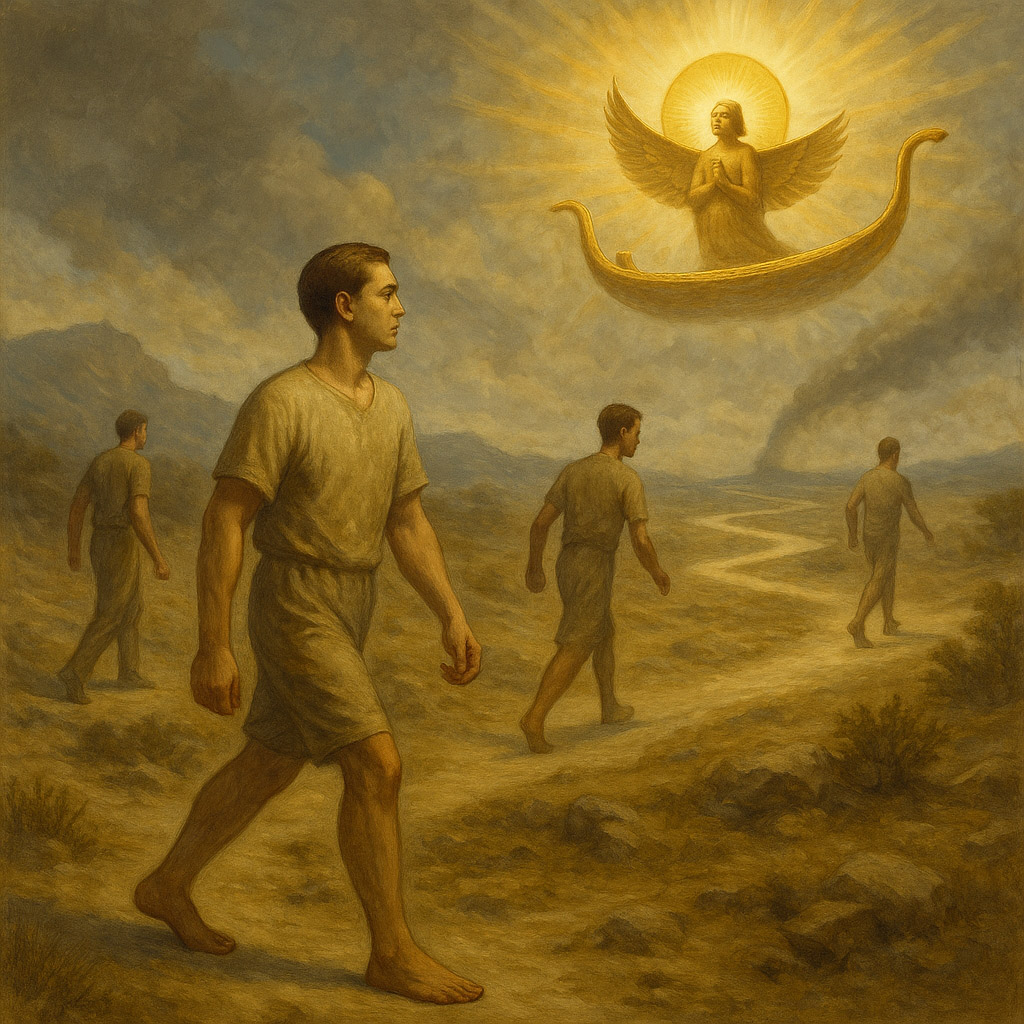
Most ka do not reach this union: they scatter, get lost in the currents, settle in the “Cities of Lies,” “Playgrounds,” or Asphodel Meadows, never managing to bear fruit. And only one or several — the strongest and most stable — find the path and unite with ba. It is in this merging that akh is born — the higher state of mind, integrating the experience of many roads.
Thus, the multiplicity of ka is a natural mechanism of selection and purification. The afterlife turns the chaotic multitude of subpersonalities into an organic process, where each ka tests its strength, and the outcome becomes a new unity that already carries within itself the purified and assimilated experience of the life lived.
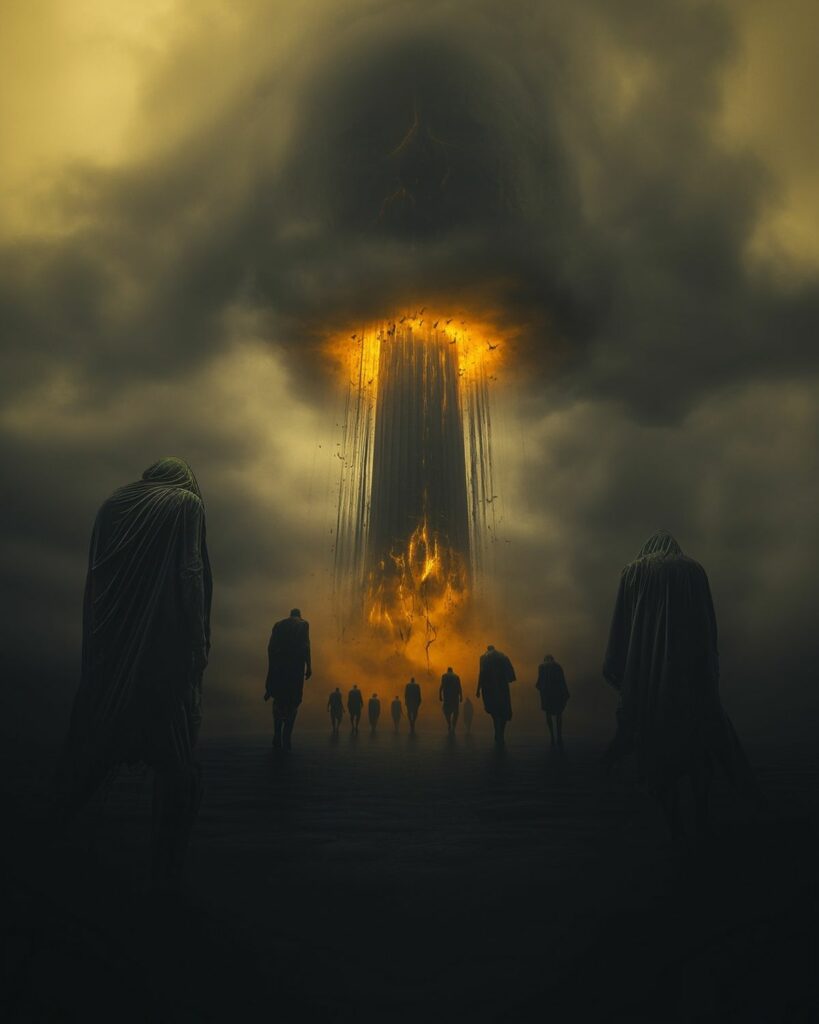
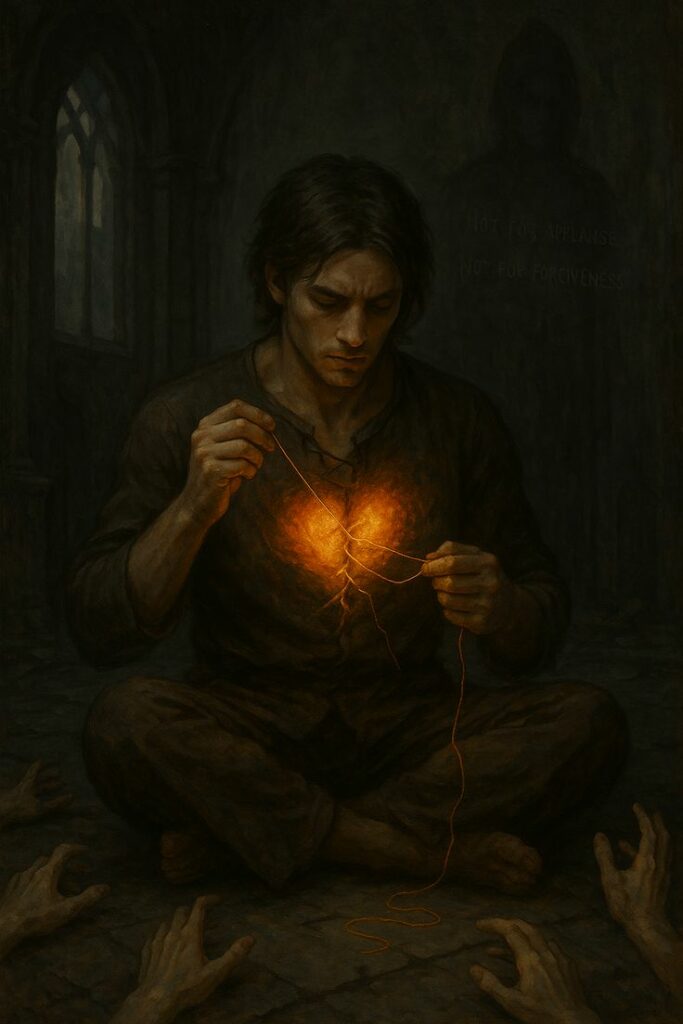
That is why work on integration of the mind during embodied life is of paramount importance. The more fragmented the mind, the more in death it will “spill” itself into many weak ka, each of which will receive only a trace of energy, insufficient for a long path. Conversely, the more the mind in life learns to gather itself into wholeness, integrate contradictions, and subordinate subpersonalities to a single will, the more energetic each of its ka becomes. This is the key to successfully passing through the afterlife: strong and saturated ka do not crumble along empty routes, but find the path to ba in order to unite and attain akh. Therefore the task of the living is — already here and now — to work on the wholeness of the mind, turning multiplicity into integrated complexity, and multidirectionality and multitasking into a coherent force. This is the surest preparation for the transition, and the deepest way to make one’s life not only worthy, but also fruitful for eternity.
As always, interesting and informative! Thank you!
This is an amazing article! So simple and so deep!! Thank you, esteemed Master.