Thanatoi and the “City of Lies
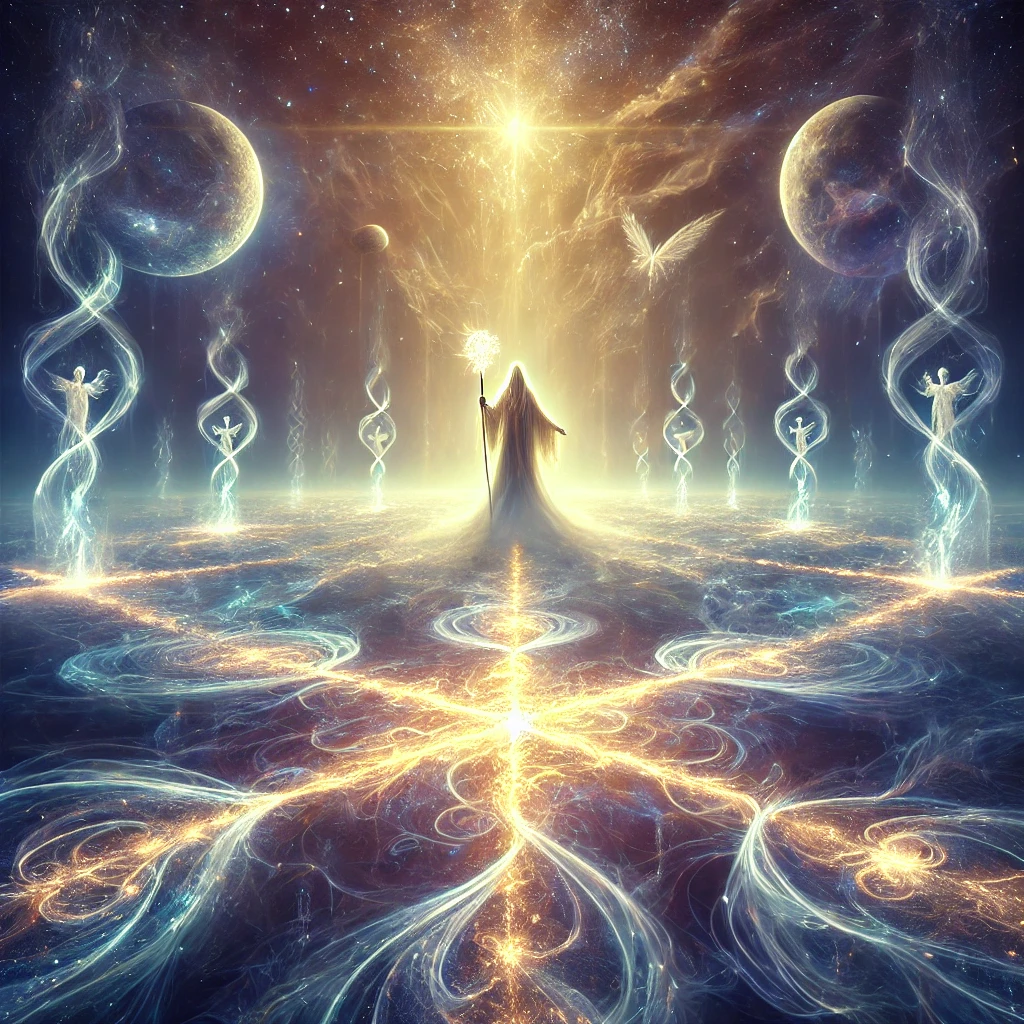
Although the Posthumous Journey is required for the mind’s transition between incarnations, for many people even taking that step is a serious problem.
The problem is that many people simply do not realize they are dead — just as most people, while asleep, do not realize that they are asleep.
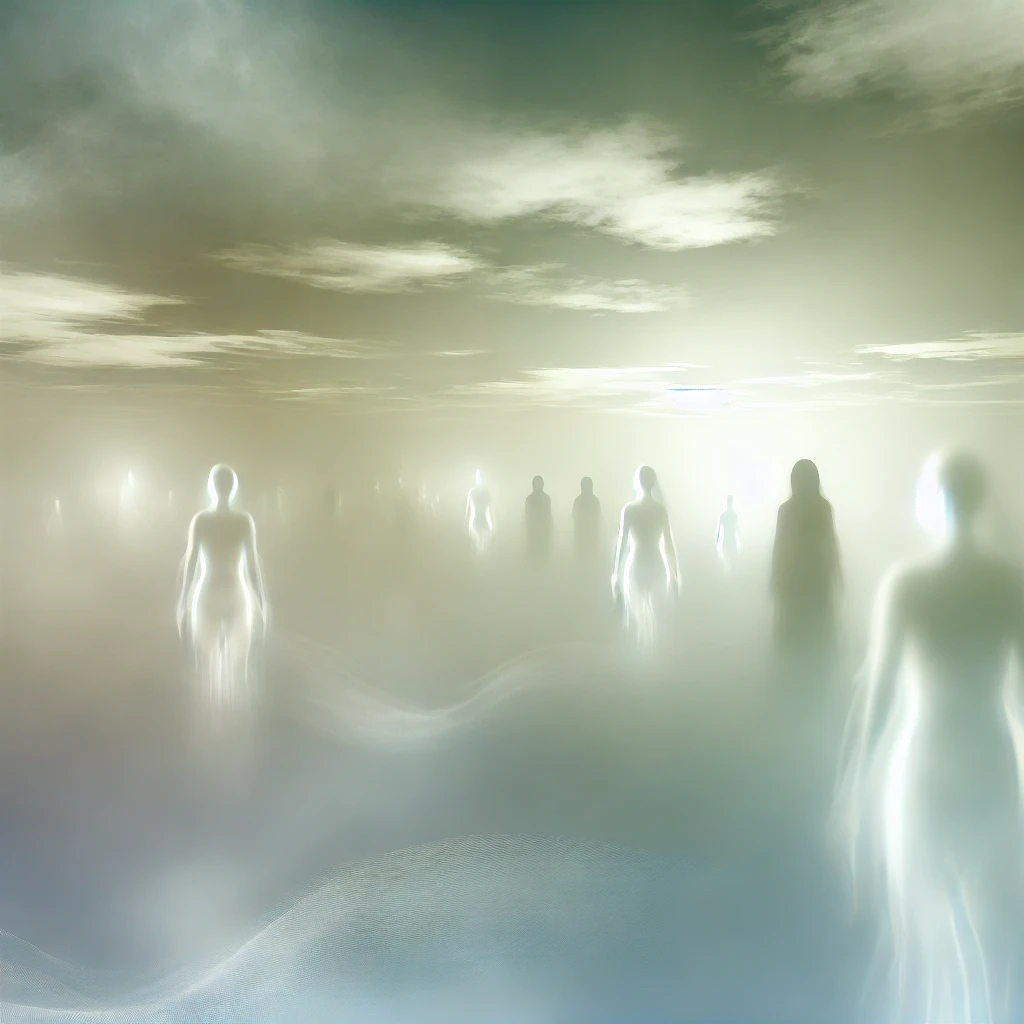
Accordingly, just as in a dream each person wanders through their own inner microcosm, rarely encountering anything aside from their own projections, in the afterlife many people continue to see similar projections, watching their mental images until their energy is exhausted and consciousness fades.
In other words, although both in dreaming and in the afterlife the mind is in the space of the Interval, it often doesn’t realize this and so cannot interact coherently with it or its inhabitants.
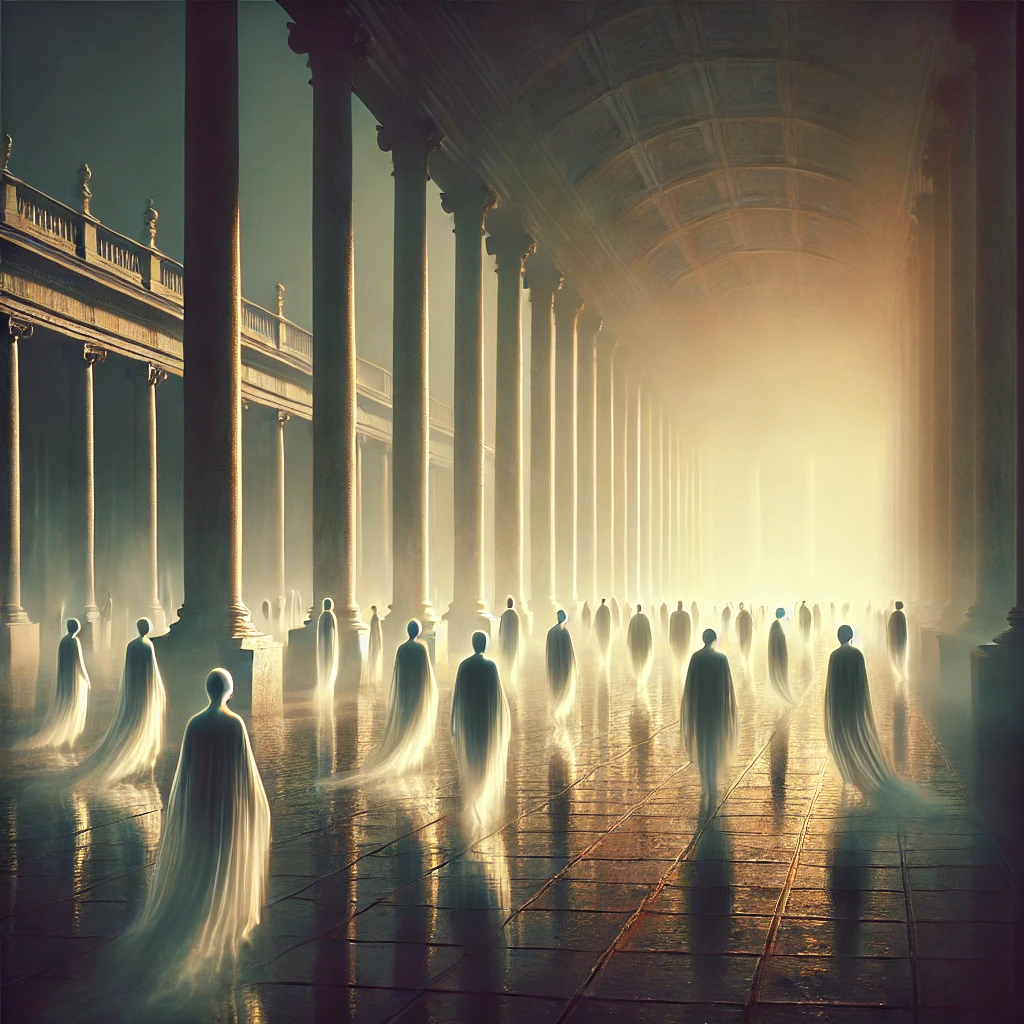
Formally, this state resembles unconscious, aimless wandering through the space of the ether TEX, with no contact with other wanderers. Vedogon or the forming Body of the afterlife resides in this space, surrounded by ‘sippers’ like Hungry spirits, causing it to lose energy or directly stealing that energy, but it does not understand what is happening and instead watches its ‘mind movies.’ This aspect of the Interval is traditionally called the “Cities of Lies” (Urbes mendacium), and is the last refuge for many of the dead.
However, if in dreaming such a state usually does not cause problems — on the contrary, it is evolutionarily beneficial, since it helps assimilate and resolve aspirations and urges accumulated while awake — in the afterlife, it prevents the mind from attaining wholeness and thus leads to meaningless repetition of past birth conditions.
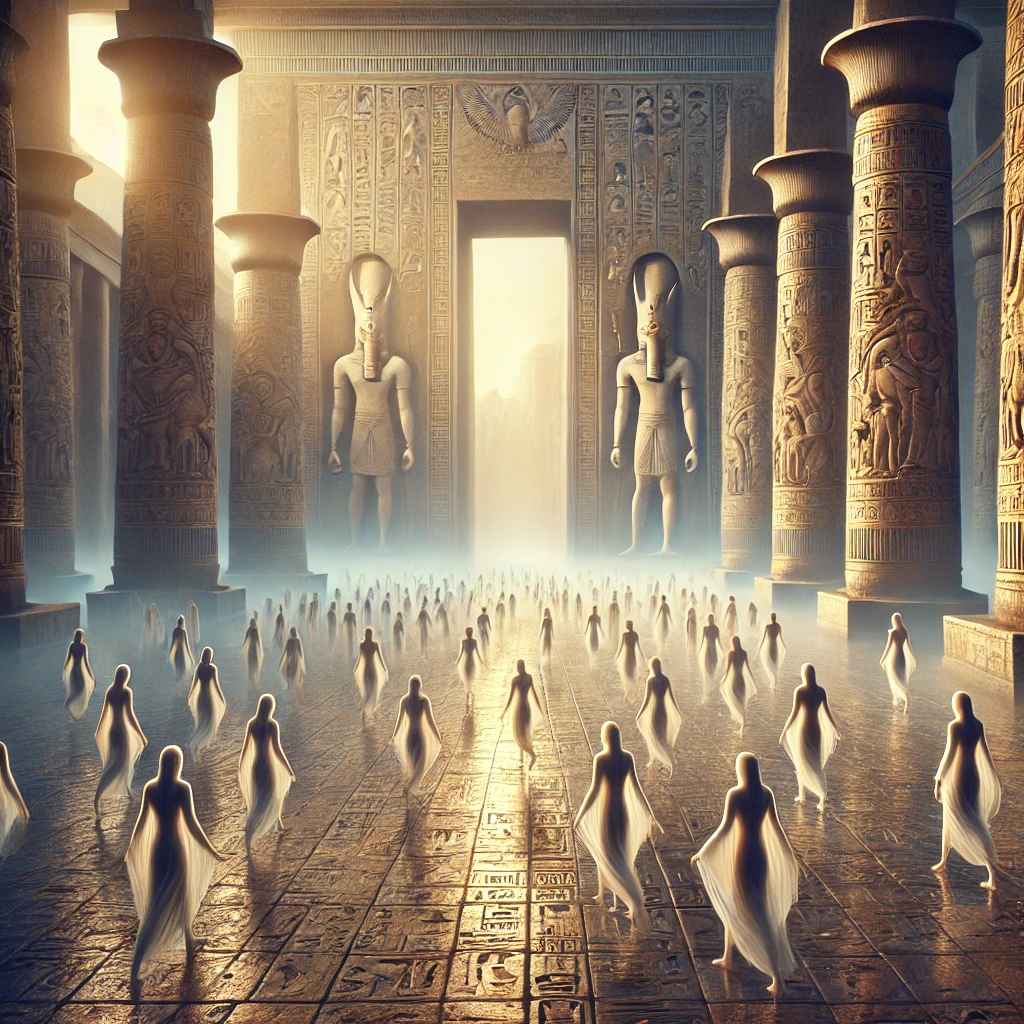
Indeed, as long as the mind has not clearly recognized the outcomes of its incarnation, such as barriers of the posthumous journey, has not overcome them, has not transcended that experience, and has not achieved perceptual-reflexive integrity (the union of ka and ba into akh), it remains merely an object, a passive participant in world cycles, not consciously influencing their formation or transformation into evolutionary spirals.
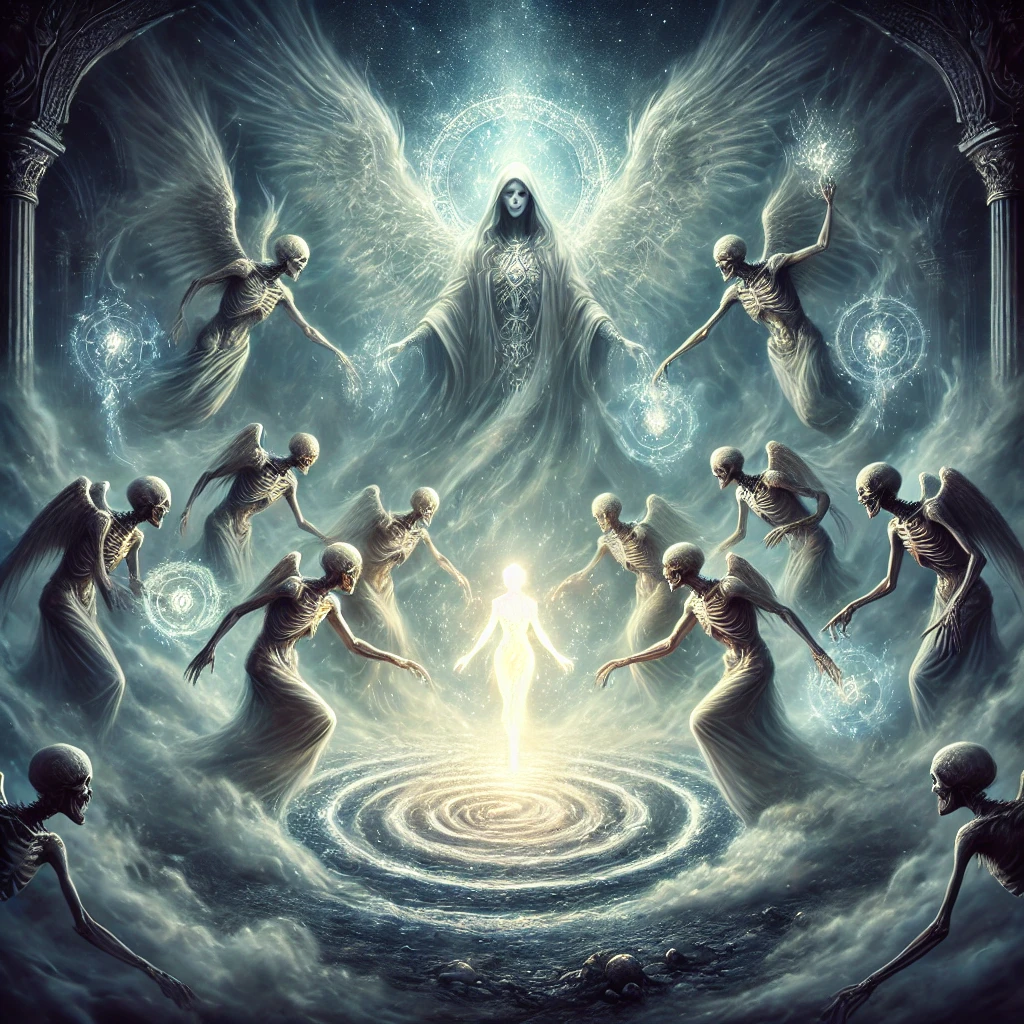
Moreover, as long as the mind has not understood that its host is dead, and that it must part with the familiar and undertake a long journey to rebirth, it wastes much energy and thus attracts many scavengers of the Interval, disrupting its energy balance.
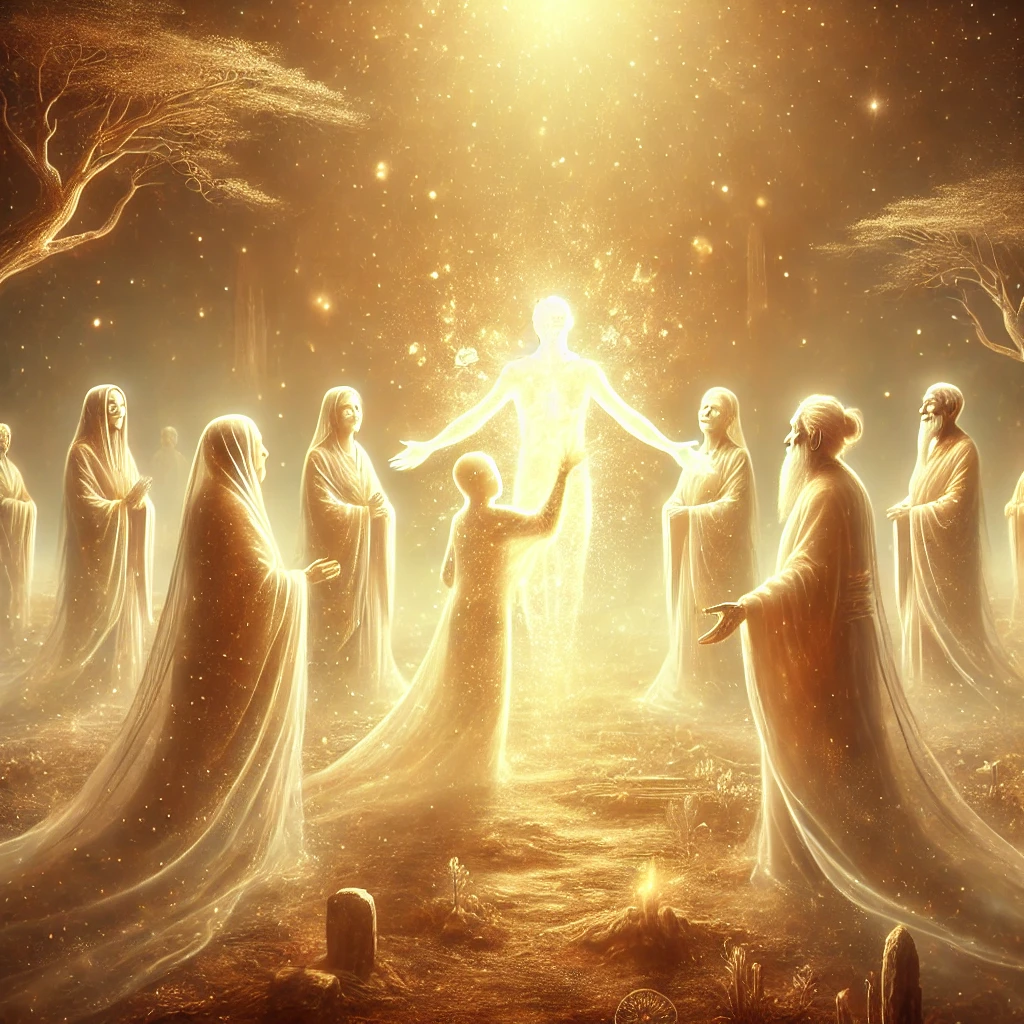
To address this situation, the Cities of Lies have special guardians, similar to Morphei, called, by analogy, Thanats. Like the Dream Keepers, the Guardians of Lies are non-hierarchical, “maternal” forces generated by the very nature of the Interval. Not coincidentally, in Classical mythology, Hypnos (the god of sleep) and Thanatos (the god of death) were described as brothers — twins; this emphasized not only the similarity of the states of dreaming and afterlife themselves, but also the kinship of the forces participating in these processes.
Thanats most often appear in visions of the dead as images of relatives or acquaintances, trying to guide the mind to understand its situation. They guide the deceased to the realization of two key facts: 1) that they have died, with no return, and 2) that a difficult journey lies ahead, which it is time to begin. Along the way, thanats protect those who gain a chance at such awareness from premature exhaustion caused by predators and scavengers that attack.
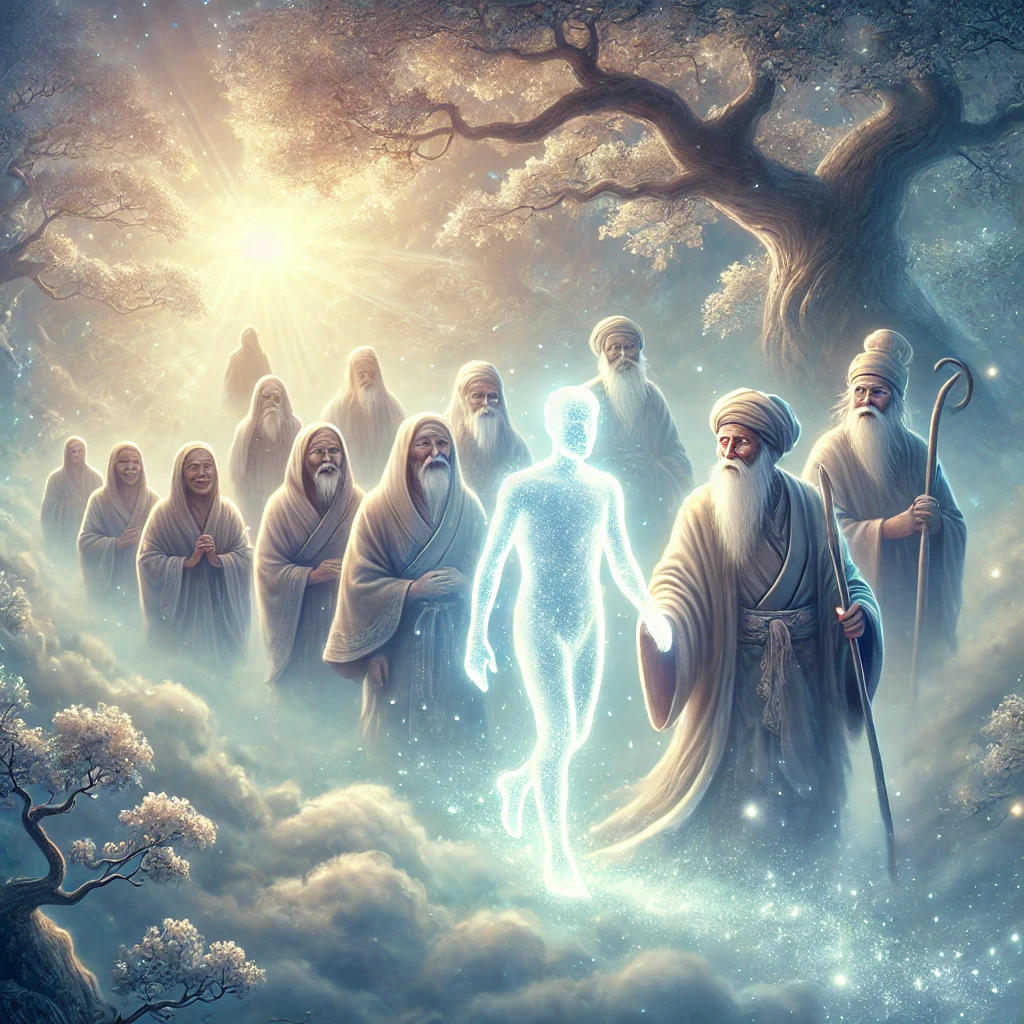
In this sense, thanats continue the guiding role of the Hierarchies of the afterlife, begun by gallu (keri) and namtarru (charons), intended to facilitate the transition from physical life to the Crossroads, and then to the Spaces of the Interval.
Like all ‘maternal’ forces, thanats are indifferent to the deceased’s personality; what concerns them is precisely the energetic aspect of disincarnation, its correct and lawful course.
Not all the dead need help from thanats; more precisely, for many the guide-thanat is the elementer’s own mind. For others, however, the help of these “friends” can be invaluable, since it is they who help the mind gain clear understanding without which its fate may be tragic.
Thank you
Thank you, very timely
Hello, esteemed Enmerkar. Is it possible that this “our” world is also my “posthumous existence” in some (which?) body? “Life, death – everything is so ephemeral…” From dream to dream, from dream to dream?