Body and Mind
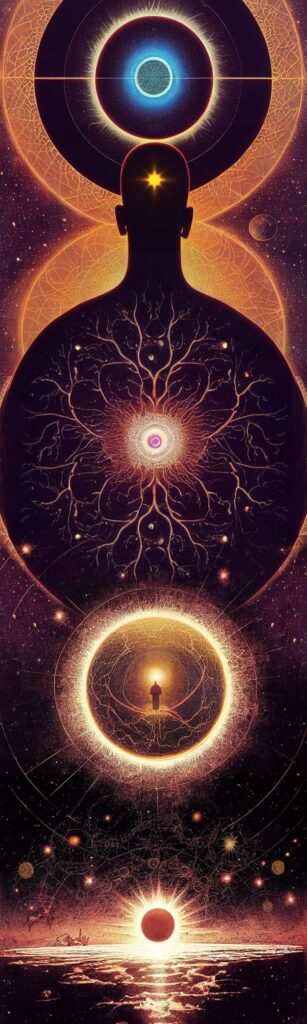
Despite the fact that the Magical worldview always strives to adhere to a “middle way” and avoid extremes, the notion that the world is a product of description often leads to a denial of its reality, and the idea that the mind for its manifestation and localization necessarily requires a body often reduces it to a product of the brain. Thus, among Magi, as among people in general, one can find both extreme eternalists and materialists.
We have already said that, from the standpoint of the Tradition, the idea that somewhere apart from the body there exists some “ideal mind” or “higher self” is as mistaken as the notion that the mind is produced by electrical activity or neurotransmitters in the brain.
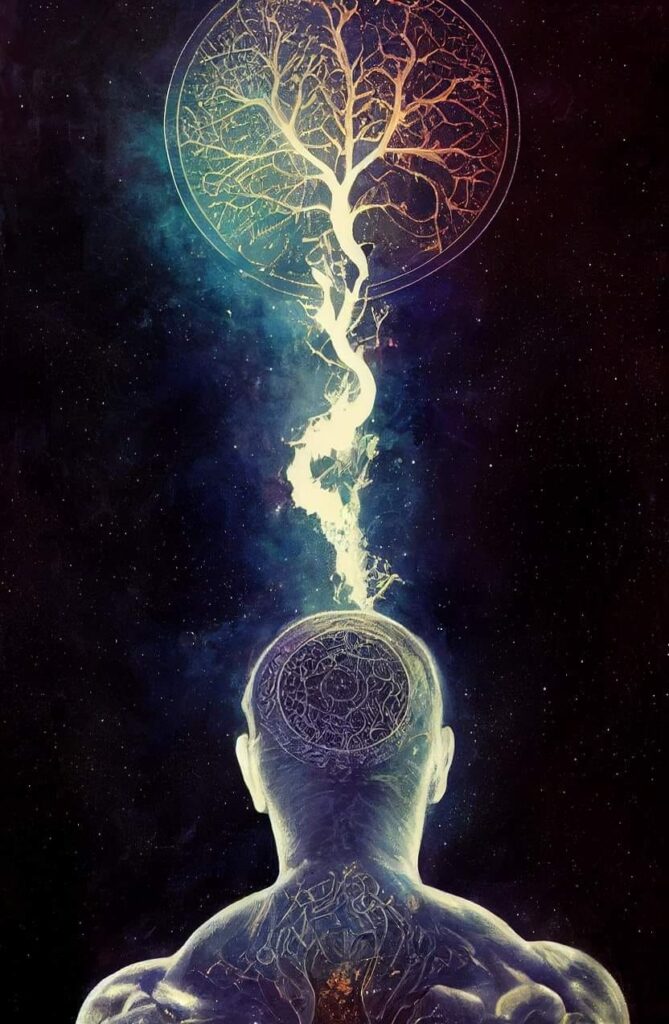
To avoid these extremes, the process by which the mind moves into actual existence and manifestation would be more correctly called “condensation”, and to describe the relationship between the One and its differential manifestation it is more apt to use not the common comparison of raindrops falling into the ocean, but to ice pellets floating on its surface. Indeed, although a hailstone, an ice pellet, is made of the same water, it is nevertheless separated by the particularity of its state, which cannot simply be “canceled” or “ignored”.
By becoming localized, the mind acquires the property of separateness, which cannot be annulled by mere denial. Simply proclaiming one’s “oneness of nature” with the All does not yet mean realizing it, and therefore Magic insists on the necessity of substantial effort and considerable work to overcome this separateness.
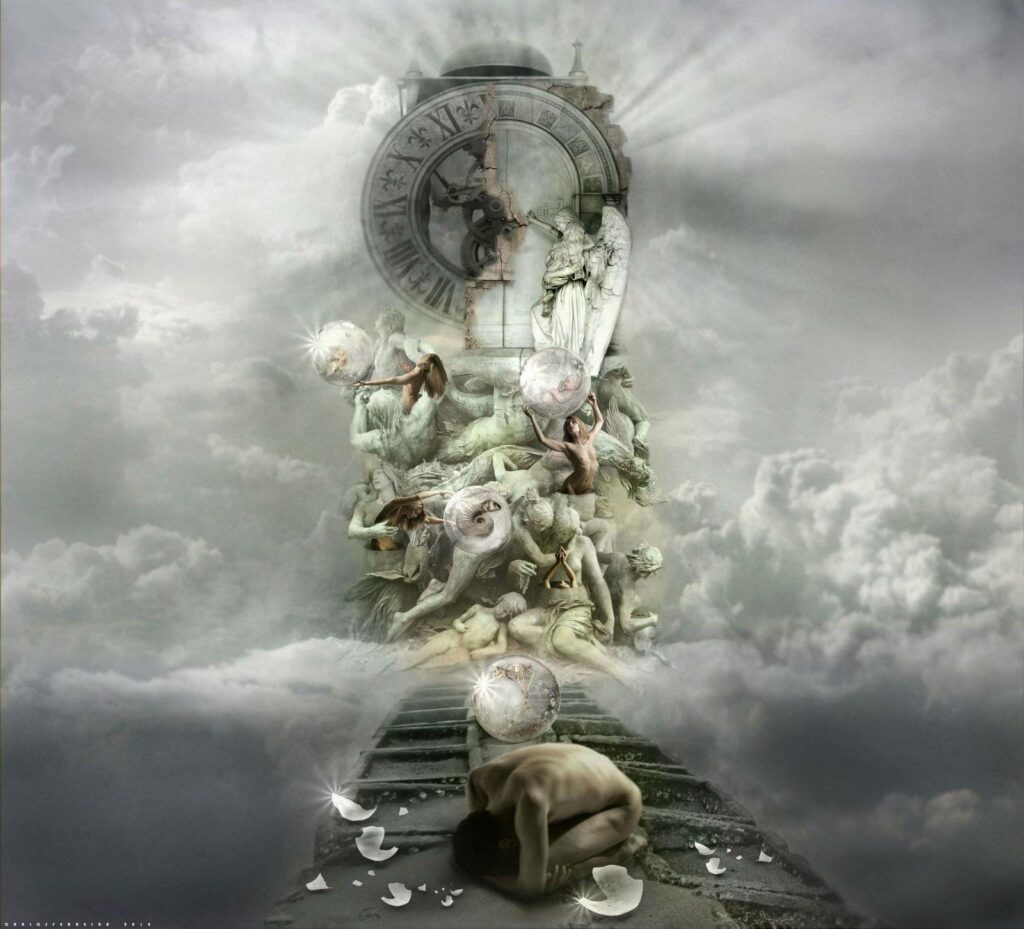
Unfortunately, most so‑called “enlightened” or “realized Masters” have simply made up their own “enlightenment”, and although this fantasy helps them lower the level of their local suffering and can even have a beneficial effect on the surrounding world, it is not liberating, extending only to circumstances limited in time and space. Of course, we can cultivate ideas of “non‑duality”, “selflessness”, or “being immersed in the present moment”, and this can indeed have significant therapeutic potential; however, it has nothing to do with the real Way of development.
As the Myth we are considering asserts, on the one hand it is important to understand that, having moved from unmanifest Unity to manifested fragmentation, the mind did not merely change its “view”; it changed the form of its existence, and did so not out of stupidity or error but as part of realizing its own drive for self‑knowledge. Therefore a simple “return” is neither trivial nor necessarily desirable. The Tradition introduces the notion of the Pleromic, realized Unity, contrasted with the unmanifest (Ain). Accordingly, moving from unmanifest potentiality to manifested realization requires effort, time, and energy.
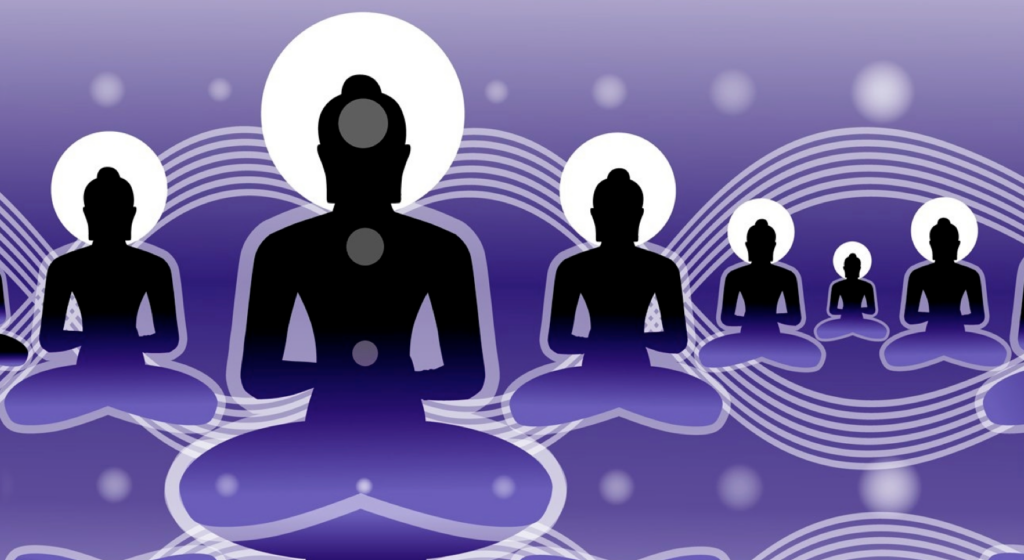
On the other hand, it is equally important to see that, in moving from mere being to self‑knowledge, the One enters an “embodied” state, and the saying that “God has no other eyes than yours, and no other hands than yours” is not a metaphor but a literal description. That is, there is no mind in itself; there is only mind manifesting in a body (in the broadest sense of the term), and therefore any “work on the mind” implies “work on the body”. The “Clear Light”, “Yechida“, the nature of absolute consciousness, is revealed only at the moment of changing bodies, and only for an instant, quickly eclipsed by the supports that sustain it.
Finally, the third important fact to understand is that, over countless periods of embodiment, a localized stream of mind accumulates an enormous inertia of separation and obscuration, the overcoming of which requires a significant amount of energy. In other words, individual mind is not simply an “ice pellet on water”; it is a deep solid block of ice, which is by no means easy to melt. Therefore, by studying the Masters’ ways of the past, one can be convinced that “enlightenment in three days” is no more than a therapeutic trick or a marketing ploy.

Overall, for Magic as both a worldview and a technology, the most important consequence of the view outlined above is the physical orientation of its practices, the use of a wide arsenal of tools and anchors. The Magus works on the wholeness of his being, developing conduits and actualizing the potentials of his stream of mind. Only with such a holistic approach is it possible to achieve a real and enduring liberation of the mind — whichever of the Ways it may follow — exhaustion, purification or rebirth.

To be a mage, one life is not enough; you are probably hereditary.