
The Chemistry of Magic
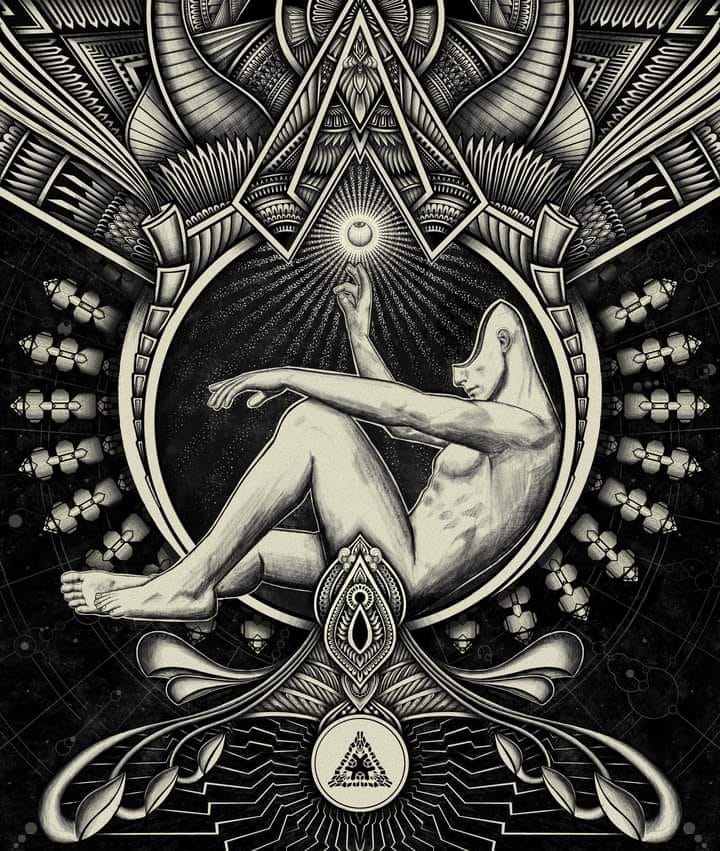
Since the unified, nonlocalized mind alone is only a potential field of absolute subjectivity, its manifestation requires not only the differentiation of individual streams but also their anchoring in a tangibly existing instrument – the body, in which the form of the mind’s manifestation – the personality – takes shape.
In other words, from the Myth’s perspective, without its incarnation in one form or another the mind remains merely a potential for cognition, unmanifested and not interacting with anything.
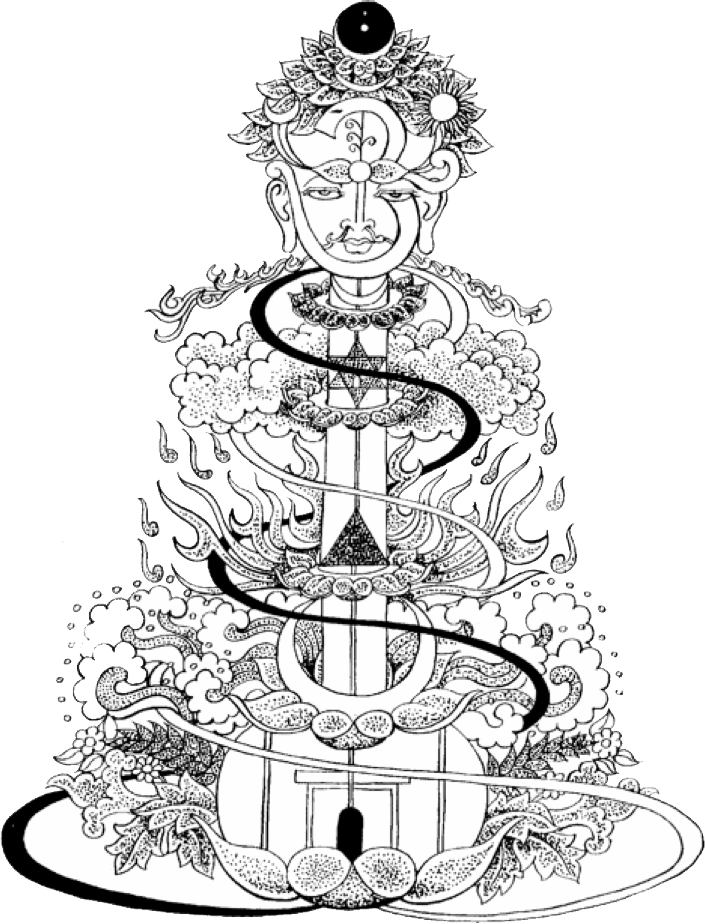
At the human level, the result of such manifestation is the psychophysical complex of “bodies” — a vehicle manifesting in different layers of “physical” reality. In turn, this conductor forms a feedback loop with the stream of mind, introducing its own “corrections” into its manifestation and interactions.
In fact, all those phenomena we usually call “mind” — produced by the brain — are the result of the brain processing two streams: the “aware” subjectivity and the “perceived” perceptual stream. The only sensation we can identify as arising directly from the stream of mind is the sense of one’s own being, “presence“, and the “true desires” it engenders — impulses urging the stream of mind toward further actualization. Based on its “reading” of these prime movers, the brain generates actual drives that flow into interactions and the awareness “extracted” from them.
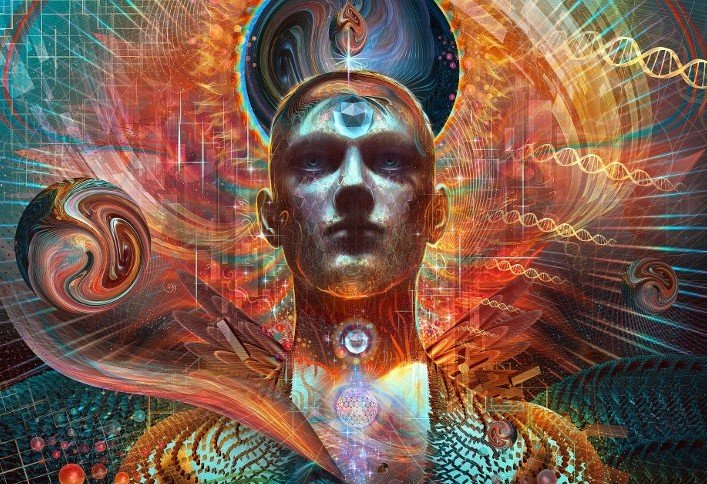
In order to translate these drives into action, the brain creates reward systems that manifest at the bodily level as pleasure and pain. Since within the mind itself there are no feelings of pleasure or suffering, there are no motivating forces for interaction; it exists in eternal “being-knowing-bliss”, and only the unrealized possibility of manifestation pushes it toward actualization, where emotional states then accumulate. Thus our personality, its drives and inclinations are only indirectly rooted in the transcendent stream of mind, being in practice the product of electrical and chemical processes in the brain, which is the generator and transformer of mental processes.
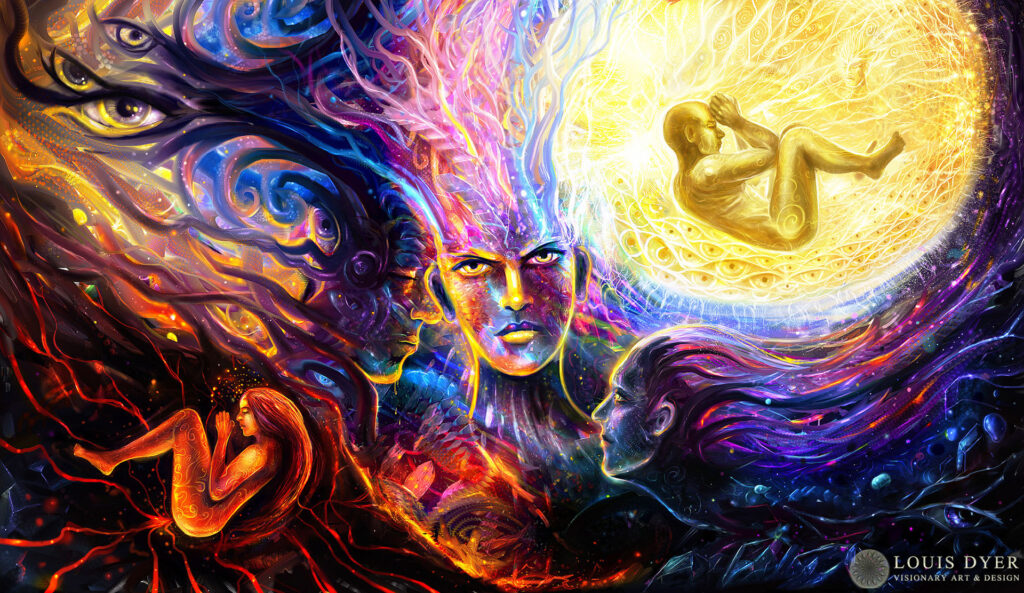
From the perspective of the Traditional-magical worldview, it is an unwarranted simplification both to consider the body merely an “illusion” or a “puppet” of the mind and to regard the mind as a “product”, an epiphenomenon of the brain. For the Magus, the body is an extraordinarily complex instrument, not simply executing the will of the mind but interpreting it, and not always accurately, expressing it in interactions and internal processes.
At the same time, however much we may wish to consider our experiences something metaphysical, sober analysis compels us to admit that they are 90% caused by the interplay of electrical impulses and neurotransmitters in the striatum, the amygdala, the hippocampus, the hypothalamus, and other parts of the brain. It is clear that this “play” is by no means accidental: it transmits the deep demands of the mind itself while superimposing its own (often erroneous) interpretations.
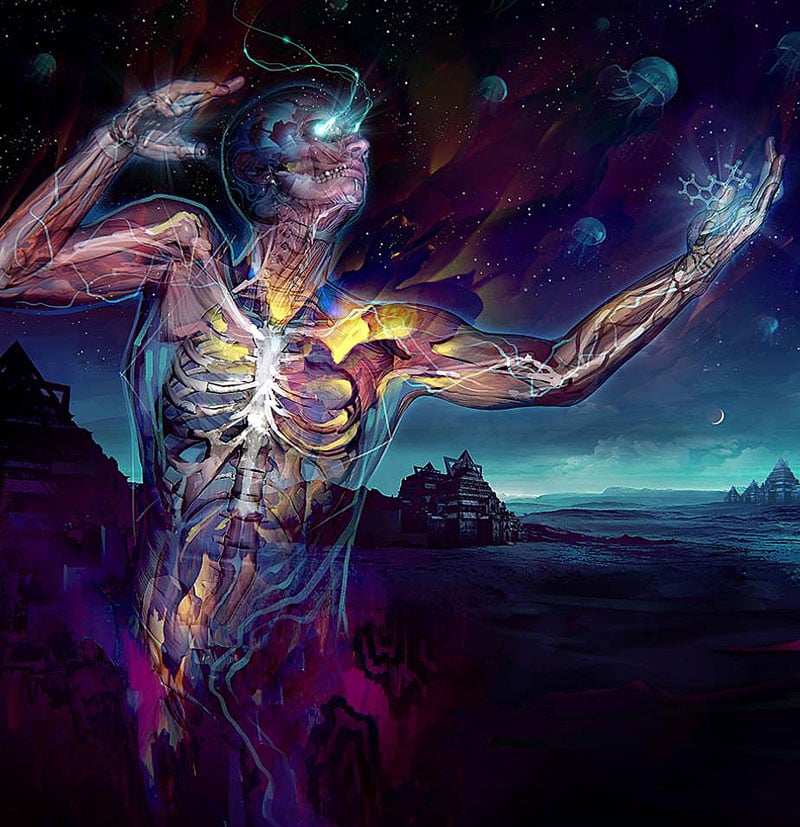
Although brain chemistry is at present far from exhaustively understood, it is clear that each experience is expressed in the body as a release of specific neurotransmitters, among which three systems are of special importance in the context of our discussion:
1) the system regulating wakefulness cycles and general psychic activity — the “tryptophan” or serotonin system;
2) the system regulating learning, providing reinforcement, reward, or punishment — the “tyrosine” or catecholamine system; and
3) the system of adaptation and long-term change aimed at restructuring and adjustment (both somatic and psychic) — the hypothalamic-pituitary-adrenal axis.
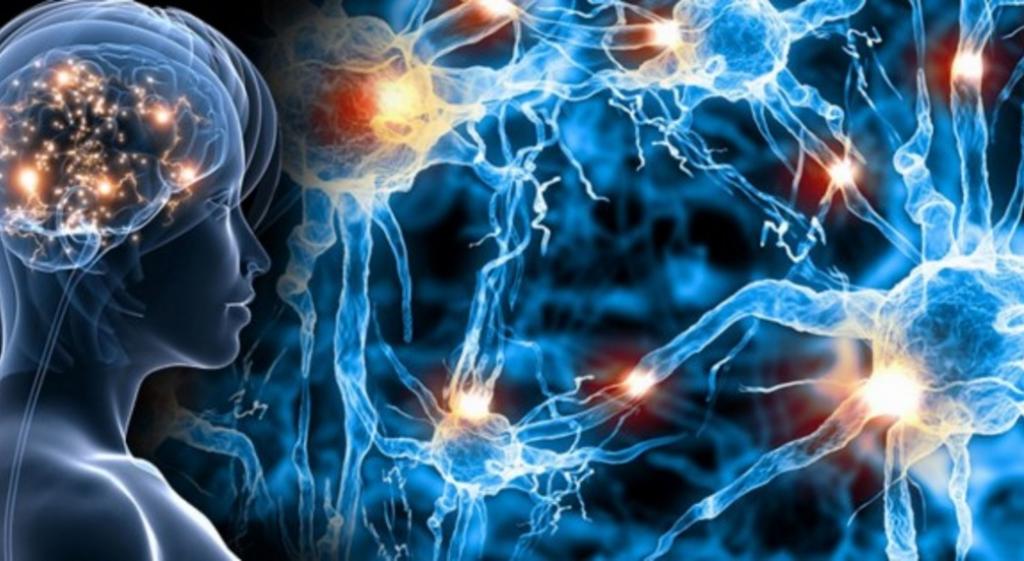
Accordingly, all methods of training the psyche (and the training of awareness) can be divided into:
1) those based on the pursuit of pleasure, enjoyment (“tryptophan”, involving serotonin and DMT and their analogues). These include all paths of experiencing “bliss”, samadhi, as well as practices of sexual ecstasy. These paths are characterized by a strong “absorbing” capacity: just as it is impossible to store sexual pleasure “for later”, travelers quickly become dependent on “samadhi” and seek “union with God” again and again. This is the Way of mystics, rising from ecstasy to ecstasy and “truly living” only in these vivid experiences. Both religious rapture and orgasmic exaltations are mediated by this system (in the brain, primarily involving the “hormone of death” — dimethyltryptamine — as well as serotonin and oxytocin, and in the body implemented by the so-called “APUD system” — a dispersed, body-wide mediator network for sustaining activity).
2) those operating by “carrot and stick” (“tyrosine”, engaging dopamine, adrenaline, noradrenaline, or their analogues). These are ways of “severe training” and, conversely, of light reinforcement that lead to rapid but poorly enduring results. It is well known how monks living under strict asceticism easily “fall” when they enter a city full of temptations, or, conversely, how those accustomed to the “distilled” conditions of spiritual schools prove utterly unable to bear hardships and deprivation. This is the Way of people inclined to reflection and rumination.
3) those aimed at achieving lasting results (“hypothalamic”, engaging systems of releasing factors, tropic hormones, and corticosteroids). These are paths of prolonged training, without extreme systems of reward or punishment, based on training will and endurance. Traditional Magic belongs to this group.
It is clear that any seriously practiced Traditional Way includes elements of all three approaches, yet the leading role always belongs to one of them. In particular, although the Way of Magic is, above all, a Way of will and adaptive change aimed at the gradual and total restructuring of both the entire psychophysical complex of the human being and the mind behind it, this Way, of course, also includes elements of reinforcement and nourishment for the soul in the form of ecstasies and samadhi. However, the Magus never prioritizes dopamine or DMT effects, striving instead to tune central regulatory systems and, relying on them, to achieve qualitative adjustments of the very fabric of the stream of mind.
I read this with great interest! Thank you very much. A lot of useful information.
Recently, visiting your resource and reading the latest articles, one receives answers to unasked out loud questions.