
Reducing Suffering
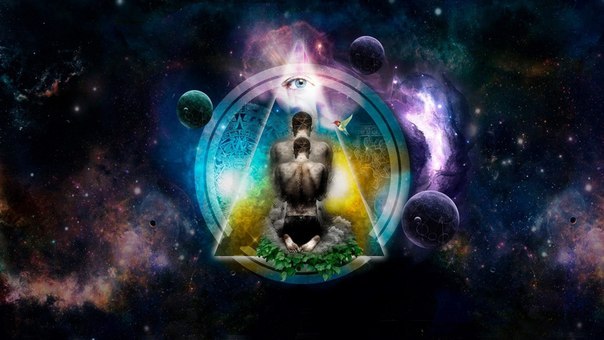
The sense of a limited existence, the restriction of manifestation, incomplete manifestation, the insurmountability of obstacles — in short, any sense of not being free — evokes in the mind, infinite by nature, a feeling of constriction: pain.
If the mind begins to turn its attention to that pain and, under its influence, diminishes its cognitive activity, the pain turns into suffering.
Thus pain is an inevitable consequence of the embodied state itself, while suffering is the mind’s natural reaction to that state. This is presumably what the Buddha meant when he said, “The cause of suffering is life itself.”
Nevertheless, it is clear that neither pain nor suffering are innate properties of reality.
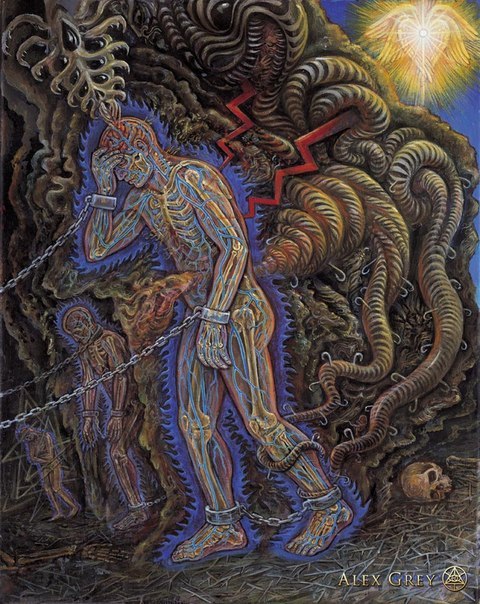
Eastern and Western Myths differ somewhat in their interpretation of suffering: for the East, suffering is the result of veiling, an illusory perception, like ripples on a lake; for the West, pain is a property of embodied existence that limits the manifestation of the Spirit but is necessary for its self-knowledge. Yet, whether we regard manifested existence as the result of a veil or as a natural necessity, the very fact of its limitation, and therefore its painful nature, is beyond doubt.
Embodied reality by its nature does not allow absolute freedom, and therefore it is always accompanied by the impossibility of fully fulfilling desire, which is experienced as pain. The more this pain serves as an independent limiting factor, the stronger the resulting suffering.

Accordingly, it is very important to understand that liberation from pain is possible only by freeing oneself from the limitations of embodiment, while liberation from suffering frees one from pain’s limits. Therefore, for the Magus, as for any other self-realizing being, removing suffering lifts major barriers to development.
Although complete liberation from suffering is possible only after the dissolution of the ego, the death of personality and either deindividuation or, conversely, the plenitude of consciousness, reducing suffering is relevant at every stage.
Two approaches are possible for reducing suffering: one can either attempt to keep moving despite the pain, transcend the limits imposed by pain, or reduce the pain to reduce suffering. Both approaches are important and applicable depending on the situation. What matters is to clearly understand which is more effective in a given situation. Fleeing from pain can lead to worse dead ends and traps, and ignoring pain can lead to loss of embodiment, so the right choice determines successful realization.
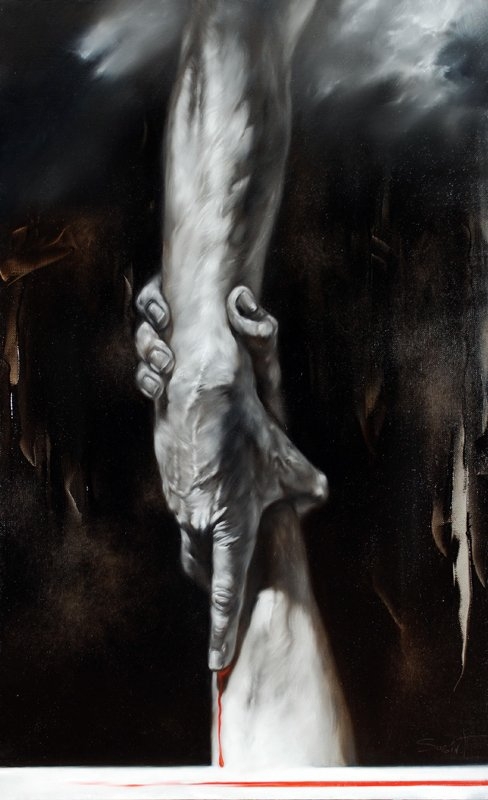
In order to make the right choice, a moment of detachment is necessary. That is, to understand whether one should move toward reducing the pain or toward reducing the suffering caused by that pain, one must, for at least an instant, become free from it. And for that to happen, someone else must bear the pain. Hence compassion — bodhicitta — is necessary as a condition for progress. Those who have traveled the greater Way should help reduce others’ suffering those who are less advanced, and for that they must have compassion. With experience overcoming suffering, use it to enable others’ self-determination. Since every embodied being is a mode of the Great Spirit’s self-knowledge, they should use their capacities to reduce suffering. It is important not to confuse compassion with pity. It is important not to shift the emphasis from perfecting the world by perfecting oneself to attempts to perfect the world without perfecting oneself. The Magus must understand that the further he progresses in self-perfection, the more successfully he will be able to help others, the purer his compassion, and the more impeccable his motives. Compassion is not instruction or moralizing, not reproach, nor ostentatious self-sacrifice or masochism. Compassion is taking on another’s pain to aid their development, and it exists only when it reduces total suffering, not when it adds your suffering to others’.

Thank you to the author, otherwise I couldn’t describe the origin of suffering at the level of words. To alleviate pain and suffering along with compassion, one must cultivate such a trait as meekness within oneself. Although meekness implies softness of character, it also combines Strength of spirit, without which victory for one’s own freedom is quite difficult.
“For the Eastern world suffering is the result of ‘obscuration’, illusory perception of reality”
So it is. When one manages to dispel a particular illusion, the associated suffering disappears.
“For the Western world – pain is a property of embodied existence, limiting the manifestation of Spirit, but necessary for its self-knowledge”
It turns out that Spirit is a masochist. And what hurts those who have overcome all their illusions but remain embodied?
The “Organ of Unity” hurts.
For those who have overcome all their illusions, the Illusion of Separation has also been overcome.
There is no such thing as foreign pain…
Good day.
If there are foreign consciousnesses (= there is no pleroma), then there is also foreign pain.
In my research, I have looked several times into versions relating to the eastern and western paths. The Eastern one looked like erasing imprint – in a dream it was told that up in the mountains there is a particle of God that erases all programs of consciousness (desires and reaction schemes) and it is worth inhaling it… and the western one appeared as a dream about ducklings in a sandbox, which are played with and every day new ones are started because the old ones die. And that the ducklings kill themselves. Also, a wonderful dream in which there was a question of whether “God hits with the butt of an axe on the head”. And generally, there is no – all conclusions can be drawn from simpler situations if one does not run away from them. I will assume that He does not hit, and any suffering is just a signal of a question waiting for its correct solution) This is like the story of “I intend to become immortal. So far, everything is going great”. In any case, all this is a very and very wonderful game.
Good day.
“If you play, then only seriously.”
Enmerkar, please tell me, what if we remove not the pain, but the cause of the pain – the corresponding limitation? Isn’t this escaping from pain? There won’t be any dead ends or traps as a consequence of this action?
Of course, this is exactly what a magician fights for – to remove barriers and limitations. A magician is not a masochist, he does not aim for pain, he simply does not allow pain to influence him. Nevertheless, he can and must remove the causes of this pain, striving for perfection.
With suffering – collective suffering. It turns out that suffering multiplies, it becomes more rather than less. One suffered, now there are two. I don’t see the logic. To help – yes, but to suffer together – no.
The intensity of pain and suffering depends on the difference between potentials now and what I wish. To reduce suffering, a difference in potentials must be reduced – either move faster towards the goal or desire less (lower the bar). Or not pay attention to the difference in potentials and not suffer from it.
Many drown this suffering by escaping from reality in various ways. But that is just a delay, because the return to reality is inevitable and sooner or later one will still have to solve their tasks.
The conclusion is simple – go within your strength and do not whine.
Compassion is not the multiplication of suffering by two; it is the division of another’s pain. The one who is stronger at that moment takes upon themselves part of another’s suffering so that they can gather their strength and continue their path. That is help.
But when it comes to foolishness – that’s another matter. You divided another’s foolishness, and suddenly there are two foolish people nearby )))
In my opinion and experience, there are different kinds of suffering. Some suffer from foolishness, and consumption can also appear as suffering. Figuring all this out without freezing – not losing sight and feeling of other people to understand where compassion is really needed and in what form (sometimes, in fact, it involves striking and causing pain) – that’s another quest)
I agree. There are such do-gooders who only need to be given a chance to empathize, to feel pity. This is how they latch onto others’ wounds. They will sting you with their pity until they drain you completely.
And sometimes it goes the other way. A person might ask a question that cuts right to the heart, like a knife, but actually – you become stronger by responding to it yourself. And their intervention stems from concern, that is, compassion.
“Since every embodied being is a mode of self-knowledge of the Great Spirit, it must use its abilities to reduce suffering as a whole. Have you ever come across chronicles of murders in the modern world, where the killer claims that they were compelled to kill by a desire to feel what the killer and the victim feel before death? What do you think, does this relate to the Creator’s self-knowledge?”
I’m curious, why did the subject in this case choose the role of the killer for themselves and not that of the victim? Because if they first become a victim, they can’t later become a killer and know both sides? Something tells me that this is not the case.
It seems that we are talking about subpersonalities (the shadow), or maybe I misunderstood. In fact, within each of us, there can live a killer and refuse to acknowledge its presence (then, probably, something needs to be done with it), which means being a killer. It can happen without a knife or blood, but that doesn’t change anything. One can kill in parts, in various ways, and different people. A saturated encounter with a part of oneself, when the subpersonality is vibrant, in my opinion, is a great chance to sort things out at once without picking at oneself in parts. This is if we’re talking about a magic-related site. Society, psychiatry, courts, and other contexts certainly have a different perspective.
From working with just socially destructive programs, such as aggression and nationalism, or self-destructive programs within oneself (like, for example, eating a lot of candy, which turned out to be one way of killing)). In general, from this technology, I know that any subpersonality of this kind, at first contact, will say that it wants to kill. Well, this is a psychological method – to separate from oneself and talk. Because we cannot dissect ourselves. Just something separate. The psychological method I’m talking about comes from the understanding that to the consciousness and subconsciousness, there is no difference between a real event and a well-imagined one. And from the idea that the integration of subpersonalities is possible through living in one’s head their goals. I don’t know how this aligns with the views presented in this blog regarding destructors. I haven’t thought about it yet. But I’ve done something like this with subpersonalities. You separate, ask what its goal is, and usually, the first answers are various variations on the theme of ‘to kill’. And if you collapse them (by simply realizing in your mind what the subpersonality has asked for) down to the root – the only answer left is ‘I wish to love’, and I think this directly relates to the self-discovery of the creator. In some cases, there’s nothing left – just emptiness and silence. And perhaps this means not a distorted desire but rather a truly imported one.
And one more question regarding the negativity within myself. I noticed that there is something in me that does not want to achieve a unity of consciousness. I delved into myself and identified something reminiscent of a mass of energy. I extracted it from my psychocosm and allowed my own energy to blossom in that spot. I admit there was resistance. Something wanted to return, constricting the freed space and desperately trying to regain lost positions. I didn’t allow that. But the struggle for myself has not yet entered its final phase.
This is exactly what the Buddha probably meant when he said that “The cause of suffering is life itself”.
It can be interpreted differently. Suffering is a conflict. If you look at life, what is Experience? Experience is the accumulation of solutions to resolve conflicts. Accumulated experience is Wisdom.
Suffering can be understood as the initial polarity of any process.
I don’t know why, but to associate suffering with limitation… hmm. Limitation implies stoppage, closure. Suffering, on the other hand, means an active process of accumulating experience.
Limitation is not necessarily stoppage and closure. For example, the water element. A mountain stream runs through a gorge. It is limited by ridges; this does not stop it but rather shows the direction… Closure occurs when the boundary runs along the entire perimeter; then it becomes a reservoir. If there is no outflow and exchange of water, it stagnates.
…connecting suffering and limitation – in my opinion, this is obvious. If you want to achieve realization, a flow of energy proceeds from you towards the result of realization; when an obstacle arises in the way, the energy partially dissipates, partially absorbed, partially reflected – depending on the properties of the obstacle, it is like the case of the propagation of light in various mediums. The outflow of energy can cause pain; the part of the energy that has been reflected and returned to you can burn you. Because in this case, it returns not with the properties you expect. These properties deprive the psychocosmos of balance and hinder the generation of energy directed towards the desired realization… In the word “suffer” – the sounds s – connection, t – solidity, r – vibrations for punch-through, a – emission, d – good… The word “pain” – b – exceeding, o – something, by the way, closed, l – infusion, y – continued… Everything converges. Suffering is a struggle against something superior that has become part of you but is not needed. Co-suffering is a joint struggle.
Much depends on the attitude and perspective. One can look at pain from such an intriguing angle – pain, like any other barrier, is created from our own separated strength. Understanding this, penetrating with Curiosity into the phenomenon, in this case, pain, and connection dissolves the pain and returns that strength to us. Pain is a signal that attention is needed at that place – attention should be directed there to dissolve it with understanding. And this works, personally for me, on almost all types of pain; I managed to deal with muscle spasms. In general, for destruction and attachment to nearly everything, we have a perfect weapon – knowledge. Because ignorance or partial knowledge subjugates us to everything, including things, while complete knowledge about an object makes it a part of us and gives us power over it. This also applies to pain.