
Forces of Disembodiment

Dying, the disembodiment of any being, is an extremely important and energy-intensive process, because within it three currents are separated, each of which is quite essential for the cosmic order: the stream of consciousness, the body and its energy.
At the same time, for the being itself, what seems important, first and foremost, is the fate of the mind, its subjectivity, whereas the body and energy appear to be merely shells, resources. Nevertheless, both the body (or, more precisely, the entire psychoenergetic complex) and energetic emissions — both residual and those released directly at the moment of death — are an source of nourishment for biological beings and for more subtly organized beings and entities.
And just as improper decomposition of the physical body can cause the proliferation of pathogenic bacteria, and as a consequence — epidemics and other problems, unregulated decay of other vessels and dispersion of emissions can lead to the strengthening of destructive and pathological beings and entities.
That is precisely why the normal process of disembodiment takes place under the control of an entire range of “sanitary” forces, called upon to preserve the healthy and balanced functioning of the entire cosmos.
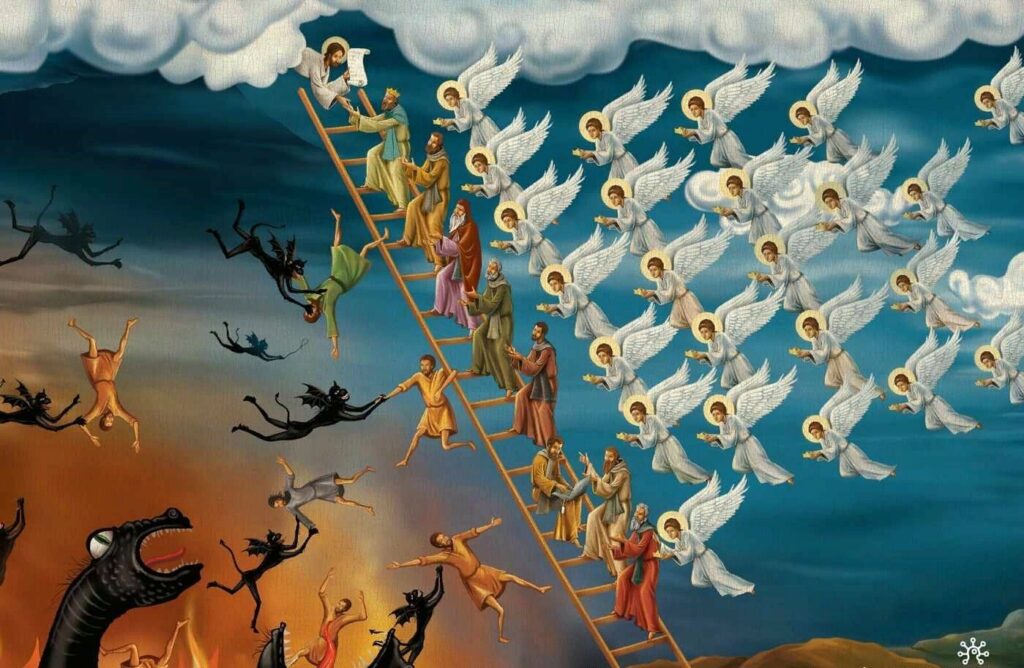
We have mentioned more than once that these forces include three important groups of actors:
· properly, those “separating” the mind and the vessels, ensuring the first stage of dying. In the West these beings were called “reapers” or “gallu”, and in the East — “worldly” or “samsaric” mahakalas. Note that the composite figure of the “reaper” or the “Angel of Death” refers to both these entities and to the next group,
· those ensuring the transition of the mind from the “living” into the “intermediate” state. These spirits are known as “ferrymen”, “namtarras”, or “yamas”.
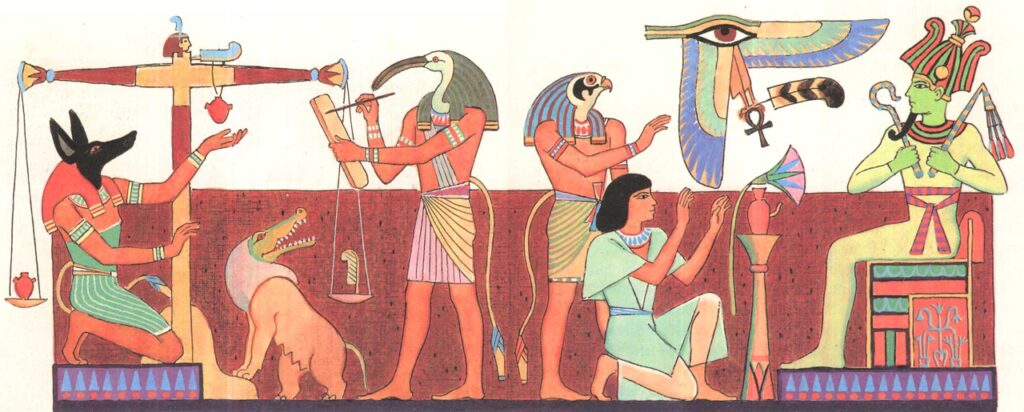
· those “distributing” the currents of mind, preventing their premature return to manifested worlds, and ensuring the proper assimilation of experience (including both “reward” and “retribution”). These are the so-called “judges” of the Afterlife, also known as Annunaki, alastors or the “spirits of Maat”.
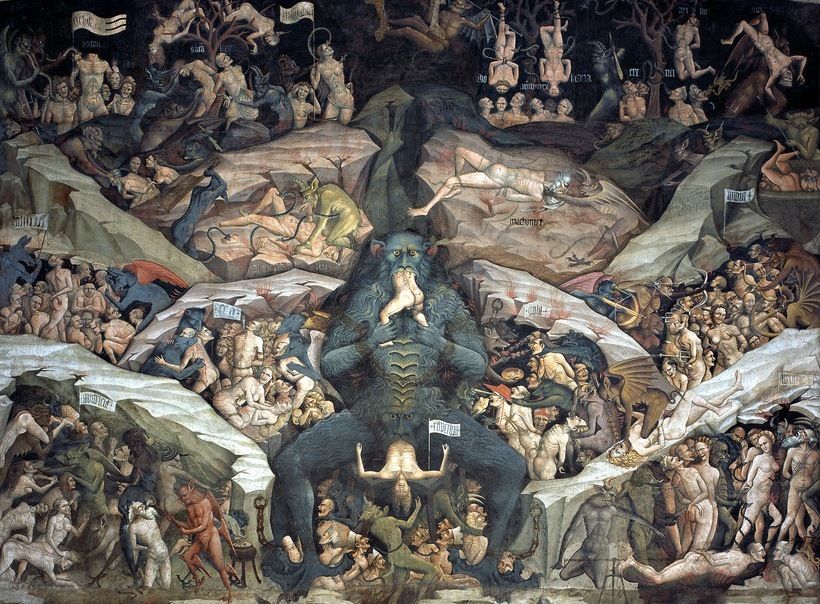
All these three groups of forces are precisely “intermediate”, otherworldly entities, expressing different aspects of the Abyss, and therefore they are often combined in synthetic images like the Angel of Death, Yamaraja-Kalarupa, Santa Muerte, and other similar ones.
Nevertheless, the classification given above also has significance, since considering the individual stages of this complex process makes it possible not only to map its passage better, but also to understand the dangers and opportunities of each of the stages.
In particular, langoliers — mahakalas — as a class of entities perform informational cleansing, the “erasure of the past”, removal of excessive reshimot, imprints, which otherwise would create continuous “white noise”, informational chaos and overload. It is precisely their activity that maintains the world in informational order and helps the deceased quickly sever attachments to the manifested, easing the transition into the Interworld. If the deceased retained complete memory, it would be far more difficult to “persuade” them to leave the familiar world and their loved ones, and that would mean that the number of “restless souls” would be immeasurably greater. In addition, these entities ensure the preservation of only significant imprints, protecting the world environment from being overfilled with insignificant details. In this connection, it is clear why in Buddhism Mahakala, as one of the main protectors of the Teaching, represents a force of resistance to delusions and hindrances, one of the main forces “clearing” the Way to Enlightenment.
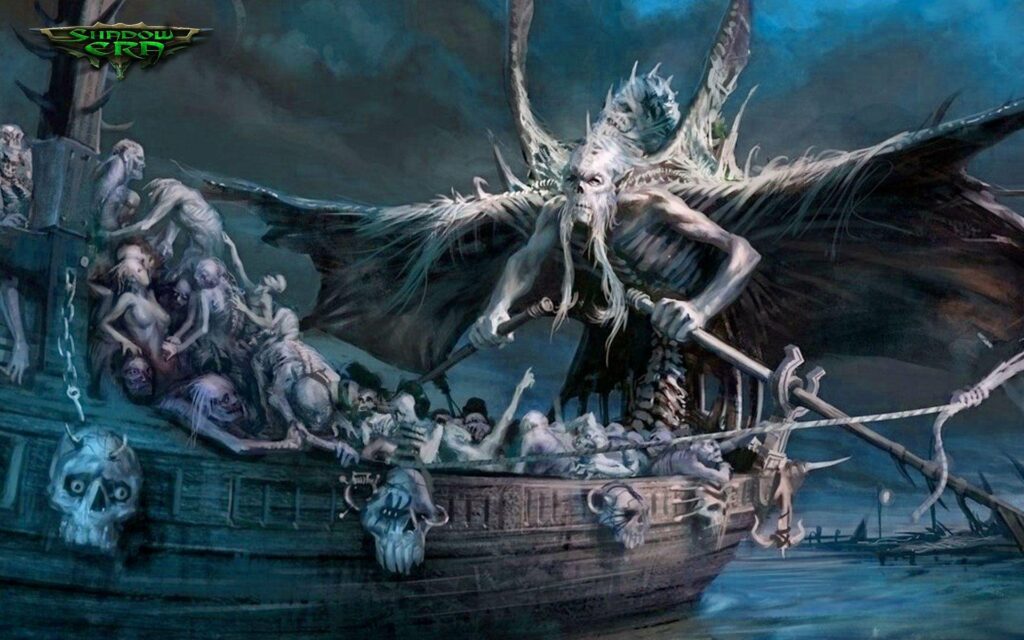
Ferrymen-namtarras then transfer the minds of disembodied beings into the state of chönyi bardo, directing it toward self-reflection and assimilation of the experience. If it were not for this aspect of Wisdom of the Abyss, the development of the mind would be impossible or severely hampered; karmic currents would carry it from body to body with no possibility of extracting lessons, and that means — it would inevitably repeat the same mistakes life after life. In addition, there would be a high risk of such a disembodied being “taking up residence” in those already living, and — as a consequence — the accumulation of ibburs and dybbuks. And one more task of the namtarras is preventing the mind from “clinging” to its decomposing vessels and, thus, reducing the danger of the emergence of various kinds of undead.
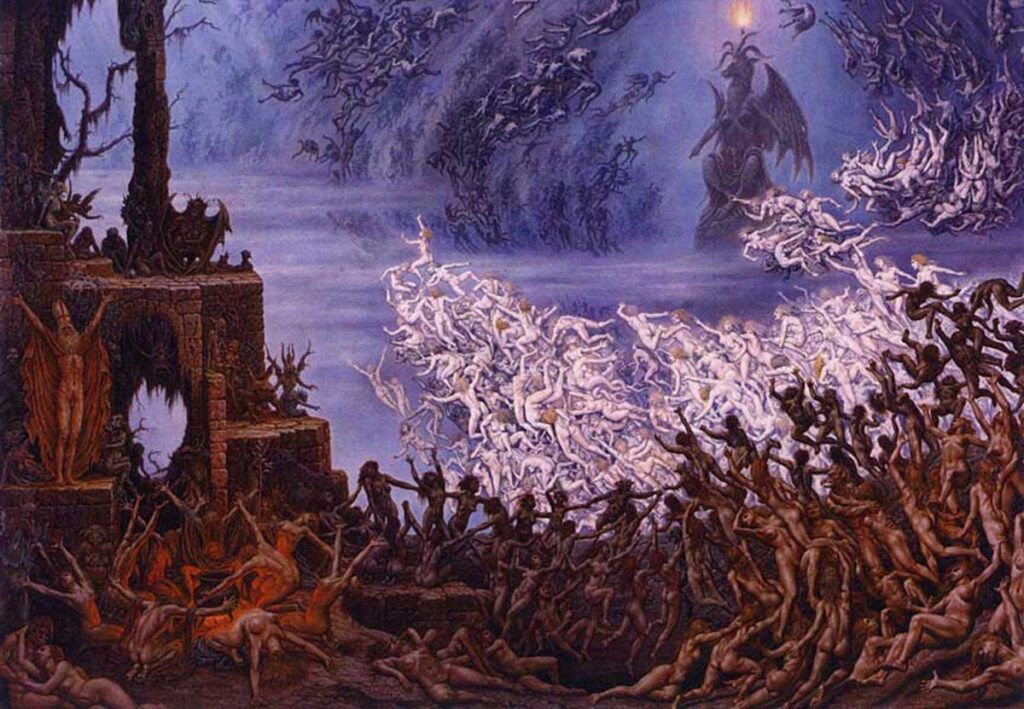
Finally, the “depth” of this imprinting is ensured by the judges, as properly forces of self-reflection, holding the mind in the Interworld for a period sufficient to draw lessons. These forces balance karmic gravitations, making it possible to live through lessons already ready for awareness without needing a new incarnation, and also to “gather the baggage” of tasks that can be coordinated and realized in a future life. One can say that these are the same forces of regeneration as, say, in an ordinary dream, which allow one to order experience and live through healing states, even when subjectively they look frightening or even painful. Accordingly, if it were not for the activity of these forces, the worlds would be filled with “short-lived beings”, beings born only for short-term experience, having lived through which, they would be forced to plunge again into the Interworld.
Thus, understanding the details of disembodiment, remembering its stages, their meaning, and preparing for them, one can avoid many traumas associated with resisting the indicated forces, whose action can indeed be frightening and traumatic. It is important to remember the consolation of Guru Padmasambhava from the “Bardo Thodol”, who reminds that “no matter how terrifying the visible images may be, all of them are only a product of your mind”.
Hello, Enmerkar. Tell me, what influence do the activities of elemental forces at the moment of death and immediately after have on the disembodiment and the path of the Soul? Recently a close person of mine died, and literally two hours later, a very strong hurricane with rain swept over the city, which had not happened for at least several decades – many trees, roofs, power lines, etc., were broken – the overall destruction was significant. An emergency mode was even introduced for several days. It is known that a strong storm can occur when a powerful sorcerer or shaman dies – but this person was definitely not anyone like that. However, I myself suspect that such a disturbance of elemental forces could have had, and most likely did have, a significant effect on the process of disembodiment and the subsequent path of the soul. Perhaps at that moment, egregorial (not natural – including Christian) control forces that measure and weigh the Soul by their algorithms and determine its further path were weakened or even completely inactive? Thank you.
Hello. Of course, physical conditions affect the process of disembodiment. However, it is unlikely that these conditions influence the processes occurring already in the Interval. The influence of the physical environment concerns the physical world; it brings new energies into this world and mixes existing ones. In your described case, one cannot speak of any influence on egregorial forces; however, indeed there is an effect on the process of transferring consciousness from the world to the Interval. In the cases of ‘sorcerers or shamans’, at the moment of death, a large amount of energy is released, which can cause weather/natural disturbances. In the opposite situation, these forces may be perceived by the disembodied, and their post-mortem fate can change up to a transition to another Wave of life (https://en.enmerkar.com/magus-way/volny-zhizni-i-perexody-mezhdu-nimi).