
Ars Notoria — the Art of Reading Sigils
We have already discussed that the system of Solomon’s Magic “Keys” is unique in that each of its books offers not only a unique idea, a perspective on one of the groups of service spirits, but also a unique method, an approach to interacting with them — so that, taken together, in a single “bundle,” these “Keys” provide a holistic, universal method for engaging descending vortices.
Thus, “Goetia” speaks of the Gates and Gatekeepers, offering the Evocative Ritual itself as a method of direct inquiry; “Theurgia Goetia” — of the Grey vortices and Wandering spirits, indicating the place of demons in the overall structure of the beings of the Interspace and introducing the notion of their matrix aspect of manifestation; “Ars Paulina” examines the vortex nature of these entities and explains the laws by which these vortices exist and interact; “Ars Almadel” speaks of the structure of the space where their activity unfolds, considering the Interspace in its dichotomy of Space and Edge; while “Ars Notoria” is devoted to the “semantic” side of the structure of vortices, considering them not from an “astral,” but from a “logostical,” meaning-based standpoint.
Formally, “Ars Notoria” is the oldest of the parts of the “Lemegeton”: its manuscripts are known from the 12th–13th centuries, and it generated a large body of “secondary” literature developing the ideas of the primary source. Among such “continuations” are the “Work of Works” (Opus Operum), the “Book of Flowers of Heavenly Teaching” (Liber Florum Caelestis Doctrinae) by Ioannes Morigny, the “Brief Art” (Ars Brevis), the “Art of Abbreviations” (Ars Abbreviata), “The Art of Paul” (Ars Paulina) or “The Art of Paul of the Seven Figures,” to distinguish it from the book of the same name in the “Lemegeton,” the “Ars Notoria which the Almighty Creator revealed to Solomon” (Ars Notoria, quam Creator Altissimus Salomoni revelavit), and others. All these works are devoted to a special “goetic” transformation of the practitioner’s mind, allowing them to move to an “immediate” understanding of the nature, energy, and names of the entities being summoned.
The title of the book, “The Art of Assurance” (“notariat”), is usually interpreted precisely in the sense of developing such a state of confidence, the Authoritativeness of mind, to which the student’s efforts are directed. However, this title also contains a “second layer”: it can be read as “The Art of notarikon,” that is, the reading of hidden meanings, the “unfolding” of the content of names and terms — which points to yet another method implicitly addressed in the book.
In terminological and ideological terms, “Ars Notoria” resonates with the Honorian tradition: many prayers and conjurations are repeated both in the “Notoria” and in the “Sworn Book of Honorius” (Liber juratus Honorii), one of the most extensive and oldest grimoires, written practically at the same time as “Ars Notoria.” At the same time, whereas in the “Sworn Book” the prayers and conjurations are given rather unsystematically, the “Notoria” is, as it were, an “extract” from them, selecting only those that are important for the transformation of mind. In other words, if the Liber juratus (as well as the Grimoire of Honorius) is a “technical” compendium intended to be consulted by those who already understand what they are doing and why, then “Ars Notoria” is part of a textbook, leading along the path of the Great Work from the very beginning.
The “Prologues” of “Ars Notoria” are direct heirs of the ancient Greco-Egyptian Tradition of “Voces magicae,” later developing into the art of “barbarous names,” and, in fact, a technique that replaces the True Names of Gods or demons with epithets or mottos.
This art of reading (as well as enciphering) names, epithets, and mottos, as we have already mentioned, constitutes one of the tasks of “Ars Notoria.”
The book says that King Solomon “composed these prayers with the wondrous privilege of divine assistance,” using special methods, among which, of course, are kabbalistic approaches, including the method of notarikon.
As in the “Testament of Solomon,” the magical action is initiated by an Angel — here he is called “Panphilos” (“Beloved by All”) — and, given the gematria of this name and its features, this Angel can confidently be correlated with Raphael of the Christian tradition. And this is not surprising, since it is precisely this Archangel who is connected with the element of mind, with understanding — what “Ars Notoria” works on.
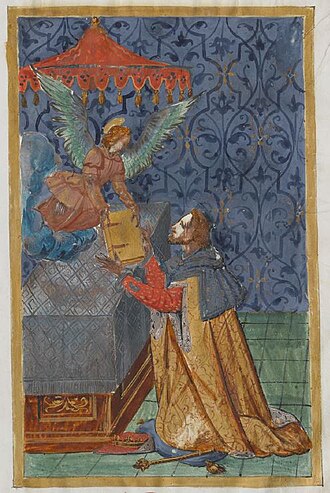
Thus, according to the legend, Solomon, under the dictation of Archangel Raphael, wrote his work “The Book of Flowers of Heavenly Teaching” (Liber Florum Caelestis Doctrinae), on the basis of which another Magus — Apollonius of Tyana — compiled “Ars Notoria.”
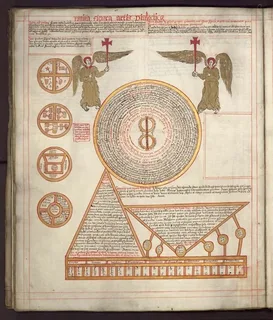
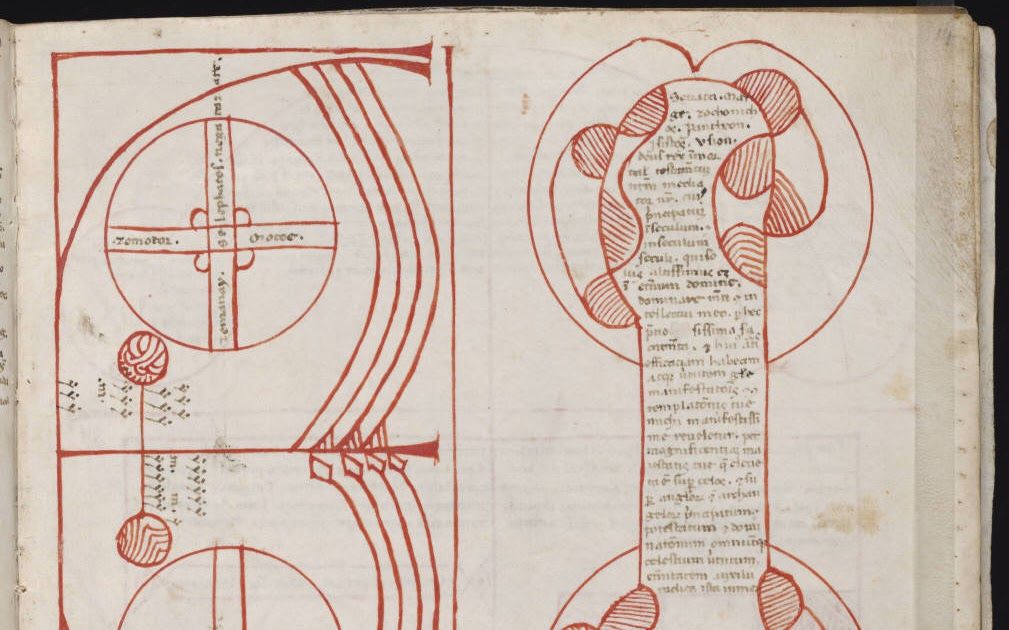
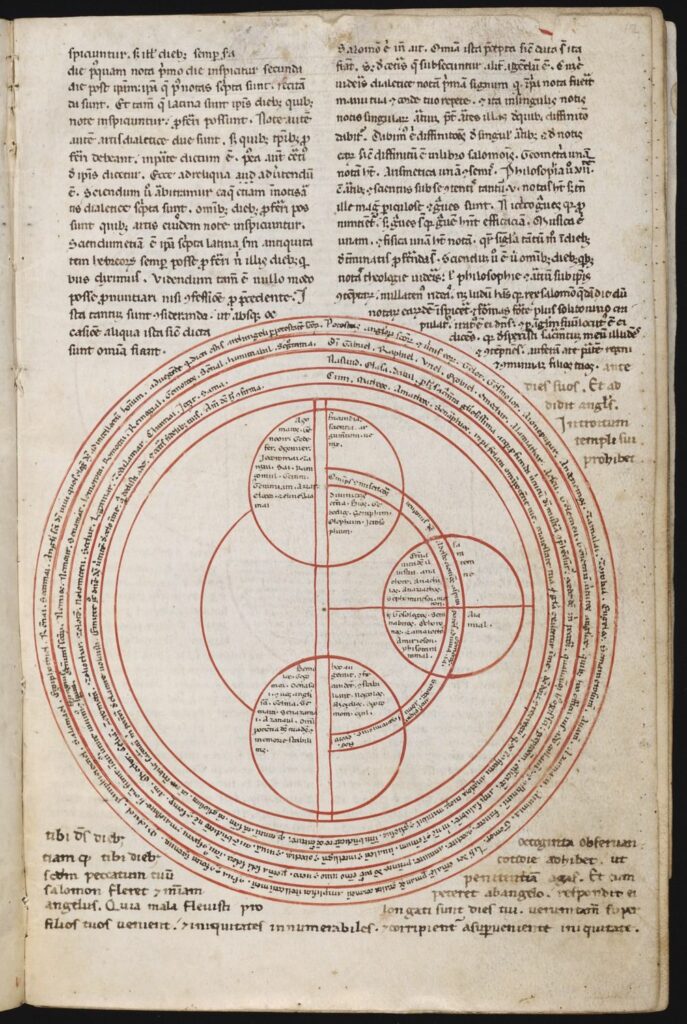
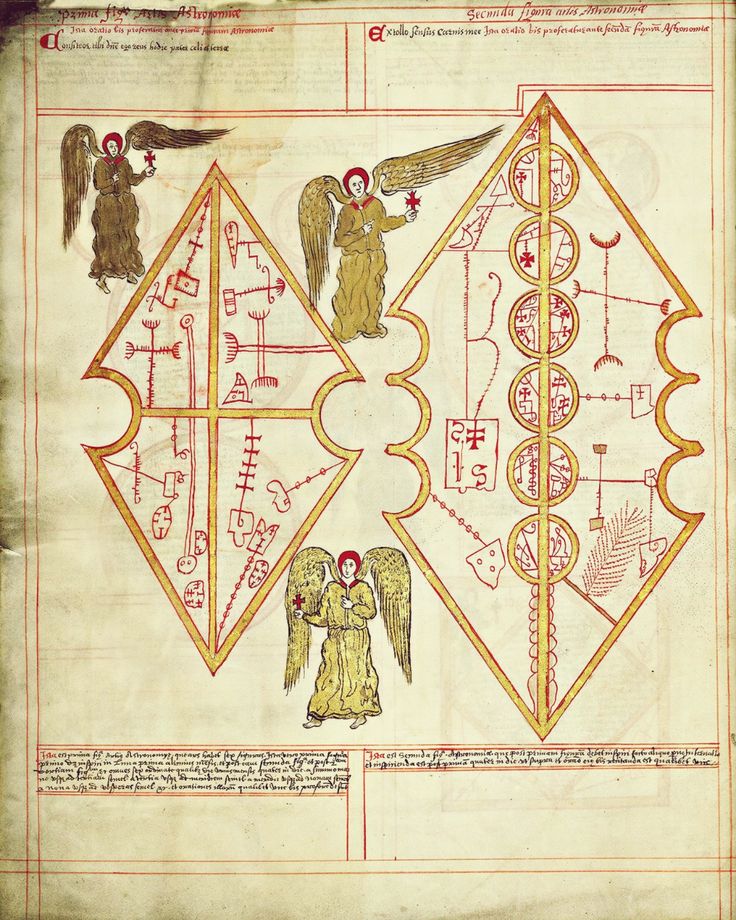
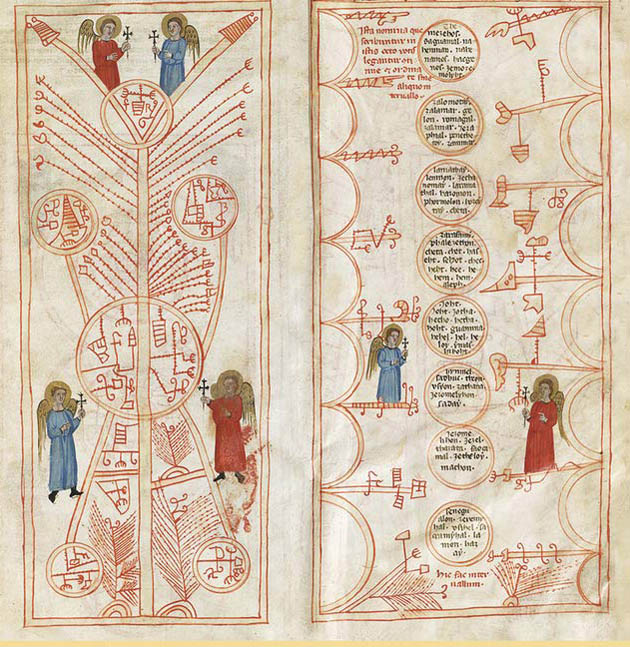
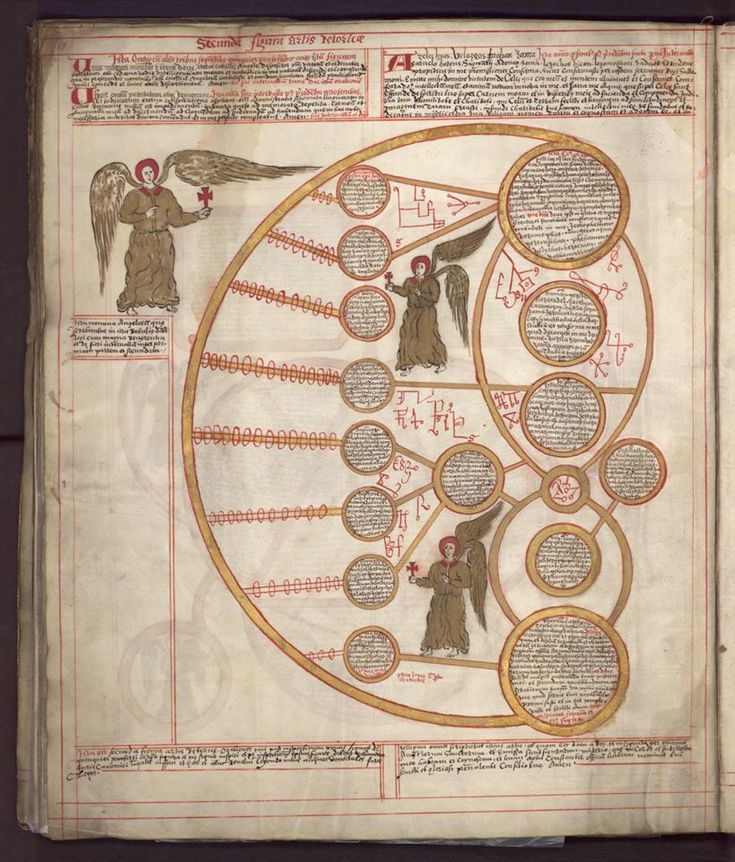
The images given in the book are “blanks” or “elements” for composing sigils, necessary for understanding the basics of composition and the principles of constructing these “signatures.” These images are also known from Greco-Egyptian sources, where they were likewise regarded as elements of a “visual alphabet” or “charaktêr” — that is, “pseudo-letters” that carry meaning but have no phonetic correspondences.
An important element of “Ars Notoria” is the mention of the “Guardian Angel,” who in this context is perceived not in the everyday sense but as “Augoeides,” which can be regarded as a reference to the “Abramelin Ritual,” described at about the same time.
Thus, the prayers and “prologues” of “Ars Notoria” are an important and effective tool for developing the mind — its shift from fragmented perception to a more integrated view — and the analysis of the texts and names used in this book paves the way to reading (and composing) sigils as semantic structures, which is also important both practically and philosophically.
And we conclude this sketch with our translation of one of the “prologues” of “Ars notoria”:
“O Eternal and Incomprehensible Memory! O Irrefutable Wisdom! O Unchangeable Power! May Thy right hand embrace my heart and send down the holy Angels of Thy Eternal Counsel; complete and fill my mind with Thy Memory and the fragrance of Thy oils; and may the sweetness of Thy Mercy strengthen and fortify my understanding through the pure splendor and luminosity of Thy Holy Spirit, even as the holy Angels eternally contemplate and delight in the radiance of Thy Countenance and in all Thy holy and heavenly Virtues; Wisdom, by which Thou hast created all things; Understanding, by which Thou hast transformed all things; Perseverance in blessedness, by which Thou hast restored and established the heavenly Powers; Love, by which Thou hast restored fallen Humanity and lifted it up after the fall to the Heavens; Teaching, by which Thou hast deigned to teach Adam the knowledge of every Science: enlighten, replenish, instruct, restore, correct, and refine me, that I may be renewed in the understanding of Thy Commandments and in the receiving of the Sciences that are useful for my Soul and Body, and for all faithful believers in Thy Name, which is blessed unto the ages of ages”.
How is the role of Archangel Raphael revealed in ‘Ars Notoria’ in the process of magical knowledge, and how does his connection with reason and understanding affect the art of reading and creating sigils?
In ‘Ars Notoria’, Archangel Raphael serves as an initiator of magical knowledge and a ‘translator’ of Divine Wisdom to Solomon. His name (meaning ‘God heals’), signifies the healing of the mind and its cleansing so that it can perceive truth without distortion. Raphael is traditionally associated with the element of Air and the Sephira Hod, which is responsible for intellect, logos, and perception. In the discourse of ‘Ars Notoria’, he performs two main functions: conveying knowledge to Solomon through the method of magical prayers and sigils, which corresponds with the tradition of ‘Voces Magicae’ and notarikon, and guiding the mage’s consciousness towards recognizing hidden connections, helping him restore the ability to see the true structure of semantic vortices on which the magical universe is based. One of the key elements of ‘Ars Notoria’ is the art of reading and creating sigils. In the Greco-Egyptian tradition to which this treatise traces, sigils were perceived as elements of a visual alphabet (charaktêr), carrying meaning but lacking phonetic attachment. In this aspect, Raphael acts as a guide leading the mage to understand the internal logic of such signs. A mage working with ‘Ars Notoria’ must develop the ability to intuitively recognize and use them, going beyond habitual logical thinking. Another important method used in ‘Ars Notoria’ is notarikon – a technique of unfolding names and perceiving meaning as a whole, holistically, as a unity rather than a sequence. Such practice leads to a special state of consciousness akin to theurgic illumination, where the mage receives insight directly, without the need for analysis. This state can be associated with the activity of the ‘inner logos’, avgoeidos, mentioned in the ‘Ritual of Abramelin’. In ‘Ars Notoria’, the Guardian Angel represents such a personalized embodiment of gnosis, allowing the mage access to the true meaning of names and verbal formulas. In this sense, Raphael is a key figure in the structure of the magical path outlined in ‘Ars Notoria’. His task is to bring the operator to a state of noetic understanding, where reading and creating sigils becomes a genuine realization of the semantic structure of the Universe. This is what distinguishes ‘Ars Notoria’ in the corpus of ‘Lemegeton’ – it reveals the very mechanism of perceiving their names and nature, facilitating the mage’s introduction to a higher state of awareness.