Raphael – Leader of the Archangels
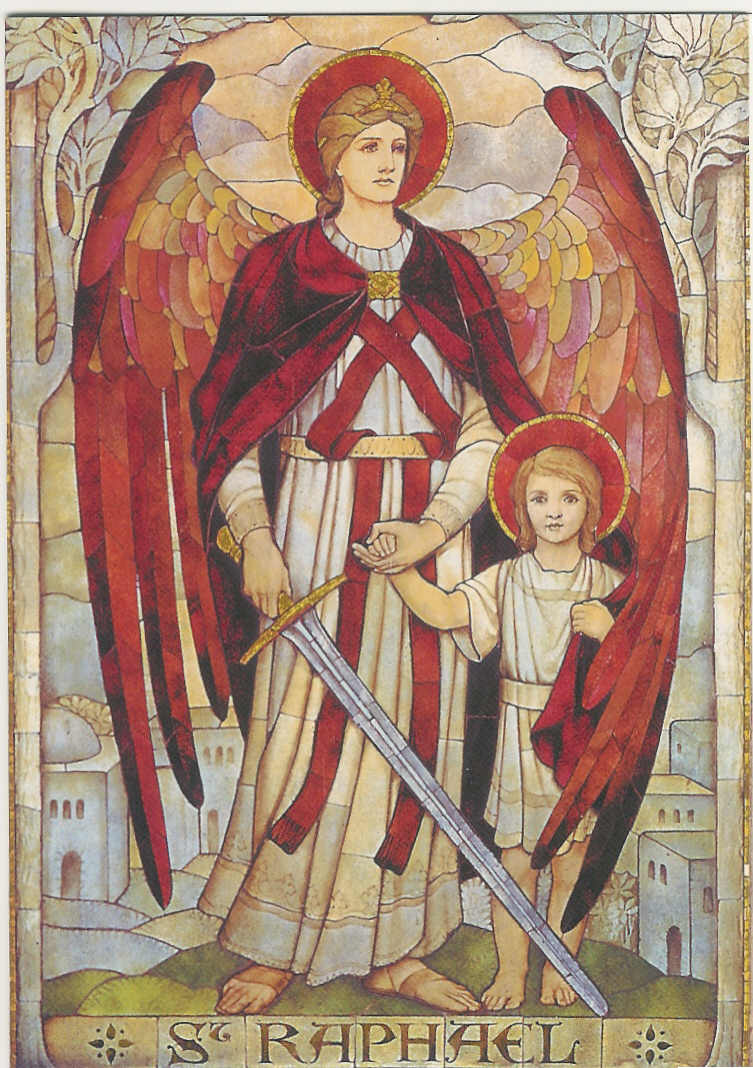
Despite the wide renown and veneration of the “Solar” and “Lunar” Archangels — respectively Michael and Gabriel — the essential features of the hierarchy of the Tree’s Guardians are expressed in a less conspicuous but no less significant figure, the Lord of Glory — Raphael.
Although in the primary sources of Judeo-Christian tradition this Archangel is mentioned only in the Book of Tobit (non-canonical for the Orthodox and deuterocanonical for Catholics) and in the apocryphal Books of Enoch, the traditional descriptions of the manifestations of Hod’s power in the world of Briah, and more generally of the hierarchy of this Sefirah — “Sons of God”, “Bnei Elohim” — are quite extensive. Grimoire literature pays Raphael no less attention than Michael, setting him against such supreme Destroyers as Astaroth, Asmodeus, Azazel, Samael, and Adramelech.
Just as Gabriel supports the Middle Pillar of the Tree, Raphael and Uriel respectively uphold the Paths of Severity and Holiness, and it is Raphael, as Keeper of the foundations of the Left Column, who serves as the first line of defense against destructive forces.
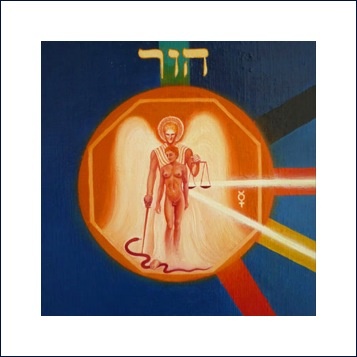
The sphere of Mercury (Kokhab), which Raphael rules, is the domain of free creative thought that describes the world and formulates the world’s laws.
The Air spheres, also belonging to the Archangel’s symbolic field, become lighter, more mobile, and faster.
The Archangel’s name goes back to the root “rapha” (רפא) — to heal — and can be translated as “Healer of God“, which also indicates Raphael’s leading role in the confrontation with destructive powers. The same is indicated by the name of the Dark Gate that Raphael prevents from being opened — Shaarimot, “Gates of Death”. The angel’s name number — 311 — and its root — 5 — link the Angel with free will and the pentagram as a symbol of the microcosm, which, together with the number of the Sefirah Hod — 8 (one of the numbers of the manifested world), points to Raphael’s liminal position, reinforcing the microcosm in the manifested state. The Divine name of this Sefirah in the world of Atzilut — Elohim Tzevaot (אֱלֹהִים צבאות – God of Hosts) — again emphasizes the key position of this “militant” Sefirah and its Spirit, since “hosts” here are traditionally understood not as “Heavenly” hosts but as “earthly” ones — that is, the creature’s capacity to resist destructive influences. It is precisely this “liberating activity of intelligence” that Archangel Raphael embodies. The Book of Enoch says the same, naming Raphael “the Angel of the spirits of men.”
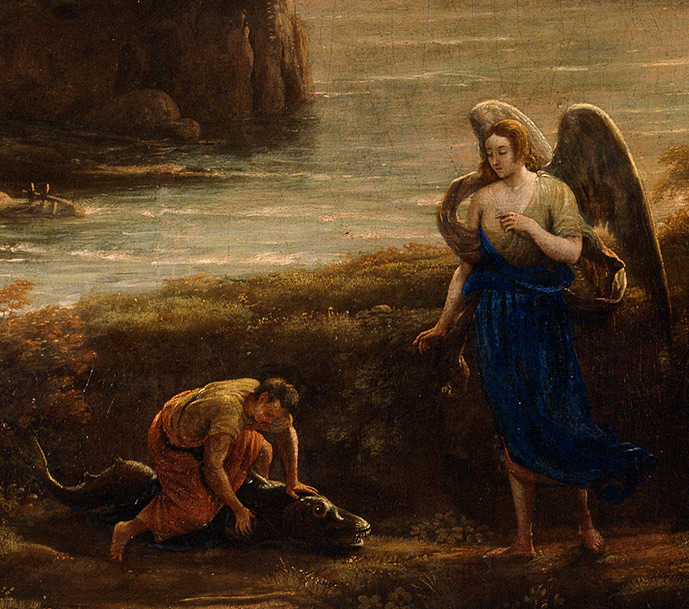
Although Raphael is usually described as the spirit of the Sefirah Hod, some sources place him in higher spheres, notably placing him at the head of the order of the Ophanim (“Wheels”, אופנים) and associating him with the Sefirah Chesed. It is clear that Chesed, as the “higher” manifestation of intelligence, whose “lower” manifestation is Hod, is entirely accessible to Raphael’s ascending activity.
“Archangels,” the “Sons of God” (בני האלהים), as a manifestation of Hod in the world of Yetzirah, thus also represent the “spiritual immunity” of the mind — its capacity for self-purification, self-healing, and self-protection.
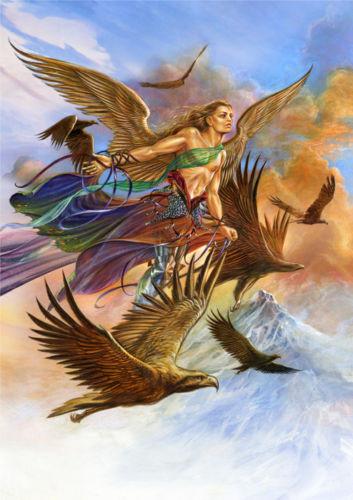
All those demonic, destructive forces that Raphael opposes penetrate the mind through flaws in understanding, and the name of the demonic sphere “Samael” — “poison of God” that is — “Lie,” — suggests that often it is substituting concepts consciously or unconsciously, distortions of ideas, that underlie the mind’s destruction. As mentioned, in its most extreme forms this problem is expressed in the figure of Astaroth, although it is also characteristic of other distorted manifestations of the mind.
Thus, the Divine Healer — Raphael — is the force of “transparency,” of the “health of currents,” manifesting on both the macrocosmic and psychocosmic levels as the system’s striving for self-control, self-protection, self-organization, and self-differentiation. The image of this Archangel and engaging with his manifestations can be useful to a Magus seeking clarity of thought, avoiding frivolity and other mental traps.
Leave a Reply