
Holiness and Severity
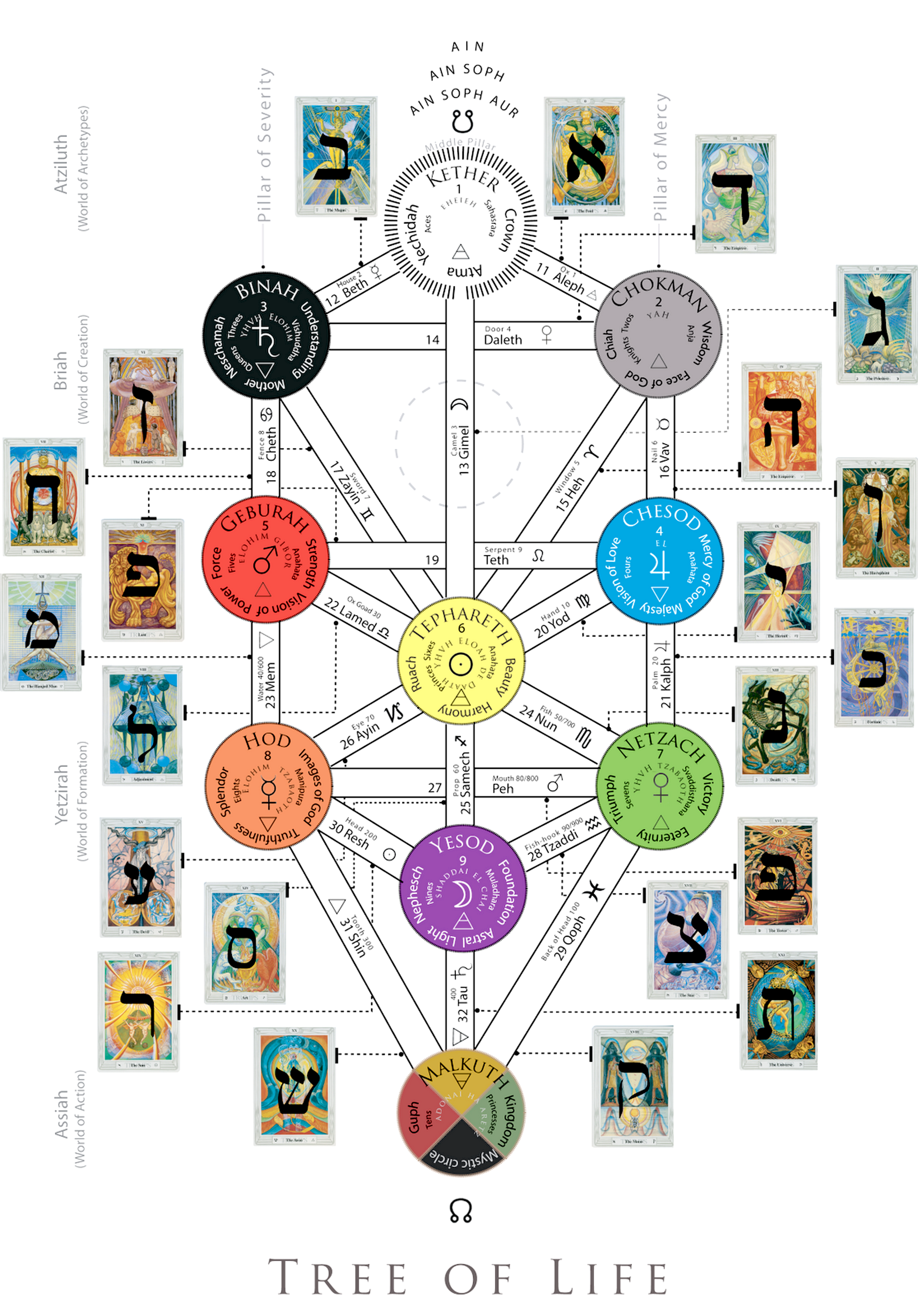
The evolution of consciousness, described and mapped by the Ascent up the Tree of Life, can follow several Ways.
Conventionally, these Ways are called the “Way of the Serpent”, the “Way of Wisdom”, the “Way of Holiness”, and the “Way of Severity”.
The First Way includes passing through all sephirothic stages, their complete assimilation, awareness, and incorporation into oneself.
The Second Way implies ascent along the Column of Wisdom, and is considered the “shortest”, though the most difficult, Way.
Integration, passing through all dualities without leaning toward either of their poles — necessary on the middle Way — often becomes a difficult or practically impossible task for a real Wayfarer; therefore, a consciousness striving for accelerated evolution, depending on its individual characteristics and level of awareness, most often attempts to proceed either along the “Right” Column, the Column of Holiness, or along the Left Column of Severity.
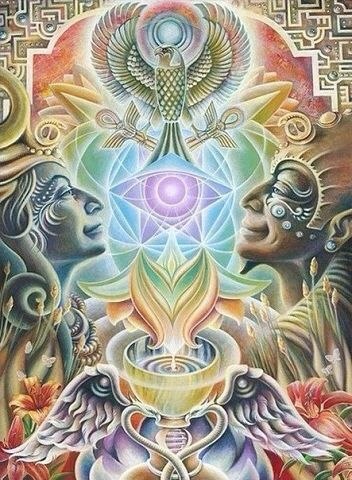
Having entered the Tree, having found its path of development, a consciousness immediately faces three possibilities: 1) awaken the Dragon, overcome the keshet, and enter the sphere of the “reflected” light of Yesod; 2) perceive the “light of Unity“, be enchanted by it, and step along the “solar” Way into the still “imperfect” unity of Netzach; 3) adopt a “pluralistic” perception, be enchanted by it, and step along the Way of “all-acceptance” toward the still “imperfect” breadth of Hod.
Clearly, for a traveler at the very beginning of their Way, the first possibility is unlikely and hard to achieve, and in practice, we have two distinct groups of neophytes — worshippers of “universal oneness” and devotees of “universal understanding“.
With further development, the first group turns into cheerful devotees of light, like Christian evangelists or Vaishnavas, while the second becomes grim death-worshippers, such as aghori or LaVeyan “Satanists”.
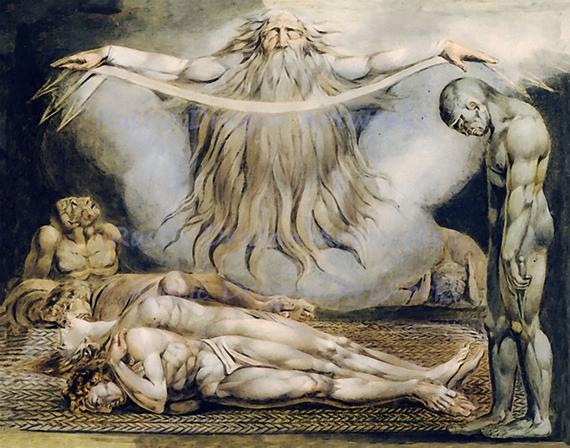
On their “ideal” Way, the former then advance toward the Mercy of Chesed, and the latter toward the Severity of Geburah. However, this step requires overcoming the Paroket, and therefore, a certain degree of synthetic integration of consciousness, which is difficult to achieve in “extreme” modes of practice. Hence, most often travelers who have “ignored” Yesod, confronted with the need at least partially to become aware of the harmony of unity and multiplicity, do not find the strength to attain it, and thus remain at the levels of Venus and Mercury.
If, however, the adept of universal oneness nevertheless finds the strength to walk the Way of Equilibrium, and the adept of universal acceptance experiences death not as a romantic image but as an ultimate reality, such Wayfarers reach the levels of Jupiter and Mars respectively, and understand that one can realize oneself either through imperative Authority (Jupiter) or through active Power (Mars).
The next step along the “extreme” columns is even more difficult, because it requires overcoming the Abyss and confronting its Master. “On the Right”, such a possibility is afforded by Love, and “On the Left” by Power.
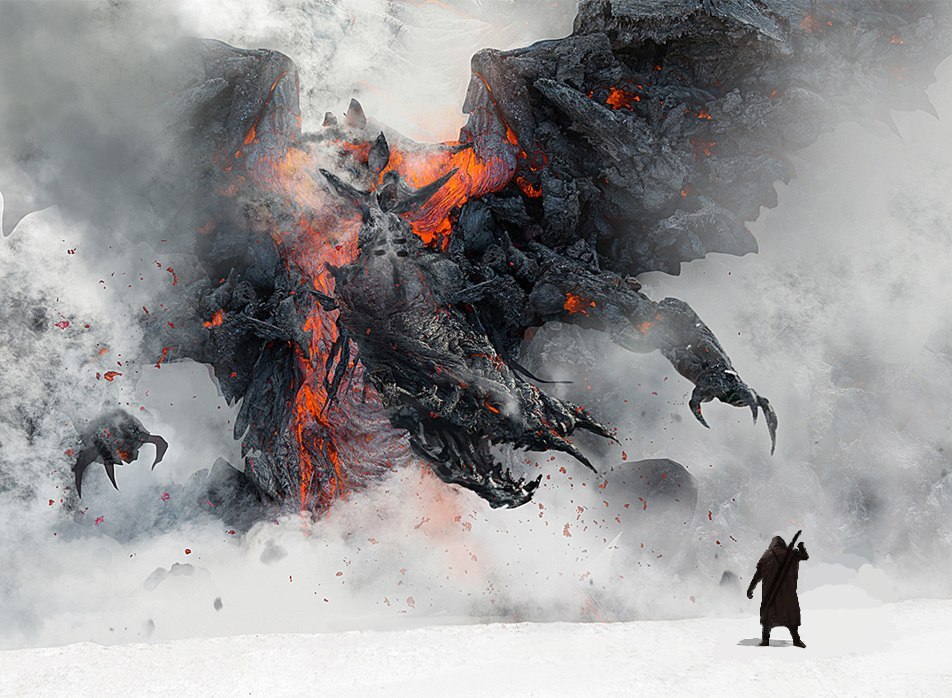
If the consciousness of such a traveler can attain the highest integrity, then, crossing the Abyss, the “White” Saint enters the sphere of the All-Merciful Father, while the “Black” Saint enters the sphere of the All-Engulfing Mother.
And at their final point, both Ways merge in the transcendental unity of the Crown.
We should note that both Ways demand enormous effort and strain.
Nevertheless, when successfully undertaken, each of them allows one to traverse the Tree in “four” steps of the Tetragrammaton, and thus significantly shortens the time of consciousness’ evolution.
The tree is not linear. And not for everyone is the short path natural. One can wander many lives from right to left, from left to right, weaving a complex pattern in space and time.
An extremely accurate remark regarding Binah and Chochmah and the exit into them as an explanation of the equality of both sides.
Esteemed Enmerkar. First, I want to thank you for your work. With your rich experience in synthesis combined with polished logic, you illuminate the paths of others.
One of your articles, “Holiness and Severity”, has become a thorn in my mind. Three months have passed, but I have been unable to comprehend it. In the article, you mentioned aghoris. While their consumption of corpses can still be romanticized as training willpower to overcome disgust, the use of passions for tempering will, bypassing dependency on them, looks absurd. It’s like using drugs to overcome the addiction to them. However, in your description, “severity” is one of the paths of evolution. And the “dark” saint, having all the symptoms of infection, is not infected. If his “darkness” is not a shell, then what is it?
In fact, indulging in passions, permissiveness, and debauchery, which are often attributed to what you called “dark saints”, are not characteristic of them. There is a big difference between indulging in passion and experiencing passion. The former means enslaving consciousness to passion, identifying oneself with it, and thus leading to degradation and loss of strength. The latter means “granting” passion to itself, distancing from it, refusing to maintain any connection with it – as in the form of indulgence or struggle. Therefore, this action leads to the “extinguishing” of the stream of passion, devoid of the sustaining support of consciousness, and, consequently, to actual liberation from it.
Thus, just as the “white” saint deprives vices of support by identifying with the “pure light” devoid of shadows, the “dark” saint deprives vices of support by identifying with absolute darkness, in which there is also no shadow.
Nevertheless, in practice, the line between “experiencing” and “indulging” is very thin, and therefore, indeed, very often dishonest practices call “experiencing” what is actually indulgence.