Pleasure in Nihilism
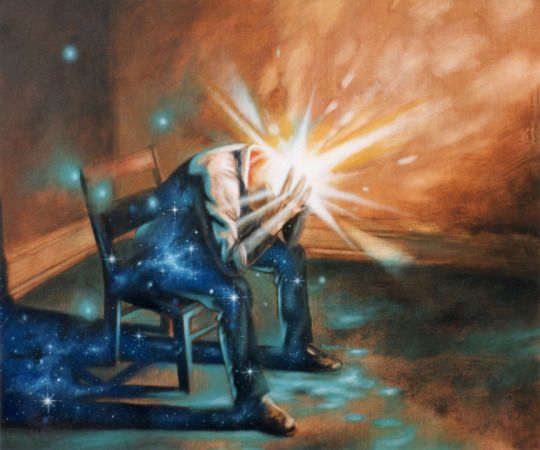
As soon as a person understands the falsity of a world shaped by arbitrary interpretations and destructive forces, he experiences a profound disappointment which, if seen as a stimulus for growth, can become the impetus to overcome the first Abyss and enter the Tree of Life. Yet, approaching that chasm, the mind encounters Choronzon for the first time, the demon of despair and negation; unable to withstand the encounter, the being may fall into nihilism and even find a certain pleasure in it.
The point is that having been convinced of the world’s falsity and its illusory nature — having destroyed faith in its reality and thus denied its existence — the mind easily slides into the opposite extreme: an emphasis on non-being.
Just as those who live at the Base of the Tree sincerely and firmly believe in the “objectivity” of reality, convinced that the world certainly exists, the one who has fallen into Choronzon’s first trap comes to see the world as an empty illusion, a dream devoid of any reality.
At the same time, broadly speaking, both assertions, as we have already discussed, are equally limited, like any single pole of a binary, and only by integrating them can one obtain a picture of the actual state of affairs.
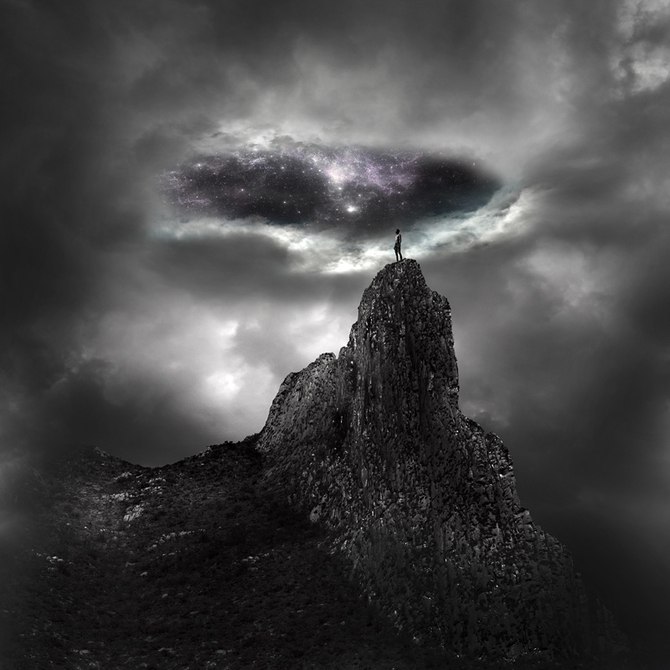
Nevertheless, to a limited mind the Abyss of nihilism is as attractive as the Abyss of absolutism, though it appears more exotic, which gives it a certain air of elitism. It is commonly believed that negation is a direct consequence of doubt, and therefore the result of inner work or personal evolution.
One often observes how proudly people proclaim “everything is vanity,” “life is shit,” relishing a certain gothic air about themselves. Characteristically, they assert this even when no one asks, becoming a kind of “preacher” of nihilism.
Indeed, this image and all its dark trimmings draw a clear boundary between its bearer and “ordinary people,” and therefore enable one to attain a certain purity of energies and thereby some insights. At the same time, without support from the opposite pole of the binary, such a view is unproductive; it prevents the mind from synthesizing and integrating, and therefore obstructs its development.
The slide into negation is very characteristic both of beginning mystics and novice Magi, the latter often masking it as a “struggle with the ego” or with the “sense of one’s own importance.” Yet in fact, denying is no more productive than “believing” in the world, although it may appear to be something “advanced.”
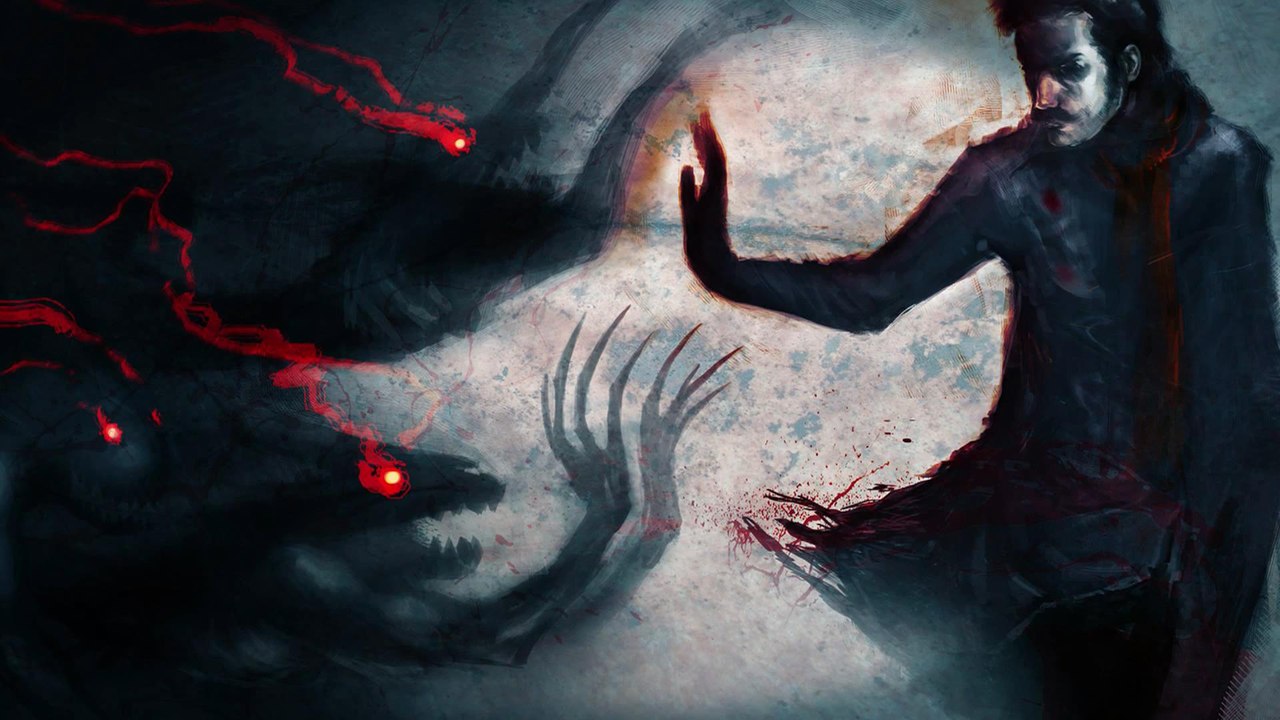
The Magus also understands perfectly that “all is vanity,” but he is equally certain that this very “vanity” is the field of battle in which he seeks his freedom. Although the world for the Magus is a product of his mind, both acknowledging its ultimate reality and denying its existence prove to be equally unproductive. It is crucial that the notion “all is vanity” for the Magus includes the understanding that he himself belongs to this “vanity,” whereas for the nihilist the vanity is everything except himself.
Viewed from this angle, nihilism turns out to be merely a form of pride that places one’s mind “outside,” in the sense of — “above” — others. And it is precisely this pride that gives the sense of “rightness” to such a perspective. The mind fallen into negation (as, indeed, the mind stuck in affirmation) is occupied mainly with seeking others’ faults and imperfections, while neglecting self-examination.
For the Magus to say that “the world exists” is as limiting as saying that “the world is an illusion”; both statements are for him equally true and equally false.
Just as the blissful reliance on materiality as a source of goods and pleasures is a dead end and leads only to the accumulation of empty experience, deriving pleasure from negation drives one toward destruction and self-fixation (since in its own terms such a mind does not dare to doubt itself).
The Magus’ “Middle Way” is not about avoiding binary poles, but about integrating them within oneself: acceptance and negation, being and non-being, finding not annihilation but mutual complementarity and reflection of the binary poles.

The problem with many modern interpreters is that their explanations of the illusory nature of the world are actually a substitution of one illusion for another. Or they present us with some specific manifestations or consequences of illusory nature as the ultimate truth, as the very essence of illusion. It turns out that illusion is unique for everyone. It would be more correct to talk about the degree of ignorance or the degree of immersion in the illusion. Exiting social society, discovering the influence of parasites – that’s the first way out of the illusion. Discovering the illusory nature of your desires and the illusory nature of the parasites themselves – that’s the second way out. And there is even a third. And perhaps not the last one. Sliding into one of the extremes is a too common phenomenon. And one of the extremes is fixation on the current worldview, no matter how productive it might seem. After all, the binders themselves are also part of the illusion.
Unfortunately, the new worldview, like complete ‘no-image’, places the researcher in a difficult position. Old methods are unacceptable in the new picture, and new methods still need to be found. At the initial steps, telling the student about the illusory nature of parasites is not effective 🙂 Although… probably even such an approach is appropriate with complete immersion in the “School.”
Why are old methods unacceptable in the new worldview?
Rozz, imagine – you studied for 10 years to work with chakras and suddenly “oops!”… it turns out they don’t exist at all 🙂 And all the Knowledge baggage about colors, sounds, properties of chakras, and consequently the baggage of Methods can be thrown in the trash since in the new realities (new worldview) none of this exists/works 🙂
I cannot imagine this. ) That chakras would just ‘oops’ – and disappeared. In my humble opinion, the worldview cannot change completely; it can be supplemented, complicated, revealing new levels, but the base remains. Otherwise, how would one identify oneself as a human?
If you ask an Indian how he would advise you to identify yourself, he will, taking away a delicious roast beef from you, tell you about chakras, subtle bodies, the greatness of Hindu gods, meditation, and self-limitation… If you ask the same thing of a “Viking,” he will offer you a piece of juicy meat and recount glorious battles, tricks, and the exploits of Northern gods over a mug of wine, and… don’t ask him about chakras! He doesn’t have them!))) If you are a Magician, you can comfortably exist in both ways of describing the world despite how they differ. And if necessary, then in the third and the fourth 🙂
What’s the deal with the Hindu? For me, chakras exist, they can be seen, both front and back, and they are indeed colored, and not only the color is visible. I have nothing to do with yoga. And chakras do not at all hinder studying runes or voodoo dolls, for example, or Russian shamanism, etc.
If we simplify it, for me, chakras exist if needed, and do not exist if not needed))
As long as we exist, as long as we are relevant – we inevitably wander among illusions and constantly replace one illusion with another. Of course, any description of the illusory world is also illusory. Of course, any categories used to describe the illusory world are illusory. But the category of illusion itself is just as illusory. Therefore, asserting that everything is real, and asserting that everything is illusory are the same thing 🙂
Illusoriness is the supporting framework of the manifested world. It has little in common with the human category of illusion. One can philosophize about illusoriness with all their mind and still not see it at the core of a particular observed phenomenon. Illusoriness is not the opposite of reality; it is the mechanism on which what we call reality is built. An important property of this mechanism is that a person can change the degree of influence of so-called reality on so-called themselves. You have to choose, wander among illusions or use illusoriness “in your interests.”
In the context of the accepted Myth in this blog, “illusion”, just like “reality”, is a way of relating to the world, that is, more like a category of consciousness rather than a category of being.
In my opinion, illusion is what turns being into cynical mockery, or war. For example, with the mind.
You write, “Illusoriness is… the mechanism on which what is called reality is built.” – By whom is it built? And, importantly, – Why?
……………………………Properties, categories, mechanisms, words – are creations of the mind.
Absolutely right, the world is changeable.) Illusions are just ideas reflected in reality. We ourselves set the boundaries of illusion. So why flee from our ideas, let’s just make this world better.
If we talk about the game, feeling my individuality fully, certain actions occur without actions. I myself want nothing but to be and to know. And I remember this in about 30% of reality cases. I.e., I live based on this as much as possible with my ego. And on the way, I make it free. So, from this point of view, there are situations where you need to work on yourself, on your individuality. Then, you watch your manifestation as an observer, yet at the same time, you do strange things.
I would not mix the concepts of reality and illusion. If one analyzes it in detail, reality is a collection of several energy spaces. It is almost always in an originally maternal unchanged state. By learning to interact with these spaces, one can make changes to reality.
Illusion, on the other hand, refers to the games of consciousness, concepts that are invented and seem to be layered on top of reality. This is something that can be changed by simply asking a question about the reality of a particular phenomenon, perspective, or concept.
The concept of reality is deeper and more fundamental; it is like plasticine from which a person shapes their life, but the basis of the plasticine is unchanged.
“The totality” is an illusion, “several” is an illusion, “space” is an illusion… ) And “unchangeable” is also, just like “changeable”. It’s the same… And it only works in totality (illusion;)) and in relation to other illusory “illusions”. Otherwise, of course, shape whatever you want, the main thing is to construct the illusions into a system that confirms itself on both the positive and negative banners, and that everything works. Otherwise, Chaos will scatter (narrow) into incomprehensibility and hang (fall) like a fool into nothing with nothing, although this has already become a certain given, one can push off in creation from such a “given”.=)
Totality and several are just connections. Is space an illusion? Then the soul is also an illusion, just like time?
Energy has polarity and duality, and possesses certain properties. Does that mean this definiteness is also an illusion?
Well, you know… It is not worth falling into fantasy.
So what is reality, according to you?
I would like to add. Chaos neither narrows nor expands anything; it only is movement. Of course, this direction exists independently, but its property also depends on the dominant: darkness, creation… etc.
“Totality and several are just connections. Is space an illusion? Then the soul is also an illusion, just like time?
Energy has polarity and duality and possesses certain properties. Does that mean this definiteness is also an illusion?” – This is just your representation of the process, often based on “knowledge” – ready-made pictures through which you reinterpret processes. ) The representation is workable, structured, illusions are tied to the syntax of “understanding”. “Duality” is manifested in the initial act of cosmization of space, an initial principle, although, there is no such thing as “space” or “time”. There is the absence of any movement and rest, the absence of absence and presence, of representations, syntax, and other constructs – Chaos, Nothingness. But then something arises.. Duality. “Energy” is born when there is a difference in potentials. When it is possible to create a “differential”, a “flow” is created. Chaos is your “prime plasticine”, potential but unvectorized. The means of creating order – Cosmos – are exceedingly numerous. An interesting point: potential unvectorized energy of Chaos, “separated” from the Source by acquiring a vector and engaging in some “work” may strive back to the Source. See, in the Cosmos, in any manifested process, energy “leaves” into nowhere, only a small part of it is “useful”, the one that “does work”.
A quote from the article: “since such consciousness does not dare to doubt its own reality.” Question: How can one doubt their own reality? One can doubt the interpretation of their own reality, but in order to doubt their own reality as such, one must actually exist, and what is there to doubt?
Quote: “The magician also perfectly understands that ‘everything is perishable’, but just as there is no doubt for him that this ‘perishable’ is the battlefield he is seeking his freedom on.” I have long wanted to ask, what do you understand by ‘freedom’?