
The Magus’s Great Doubt
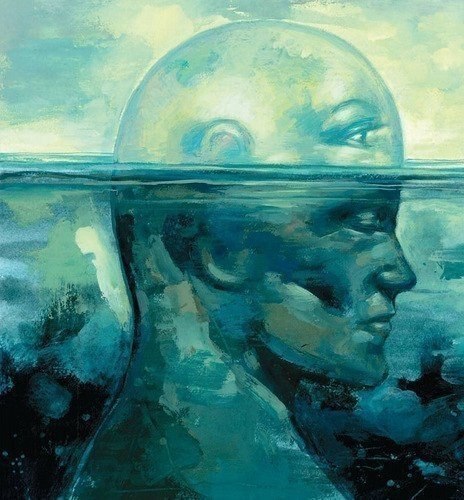
Doubt for the Magus is not merely a word, nor even a motto. Doubt for the Magus is a method. A method by which he leads his mind through a labyrinth of dead ends and destructive forces — toward development, toward expansion, toward the Abyss, beyond which genuine creativity begins.
The Magus lives in a world of probabilities, where causes and effects merge and trade places, where there can be no certainty about anything except his Way.
Doubt for the Magus is the instrument with which he undermines the very foundations of his chief enemy — his separateness, his self-enclosure, his egocentrism.
All Magic, all mysteries, all the riddles of the world with which the Magus persistently comes into contact are meant to loosen his certainties, to loosen his rigid views, and to give the mind the fluidity and plasticity necessary to flow freely and easily from one cognition to another, from one awareness to another.
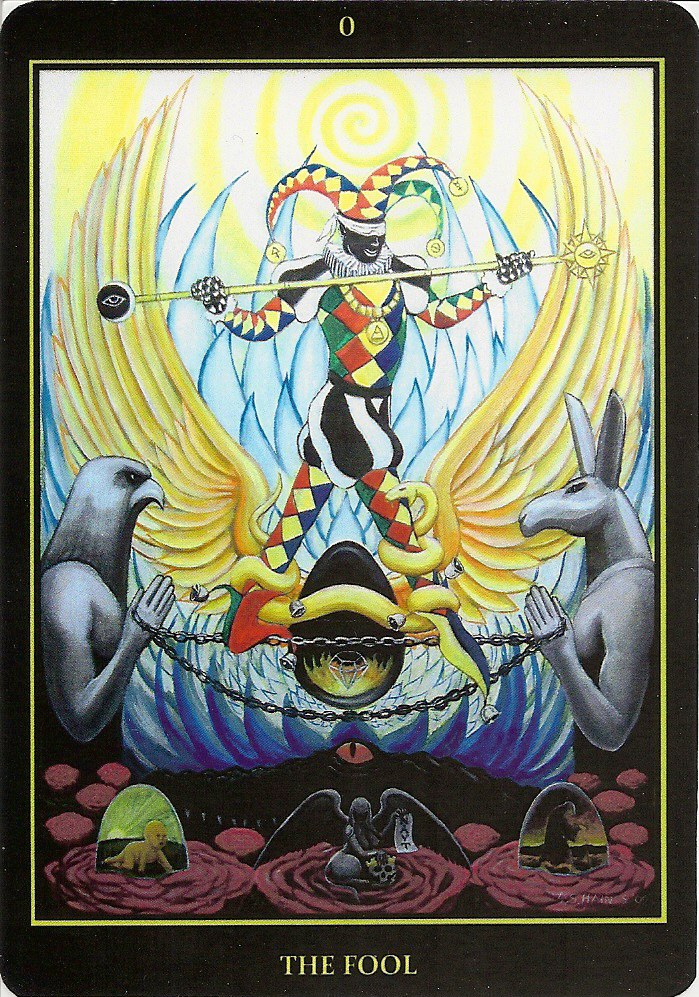
The Magus is a supremely skeptical being. “I’ll believe it when I see it,” “do it and you’ll see” — these are not phrases from his life. The Magus works with the world, flows through it, but does not take it seriously. The Magus does not believe; the Magus acts. He understands that the world is an illusion, not in the sense that it does not exist, but in the sense that its existence is dependent on the mind that describes it.
Certain causes give rise to certain effects, but when the cause itself is indeterminate, the spectrum of its consequences is infinitely varied. The Magus’s world is such a world of infinite diversity of interweaving energies, none of which possesses independent existence.
When the Magus says that he doubts, he does not mean that he believes the opposite; he means that he embraces the full field of probabilities, all the possibilities that open up — for the development of the mind.
To doubt, for the Magus, is to remain in the flow, to remain in motion in which arising and passing away are not separated into distinct stages.
Blow after blow, doubt after doubt — the Magus leads himself to the edge of the Abyss, and then — easily and without effort — falls into it, either to dissolve into Infinity or to awaken as a Master.
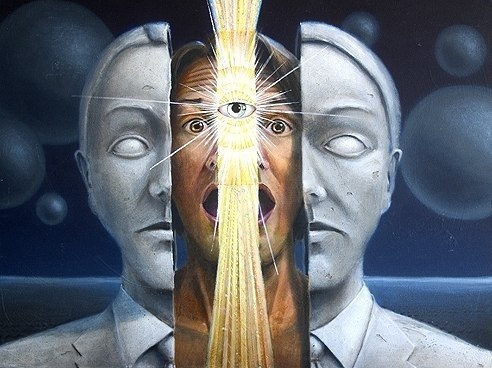
To doubt, for the Magus, is to be in a state of alertness, attentiveness, and openness of mind.
Since the world in which the Magus lives is eternally mutable and fluid, the Magus’s mind is likewise trained for free movement, to flow from state to state. Nevertheless, the Magus’s actions and the responsibility for them are final and irrevocable. The Magus does not ruminate over his failures, nor does he lapse into complacency over his victories because he lives in an ever-indeterminate world. Nevertheless, he owns his actions and bears the full responsibility for where those actions lead.
The Way of the Magus is a constant revolution, a continual overcoming of what appears impossible and a realization of what seems unrealizable. And each such breakthrough is a new turn in the infinite field of awareness.
The Magus is a speck of dust in the wind, and the wind that carries it, and its source and destination. And doubt for the Magus is the very instrument by which he does not become stuck either in the condition of the speck or in the state of the wind, but enfolds everything within himself and includes himself in everything.
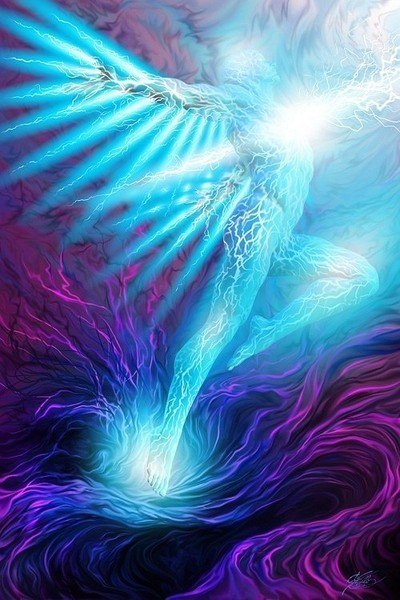
Hello! You have already written about overcoming the Abyss, but I’m curious about how this looks subjectively or what precedes it? Little enlightenments and restructuring of oneself, successful practices, experiments, you delve deeper and deeper into the World, trying to assemble a puzzle – that’s how I see it. And life does not cease to amaze, even when you glance a little more closely, it starts to amaze even more. It’s an amazing puzzle, it grows, changes, and complicates when you look at it, making your gaze dart between its pieces, when you assemble one side, the other falls apart, and there is no end in sight. But you speak of the Abyss – and I understand this as the chance to somehow see the final picture without assembling the puzzle myself, but what this Abyss itself is for me is not clear.
Subjectively, the Abyss looks like complete disintegration of consciousness, its complete deprivation of any vectors and orientations, like a moment of “total darkness,” behind which, however, real Light is anticipated. The fall into the Abyss is preceded by a deep and total disappointment in oneself and in the world, but not in the sense of nihilism or apathy, but in the sense of a deeply rooted and ever-strengthening feeling of dissatisfaction, a feeling not just that “you cannot live like this,” but that “you cannot live like this.” This disappointment is not a product of rejection, cynicism, or philosophy, it is a product of practice, self-knowledge, and growth of Power, and can be achieved only when the amount of Power is already very great. One could say it is the desire of Power itself to break free from conditioning, its inability to stay within the limits set by the current level of existence.
Isn’t the consciousness of the magician like a rock in the ocean to resist such oppressive thoughts? And the very thought of “you cannot live like this” – does it not contradict the very principle of playing for the sake of play? In the sense of the view on the diversity of reality without false expectations and representations of oneself as great and wonderful? In this, my view is roughly concordant with this author http://progressman.ru/2014/05/aims/
Everything is correct; consciousness is precisely such a rock. However, the personality formed within this consciousness under the influence of a destructive environment is usually also destructive. The abyss is not the destruction of consciousness; on the contrary, it is a breakthrough to its deeper essence. In this analogy, it is exactly the refusal to be a splinter on the raging waves of the ocean. But a splinter cannot suddenly become a rock; it must first stop identifying itself as a splinter. In other words, for the rock to be born, the splinter must first die.
The idea of “action for the sake of action” similarly reflects this desire to act not based on the whims of a limited personality, but from consciousness, manifesting itself in an infinite number of individual forms. A magician is a person of action, but his actions are not arbitrary in the sense that he does not follow destructive impulses created in the environment; rather, he is an active rower in the Great Stream of Force.
Thanks again for your wisdom.