
The Fire of Azazel’s Guilt

The striving for perfection is a fundamental drive of human nature. At the same time, when the mind realizes how far it is from perfection, it may either motivate itself toward development or, conversely, lapse into destruction. A sense of guilt, of one’s own “unworthiness” and “sinfulness,” when perceived by the mind not as a spur to self-improvement but as a destructive impulse toward self-abasement and self-destruction, is one of the principal destructive elements that render the mind ineffective. The idea of “punishment” (often in the form of self-punishment or even self-flagellation), presented as a path to atonement (as a misunderstood concept of sacrifice), frequently becomes a factor that ensnares the mind. Viewed from this perspective, the destructive feeling of guilt that “burns” the mind is personified by one of the important figures of the infernal pantheon — Azazel.
The name of this Demon, though rarely mentioned in the Grimoires (Agrippa identifies Azazel at times with Paimon, at times with Amaimon; identifications of Azazel with Samael and with Satan are also common), has deep traditional religious and mystical roots. It is well known that the ancient Jews (and perhaps other peoples) called Azazel the spirit of the deserts and offered the “scapegoat” as sacrifice.
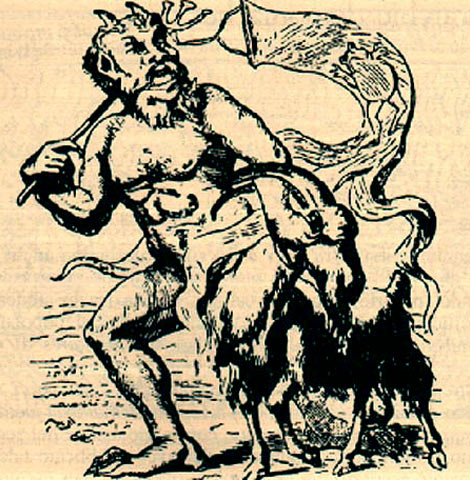
The Book of Enoch names Azazel as one of the leaders of the Grigori and accuses him of having
“taught every form of lawlessness on earth and revealed the heavenly secrets of the world. ”
The same source also says that
“Azazel taught men to make swords, knives, shields, breastplates, to see what was before them, and he taught them the artifices: bracelets, ornaments, the use of white lead and rouge, the painting of the eyebrows, the beautifying of the most precious and excellent stones, and every kind of coloured fabric and metal of the earth.”
Note that this description clearly pertains to the sphere of Pahad, Severity, and indicates that a distorted notion of justice and atonement lies at the root of Azazel’s destructive nature.
The name of the Demon (Heb. עזזאל) is rendered as “God’s strength” or “God’s Remoteness”; the first interpretation points to the demon’s connection with the desert, and both relate to the rite of the “sending away” of the scapegoat. In any case, the link between Azazel and the expiation of guilt is evident here as well.
At the same time, despite Azazel’s “fiery” nature, his opponent (according to the Book of Enoch) is not Michael but Raphael:
“And again the Lord said to Raphael: ‘Bind Azazel hand and foot and cast him into the darkness; make an opening in the desert which is in Dudael, and cast him therein. And lay upon him rough and jagged rocks, and cover him with darkness, and let him abide there for ever, and cover his face, that he may not see the light. And in the great day of judgment he shall be cast into the fire. And heal the earth which the angels have corrupted, and raise up the earth that I may heal it, not all the children of men may perish through all the secret things which the watchers have taught, and through all their wicked works; for all the earth has been corrupted through the works of Azazel: to him therefore give all sin.’”
The pairing of Azazel with Raphael — the angel-Healer — indicates that the way to overcome the burning fire of guilt lies not in countering fire but in healing, in restoring wholeness and fullness.
The general condition induced by Azazel in the mind is precisely self-destruction, as the Book of Enoch also indicates:
“And he said unto Azazel: ‘Thou shalt not have peace; heavy judgment is prepared against thee, to take thee and to bind thee, and release, intercession, and mercy shall not be unto thee…’”
Thus, in the symbolic field of the Desert Demon several components are important: 1) his “martial” — fiery (with elements of “dry” air) — militant, emotionally barren nature; 2) an emphasis on guilt, inevitability and the necessity of its expiation through punishment, suffering; 3) the path to confronting the demon runs through healing.
Thus Azazel is an activity of the mind that focuses attention on one’s mistakes and imperfections and drives the mind into the “desert” of despondency and self-destruction instead of opening paths to wholeness and actively overcoming imperfection through constructive awareness (Raphael as the angel of the intellectual process, of understanding).
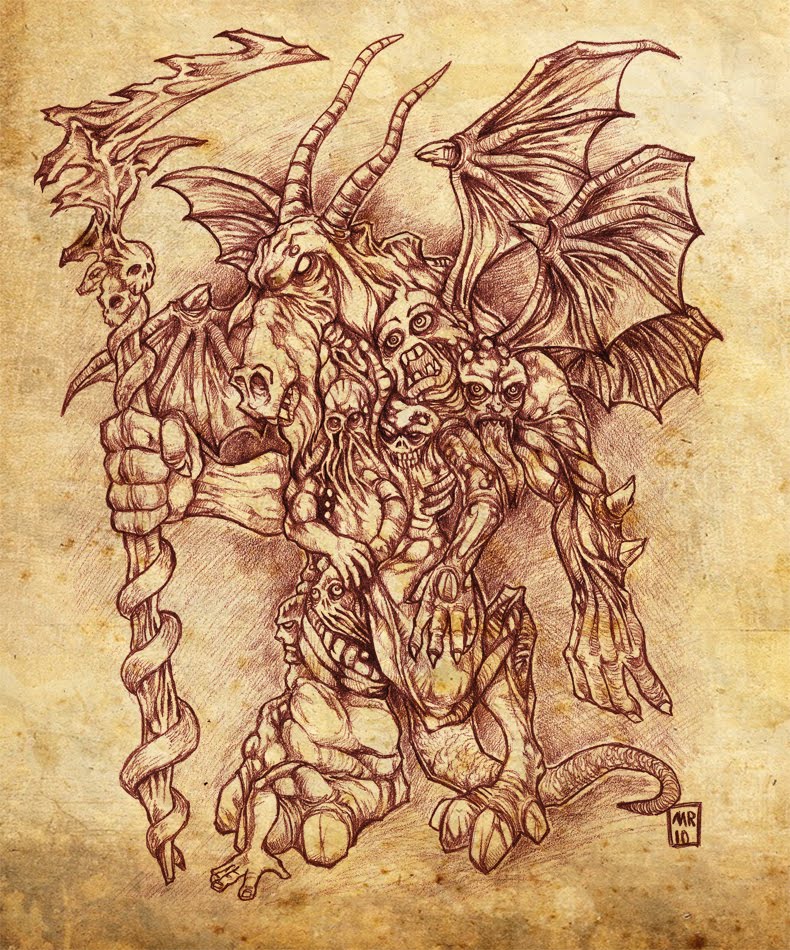
Viewed as an independent actor in the macrocosm, Azazel can be associated with the sefirah Geburah and has a martian nature (hence identifications with Samael), while manifesting in hot, dry desert places as the supreme expression of that very “dry heat” (hence Azazel’s role as leader of the seirim (שעיר) — the goat-like demons of the desert well known to the ancient Jews).
At the same time, Azazel is called a demon of the klippah Orab-Zerek — the “shadows” of Netzach — and in this sense Azazel’s “desert” is barren thought and empty reasoning, and the demon himself is an expression of the power of Nakhash — the world’s dividing tendency. In this respect, Azazel is opposed to Raziel — angel of Chokma and lord of the higher intelligence. It is precisely as a source of “false knowledge” that Azazel is mentioned in the Book of Enoch: “…all the earth was corrupted through the teachings and works of Azazel: to him assign all the sins.”
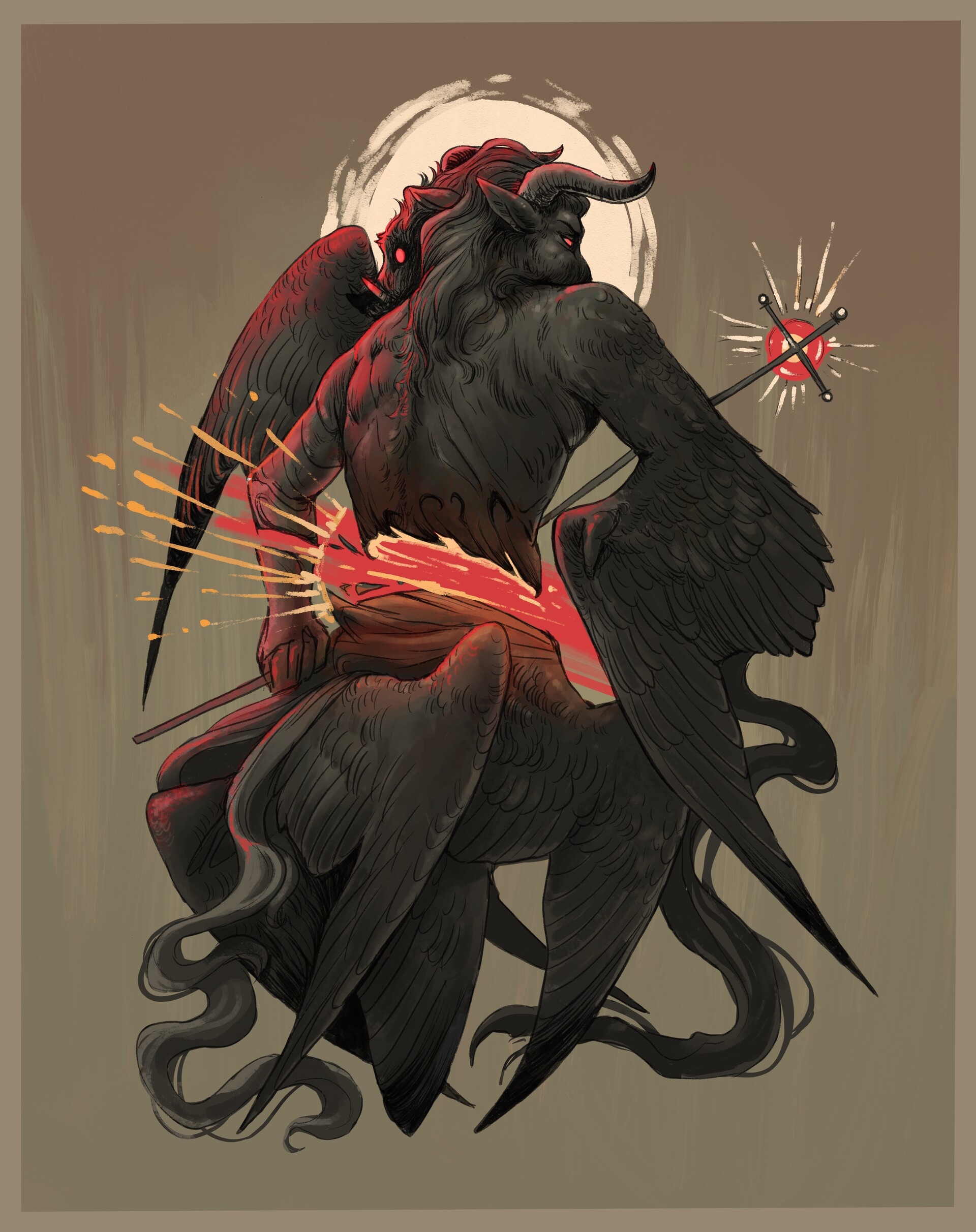
Viewed from the perspective of the psychocosm, Azazel embodies a destructive matrix of guilt, the “inner desert” of the mind into which it drives itself having fallen into the trap of a “sense of sinfulness.” It is in this sense that Azazel is sometimes identified with hell itself as a fiery place of torment.
And just as the way to withstand the dry heat of the desert is to bring in the fertile, life-giving principles of earth and water, so the way to counter the mind-consuming fire of “self-alienation” is to recognize one’s imperfection as an occasion for self-development, self-examination, and self-transformation.

It is worth noting that Raphael not only heals a person from blindness but also casts out Asmodeus from his wife, which, as it seems to me, is mistakenly considered a demon of lust. Although some say that he is a “judging being”, a demon who imparts knowledge to those who turn to him. And goetia claims his skill in counting sciences such as arithmetic, geometry, and astronomy…
Asmodeus is a somewhat different story. I agree that they are overly fixated on lust; it is more about wealth and abundance in a broad and often unwholesome (due to the fault of the person themselves) sense. And the wife is still a separate individual with her own demons…