Coins and Staves
As we have discussed elsewhere, Magic describes flows of energy in two ways – as vortices and as vectors – and accordingly operates on them using two technologies. The first group of technologies, Ceremonial Magic, born in the ancient Near East, rests on Desire, is founded on Authority, and employs above all the energy of baraka. The second, Galdr, whose homeland is the expanses of the North, rests on intelligence, demands great Power, and employs the energy of the waters. What is common to both groups is their clear understanding of the importance of well-chosen anchor points, which in the first case are used to form vortices and in the second serve as anchors for vectors of will.
However, both the form and the underlying ideology for choosing such points differ.
We have already said repeatedly Western Magic uses a «monetary», «sickle» principle for constructing supports, based on creating «standing vortices», whereas the Magic of the North relies on «Staves», «Stavs», which steer vectors of will by virtue of Authority. Let us repeat: Vortical Magic works through agents and «redeems» energy, while Vectorial Magic works with processes and «commands» energy.
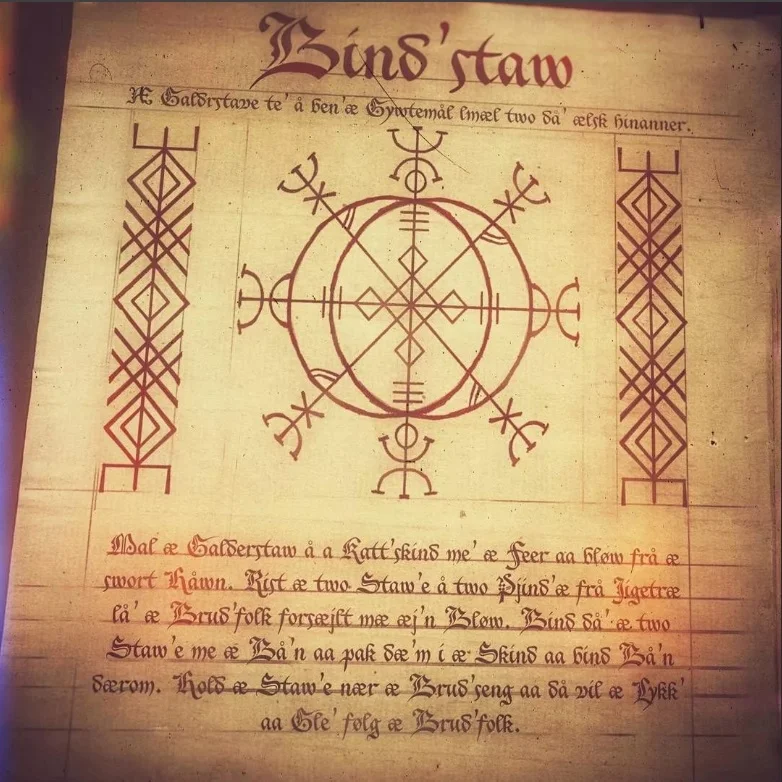
That is why the principal graphic instruments of the West are sigils (lit. “Seals”), a kind of sluice that governs flows of energy on the principle of a «gate», while the North uses staves (lit. “Staves”), which can be seen as the rudders of ships, transforming energy flows from within.
From an energetic point of view, creating sigils/seals is far less costly than carving galdrastafs, yet it requires greater attentiveness and ritual purity. At the same time, Galdr Magic requires purity of mind and a high degree of inspiration.
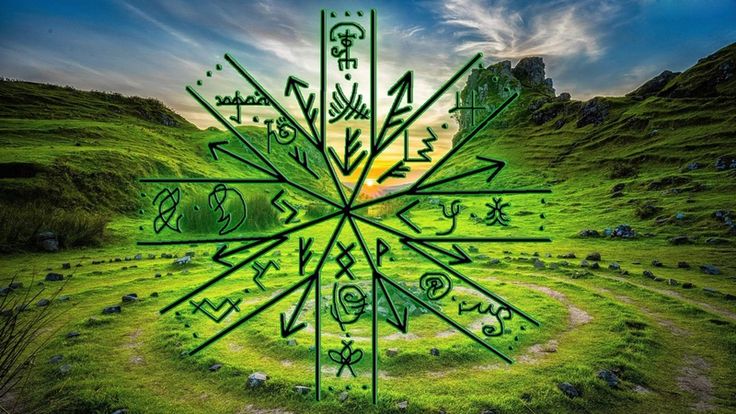
In fact, the use of these approaches is quite widespread outside the strictly magical context: for example, signs reading “No admittance” or “Beware of the dog” can reasonably be viewed as sigils (with modest operative force), while clothing labels like “Wash in cold water” or “Iron at 100 degrees” function as staves (such non-runic staves are traditionally called Galdramunda — “Galdr drawings”).
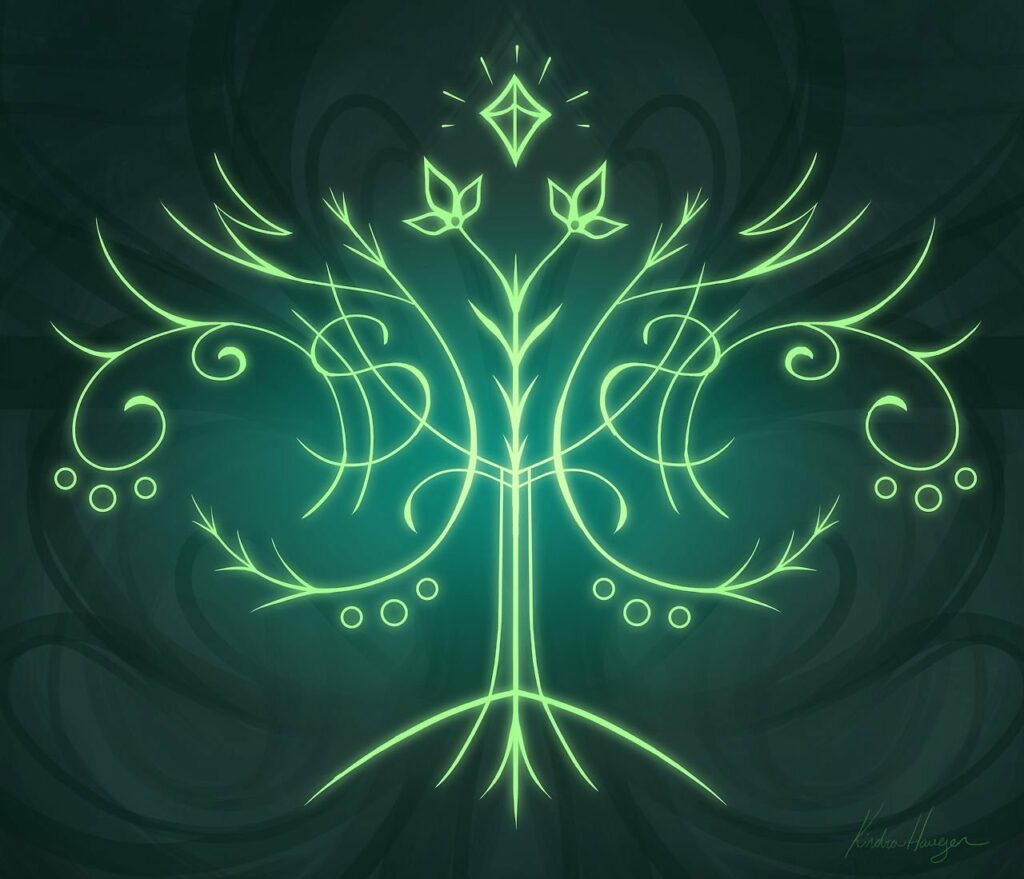
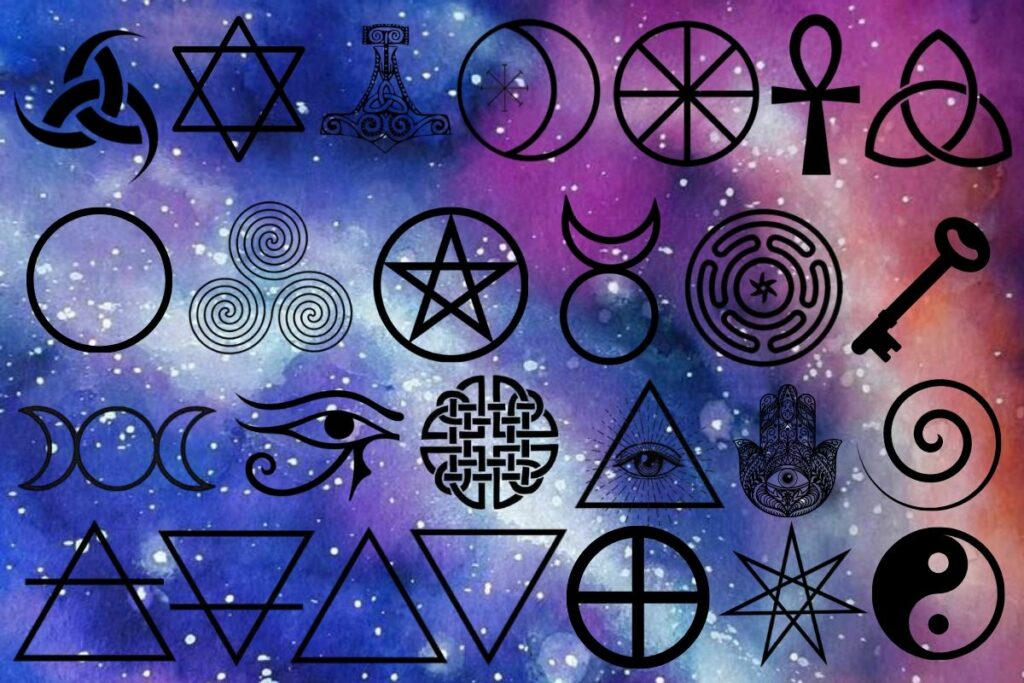
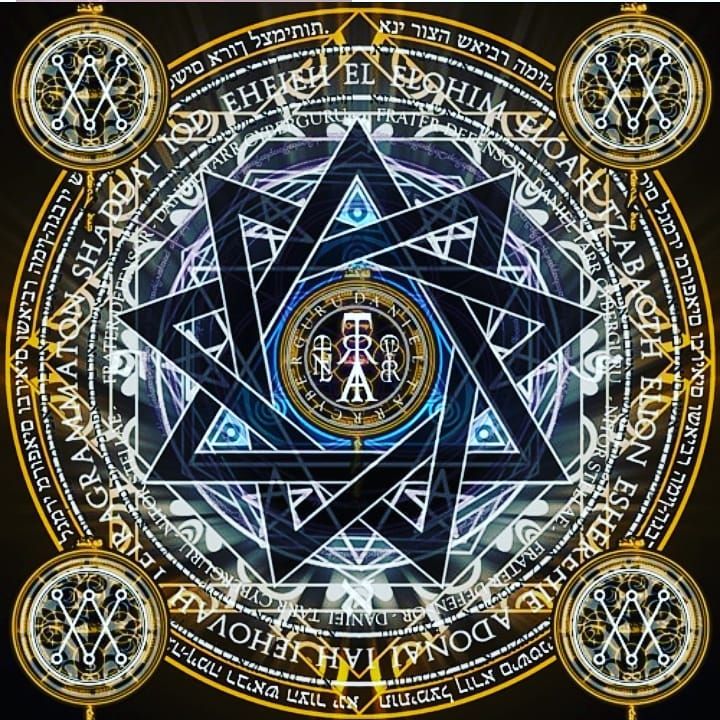
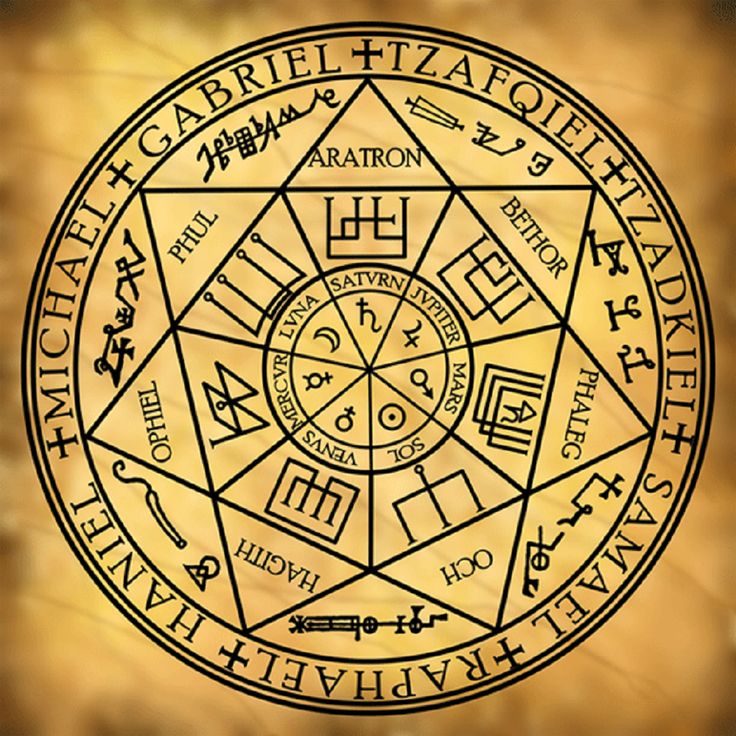
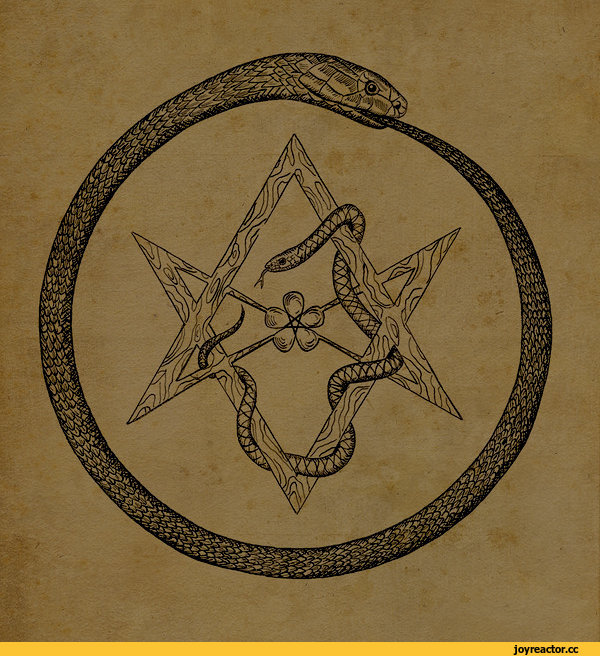
A ‘sickle’ is a precise aperture, a diffraction grating that splits vortices into components and filters them. The cross, the pentagram, monograms on icons and the Great Names — These are all ‘sickles’, opening some Gates of Power and closing others.
Stav is a “tuning knob”, a rheostat that changes the characteristics of the target vector. All schematic symbols on diagrams, maps, etc., operate on the principle of staves, guiding the operator’s mind (and energy) in the required direction.
As we have said, contemporary Magic often combines; nevertheless, the differences between them are not exhausted by «mechanics» — they lie, first and foremost, in the domain of the psyche: some Magi are more predisposed to vortical methods and others to vectorial ones. It is clear that a Magus aligned with fire or earth will tend toward vortical approaches, whereas one whose mind is more suffused with air and water will lean toward vectorial methods.
In any case, a Magus must clearly understand the mechanisms of what he attempts and what he works with, because without such clarity his actions will always be inefficient and will only hasten the Universe’s heat death.
If sickli is “money”, where does the magician initially get it? How is the energy that is in his (the magician’s) competence redistributed? This is, of course, purely theoretical, but still, through which “valves” does a person receive and use various types of energy? I have read many of your articles on this topic, but there are still questions… ) Does he become some sort of Ray? Absorbing such energy and uniting with it?
https://enmerkar.com/en/way/loans-of-power-and-magical-chains
Thank you.