Vortices and Vectors
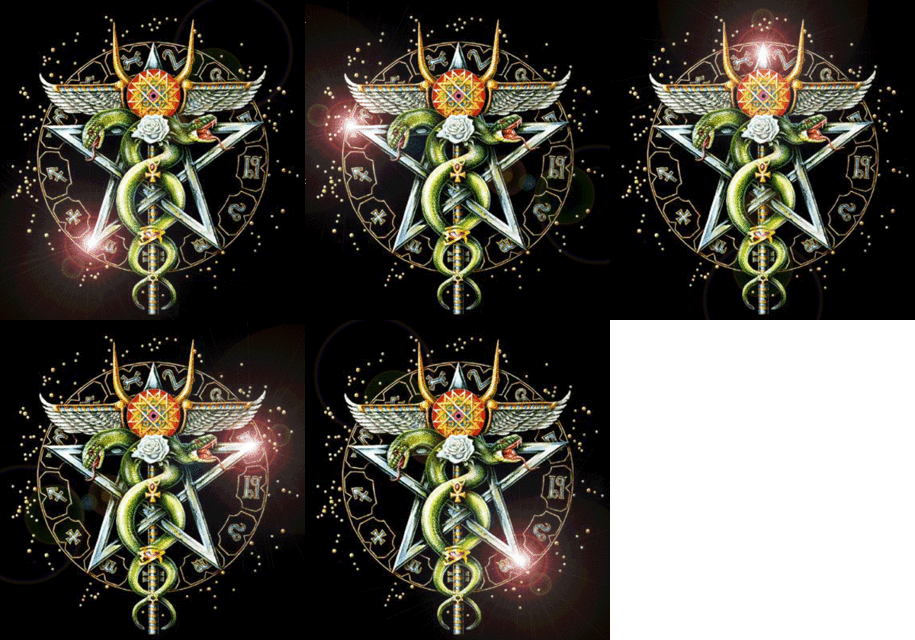
Schools of practical Magic, based on their ideological foundations, divide into two main groups.
Schools of the first group regard Power as a vortex-like movement of the world’s passive medium, a tourbillon — both as an individual act of manifestation (every act of will is seen as creating a vortex in the depths of the Medium) and as part of the Great Flow.
Schools of the second group view power as a vector field, made of vectors of differing lengths and directions, and thus consider the volitional act to be the creation of a new vector of power.
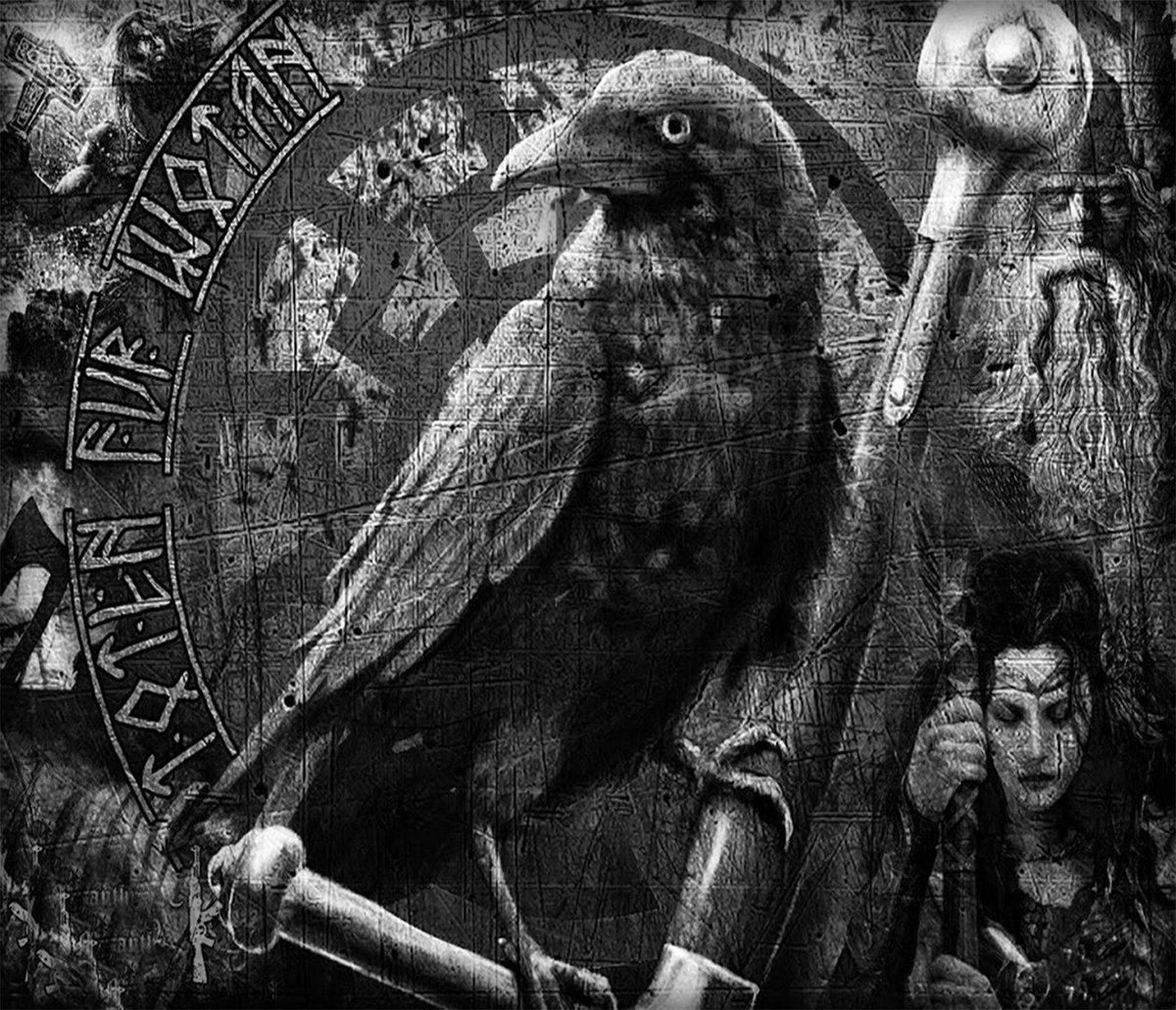
The first group includes, for example, traditional Western ceremonial Magic, while the second includes Runic Galdr.
At the same time, of course, it is important to understand that both perspectives not only enable effective practice but also complement each other in describing the cosmos.
Indeed, every volitional act produces a vortex-like disturbance in the world’s medium (according to the Tetragrammatical law), yet the will also has a vector nature, as it has both strength and direction.
Nevertheless, it is obvious that for different people (or different situations) it is more convenient to adopt one view or the other. You are unlikely to succeed in evoking a ministering spirit if you use only vector concepts, and likewise you will not rid yourself of external influences by relying only on vortical manipulations.
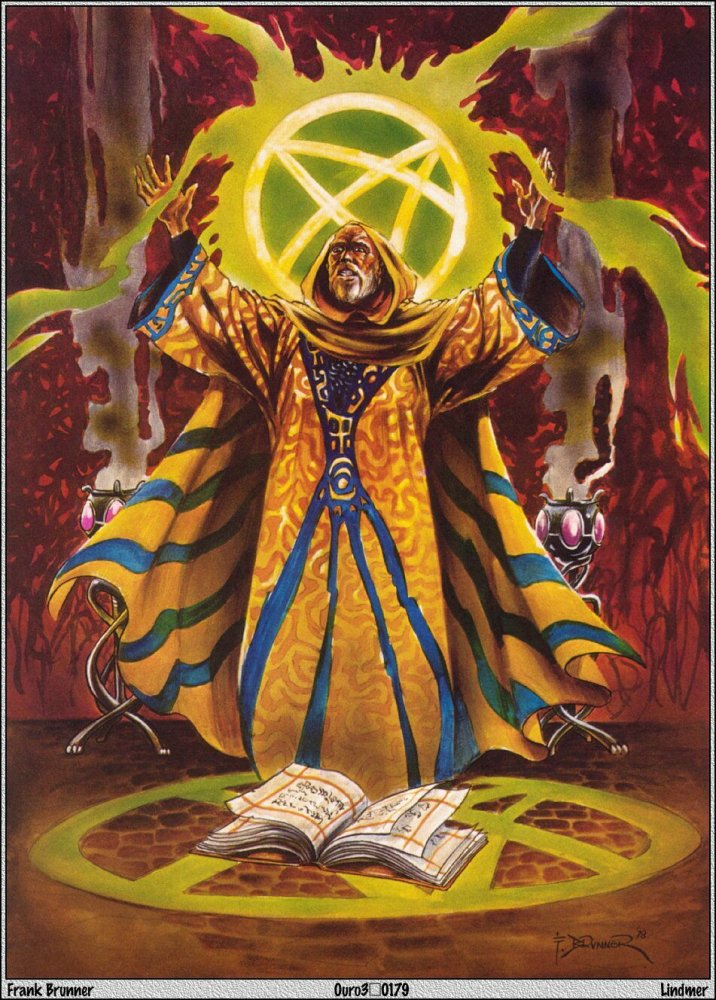
A Goetic Magus, when creating a pentacle and the method of evocation, must clearly envision how the evocative vortex will form, how it will pierce a rift between worlds and draw in the desired spirit. For this he must understand the nature and causes of the Tetragrammatical cycle and its transition into a dynamic state — the quadripolar quaternary (although a Magus may not know all these terms and may grasp the manner and process of vortex formation intuitively and be just as effective — the important thing is that the vortex forms correctly). The Magus surrounds himself with a circle, draws square pentacles, and all his actions thus bear a pronounced cyclical, therefore vortical, cast.
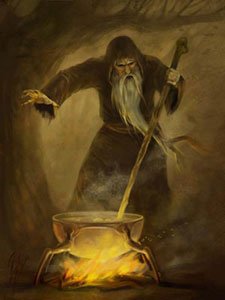
The Runic Magus, by contrast, is sharply focused. He is ready to strike like a warrior in battle; the Runes themselves, as well as the sigils, are crisp and spear-like. The interaction of Runes is not a comparatively gentle merging of vortices; it is a contest, where the addition of one Rune can change the meaning of a formula to its exact opposite, though there are no ‘strong’ or ‘weak’ runes.
So, the very skeleton of operations is quite different. As are the natures of the people who feel closer to Goetia or to Galdr.
Nevertheless, people have always intuitively felt this duality of power: it is a vortex, and yet it is a Flow. It is cyclical, and at the same time always directed. Therefore Goetic rituals always contain vector elements, and Galdr includes cyclical elements. For a vortex, the vortex itself is not the only thing that matters, but also its axis — which is vectorial; for Galdr, not only is directed will important, but also the influx of power, which is cyclical.
This does not mean that all Runemasters should rush into Goetia, nor that Evokers must retrain as Eriley. It simply means that duality underlies the essence of existence, but in a perfect binary each pole carries a reflection of its opposite, and for the Magus the foremost task is to remember this.
Can it be said that a ‘vortex’ is the addition of something to the system, while a ‘vector’ is changing something in the system?
In general, it can be said, but the difference is still in the level of action: a vector is created in the field of potentials, while a vortex is in the World Environment.