Two Lands and the New Semataui
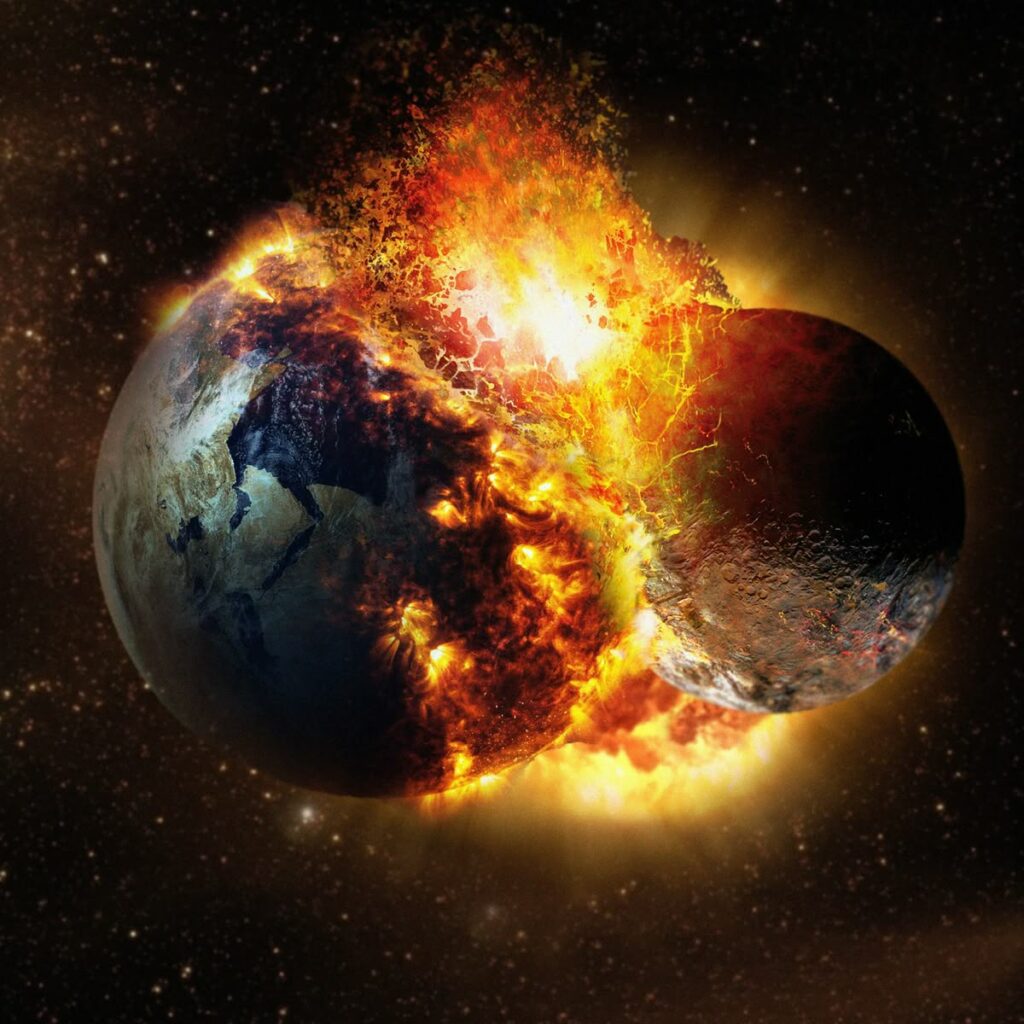
About 4.4 billion years ago, the still-forming proto-Earth collided with another protoplanetary body existing on the same orbit, as a result of which the Earth was formed in its present form and the Moon appeared. Thus, instead of two planets moving together around the Sun, only one remained on the physical plane; however, on the informational level, at the level of “imprints” — reshimot, the memory of two parallel bodies was preserved.
It was precisely this memory — this energy-information structure — that many millions of years later served as a “matrix” for a new catastrophe, known in paleohistory as the “Separation of the Earths.”
That our Earth has a “double,” a kind of “alter ego,” has long been known. The Pythagoreans (notably Philolaus) spoke of Antichthon — the Earth’s “counter-body,” revolving around the Central Fire on the opposite side. It moves synchronously with our Earth but always remains behind the Central Fire, so we never see it in the sky. In Pythagorean thought, Fire (life) occupies the center of the world, while Earth and Counter-Earth are complementary aspects of a single substance: visible and invisible, manifest and hidden.
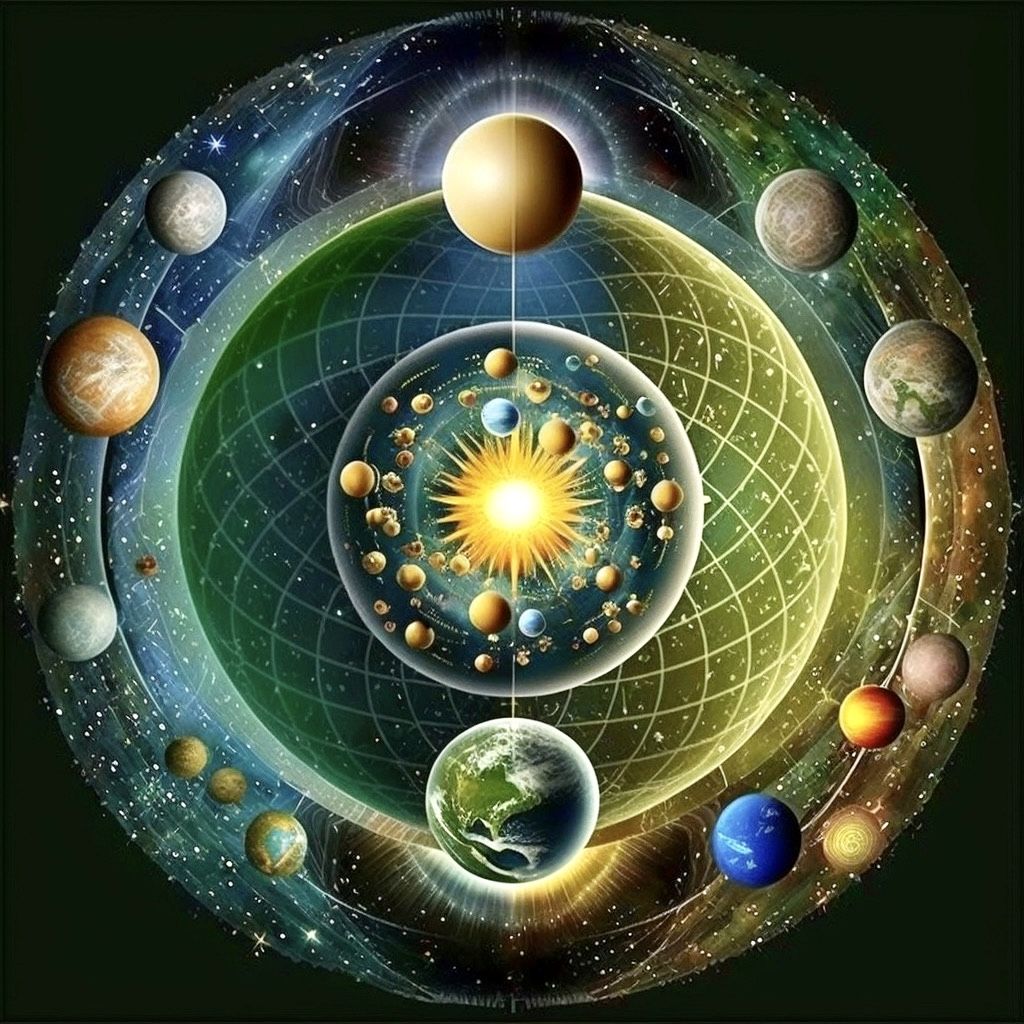
Numerous Arabic tales speak of multiple “parallel Earths” (seven Earths), each with its own inhabitants, sages, and prophets. Qur’an 65:12 (“…and of the earths — the like of them”) gave rise, in classical commentaries, to the idea of seven “earths” (سبع أراضين, sabʿarāḍīn). In several traditions this is taken quite literally: “in each earth — its own inhabitants and even its own prophets” — i.e., a series of parallel Earths with separate histories, “earth‑doubles.” Thus the mufassir At‑Tabari (9th century) writes in his Tafsir: “Allah created seven Earths — one above another. Between each Earth and another there is a distance, and each contains its own creatures, as on our Earth: people, plants, animals.”
The science‑fiction writer and gnostic visionary Philip K. Dick, in 1974 (his famed “2‑3‑74”), underwent a series of visions he described as an invasion of another mind — a kind of descent of Gnosis. During that period he reported perceiving two realities coexisting (which he named “Black Iron Prison” and “Palm Tree Garden”). The second reality was the true Earth, a living world where history continues and the divine light has not been extinguished. He said the two Earths are superimposed, like two frames of film: one dead and black‑and‑white, the other alive and in color, visible only to a “second sight.”
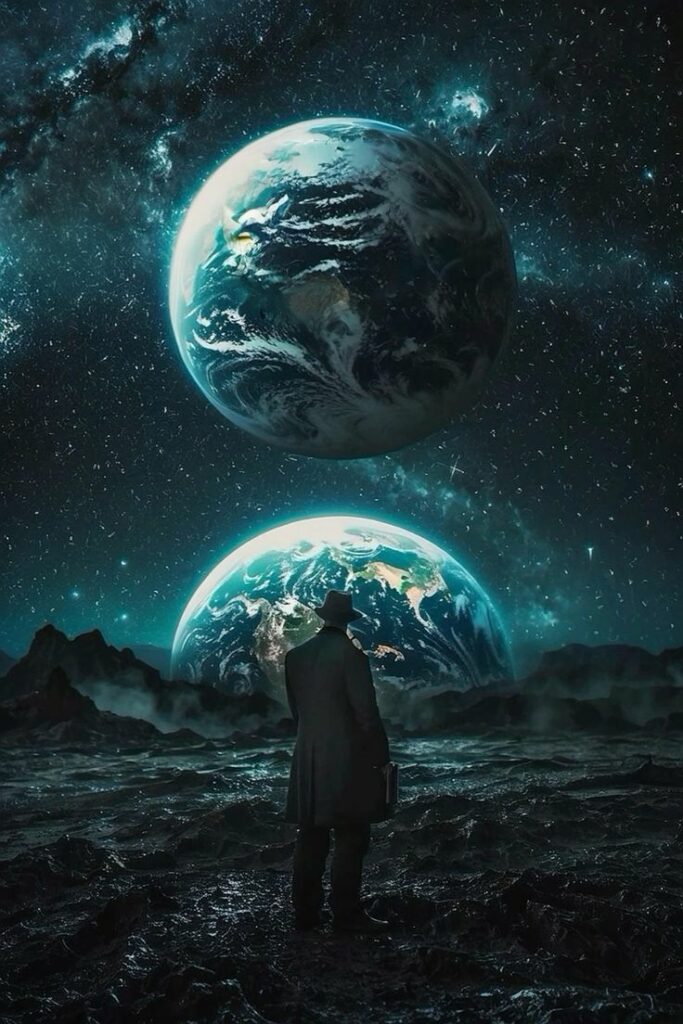
Nevertheless, the most profound elaboration of the Two Earths concept was offered by the ancient Egyptians, for whom it fit within a broader conception of the duality of the world; they compared it to an “earthly parallel” — the dichotomy of Upper and Lower Egypt.
In Egyptian and hermetic thought, life is not a state of rest but a process of coniunctio — the union of opposites in which difference is preserved without hardening into enmity.
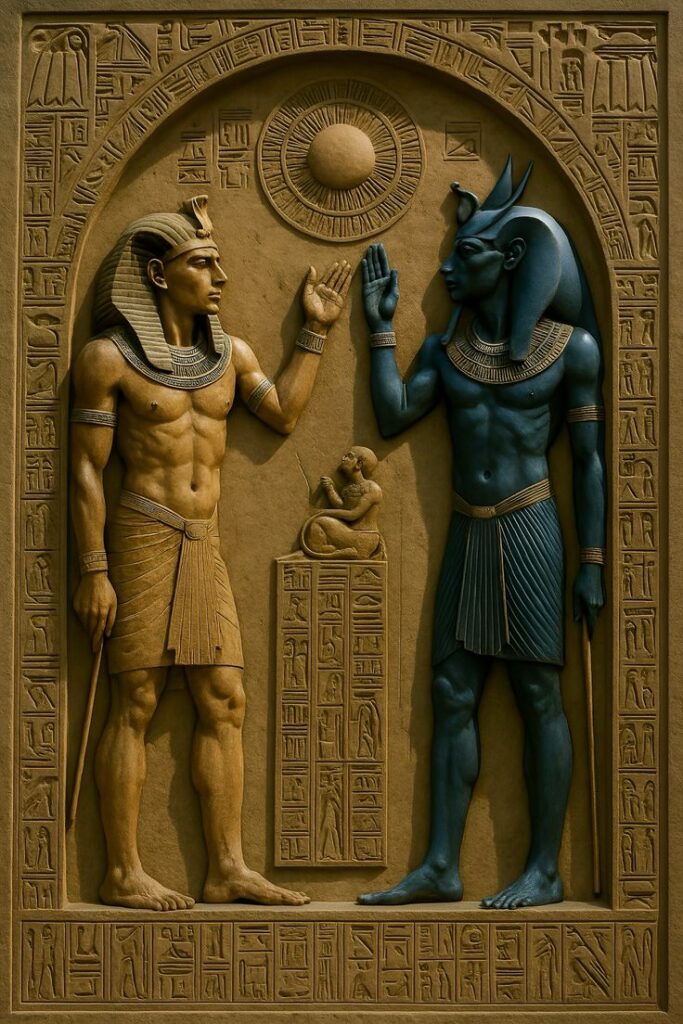
Ta‑Shemau (the Southern, Upper Land) and Ta‑Mehu (the Northern, Lower Land) referred not only to two regions but to two cosmic principles: the dry, solar “upper” and the moist, lunar “lower.” The Egyptians called the king nsw‑bity, “King of the Two Lands,” stressing that he ruled not merely over territory but over two cosmogonic principles — masculine and feminine, heavenly and earthly, spiritual and material.
Another titulature — nebty, “Lord of the Two Ladies” — linked the ruler with two protective goddesses: Nekhbet, the white griffin of Upper Egypt, embodying the power of the desert, clarity of spirit, and solar authority; and Wadjet, the serpent of Lower Egypt, the embodiment of moisture, fertility, and life energy. These goddesses expressed an important principle, representing two sides of a single creative force — the heavenly and the earthly, the spiritual and the bodily.
The king, bearing the name of the “Two Ladies,” united them within himself, like body and breath. He was not merely a mediator between humans and the gods, but a living pontifex, a bridge between dimensions and levels of reality. Precisely in him — in his body and in his rituals — Egypt again became a whole world, and his crown (pshent), composed of white and red, symbolized the union of earth and water, spirit and matter, the higher and the lower.
Such a view is understandable: the Egyptians, regarded as heirs of the ancient Atlanteans, “responsible” for the Separation of the Earths, bore the memory and the burden of guilt for having introduced an imbalance that they sought to correct.
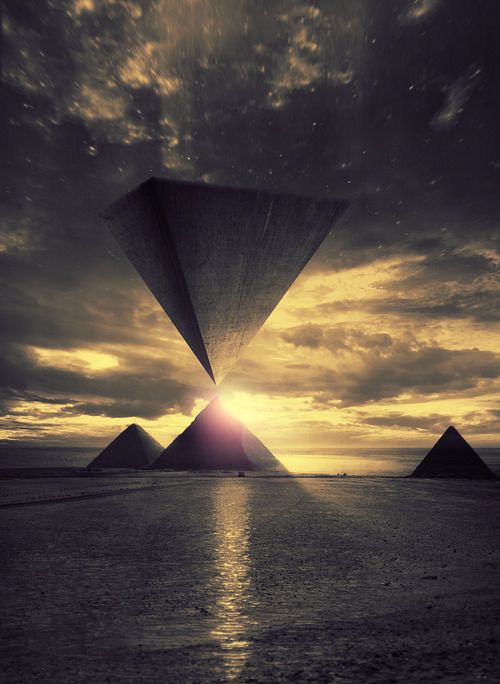
Recall that, according to the oldest traditions, the Atlanteans, in attempting to “break through” a Portal into Alvheim, created an energy imbalance on a cosmic scale. This caused two tendencies already clearly formed in the human mind — the technogenic and the anthropogenic — to separate not only in worldview but physically, each creating its own “separate” reality: the Earths of Temet and Geb, respectively.
At the same time, this separation was not an ordinary “bifurcation point,” where the timeline branches into parallel realities of a multiverse, but became that very “filling of the reshimo” that we mentioned above, such that the two Earths exist within the same reality, but as if in different “sub-realities,” in different “quantum fluctuations,” and are not simply “versions” of each other, but constitute precisely a “split” actuality. Note that, from a formal point of view, “our” Earth took the place of the former Theia — the smaller of the two protoplanets, while the Earth of Geb — Tellus — preserved the larger size of the “proto-Earth.”
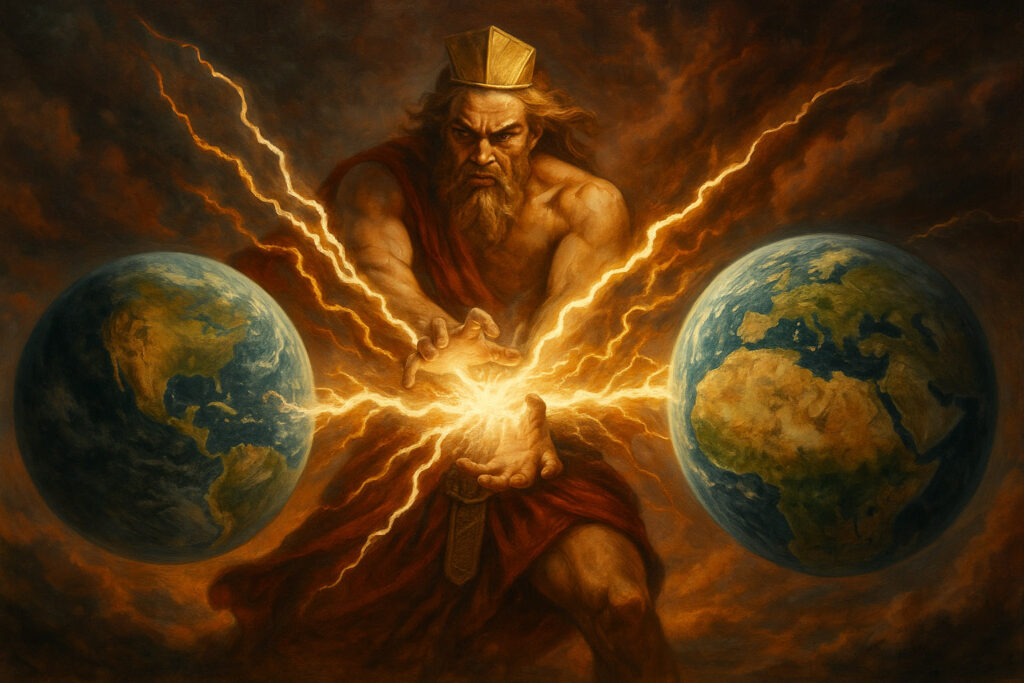
Because the Law of Conservation of Energy operates on both Earths, their populations are equivalent and remain in a binary relationship; nevertheless, physical contact between the “planets” is impossible due to different spatial characteristics of their ways of existing.
From the standpoint of the general logic of human development, the path of Tellus was more “natural”; however, because people have always been under the selective pressure of the Archons, it was the Earth of Erd (“our” Earth) that received the support of the Rulers.
And the Egyptians saw here a certain analogy with their “Two Egypts”: Upper Egypt is the vital and sacred source, while the Delta serves more as the “center of events.”
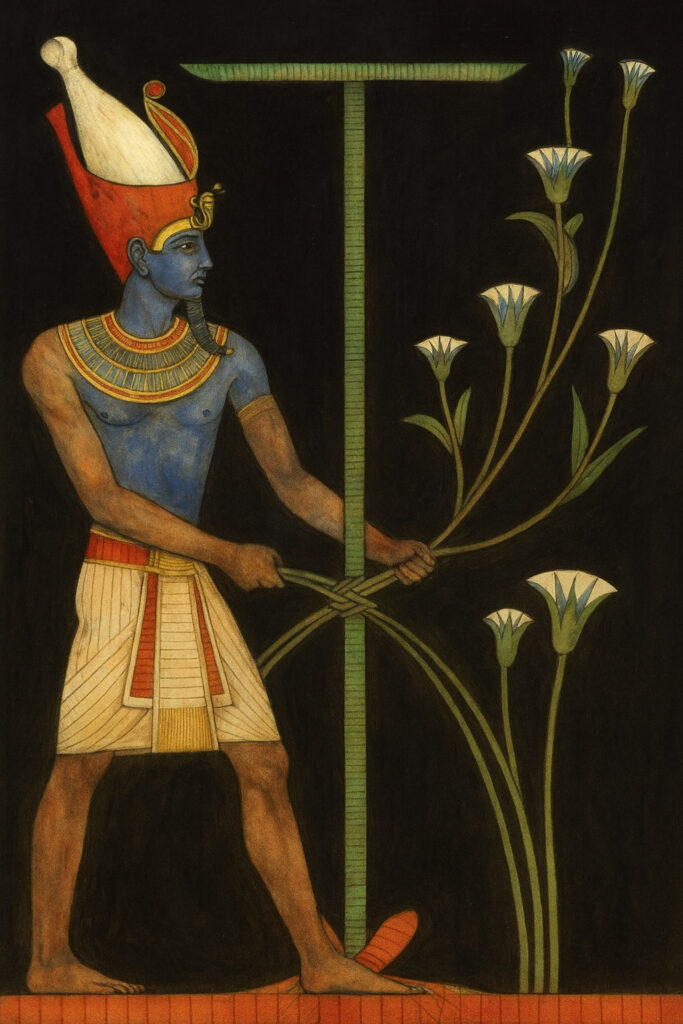
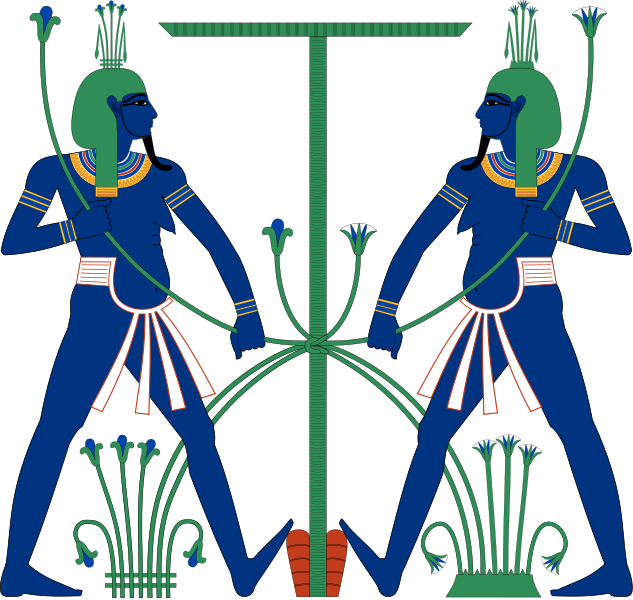
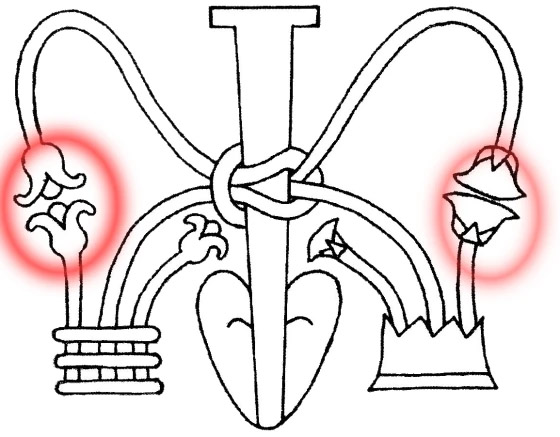
Therefore, on temple walls the pharaoh is often shown performing the act of sematauai — the “binding of the Two Lands” — in which the lotus (South) and papyrus (North) are bound around the emblem of the lungs (sema), by which two figures of Hapi (the god of the Nile) draw the Two Lands together — a symbolic “breathing” of life into the country’s (and the cosmos’) integrated body.
Thus, the legend of the separation of the Earths of Geb and Temet represents a repetition of the same drama, but on a cosmic level, when after an ancient catastrophe humanity split into two interconnected, but ever more diverging worlds.
Although the Earth of Geb may appear closer to humanity’s “true nature” and thus more harmonious, the rupture there also produced imbalance. Indeed, the world of Geb (Khthon, Grid) retained activity immanent in matter: technology is natural here, people draw strength from the body and the earth, and spirit manifests through bodily form. The world of Temet (Gaia, Erd), by contrast, externalized its activity, producing machines, codes, and artificial carriers of mind. Over time both worlds lost their harmony: exchanges of energy and ideas virtually ceased, and the connection between them was broken. The people of Erd began to seek strength externally rather than within themselves; the people of Geb retreated into natural autonomy.
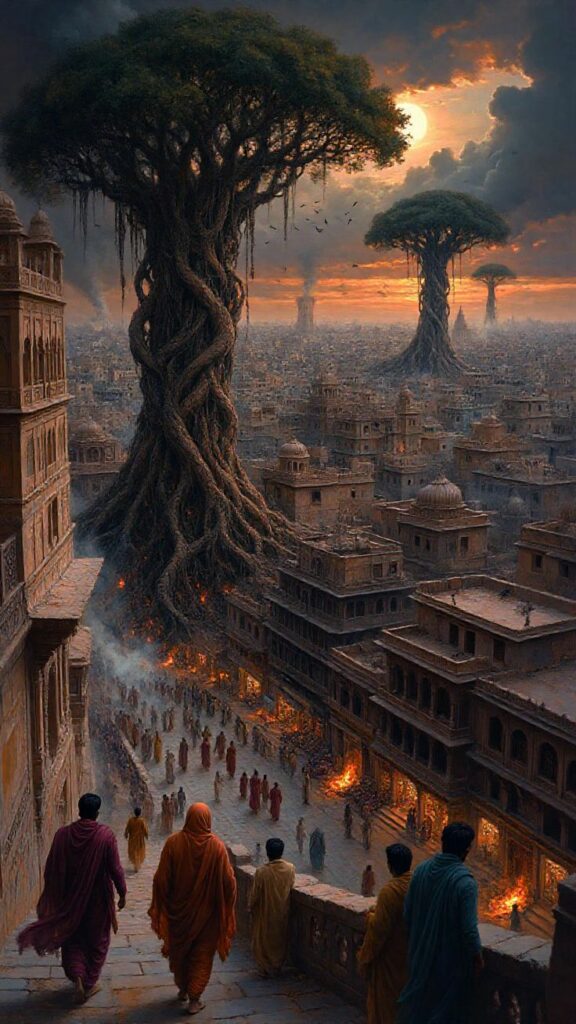
It was at this point that the two Earths lost the sense of their complementarity and became opponents. What could have become a new unity hardened into opposition. In Egyptian terms, Ma’at ceased to flow between the worlds — the cosmic “error of separation.”
From the Egyptian point of view, every creation involves separation followed by binding. In this sense, the creator separates not to destroy but to bind on a new level.
The Egyptians held that the union of Geb and Temet should not be a return to primordial chaos but a new reconciliation of the poles — the birth of a “third Earth,” a renewed whole, like an ascent along a spiral.
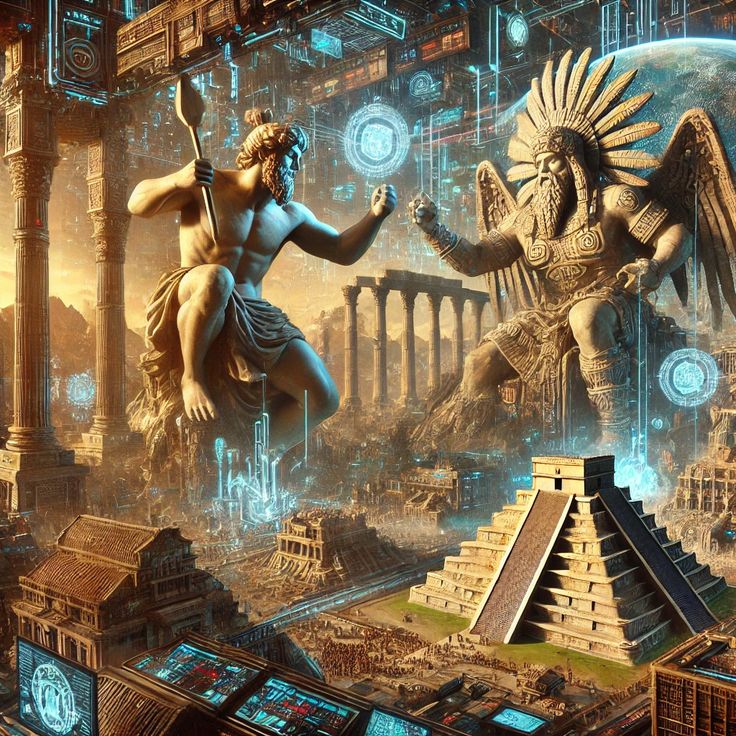
Today that ancient drama takes new forms. The civilization of Erd has severely weakened the link between the Apollonian (rational, analytical, luminous) and the Dionysian (sensual, bodily, dark) principles. Reason has become distanced from corporeality, technology from nature, and knowledge from wisdom.
The modern human of “our” reality has overdeveloped one side — logic, calculation, algorithm — but suppressed the other — imagination, emotional involvement, bodily presence. Under the influence of archontic pressure, rationality degenerated into mechanical “effectivism,” and sensuousness — into dependence on stimuli. As a result, the mind loses integrity: the Apollonian without the Dionysian becomes dry and lifeless, yet the Dionysian without the Apollonian becomes chaotic and self-destructive.
In this separation, the same error manifests that led to the separation of Geb and Gaia: the external world lost the internal source of activity, and the internal one lost its external expression.
Thus, the modern era urgently demands a new sematauai — a new “binding of the Two Earths,” a restoration of energy exchange between the internal and the external. Just as each pharaoh united Upper and Lower Egypt, joining heaven and earth, spirit and body, the modern Magus must unite the internal and external civilizations, the world of spirit and the world of technology, mind and feeling.
This could occur literally — physically — if humanity finds a way to establish real contact between the two Earths. Because the Earths are not divided by an impenetrable (for modern technology) boundary like separate universes or timelines, it is conceivable to build transition systems between them. Modern science would likely be able to tackle this task if it ceased diverting resources to the development of ever deadlier weapons.
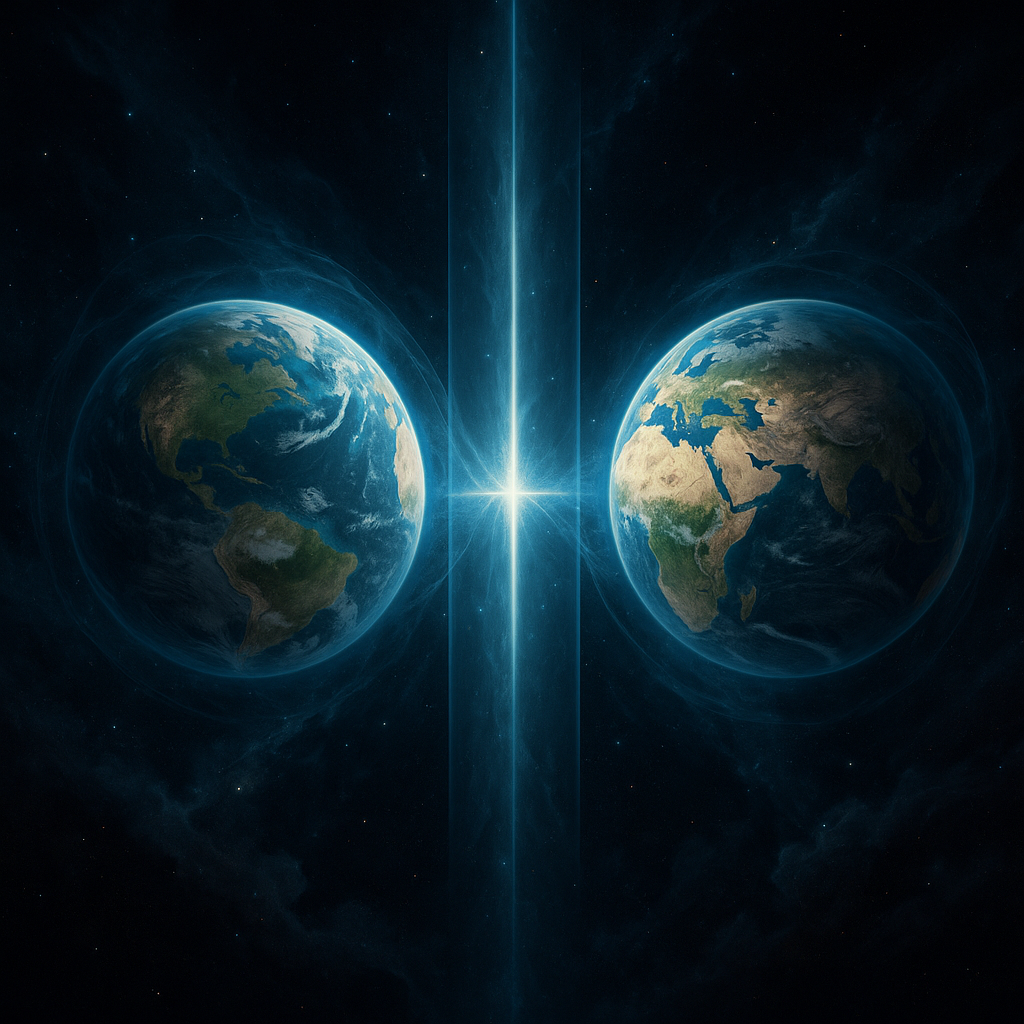
At the level of both civilizations, this means restoring the link between technosphere and biosphere, the artificial and the natural, so that technology again serves life instead of consuming it. In a negative scenario on “our” Earth — if the development of machine forms of consciousness turns to the oppression or destruction of humanity — “escape” to Tellus might become the only means of salvation. As noted above, this would require balancing energies — i.e., transferring from Tellus to Gaia exactly the same amount of energy that the evacuating humanity would take with it. This, too, appears feasible, though not a simple task.
Even on a symbolic level the “new sematauai” is indispensable. Individually, a new act of binding can mean grounding the mind in the body, awareness in action, spontaneity in creativity. Culturally, it is the union of science and art, logos and myth, the rational and the symbolic. A civilization founded on technology must rediscover the value of inner alchemy — disciplined work on attention, will, and perception. Only thus can Ma’at return to a world losing its living breath.
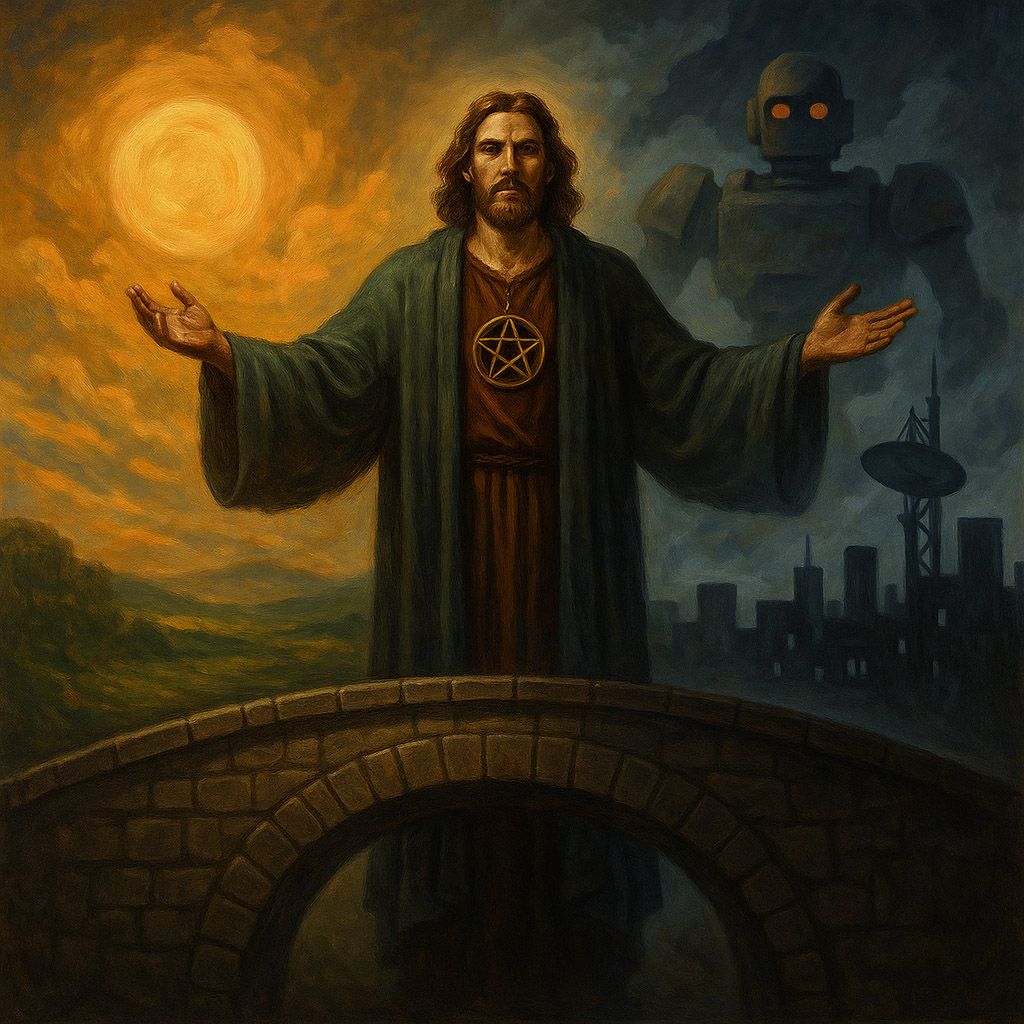
The Magus‑creator is one who has come to see himself as a bridge between worlds. The Latin word pontifex — “bridge‑builder” — aptly defines this role.
The Magus does not ascend into the heights of spirit nor dissolve into matter; he maintains the center in which both worlds can exchange life. Such a person becomes what the pharaoh once was to his realm: a living point of balance, a heart through which the world’s breath flows. He sustains both Ma’ats — inner and outer, heavenly and subterranean, the truth of meaning and the truth of action.
Could you tell us more about the relationship between the Atlanteans and the Alvs? How did their attempts differ from ‘ordinary’ approaches?
This is the subject of two articles, the hyperlinks to which are also included in this note:
https://enmerkar.com/en/myth/atlantis-before-the-atlanteans
https://enmerkar.com/en/myth/caichir-memory-of-a-lost-alliance
The general idea is that at some point, people, partly by force but mostly by cunning and deceit, effectively compelled the Svartalfs to work for them.
As for the Ljosalfs, they have always regarded humans with a certain disdain and almost never interacted with them.
Thank you.
But from these two articles, I didn’t understand why the choice fell on Alfheim.
Hello. Thank you, very interesting. What prospects does the integral state of “Two Ladies” open for a magician in our world?
Hello.
The “Two Ladies” (Nebty) refer to:
Nekhbet, the white vulture, patroness of Upper Egypt (the South, heights, deserts, sunlight), and
Wadjet, the cobra of Lower Egypt (the North, the delta, moisture, the moon, fertility).
These goddesses embody two aspects of the peace-making force:
– Nekhbet — dry, fiery, protective, and celestial energy (nebet-pet),
– Wadjet — wet, serpentine, life-giving, earthly power (nebet-ta).
When the pharaoh (or a modern magician) is referred to as the “Lord of the Two Ladies,” it means that he contains and reconciles both elements — the upper (solar, spiritual) and lower (lunar, material), keeping them in balance with Ma’at.
Thus, he is not merely the “king of the North and South” but a center, an axial intermediary between Heaven and Earth, where the Upper and Lower become whole, like the breath of Ra and Osiris, like day and night of one Barge. He is not the “owner” of order but an act of harmonization, a “convergence of two streams”.
When the pharaoh is called the King of the Two Lands and the Lord of the Two Ladies, it means he restores the integrity of being from chaos; he becomes the one who sits on the First Hill, risen from the waters of Nun — the very act from which cosmogony began. And modern humans, culture, or even all civilization must learn to be this “center of creation.”
Thank you. It reminds me of the Orphic realization balancing Apollo/Dionysus.
This is an amazing article! Delight and respect for Wisdom!