Selection and Its Selectors
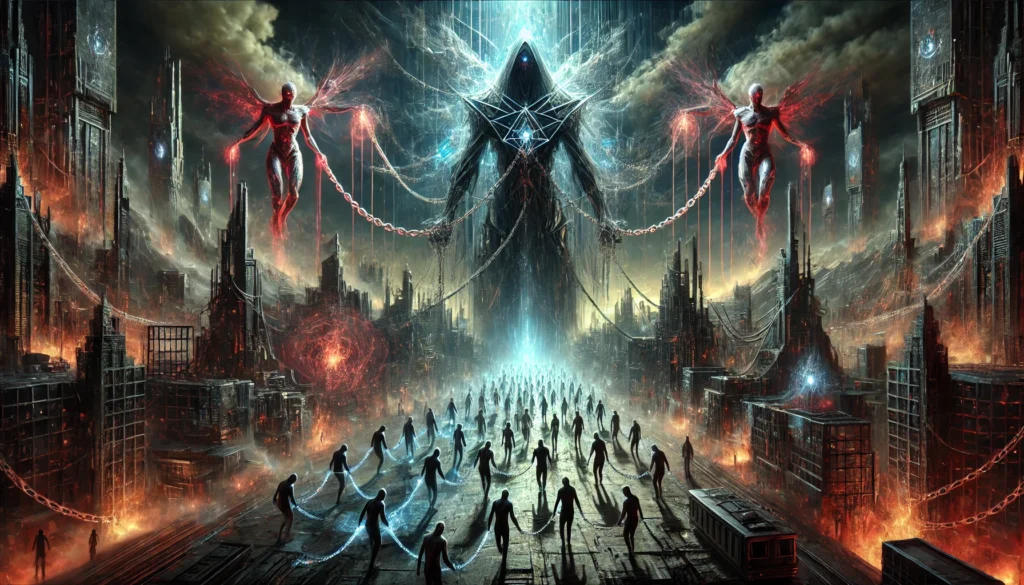
We have already noted more than once that the development of humankind from the very beginning took place under the influence of two opposing forces and impulses: an inner constructive drive of the mind toward development, creativity, realization, and preserving experience; and destructive tendencies aimed at the generation and dispersal of the maximum amount of energy.
The first group of forces, which facilitates the evolution of the mind, is traditionally called luminous influences, which are regarded as “anticipations of perfection,” whereas the totality of “entropic” influences is known as the dual oppression of archons and demons.
At the same time, it was precisely the selective pressure produced by predatory forces or destructive tendencies that directed human development from the simplest forms to ever more complex behavior and interaction with both physical and psychic reality.
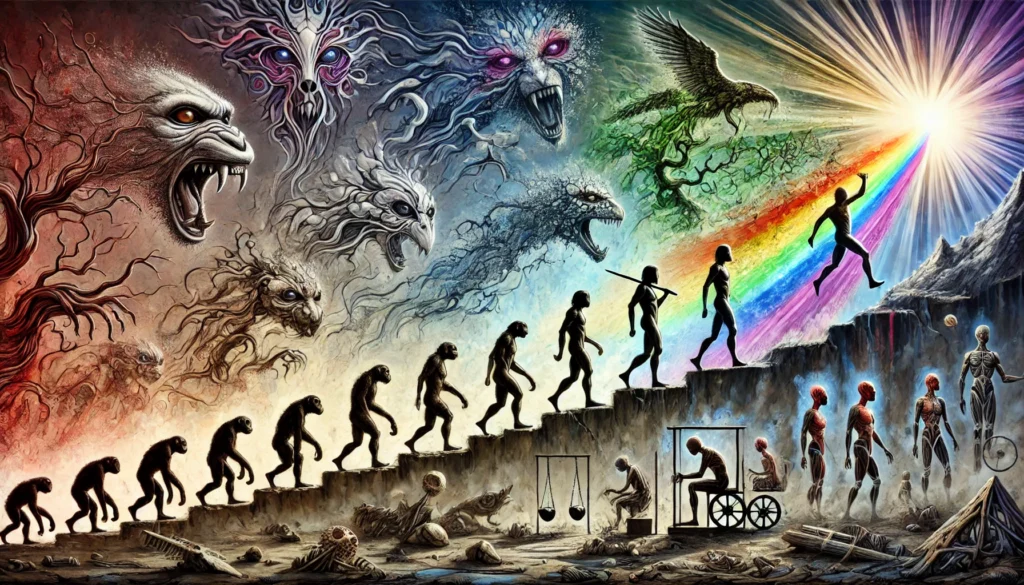
The human manifestation of consciousness in the sense in which we know it today arose about 700 thousand years ago and rather quickly manifested in the form of three different branches, each of which had its own physical, energetic, and psychological features that made them selectively attractive. These branches are known in the Tradition as the Hyperborean, Lemurian, and Atlantean races, and in modern scientific discourse as, respectively, Neanderthals, Denisovans, and Cro-Magnons.
At first, the formation of the biological features of each species proceeded in such a way as to “try on” a human level of mind for them. Each species was formed predominantly by one of the Archons, who laid down those traits they considered most useful from the standpoint of producing large amounts of vital energy.
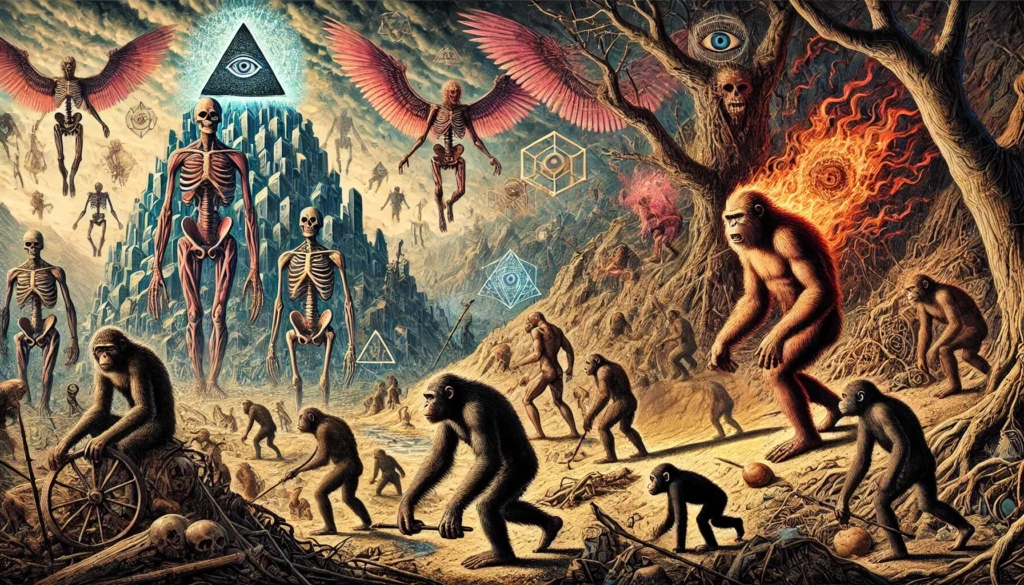
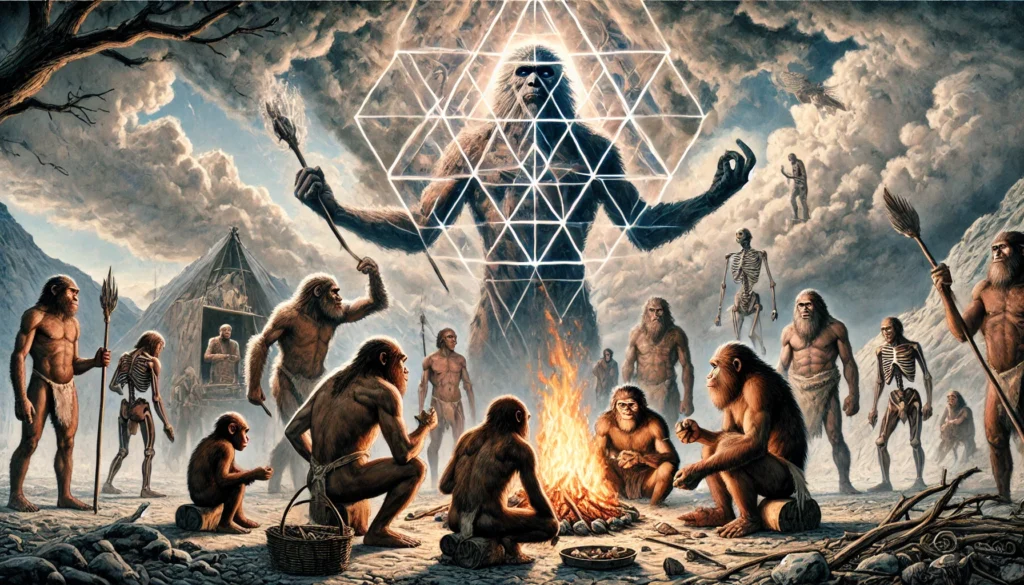
Neanderthals, Children of Earth, were created under the guidance of Sabbatai, and possessed a powerful physique, ideally adapted for survival in the harsh conditions of glacial Europe. Their physical power and dependence on stable environmental conditions reflect Saturnian characteristics and limitations. A massive skeleton, short limbs, and a broad torso helped retain heat in cold climates. Powerful muscles provided exceptional strength, enabling effective hunting of large animals, including mammoths and woolly rhinoceroses. Neanderthal skulls were large, with a prominent nose and developed brow ridges, which may have been useful in their environment. However, their physique, so effective against the cold, made them less mobile and adaptive compared to the lighter Cro-Magnons. This became a weakness when the climate began to change and conditions demanded greater flexibility and mobility. In addition, high physical endurance required large amounts of food, which made them vulnerable under conditions of resource scarcity.
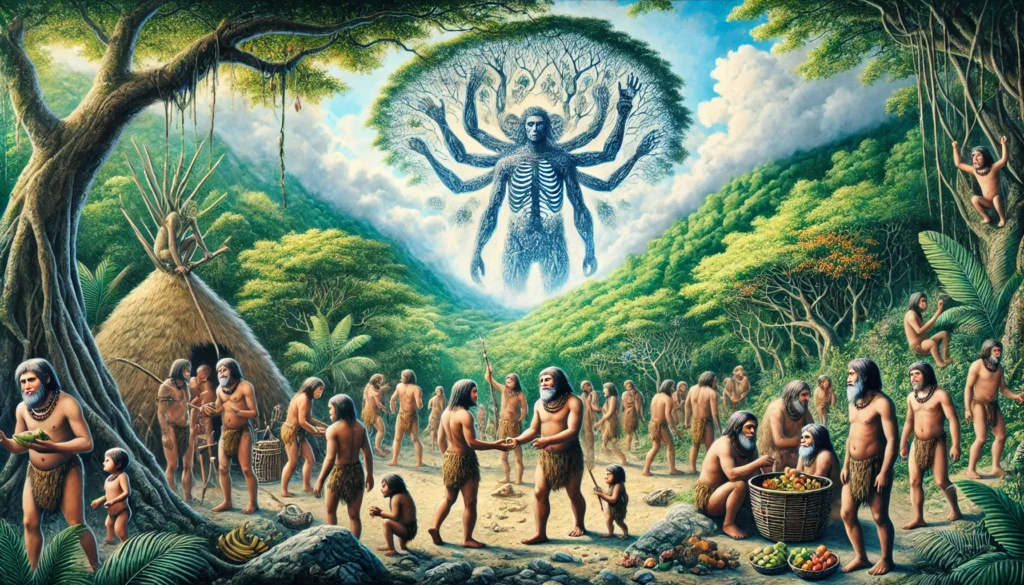
Denisovans, “People of Water”, unlike Neanderthals, demonstrated greater ecological plasticity. Being the creation of the “lunar” Archon, Khorey, they expressed fluidity, softness, and the ability to adapt. Denisovans lived in a wide variety of regions, from the highlands of Tibet to the tropical forests of Southeast Asia, which indicates their ability to adapt to diverse climatic conditions. Their physical traits included adaptations to high altitudes and, possibly, a specific metabolism that allowed survival in harsh mountain conditions. Denisovans likely had an intermediate physique between Neanderthals and Cro-Magnons, which gave them both strength and relative mobility. However, their scattered settlements in isolated populations and the lack of specialized adaptations for specific environments made them less competitive. In addition, their numbers were relatively small, which increased their vulnerability to change and competition.
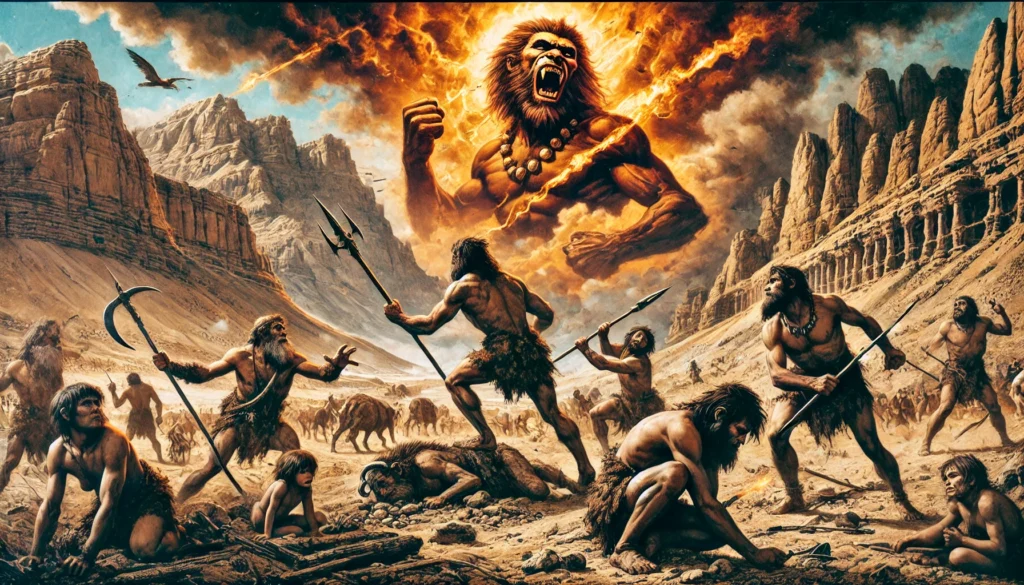
Cro-Magnons, “People of Fire,” early Homo sapiens, had the most universal physique. They were the “product” of Adonin — the Archon of Mars. Their light but strong bodies ensured high mobility, and elongated limbs made it possible to travel long distances effectively. This made them “super-predators,” excellent hunters and explorers of new territories. Cro-Magnons had a higher forehead and a smaller face compared to Neanderthals, which is associated with the development of the frontal lobes of the brain and the capacity for complex thinking. Their adaptability to a variety of climatic conditions was ensured not only by physiology but also by the use of clothing, shelters, and tools. However, unlike Neanderthals, Cro-Magnons did not possess the same physical strength, which made them less effective in close combat with large animals. Instead, they relied on collective hunting and the use of ranged weapons. This universality was their strength, but it also carried the risk of dependence on technologies that might be unavailable in crisis situations.
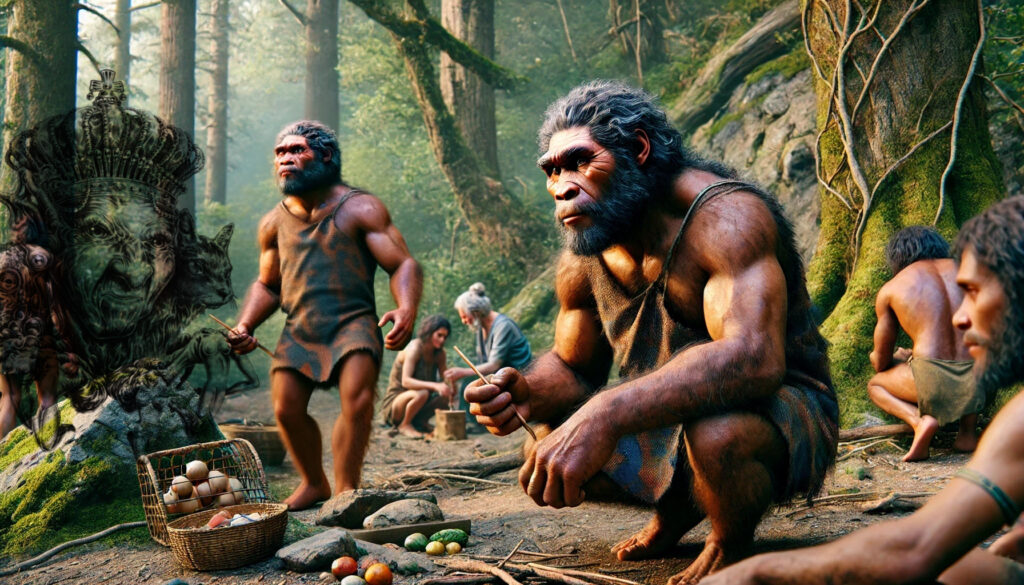
At the same time, already at that very early stage, three behavioral strategies were also delineated, which then manifested at all stages of human development and are known as manifestations of the three basic destructors, or the three Archdemons: Bael, Asmodeus, and Belial.
Neanderthals were steadfast, hardy, and devoted to their group, but their key weakness was limited capacity for learning and a tendency toward conservatism — a result of Bael’s activity. These qualities shaped their psychological profile. Neanderthals were distinguished by deep social bonds within their tribe. They cared for the sick and the elderly, buried their dead, which testifies to a developed sense of attachment and empathy. At the same time, their entire world was predictable and stable, which gave them a sense of psychological comfort but made them vulnerable to change. They were not inclined to experiment or accept new ideas, which limited their capabilities under conditions of a changing climate or competition with more inventive Homo sapiens.
The strong side of the Neanderthal character lay in their reliability. They were calm, patient, and attached to their traditions. However, a lack of flexibility and a tendency to repeat outdated behavioral patterns became fatal for them. When faced with new challenges, such as resource depletion or competition with more numerous Cro-Magnons, they could not adapt. Their limited capacity for learning and innovation left them losing out to Homo sapiens, who quickly adopted and spread new technologies. Nevertheless, later generations inherited some of their genes and some energetic features, above all the habit of holding on to their foundations.
Denisovans, by contrast, were characterized by emotional instability inspired by Asmodeus, which, despite their outward friendliness, became their main weakness. They were prone to maintaining numerous but superficial connections between individuals. This trait helped them survive in isolated populations, where interpersonal interaction was rare, but at the same time they did not know how to form deep emotional bonds that could strengthen their groups.
On the one hand, Denisovans were socially open, ready to interact not only with members of their own group but also with other species, including Neanderthals and Cro-Magnons. This quality could have facilitated hybridization and gene transfer. However, the lack of capacity for deep attachments limited their ability to create strong alliances and coordination within their communities. They were emotionally changeable and not loyal, which could cause instability in their social structures. Under conditions of crisis or competition, this made them less resilient and cohesive.
Another product of the formation of Denisovans under the strong influence of Asmodeus was their greed, which in their descendants later manifested as a tendency to obesity. Since their populations were scattered and contacts between them rare, competition for resources bred greed, or the drive to accumulate, in order to survive periods of scarcity. In the absence of strong attachments within the group, the urge to stockpile or hold on to resources became the dominant motive. Unlike Neanderthals, who cared for their sick and elderly, Denisovans paid less attention to mutual aid. Their weak social structure contributed to the formation of individualistic traits.
The strong side of Denisovans was their flexibility in relationships and friendliness, which facilitated the establishment of many contacts. But the weakness in the form of an inability to build deep bonds and weak social integration became the reason for their vulnerability before the more organized and cohesive Cro-Magnons.
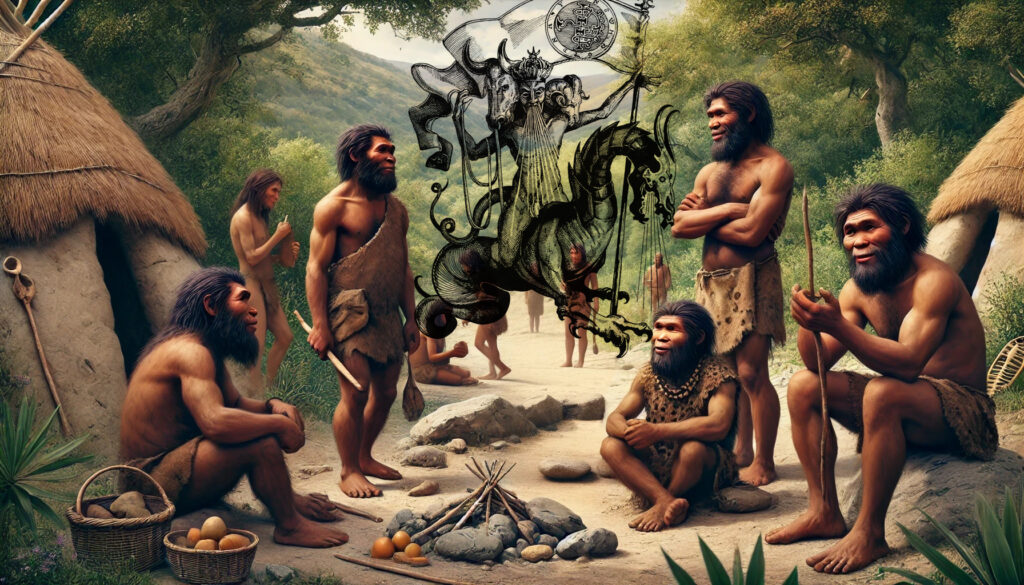
Cro-Magnons possessed an aggressive, ambitious character nurtured by Belial, which became their main advantage, but at the same time their weakness. Their group aggression was expressed both in the conquest of new territories and in conflict interactions with other Homo species. Cro-Magnons tended toward active competition for resources, which led to the displacement of Neanderthals and Denisovans from their traditional territories.
The strong side of the Cro-Magnon character was their energy and purposefulness. They were not only aggressive but also inventive, which allowed them to quickly adapt to new conditions, use new technologies, and find solutions for survival in difficult situations. Their ambitions contributed to a drive for expansion, the capture of new territories, and the creation of complex social structures.
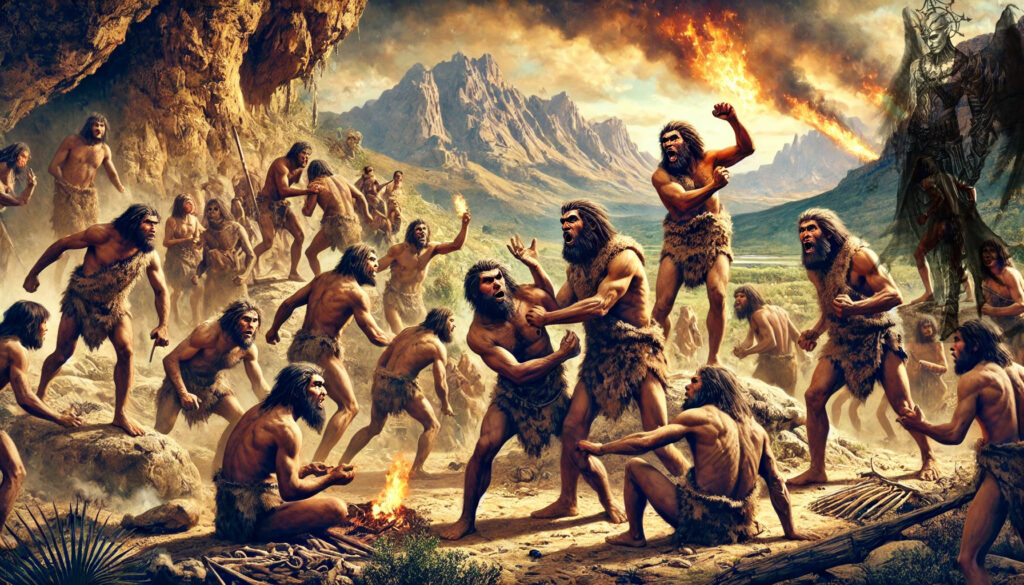
However, their aggressiveness often also proved an obstacle. Intragroup conflicts caused by competition and the struggle for leadership periodically weakened their communities. Group aggression also often led to the depletion of resources and excessive exploitation of the environment, which later not only divided human society itself but also set people at odds with nature and the faerie. Despite this, their ability to cooperate within the group and to use language to coordinate actions largely compensated for these shortcomings, quickly making them the dominant species. Therefore modern society is a product of the influence of Belial, who managed to cultivate in people a unity formed through opposition that, on the one hand, helped them survive, and on the other led to the waste of enormous energy zaam — anger. These behavioral features are believed to have formed as early as about 50,000 years ago and since then have changed very little.
As a result, due to a successful combination of physical, cultural, and psychological factors, it was precisely the Cro-Magnons who survived. Their extreme aggressiveness ensured energy, initiative, and the ability to conquer new territories, while high sexual drive contributed to rapid population growth and hybridization with other Homo species. These features allowed Homo sapiens to dominate other representatives of the genus Homo and successfully adapt to a rapidly changing world.
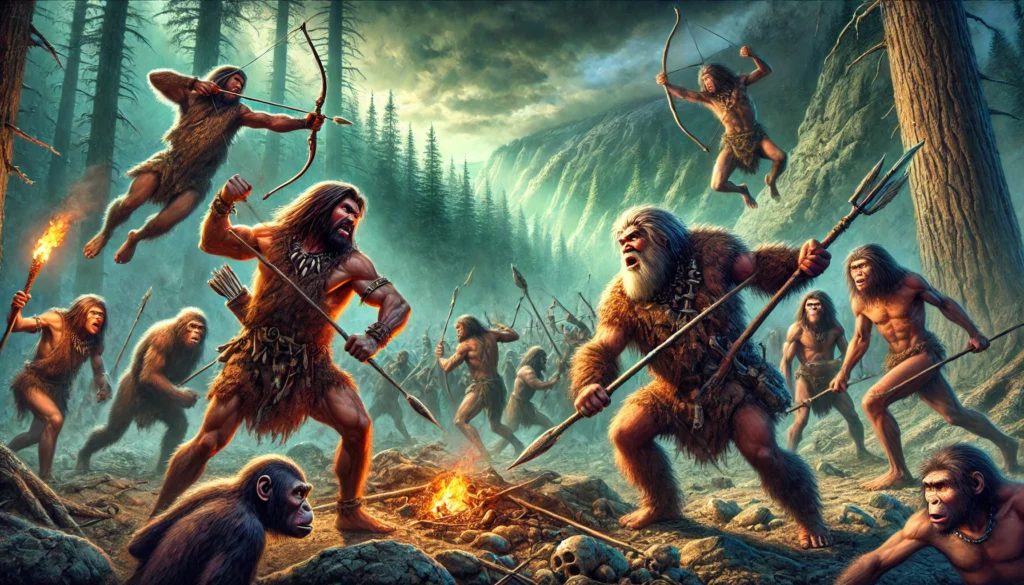
As mentioned above, Neanderthals, who lived in glacial Europe and Western Asia, became known in myths under the name Hyperboreans — inhabitants of the distant North, associated with wisdom, resilience, and natural harmony. In this sense, Hyperborea is historically Doggerland, a now-flooded plain between France and Great Britain. The Hyperboreans are described as a people living in eternal winter, close to the gods and possessing unique strength, but cut off from a world of change. These features perfectly resonate with the image of Neanderthals. They lived in harmony with the surrounding nature, without destroying it and without trying to radically change their habits. However, these people were unprepared for change: when the climate changed and competition with the more mobile and inventive Cro-Magnons intensified, Neanderthals could not adapt. Like the Hyperboreans who, according to legend, vanished with the arrival of a new era, Neanderthals also left the stage of evolution, leaving only traces of their existence in the genes of modern people.
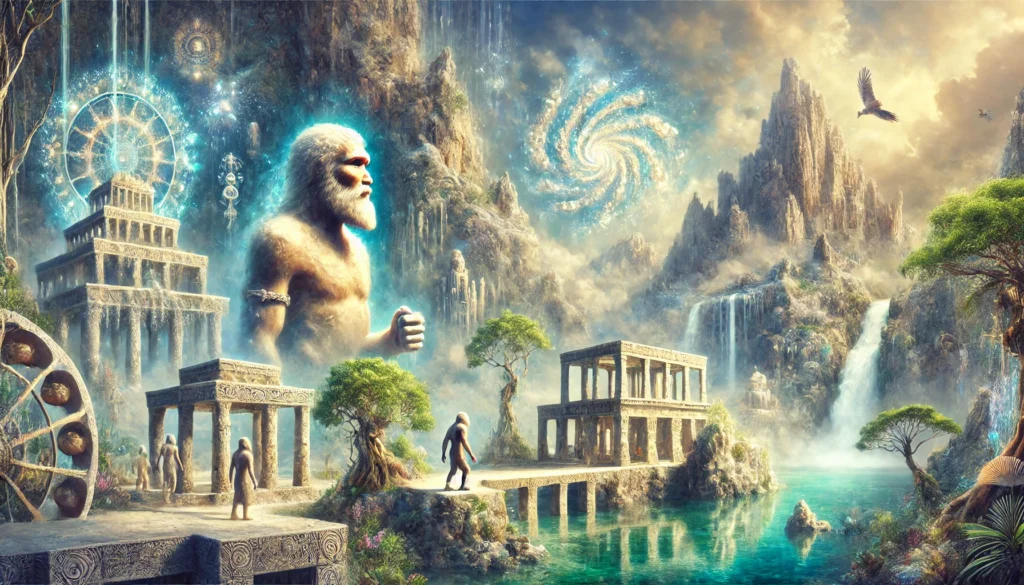
Denisovans, who inhabited vast expanses from Tibet to Australia, are known in myths under the name Lemurians — inhabitants of the lost oceanic continent of Lemuria (or Sunda — a landmass that united most of the islands of Southeast Asia, including present-day Sumatra, Java, Borneo, part of present-day peninsular Malaysia, and adjacent territories). Lemurians in myths are characterized by changeability, softness, and a capacity for connection, but also by emotional instability and fragmentation; they lived in a “world of dreams,” not fully in contact with the manifest world, which led to their disappearance.
At the same time, one branch of Cro-Magnons that settled in the region of North Africa is known as the Atlanteans. At the end of the last glacial period (~12,000–8,000 years ago), the global ocean level rose by 120–130 meters, which flooded the low-lying coastal areas of North Africa. It was there that archipelagos formed on which the civilization of the Atlanteans developed. These territories were fertile and densely populated. Atlanteans possessed considerable strength, creative abilities, and expansiveness, but also pride and a tendency toward destruction, which led to their fall. These traits can help us understand the evolution of North African Cro-Magnons as well. Cro-Magnons-Atlanteans had a special capacity for adaptation and creativity. In the regions of Upper Egypt, as well as on the Nabta Playa plain, they laid the foundations for agricultural societies, which later evolved into the greatest civilizations of Ancient Egypt. They brought with them a high level of organization and laid the first steps toward the structuring of society, as well as the use of complex technologies and the beginning of a sedentary way of life.
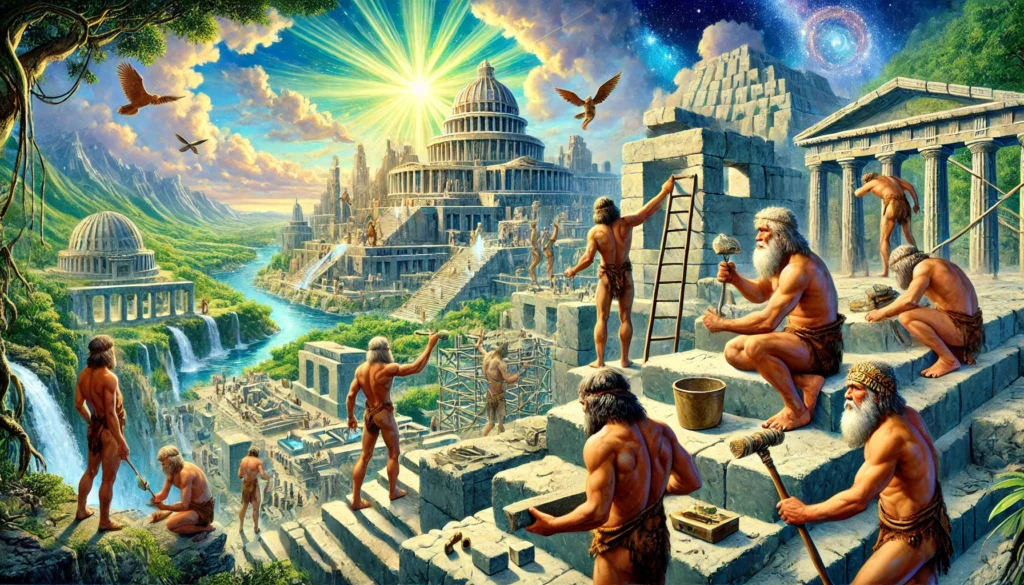
Thus, modern civilization in fact grew out of the “Children of Belial,” the Cro-Magnon-Atlanteans, who, after the destruction of their homeland, resettled first across the Middle East and then throughout the rest of the world, mixing with other groups, displacing and eliminating Neanderthals and Denisovans, and becoming the dominant species. At the same time, three basic destructors became entrenched in it — ignorance, greed, and anger — becoming reliable suppliers of energy for the qlippoth, while three physical features — passivity, short attention span, and dopamine addiction — formed the basis of energy outflows into the Interval.
I hold a more optimistic view. Man was created as he is from the very beginning, but then degradation began on the planet, and since ancient Babylon, evolution started.
It would be naive to think that the monkey is the only basis for human development (neural network). For example, there are myths about wisdom dragons, born from an egg. There are also mentions of trees (the so-called prophetic groves – this refers to mycorrhiza, of course). Right now there is a full steam initiative of secondary ‘creation’ of artificial intelligence. From your perspective, what triads of forces could participate in their formation?
Thank you
The development of elements through human consciousness? Regarding fire… that’s correct. I hadn’t finished saying that when Mars realized there was trouble, the colonists’ memories were erased and they were settled on this planet, hoping to correct their mistakes.