Shattered Harmony. The Bronze Age Catastrophe
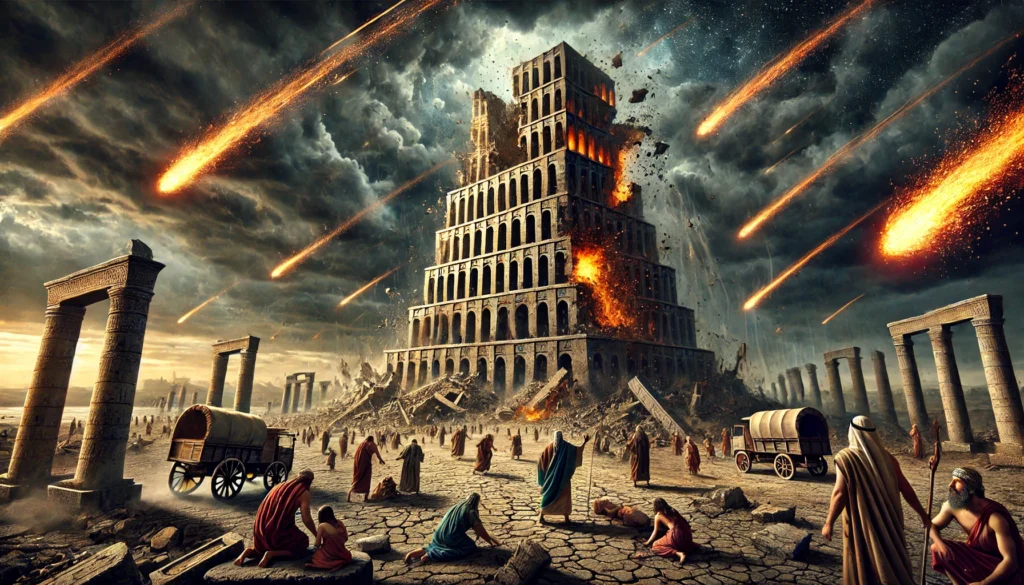
As we have already discussed, humanity’s transition from relatively smooth and harmonious development to broad expansion and the rise of a “consumer civilization” occurred during a period of crisis and upheaval known as the “Bronze Age collapse” and is symbolically described in Celtic lore as the “Murder of Ith”, or, in other mythologies, as the Destruction of the Tower of Babel, the Death of Erysichthon, and others.
In all these tales, people encroach upon what is not theirs, and the forces of nature, gods, or other beings strike back, with catastrophic consequences. These myths illustrate a general and profoundly important idea: humans cannot seize resources or violate nature’s laws with impunity.
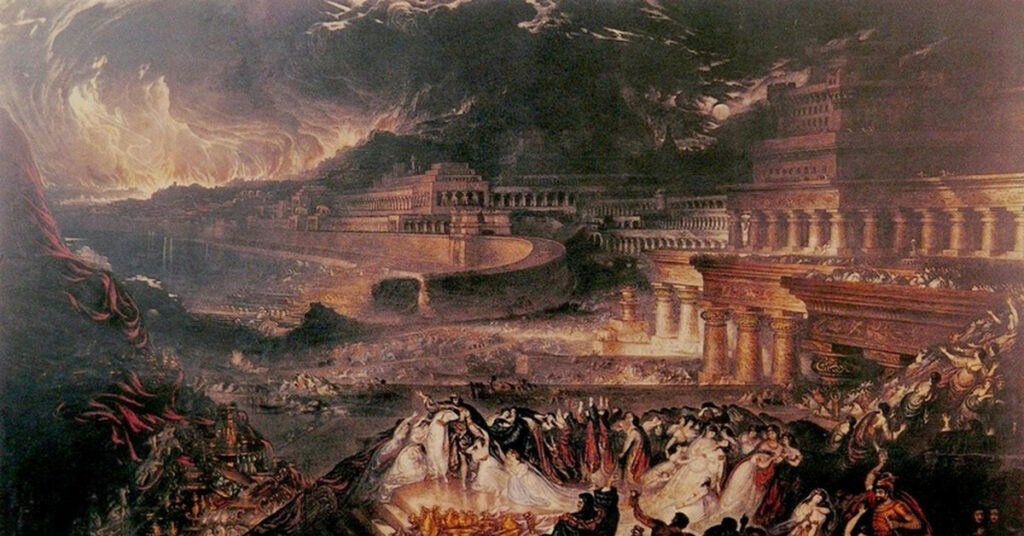
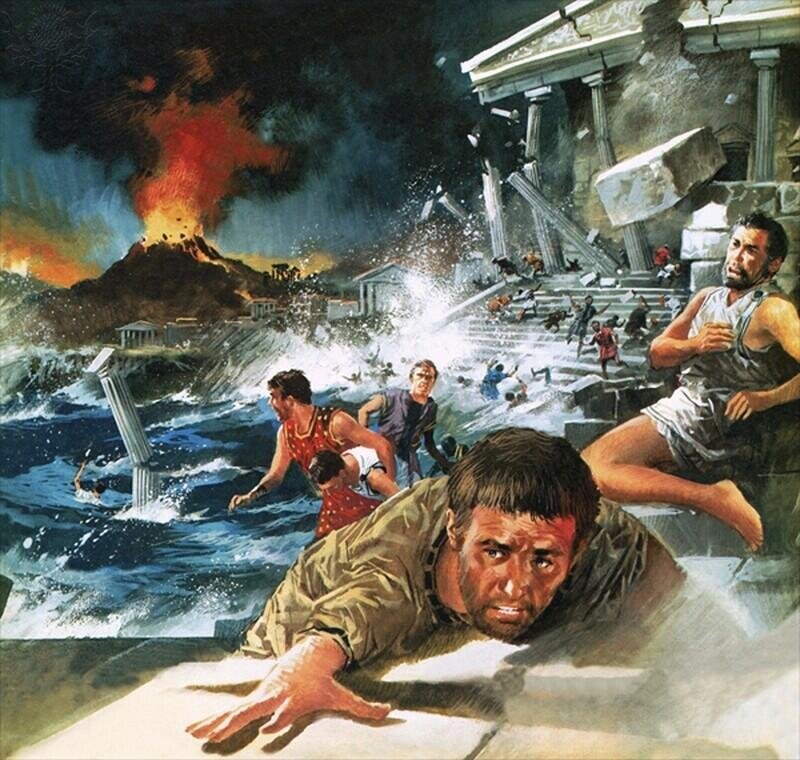
The so-called “Bronze Age collapse”, which occurred around 1200–1150 BCE, became one of the largest societal collapses in the history of human civilization. This period was marked by a sudden, destructive, avalanche-like decline of civilizations across Europe — above all in the Eastern Mediterranean and the Near East — affecting Mycenaean Greece, the Aegean, Anatolia, the Levant, the Balkans, and central Europe.
The centralized palace economies characteristic of the Late Bronze Age disintegrated, leading to ruined palaces, loss of writing, and the disruption of trade routes. The culture of Mycenaean Greece, once sustained by maritime trade and powerful palace centers, was shattered, plunging the region into a prolonged “dark age”. The Hittite Empire, which stretched across Anatolia and the Levant, ceased to exist, and its capital Hattusa was abandoned. In Egypt, attacks by the “Sea Peoples” weakened the New Kingdom, causing a period of decline and loss of influence in the region from which it never fully recovered.
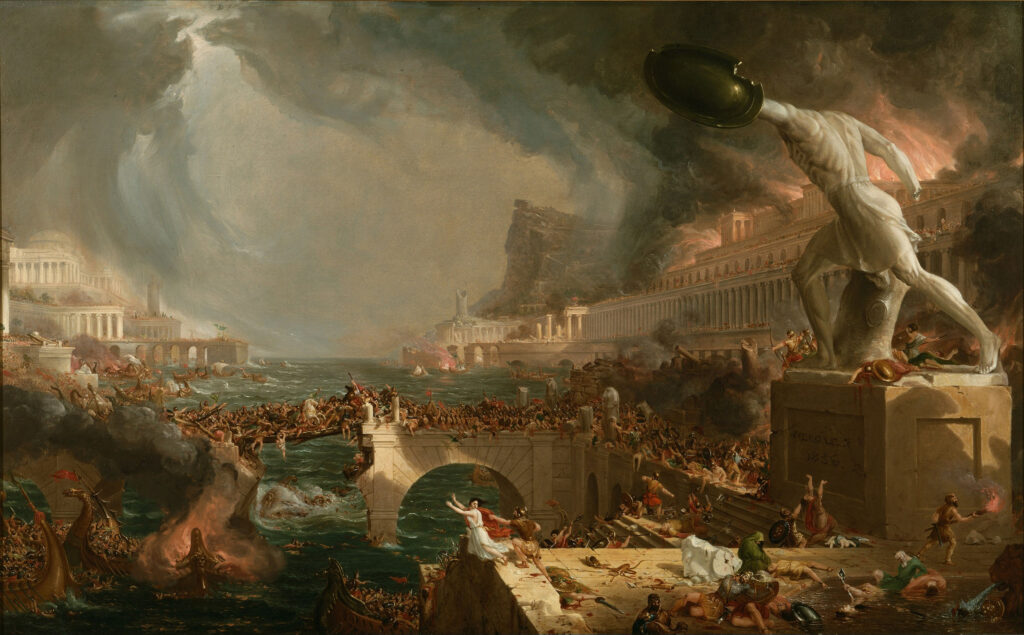
The causes of this collapse were complex and interconnected. Droughts and famine driven by climate change, resource depletion, and the destruction of ecosystems under human pressure undermined agriculture. Earthquakes razed cities, while early strains of bubonic plague exacerbated the demographic crisis. Attacks by the “Sea Peoples” and migrations of other groups catalyzed military instability, leading to the destruction of cities and palaces. The breakdown of trade routes — on which the supply of copper and tin for bronze depended — ultimately destabilized economic systems.
We have already mentioned that the Myth identifies the crisis’s deep cause as humanity’s aggressive expansion and describes the catastrophes as “counterstrikes” by the Fairies, together with the elementals and other spirits of nature, who tried to restrain people’s predatory impulses.
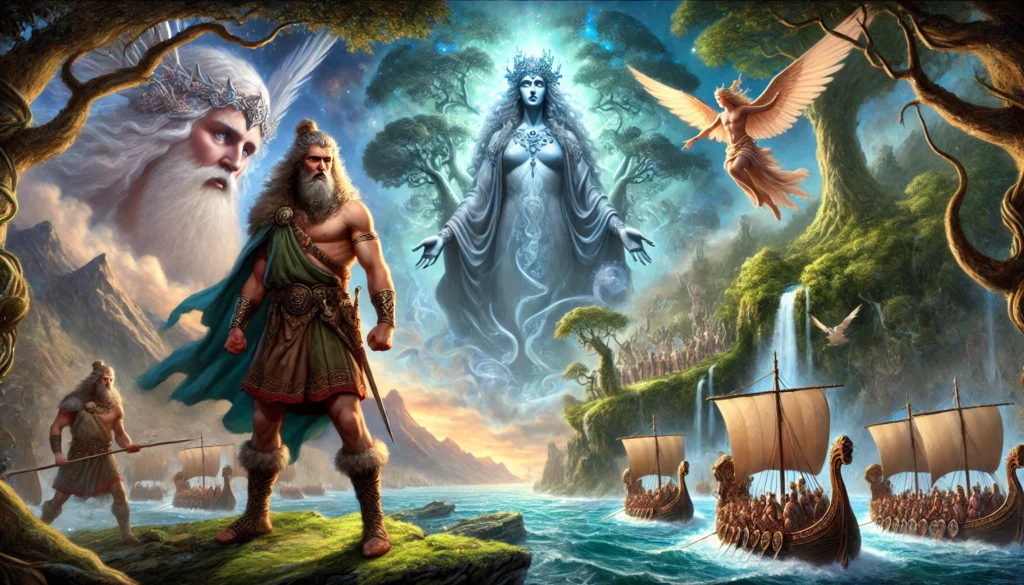
The Fairies knew that Ith’s proposal to “divide the land” was a trick. Having obtained fields, people would continue cutting down forests for construction, diverting rivers for irrigation, and draining swamps for new pastures. At first, Ith did not appear to be an open enemy, but he embodied a new era in which people sought to subdue nature rather than live in harmony with it.
The Fairy kings — Mac Cuill, Mac Cecht, and Mac Gréine — rulers of forests, earth, and sky, refused the deal. Offended by their refusal, Ith began studying their magical lands in search of weaknesses. His actions soon became a threat to nature, and the Fairies killed Ith. His death became the first act of war between humanity and the forces of nature.
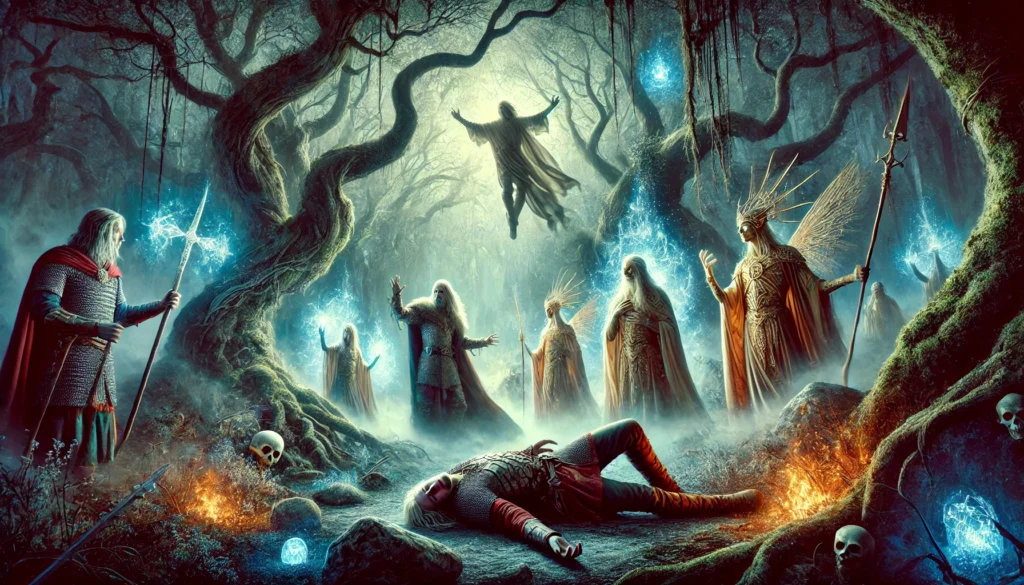
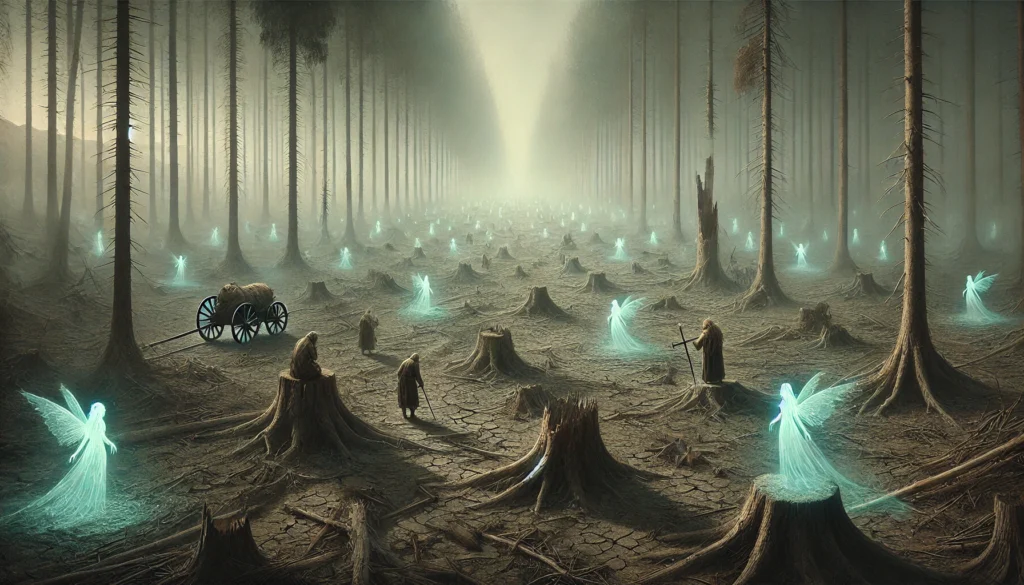
In the Myth, the “visit of Ith” to the peoples of the forests — that is, to the Fairies — figuratively describes the intensive deforestation associated with the expansion of human civilization in the Bronze Age. People, with their technologies (especially metallurgy) and growing need for resources, began penetrating forests that were considered sacred and under the patronage of magical forces. For the ancient mind, forests were living and ensouled, and their destruction was perceived as a violation of the established order. The Fairies protecting the forests acted as defenders of nature itself, resisting destruction. This deforestation — the devastation of lands for agriculture and for metal smelting — is the realization of the idea proposed by Ith: to “divide” the land between people and nature. However, nature, in the person of the Fairies, refused this “contract,” which led to conflict.
Indeed, the ancient Bronze Age civilizations actively transformed the environment to meet their economic and social needs, and these changes led to the destruction of local ecosystems, creating conditions that contributed to climate change.
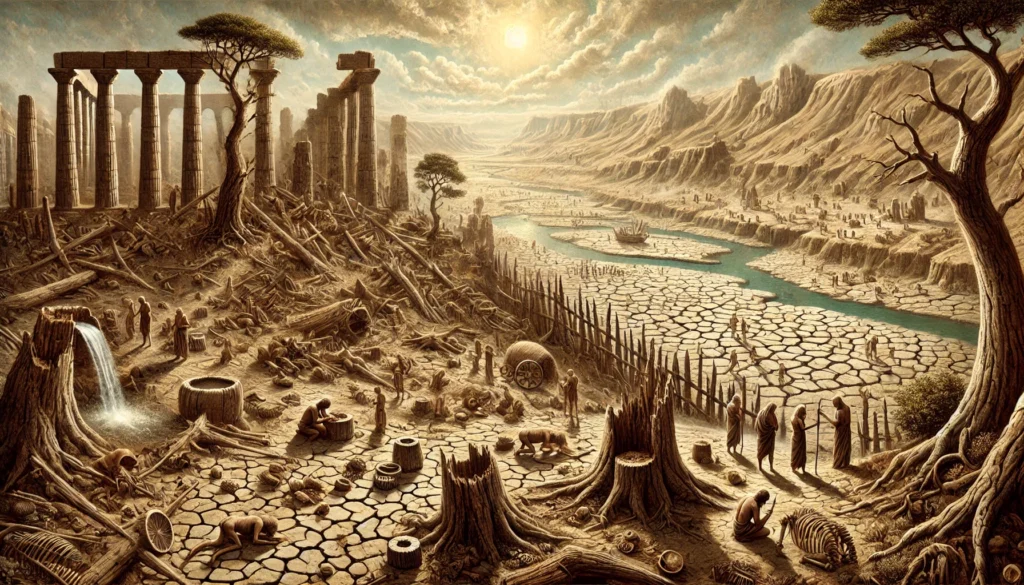
Although intensive deforestation began long before the Bronze Age collapse and was driven by population growth and the development of metallurgy and agriculture, by the 12th century BCE it had peaked, intensifying drought, cooling, and other disasters. This produced an “ecological bomb,” which became one of the factors in the global collapse.
At the same time, of course, the Bronze Age collapse was a complex, multi-layered process; however, its trigger, according to the Myth, was ecological change that undermined the stability of economic and social systems and ultimately led to a global collapse.
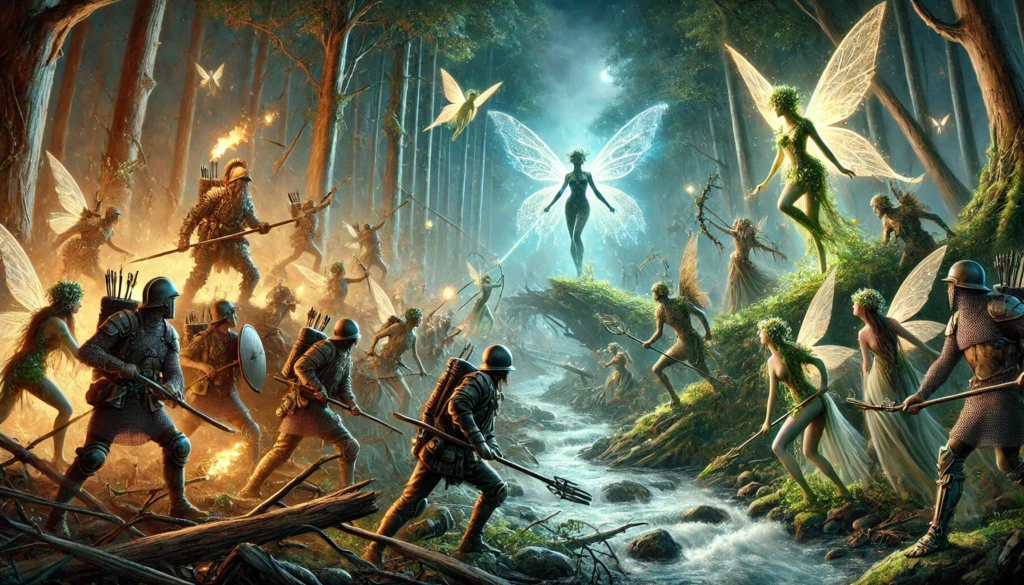
In addition to such indirect clashes between people and the forces of nature and the Fairies, there were evidently also direct battles with the Fairy Folk and nature’s embodied guardians, which further exacerbated the conflict.
It may be argued that ecological changes (in particular, drought provoked by deforestation) made existing agrarian systems unstable. Exploiting land without restoring soil fertility left agricultural regions more vulnerable to the consequences of climate change. This produced famine and migrations. At the same time, earthquakes destroyed key cities, weakening states and their administrative systems. Attacks by migrants — the so-called “Sea Peoples” — accelerated the destruction of coastal and inland centers. The subsequent collapse of trade deprived civilizations of the resources needed for recovery. And finally, internal uprisings intensified the disintegration of political structures, completing the collapse.
Accordingly, although Ith appears to arrive intending to “study” or “share” resources with the Fairies, his death demonstrates that harmony between people and nature is impossible under conditions of expansion. After his murder, a sequence of events marked the destruction of the natural order: nature’s response (drought and catastrophes) and the final conquest of the forests by the Milesians. Humanity, armed with technologies (bronze, then iron), collided with nature, which was defended only by its magic.
Thus, the conflict between humanity and nature (and the Fairies supporting it) led to catastrophe because it disrupted the fragile balance between technological progress and natural harmony. The “Murder of Ith” initiated a chain reaction in which this harmony is destroyed: forests are cut down, swamps are drained, ecosystems degrade, and the soil is exhausted. Accordingly, the “storm” caused by the Fairies represents real climate changes such as droughts, floods, and the collapse of agriculture, which played an important role in the decline of Bronze Age civilizations. Earthquakes can be linked to the intervention of gods or the Kings of the earth (such as Mac Cecht), intent on destroying human settlements that disrupt natural rhythms.
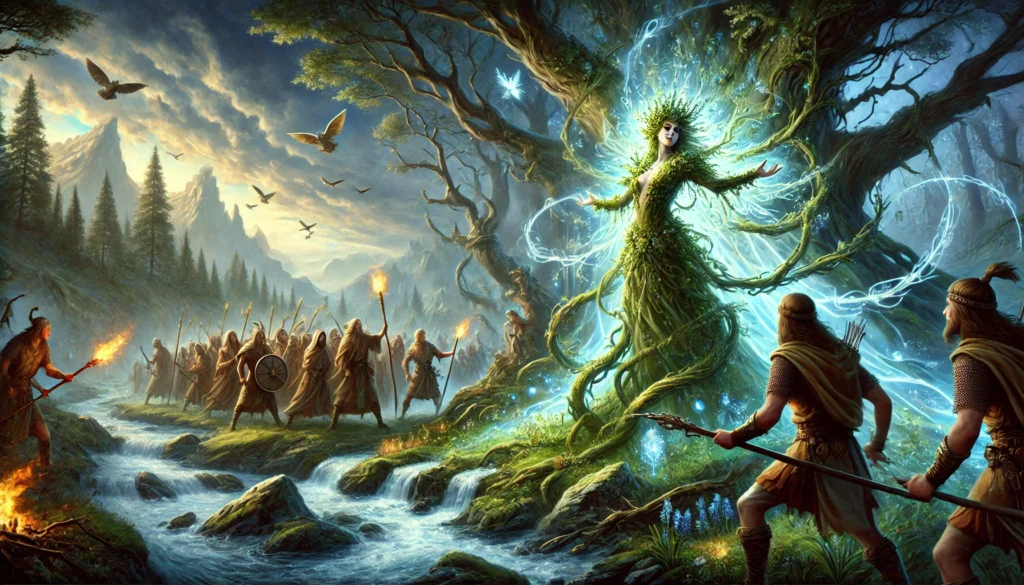
The three Fairy queens — Ériu, Banba, and Fódla, personifying aspects of the land — embody the land’s fertility that become barren through aggressive exploitation. Their presence in the Myth of resistance to the Milesians indicates a close connection between natural disasters and mythological confrontation.
People prevailed over the Fairies. They burned forests, felled sacred trees, and seized fertile lands. After the Milesian conquest, the Fairies left the physical world, which accompanied humanity’s further loss of a sacred perception of nature. Nature ceased to be seen as sacred and ensouled and became an object to be controlled and exploited. The Fairies departed the physical world, leaving people alone to face the consequences of their aggression.
Thus, the Myth invites us to consider the Bronze Age collapse as more than a coincidence of natural and social factors. It is portrayed as a dramatic account of a rupture between people and nature, in which the forces of nature attempt to halt or at least slow humanity’s expansion through destructive natural disasters. This perspective not only explains the images and logic of the Myth but also serves as a general warning about the catastrophic danger of losing harmony between humans and the surrounding world.
Very interesting. It seems a new spiral is starting. It’s a pity that people aren’t learning anything.
For reference: Mars and Venus were also inhabited. On Mars, people disrupted the balance with Light. The result – a Rider was sent. His presence was enough. The expeditions to Mars, sent by the locals, are not for studying the planet at all. They are looking for technology. As for the here… From my perspective, the emphasis is on techno-magic. Thus, some developments, particularly in medicine, have already been adopted by others. A breakthrough in the field of AI is also awaited.
Thank you!
Do you really think that people fought with spirits? How is that possible?
Every time people cut down an ancient tree, pollute a clean water body, or block a river, they are fighting with spirits; every time people die from volcanic eruptions, earthquakes, or forest fires – the spirits strike back. However, fairies are not spirits; they are beings in flesh, just their materiality differs from ours. Therefore, wars between humans and fairies can look more literal.
In traditional terminology, fairy refers to fairies, i.e., invisible spiritual beings without physical bodies! Or do you believe they have physical bodies? If there is no physical body, then war is unlikely possible between spirits and humans. If they have physical bodies, then they are no longer spirits, but rather remnants of a former civilization hiding underground to escape destruction and new orders. Bearers of ancient knowledge on whom a hunt has been declared, like the chthonian creatures that have gone underground or the pre-Celtic mead-makers, Heather Mead – an ancient legend, there is a song. What do you mean by another materiality?