
The Trap of Selfishness
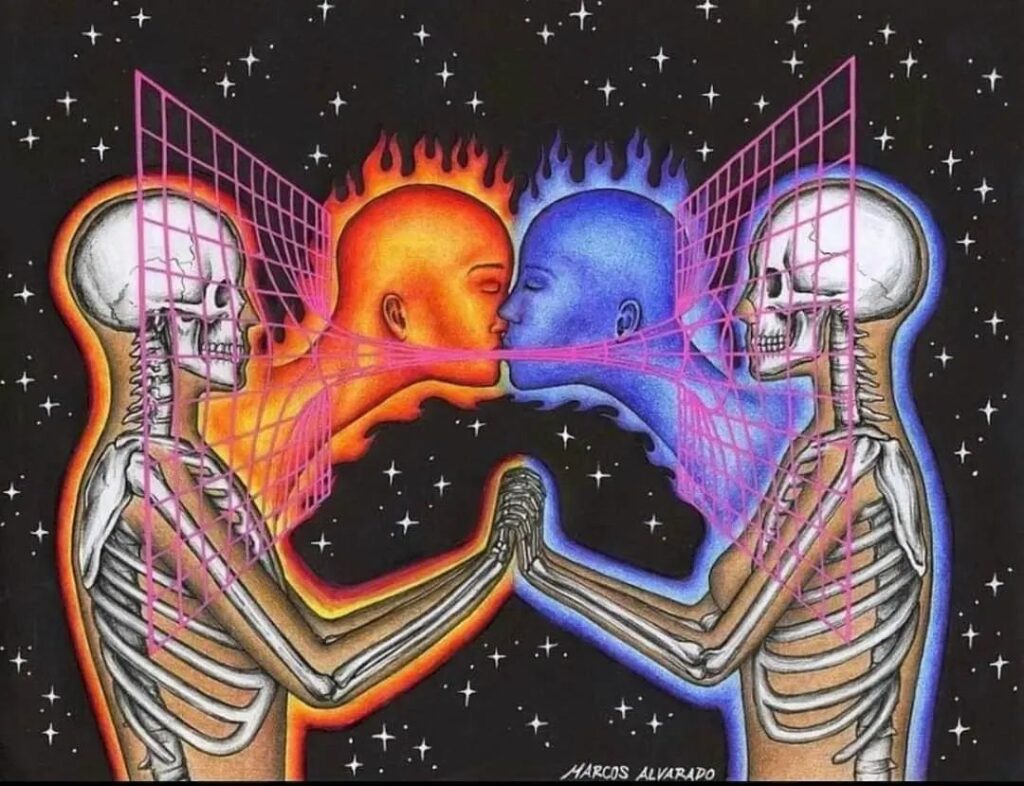
The modern world is a space overflowing with beings and, at the same time, extremely depleted of energy. On the one hand, this is connected to the high activity of predators that consume this energy, and on the other hand — to its improper generation.
Indeed, any life energy — qi, libido, zhiva — is born in the oceans of the Mother, manifests and flows only when there is a potential difference, i.e., a source (desire) and a recipient (direction). One might say that a person is alive and active to the extent that they have a desire and a reason to live.
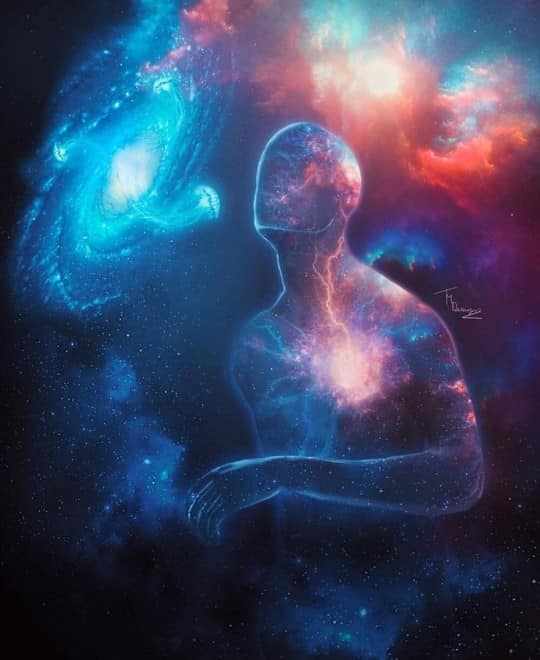
At the same time, it is easy to see that energy trapped at its source cannot act: it has nowhere to flow, and so its impulse fades. In other words, any being can be strong only for the sake of someone; can develop only for the sake of someone; can create only for the sake of someone.
As the fundamental religious metaphor shows, in order to create the world God needed a human recipient for that creation: in this depiction God appears as the source of Desire, and the human — as its purpose.
The same idea is conveyed by the figure of the bodhisattva of Compassion — Avalokiteshvara — who, together with Power and Wisdom, forms the triad of the fundamental qualities of the Enlightened mind: compassion is an original and inseparable quality of the ground of the mind. The Buddha cannot be without compassion (just as he cannot lack wisdom and efficacy).
If a person believes that they do something “for themselves,” they are either lying or mistaken: trying to be selfish, they must either produce an additional “supra-I” within themselves that will observe and validate self-serving acts, or — constantly seek an audience to approve them. This is the problem of the modern world: we are desperately selfish and therefore hopelessly dependent on public opinion and others’ approval. We are preoccupied with ourselves and cling to an audience, torn between narcissism and self-hatred. This is the reason for the contemporary “ever-tired” society — people deprived of love have nowhere to draw energy from; they have neither the opportunity nor the means to activate the ocean of pneuma. We are constantly exhausted simply because we have no genuine direction to channel energy, and therefore lack energy.

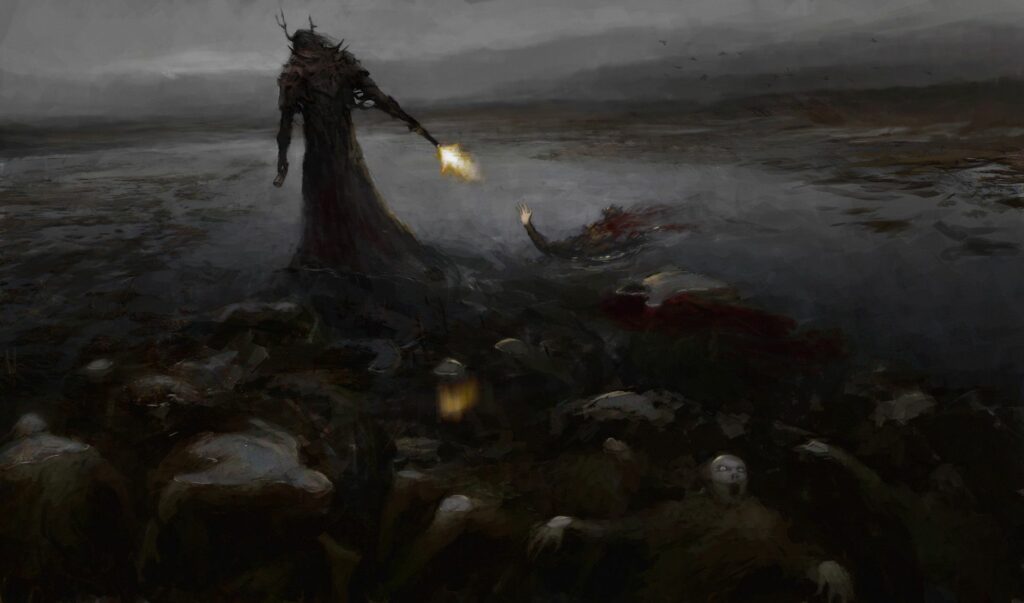
It is clear that such a tendency is very advantageous to predators: they need not try hard to take the place of the “approving audience,” that is — to perform the function of the “negative pole” in the energy flow. All that is required is to “open” the energetic circuit of the mind, convince it that “you must live for yourself”, deprive it of its natural and harmonious recipients, deprive it of love and compassion — and voilà, the energy flows like a river straight into the hungry maws of demons. All talk of “self-sufficiency,” “independence,” “this world being cruel and unfair” is merely cheap tricks that deprive the mind of its natural energy flow and turn it into a milk cow for the inferno.
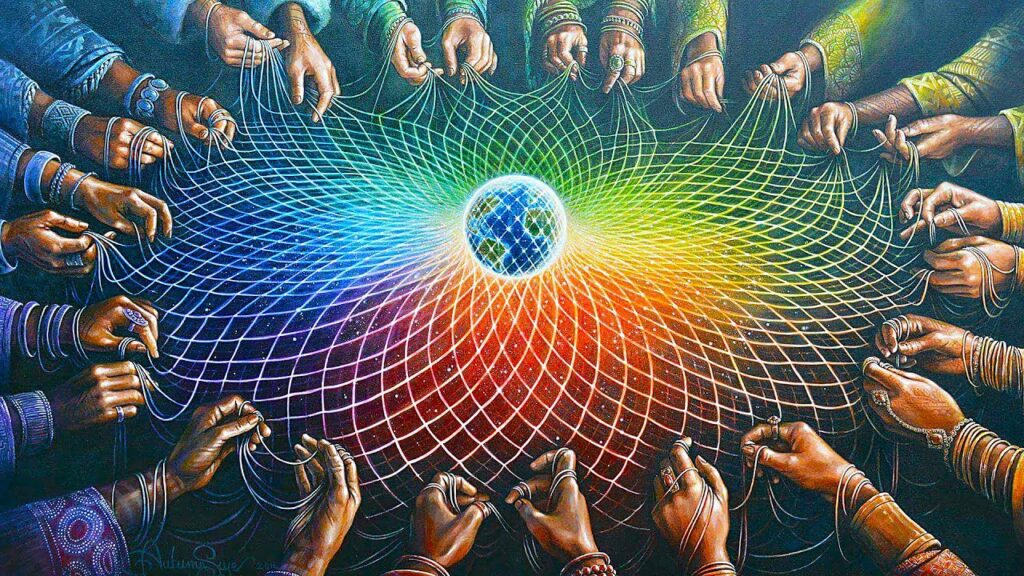
At the same time, being essentially unified, the mind does not need the separateness that arises as a delusion, an error, a distorted perception of the individuality of streams of consciousness. If the mind, in its ego, includes someone else — if it finds the recipient of its energy in another — then it frees itself from the need for surrogate energy consumers.
In Ancient Mesopotamia such a fundamental energetic structure was called “service.” And although today this word carries mostly negative connotations, and few in their right mind (and outside BDSM play) would say that they “serve” someone, the Sumerians believed that every being is born to “serve,” that is — to perform the function of a conduit in the world’s circulation of energy. When they said that “people were created to serve the gods,” they meant far more than a mere religious justification of social injustice: people are conduits of divine creative energies in the material world; they “cultivate” matter in accordance with those energies. In modern parlance it would be more accurate to replace that “service” with “love.” And if we say that every being lives in order to love, and to the extent that it loves — then we will understand the sense of yet another fundamental religious metaphor: “God is love.”
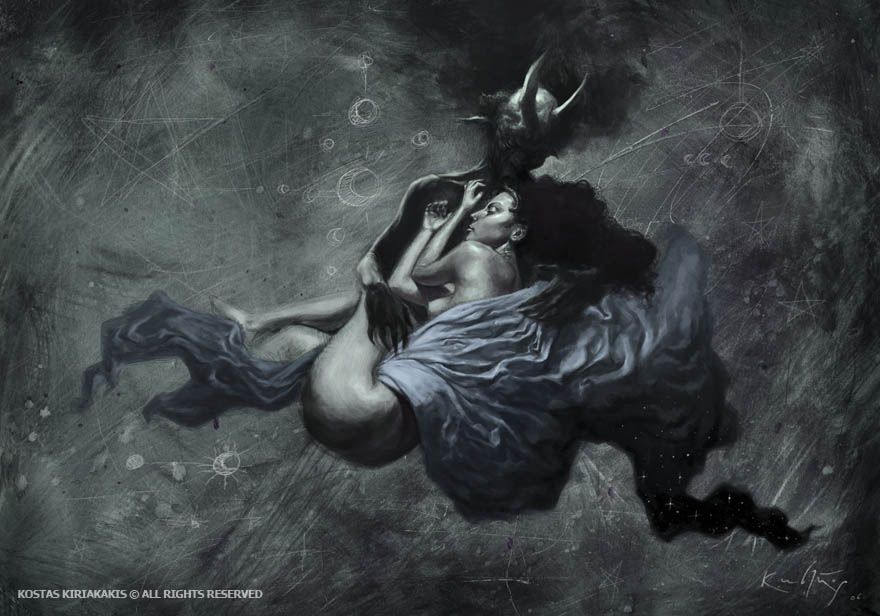
If we freely and autonomously choose to expand our mind — to extend our ego beyond a single stream — we can establish harmonious relations in the flow of energy, in which its generation and consumption are balanced and mutually beneficial. There is a big difference between a mother who freely and willingly nourishes her child with milk and a dairy cow from which a mechanical milking machine has drained life by machines. And even if that child proves ungrateful and does not return care to the mother, the mother’s love in itself creates harmony and a natural flow of energy both within her and around her.
Contrary to the widespread belief propagated by predators, “living for someone” is not a renunciation of one’s freedom, not its loss; on the contrary, it is a liberation from neurotic surrogates that laboriously drain the currents of zhiva, a liberation from the role of power source for the parasites and predators of the psychocosmos.

Just in time). Thank you.
Thank you.
Thank you very much for this article.
Thank you for your efforts. It always comes at the right time when it is necessary to ‘get one’s thoughts in order’…
— Why don’t you read the sutras? — Baso once asked. — Isn’t there a difference between sutras and zen? — replied Seido. — You must still read the sutras for the sake of others. — Each heals their own disease. How can I help others? — Soon you will turn the world upside down.
Thank you, Enmerkar.